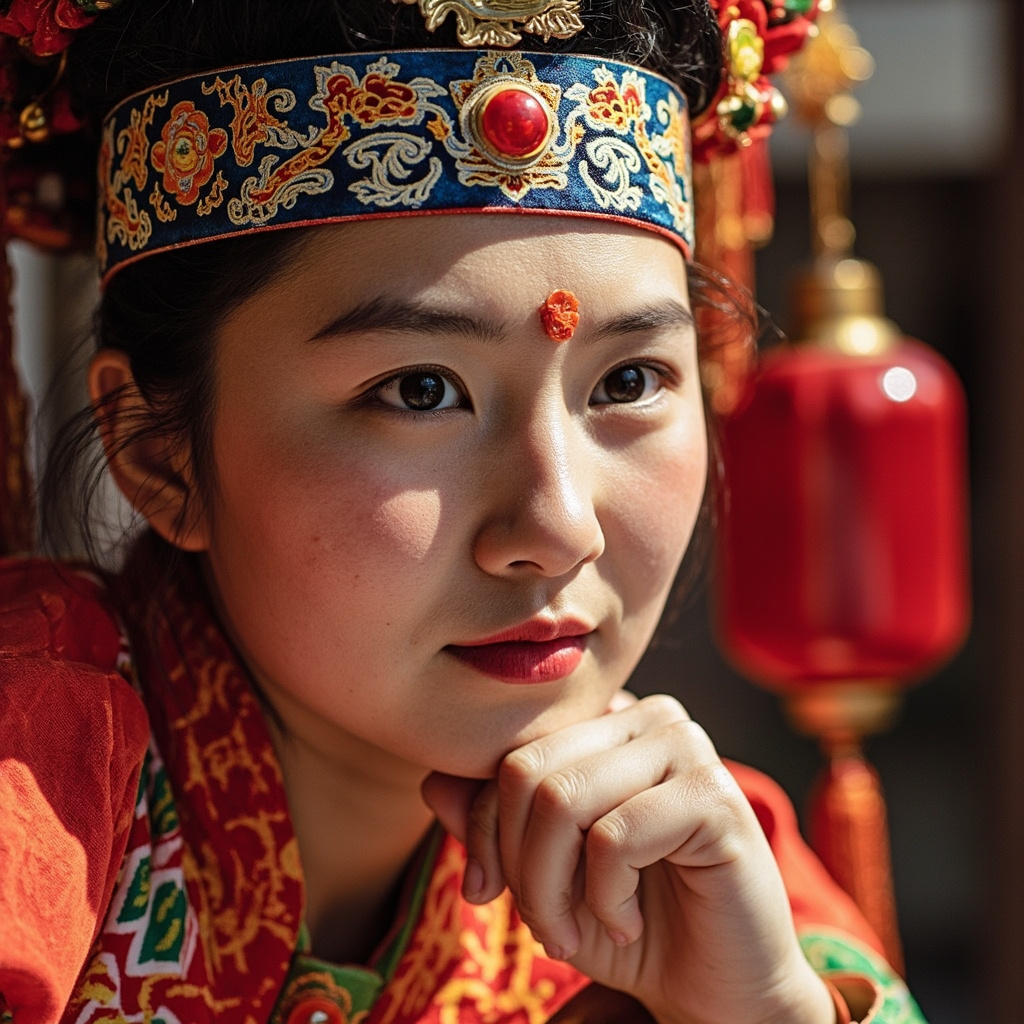
**Guangzhou Cantonese Culture: A Journey Through Southern China’s Ancient Traditions**
*Discover a city where ancient rites meet modern marvels—Guangzhou Cantonese Culture is a living tapestry of history, language, gastronomy, and art that beckons every curious traveler.*
—
### **Introduction**
Guangzhou, the bustling capital of Guangdong Province, is the cradle of Cantonese civilization. For more than two millennia, this southern metropolis has been a gateway for trade, a crucible of language, and a custodian of traditions that still pulse through its streets today. If you’re yearning for an authentic encounter with China’s most distinctive regional culture, Guangzhou Cantonese Culture offers a perfect blend of historic depth and contemporary dynamism. In this guide, we’ll walk you through the city’s storied past, its unique dialect, its legendary cuisine, its tea rituals, performing arts, vibrant festivals, architectural marvels, and the glittering reality of a 21st‑century megacity. Plus, we’ll share practical travel tips so you can experience it all like a local.
—
## 1. Cantonese History and Origins
Guangzhou’s story begins over 2,200 years ago when the Qin Empire first incorporated the region into imperial China. By the Han Dynasty (206 BC–220 AD), the city—then known as Panyu—had already become a bustling port for the maritime Silk Road. Over the centuries, it attracted merchants from Persia, Arabia, India, and later Europe, fostering a cosmopolitan spirit that still defines Cantonese identity.
The term *Cantonese* itself derives from the older European name “Canton,” a phonetic rendering of Guangzhou’s name in Mandarin (Guǎngzhōu). Yet the local people call their language and culture *Guangdonghua* or *Yueyu*, reflecting a linguistic lineage distinct from the northern Mandarin heartland. The region’s isolation, aided by the Pearl River delta’s waterways, allowed a unique culture to flourish—one that prizes practicality, trade savvy, and a love for culinary excellence.
**Key historical milestones in Guangzhou Cantonese Culture**
– **Qin–Han Period:** Early settlement and establishment of Panyu as a trade hub.
– **Tang–Song Dynasties:** Rise of the “Cantonese” dialect and the flourishing of porcelain and silk exports.
– **Ming–Qing Era:** Development of the iconic *Lingnan* architectural style and the codification of Cantonese opera.
– **Early 20th Century:** Formation of the modern city, with European concessions on Shamian Island, blending East and West.
– **Reform and Opening (1978 onward):** Guangzhou’s resurgence as a global commercial powerhouse while preserving its cultural heritage.
Understanding this layered history enriches every temple visit, market stroll, and dim‑sum brunch you’ll experience in the city.
—
## 2. The Cantonese Language and Dialect
While Mandarin is the national standard, Cantonese remains the lingua franca of Guangdong, Hong Kong, Macau, and many overseas diaspora communities. Spoken by roughly 80 million people worldwide, Cantonese is not merely a “dialect” of Chinese; it retains its own classic phonology, tones (six to nine depending on the source), and a rich corpus of colloquial expressions that have no Mandarin equivalents.
**Why the language matters for travelers**
– **Cultural immersion:** Ordering food, bargaining in markets, and chatting with locals feels more genuine when you use a few Cantonese phrases.
– **Pronunciation quirks:** The six tones (e.g., “si” can mean “four,” “time,” “is,” or “to try,” depending on tone) are a fun challenge.
– **Written Cantonese:** You’ll see unique characters in street signs and menus, like “啲” (di1) meaning “some” – a sign you’re in the heart of Cantonese culture.
**Essential phrases for the road**
| English | Cantonese (Jyutping) | Approx. Pronunciation |
|———|———————-|————————|
| Hello | nei5 hou2 | “nay ho” |
| Thank you | m4 goi1 | “m goy” |
| How much? | gei2 do1? | “gay duh” |
| Delicious | hou2 mei6 | “ho may” |
| Let’s go | haa1 go1 | “ha go” |
Even a modest grasp of Cantonese can turn an ordinary interaction into a memorable exchange.
—
## 3. World‑Famous Cantonese Cuisine and Dim Sum
When people think of Cantonese food, “dim sum” inevitably springs to mind. But Guangzhou’s culinary scene is far more expansive, encompassing fresh seafood, delicate soups, slow‑cooked meats, and inventive desserts. The Cantonese philosophy of cooking—*“fresh, light, and natural flavors”*—makes every dish a celebration of ingredient quality and subtle seasoning.
### 3.1 Must‑Try Dishes
| Dish | Description | Where to Try |
|——|————-|————–|
| **Dim Sum** (点心) | Bite‑size portions: har gow (shrimp dumplings), siu mai (pork & shrimp dumplings), char siu bao (BBQ pork buns) | **Lian Xiang Lou**, **Cantonese Tea House** |
| **White‑Cut Chicken** (Bai qie ji) | Poached chicken served with a ginger‑scallion oil dip | **Liu Hua Yuan** |
| **Steamed Fish** (Zheng yu) | Fresh perch or grouper, lightly seasoned to highlight natural taste | **Jiang by Chef Fei** |
| **Roast Suckling Pig** (Shu Zhu) | Crispy skin, tender meat, a festive favorite | **Guangzhou Restaurant** |
| **Egg Tarts** (Dan ta) | Flaky pastry with silky custard, a perfect sweet finish | **Kwan Yu Siu** |
| **Beef Offal Stew** (Niu杂) | Slow‑stewed tendons, stomach, and tripe, spiced with five‑spice | **Old Guangzhou Snacks** |
### 3.2 Best Districts for Food
– **Shangxiajiu Pedestrian Street:** Traditional snack stalls and century‑old restaurants.
– **Beijing Road:** Mix of historic tea houses and modern food courts.
– **Pearl River Night Market:** Fresh seafood stalls and street‑side grills.
– **Tianhe District:** Upscale dining with innovative Cantonese fusion.
**Travel tip:** Arrive at a dim sum restaurant before 10 am; locals often “喝早茶” (drink morning tea) and the carts are freshest early in the day.
—
## 4. Traditional Tea Culture – Yum Cha
Yum cha (飲茶) literally means “drink tea,” but it’s so much more: it’s a social ritual that unites families, friends, and business partners over pots of oolong, pu’er, or chrysanthemum tea, paired with an array of snacks.
### 4.1 The Ritual of Yum Cha
1. **Select a tea house** – Look for establishments with bamboo steamers, handwritten menu boards, and the faint aroma of jasmine.
2. **Choose your tea** – Common choices include **Pu-erh** (aged, earthy), **Oolong** (floral, roasted), or **Chrysanthemum** (cooling, sweet).
3. **Order dim sum** – Dishes arrive on pushcarts; simply point at what catches your eye.
4. **Serve with courtesy** – The youngest pours tea for elders, and the elder may tap their fingers on the table as a silent “thank you.”
5. **Savor slowly** – Yum cha is about conversation as much as flavor; linger for hours.
### 4.2 Tea Houses to Visit
– **Chen’s Tea House (陈家祠茶楼):** Set near the historic Chen Clan Ancestral Hall, it offers authentic Cantonese tea ceremonies.
– **Lai Wah Heen (来华轩):** A high‑end option in the Tianhe district with a modern twist on classic teas.
– **Jade Garden Tea House (翡翠园):** A quaint garden setting perfect for a relaxed afternoon.
**Travel tip:** If you’re unsure which tea to pick, ask for “茶单” (chaa daan) and request a “sample tasting” (茶尝). Most tea houses will accommodate a small flight of brews.
—
## 5. Cantonese Opera
Cantonese opera (粤剧) is a vibrant performing art that fuses singing, acting, martial arts, and elaborate costumes. Recognized by UNESCO as an Intangible Cultural Heritage, it dates back to the Qing Dynasty and continues to thrive in Guangzhou’s teahouses and dedicated theaters.
**What to expect**
– **Vocal style:** High-pitched, melodic singing with intricate ornamentation.
– **Costumes:** Lavish silk robes, elaborate headdresses, and symbolic colors (e.g., red for heroism, white for mourning).
– **Stagecraft:** Minimal sets but rich use of props like fans, swords, and banners to convey story.
**Where to experience it**
– **Guangzhou Opera House (广州大剧院):** Hosts modern reinterpretations of classic pieces.
– **Shamian Island’s Baozheng Theatre:** Intimate venue for traditional Cantonese opera.
– **Cultural Festivals:** Look out for the annual **Guangzhou International Cantonese Opera Festival** (usually in November).
**Travel tip:** Book tickets through the venue’s website or ask your hotel concierge; many performances include English subtitles.
—
## 6. Traditional Festivals
### 6.1 Spring Festival (Chinese New Year)
Guangzhou’s Spring Festival (農曆新年) is a city‑wide celebration marked by lantern displays, flower markets (花市), lion dances, and the iconic “flower gun” fireworks along the Pearl River. The **Yongqing Fang** district becomes a pedestrian paradise, with red lanterns strung overhead and traditional performances on open stages.
**Must‑see highlights**
– **Chen Clan Ancestral Hall Flower Market:** Browse fresh peach blossoms, kumquat trees, and auspicious plants.
– **Nighttime fireworks at Haizhu Bridge:** The sky lights up with synchronized pyrotechnics.
– **Cantonese Opera street performances:** Free shows in Liurong and Huacheng Square.
### 6.2 Dragon Boat Festival (Duanwu Festival)
Held on the fifth day of the fifth lunar month, the Dragon Boat Festival (端午節) honors the poet Qu Yuan. The city’s rivers fill with sleek dragon boats, drums pounding, and crews racing to the finish. Locals also indulge in *zongzi*—glutinous rice dumplings wrapped in bamboo leaves.
**Best spots to watch**
– **Pearl River at Tianhou Temple (天后宫):** Home to the city’s premier dragon boat races.
– **Liwan Lake (荔湾湖):** Smaller, more intimate races with traditional team costumes.
### 6.3 Other Cultural Celebrations
– **Mid‑Autumn Festival (中秋节):** Mooncake fairs at Zhongshan Road and lantern processions in Yuexiu Park.
– **Lantern Festival (元宵节):** Illuminated displays and guess‑the‑riddles games in the old city.
– **Guangzhou International Food Festival:** A gastronomic extravaganza showcasing regional dishes.
—
## 7. Unique Lingnan Architecture
Lingnan architecture (岭南建筑) is a distinctive style that blends Chinese courtyard layouts with Western colonial influences, reflecting Guangzhou’s historic role as a trade nexus.
### 7.1 Chen Clan Ancestral Hall (陈家祠)
Built in 1894, this hall showcases exquisite **brick carvings, wood carvings, and ceramic sculptures**. Its courtyards are shaded by banyan trees, and the roof ridges are adorned with colorful figurines depicting folk legends. Today it serves as the **Guangzhou Folk Art Museum**, displaying Cantonese crafts such as paper‑cut, ivory carving, and embroidery.
### 7.2 Shamian Island (沙面)
Shamian is a tiny island in the Pearl River, famous for its **European‑style colonial buildings**—English, French, and American consulates, churches, and mansions built in the 19th century. The tree‑lined streets and pastel‑colored facades provide a striking contrast to the surrounding Chinese architecture, making it a favorite backdrop for photographers.
### 7.3 Modern Interpretations
Architects today reinterpret Lingnan motifs in contemporary skyscrapers:
– **Canton Tower (广州塔):** Its sinuous “Fish Belly” shape echoes traditional Chinese ceramics.
– **Guangzhou Opera House:** Designed by Zaha Hadid, the building’s rippling façade references river stones and silk.
– **Guangzhou International Finance City:** Incorporates sky gardens and green terraces inspired by classic courtyard homes.
**Travel tip:** Rent a bicycle on Shamian Island to glide past the historic mansions; the island is largely car‑free, making it safe and pleasant for a leisurely ride.
—
## 8. Modern Guangzhou as a Megacity
Beyond its ancient roots, Guangzhou is a **global economic powerhouse**. Home to the China Import & Export Fair (Canton Fair)—the largest trade fair in the world—it also hosts multinational corporations, high‑tech industrial zones, and a thriving creative sector.
### Key Modern Attractions
– **Zhujiang New Town:** A sleek central business district with museums, shopping malls, and the towering Guangzhou CTF Finance Centre (530 m).
– **Haizhu Innovation District:** Known for tech startups and the iconic **Guangzhou Net Valley**.
– **Guangzhou International Media Port:** A hub for film, design, and digital content production.
### Urban Experiences
– **Metro:** The Guangzhou Metro is one of the world’s longest, with over 300 stations—buy a rechargeable “Lingnan Pass” for seamless travel.
– **Night Cruise on the Pearl River:** Watch the illuminated skyline reflect on the water while enjoying a buffet dinner.
– **Shopping:** From luxury malls in Tianhe to the bustling **Shangxiajiu** arcade, there’s something for every budget.
**Travel tip:** Download the **Guangzhou Metro app** (广州地铁) for real‑time route planning and English signage assistance.
—
## 9. Practical Travel Tips
| Category | Recommendation |
|———-|—————–|
| **Best time to visit** | October–December (cool, dry weather) or March–May (flower festivals). Avoid the scorching July–August heat. |
| **Getting there** | Guangzhou Baiyun International Airport (CAN) is well‑connected globally; take the Metro Airport Express (Line 3) to downtown. |
| **Accommodation** | **Boutique:** The **White Goose Pond Hotel** (白鹅潭饭店) near the Chen Clan Ancestral Hall. **Luxury:** The **Rose Garden Hotel** (玫瑰园酒店) in Tianhe for modern comfort. |
| **Transport** | Use the **Lingnan Pass** (a contactless card) for metro, buses, and some taxis. Ride‑hailing apps (Didi) operate in English. |
| **Language** | While Mandarin