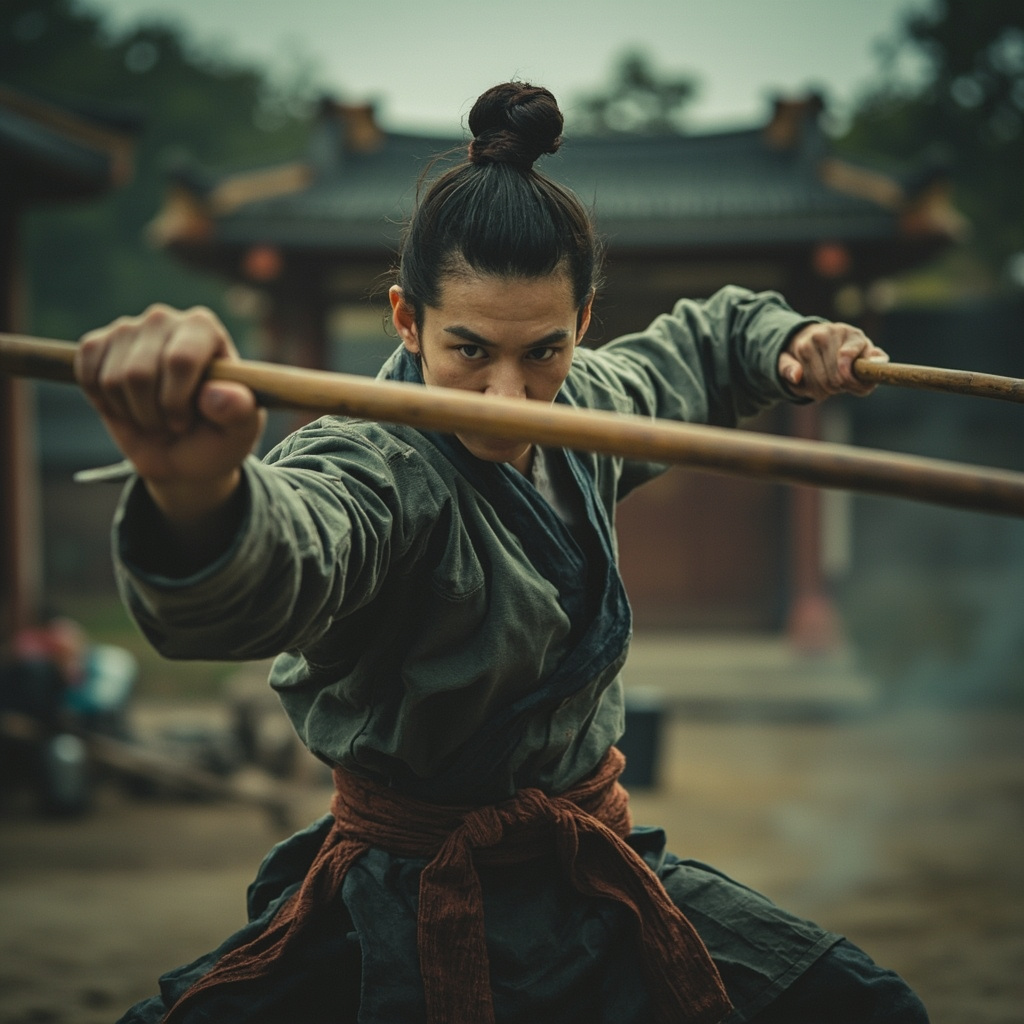
# Chinese Staff Fighting Techniques: Mastering the Long Weapon Forms
The Chinese staff weapon stands as one of the most revered instruments in the vast landscape of traditional martial arts. Dating back centuries, this long weapon has been the foundation of countless fighting systems, battlefield techniques, and forms practiced in martial arts schools across China and throughout the world. The Chinese staff fighting techniques represent a sophisticated blend of power, precision, and flowing movement that continues to captivate practitioners seeking to master the art of long weapon martial arts.
Whether you are a beginner exploring staff forms training for the first time or an experienced martial artist looking to deepen your understanding of the Chinese staff weapon, this comprehensive guide will provide you with the knowledge, techniques, and training methodologies necessary to develop genuine proficiency with this remarkable instrument. From the fundamental principles that underpin all staff work to the advanced forms practiced in traditional kung fu systems, we will explore every aspect of mastering long weapon forms.
[IMAGE: Traditional Chinese long staff weapon displayed in a martial arts training hall]
## The Rich History of the Chinese Staff Weapon
The history of the Chinese staff weapon stretches back over two millennia, with origins rooted in both military applications and civilian self-defense. During the Warring States period (475-221 BCE), the staff served as a primary battlefield weapon for infantry soldiers who could not afford more expensive swords or polearms. Its simplicity of construction and effectiveness in combat made it a staple of Chinese military tradition for generations.
Within Chinese martial arts, the staff evolved from purely utilitarian combat applications into a refined art form that combined practical fighting techniques with aesthetic movements and philosophical principles. Buddhist monks traveling the Silk Road used staff fighting kung fu not only for protection but also as a form of moving meditation. Military generals developed systematic curricula for training soldiers in long weapon martial arts, creating training manuals that would eventually influence civilian martial arts schools.
The Ming and Qing dynasties witnessed significant refinements in staff techniques, with the weapon becoming increasingly specialized. Different regions of China developed distinct styles and approaches to staff fighting, each emphasizing particular aspects of the art. Northern Chinese martial arts tended to favor longer, more flowing forms with extensive ground coverage, while southern systems often emphasized tighter movements and more compact weapon handling. Understanding this historical context enriches your appreciation of why Chinese staff fighting techniques developed in the particular ways they did and helps you approach training with appropriate respect for tradition.
## Understanding the Staff in Chinese Martial Arts
Before beginning intensive staff forms training, practitioners must understand the fundamental characteristics of this weapon and how different designs affect performance. The Chinese staff weapon typically ranges from six to nine feet in length, though weapons of twelve feet or more are used in certain advanced forms and theatrical performances. The length you choose should correspond to your height, training goals, and the specific style you intend to practice.
Traditional staff weapons were crafted from hardwoods such as white wax wood, bamboo, or ironwood, each material offering distinct advantages. White wax wood provides excellent flexibility and shock absorption, making it ideal for practicing contact techniques without causing excessive injury. Bamboo offers durability and a lighter weight that permits faster movements. Hardwood staves provide substantial heft for building strength and developing powerful strikes. Modern practitioners also utilize fiberglass and composite materials that offer durability and consistent performance across various weather conditions.
The diameter of your staff affects grip security, striking power, and the speed of transitions between techniques. Thicker staves build hand strength and generate more impact force but tire the grip more quickly. Thinner weapons permit faster manipulation but require more refined grip control. As you develop your staff fighting kung fu practice, experiment with different dimensions to discover what best supports your body mechanics and training objectives. Many traditional masters recommend beginning with a heavier, thicker weapon for conditioning and switching to a finer weapon once your technique matures.
[IMAGE: Collection of traditional Chinese staff weapons showing various lengths and materials]
## Essential Stances and Footwork in Staff Fighting
Mastery of Chinese staff fighting techniques requires rock-solid foundation work, and this foundation begins with proper stances and footwork. Unlike empty-hand martial arts where the body must perform all offensive and defensive functions, staff fighting places half of your technical vocabulary in your hands while your feet must support efficient movement and stability. The relationship between your body positioning and staff handling creates the platform for all advanced techniques.
The fundamental stances used in long weapon martial arts include the bow stance, horse stance, empty stance, and seven-star stance, each serving particular tactical purposes. The bow stance provides a strong base for forward-thrusting techniques and allows rapid weight transfer for generating striking power. Horse stance offers stability for defensive positioning and wide-sweeping techniques that require a rooted foundation. Empty stance permits rapid weight shifts and direction changes essential for evading attacks and repositioning. Seven-star stance creates a dynamic balance point that facilitates quick transitions between offensive and defensive postures.
Footwork patterns in staff fighting kung fu emphasize continuous movement rather than static positioning. The walking step, sliding step, and sprinting step each serve different tactical situations. When executing staff forms training, practice moving through your forms with deliberate attention to foot placement, weight distribution, and the maintenance of proper stance depth. Many practitioners rush to learn impressive techniques before establishing solid footwork foundations, and this shortcut invariably limits their eventual achievement. Dedicate significant training time specifically to stance work and movement patterns until they become second nature.
## Core Techniques in Staff Fighting Kung Fu
The technical vocabulary of Chinese staff fighting techniques encompasses striking, thrusting, sweeping, blocking, and controlling techniques that together create a comprehensive fighting system. Understanding these fundamental categories provides the framework for developing more advanced combinations and transitions that define mastery of the long weapon martial arts.
Thrusting techniques form the foundation of staff combat, delivering concentrated force through linear acceleration along the weapon’s axis. The center thrust targets the opponent’s torso or face, while lower thrusts aim at the legs or feet to disrupt balance. Thrusts should originate from the waist and transfer power through the arms into the staff, with the weapon tip leading the movement. Practice thrusting movements against targets such as hanging bags or makeshift striking posts to develop proper technique before integrating them into full-speed sparring.
Sweeping and striking techniques utilize the weapon’s length and momentum to create wide arcs of destruction. Overhead strikes generate tremendous force through gravity acceleration and body rotation. Side strikes sweep horizontally across multiple targets. Downward strikes overwhelm opponents with crushing force. Each strike category includes variations in angle, height, and power application that adapt the fundamental movement to different tactical situations. Staff forms training should systematically develop proficiency across all strike categories before attempting to combine them into flowing combinations.
Defensive techniques with the staff require understanding how to use the weapon’s length for interception, deflection, and control. Vertical blocks, horizontal parries, and circular deflections each provide different defensive outcomes depending on the incoming attack. The staff can also be used for binding and controlling an opponent’s weapon or limbs, creating opportunities for counter-strikes. These defensive applications distinguish combat-effective staff fighting from mere form performance, and practitioners must dedicate significant training time to developing defensive proficiency.
## Mastering Long Weapon Forms: Training Methods
Traditional staff forms training follows systematic progression from basic movements through increasingly complex sequences that integrate technique, movement, and intention. Solo forms provide the foundation for all staff work, encoding patterns of movement and technique that later support partner practice and combat application. Understanding how to approach form training ensures maximum benefit from your practice time.
Begin each training session with a thorough warm-up focusing on the wrists, shoulders, hips, and ankles. Staff work places unique demands on these joints that empty-hand training may not address adequately. Dynamic stretching routines that gradually increase range of motion prepare your body for the full movements required in forms practice. Following warm-up, review fundamental techniques individually before attempting to integrate them into form sequences. This approach reinforces proper mechanics and helps identify and correct technical deficiencies before they become ingrained habits.
When learning new forms, work slowly through the sequence without concern for speed or fluid transitions. Break the form into smaller sections of three to five movements, drilling each section until you can execute it confidently from memory. Gradually string sections together, building toward complete form performance. Practice at reduced speed to ingrain proper technique before attempting the flow and speed that characterize advanced performance. Record your training sessions when possible, as video review reveals technical issues that may not be apparent during practice.
Solo form practice builds the technical foundation, but true staff fighting kung fu mastery requires partner training that tests your ability to apply techniques against resistance and adapt to unpredictable situations. Start with basic two-person drills that develop timing, distance perception, and reactive capability before progressing to more complex sparring formats. Partner training exposes weaknesses in your solo practice and provides essential feedback for continued improvement.
## Popular Chinese Staff Forms and Styles
The Chinese martial arts tradition includes numerous recognized staff forms, each associated with specific regional styles, lineages, or schools. Understanding these traditional forms provides insight into the diversity within long weapon martial arts and helps you identify traditions that align with your training goals and physical attributes.
Northern Chinese martial arts feature extended staff forms emphasizing wide stances, expansive movements, and dramatic power generation. The Seven-Star Staff form practiced in the Northern Praying Mantis system exemplifies these characteristics, incorporating complex footwork patterns and aggressive striking combinations. The Five-Point Staff form from the Emei region includes circular movements and acrobatic elements that showcase the weapon’s defensive capabilities. These northern styles typically favor longer staffs that maximize reach and striking range.
Southern Chinese staff traditions often emphasize tighter movements, more compact stances, and greater emphasis on thrusting techniques. The Staff Set from the Hung Gar system integrates staff work with empty-hand techniques in comprehensive martial curriculum. Tiger-Crane staff forms combine the fierce aggression of tiger-style techniques with the evasive footwork associated with crane imagery. Southern staff styles frequently incorporate weapon retention techniques and close-range applications that differ significantly from northern approaches.
Regardless of which tradition you pursue, authentic training requires finding qualified instruction and maintaining consistent practice over extended time periods. The forms themselves represent condensed wisdom accumulated over generations of martial practice, and their depths reveal themselves progressively as your skill develops. Approach traditional forms with respect for their heritage while remaining open to discovering your own interpretation and expression of the techniques.
[IMAGE: Martial artist performing traditional Chinese staff form sequence]
## Practical Applications and Combat Principles
While forms training develops technique and cultivates martial qualities, understanding practical combat principles bridges the gap between choreographed sequences and real-world application. Chinese staff fighting techniques contain embedded tactical wisdom that can inform your approach to self-defense situations while highlighting considerations unique to weapon-based combat.
Distance management becomes paramount when wielding a staff weapon. The weapon’s length extends your effective range significantly but creates vulnerabilities at close quarters where the staff becomes difficult to manipulate. Maintain awareness of distance relative to your opponent and use footwork to preserve optimal fighting range. When opponents close distance despite your attempts to maintain separation, transition to shorter weapon techniques or employ the staff as a barrier while creating space to re-establish favorable positioning.
The staff’s defensive applications often prove more practical than offensive techniques in civilian self-defense scenarios. Using the weapon to intercept attacks, create barriers, and control space provides protection without necessarily requiring injurious counter-strikes. Striking vulnerable targets should remain reserved for situations where lesser responses prove inadequate to stop genuine threats. The mindset of using minimum necessary force aligns with both ethical martial arts principles and legal considerations surrounding weapon use.
Speed and unpredictability serve as significant advantages in staff combat. Practice varying the tempo of your techniques, alternating between measured movements and explosive bursts of speed. Feints and misdirection with the weapon create openings for genuine attacks. Develop the ability to shift seamlessly between defensive and offensive postures without telegraphing your intentions through preparatory movements. These combat principles require dedicated drilling over extended time periods to become reflexively available under pressure.
## Building Your Staff Training Program
Effective staff forms training requires structured programming that balances technical development with physical conditioning and tactical skill building. Creating a sustainable training routine ensures consistent progress while preventing injuries that derail your martial development. Consider these principles when establishing your personal training program.
Schedule regular sessions of adequate duration, typically one to two hours for focused practice. More frequent shorter sessions often prove more productive than occasional marathon training blocks. Reserve specific days for intensive technique work, form practice, conditioning, and partner training if available. This variety ensures comprehensive development across all aspects of Chinese staff fighting techniques. Track your training in a journal, noting what you worked on, observations about your performance, and goals for future sessions.
Physical conditioning should address grip strength, rotational power, cardiovascular endurance, and flexibility. Grip-intensive training using grip trainers, thick bars, or simple hang time on the staff develops the foundation for maintaining weapon control throughout extended practice. Rotational power develops through medicine ball exercises, cable rotations, and technique-specific drills that train the torso to generate force for striking movements. Cardiovascular training supports recovery between intensive bursts of activity and improves endurance during longer forms.
Address technical weaknesses directly rather than avoiding difficult movements. Identify specific areas where your technique breaks down under pressure or fatigue, and design targeted drills that isolate those movements for concentrated practice. Seek feedback from qualified instructors and training partners who can observe aspects of your technique invisible to your own perspective. The path to mastery passes through discomfort with challenging techniques, and persistent, intelligent practice inevitably produces improvement over time.
## Conclusion: Your Journey with the Chinese Staff Weapon
Chinese staff fighting techniques offer a lifetime of learning for dedicated practitioners willing to invest consistent effort in their development. From the historical traditions that shaped these arts through the modern practitioners carrying them forward, the staff remains a vehicle for cultivating physical skill, mental discipline, and connection to a rich martial heritage. Whether your goals involve competitive performance, self-defense capability, artistic expression, or simply the joy of learning a challenging skill, the path of the staff provides ample reward.
Begin your journey by obtaining appropriate equipment, finding qualified instruction, and establishing sustainable training habits. Progress gradually, respecting the time required for genuine mastery rather than chasing shortcuts to superficial proficiency. Connect with the community of staff practitioners both locally and globally, learning from diverse perspectives while contributing your own experiences to the collective wisdom. Most importantly, maintain the curiosity and dedication that brought you to this remarkable art, allowing the training to transform not just your technique but your character and understanding of Chinese martial culture.
The Chinese staff weapon awaits those ready to commit to its study. Take your first steps today, and discover why generations of martial artists have devoted themselves to mastering these extraordinary techniques.
—
*Ready to begin your staff training journey? Explore our recommended equipment selection and find qualified instructors in your area to start practicing Chinese staff fighting techniques under proper guidance.*