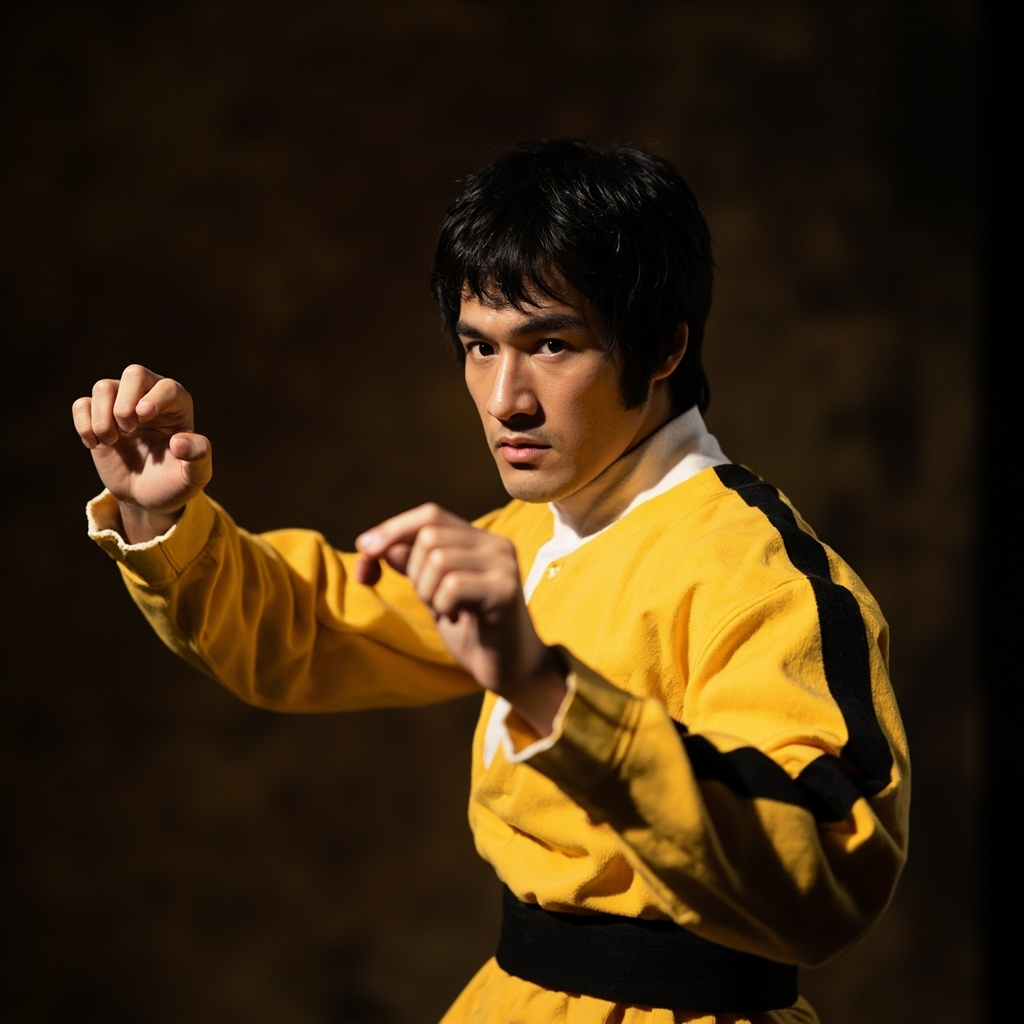
# Bruce Lee Philosophy: The Mind and Body Revolution That Changed Martial Arts Forever
The name Bruce Lee conjures images of lightning-fast strikes, impossible physical feats, and an intensity that captivated audiences worldwide. Yet beneath the muscular exterior and mesmerizing combat skills lay a philosophical framework that fundamentally transformed how practitioners approach martial arts. Bruce Lee’s philosophy extended far beyond kicks and punches-it represented a complete overhaul of mind-body connection that continues to influence millions of practitioners, athletes, and thinkers across the globe.
Born in San Francisco in 1940 and raised in Hong Kong, Bruce Lee developed an extraordinary understanding of human potential through decades of dedicated training, cross-disciplinary study, and relentless self-exploration. His philosophy emerged not from dusty philosophical texts alone but from the forge of actual combat, continuous experimentation, and honest self-assessment. Today, understanding Bruce Lee philosophy means examining a complete system for human development that transcends cultural and temporal boundaries.
This comprehensive exploration of Bruce Lee’s martial arts philosophy will guide you through the core principles that made him legendary, the revolutionary concepts behind Jeet Kune Do philosophy, practical applications for modern life, and actionable strategies you can implement immediately. Whether you practice martial arts or simply seek personal transformation, the wisdom embedded in Bruce Lee’s philosophy offers profound insights for anyone willing to do the work.
[IMAGE: Bruce Lee in a focused martial arts stance demonstrating his signature intensity and form]
## Understanding the Core of Bruce Lee’s Philosophy
At the heart of Bruce Lee philosophy lies a deceptively simple yet profoundly deep concept: the constant and never-ending improvement of oneself. This principle, expressed through his famous acronym “CIP,” reminds us that growth cannot be scheduled, paused, or completed-it must become a natural state of being. Bruce Lee understood that the moment a practitioner believes they have “arrived,” they immediately begin declining.
Bruce Lee’s philosophy rejected the traditional martial arts notion of rigid styles and dogmatic techniques. He recognized that true mastery came not from memorizing countless forms but from understanding fundamental principles and adapting them freely to any situation. This insight emerged from his own journey through Wing Chun, Western boxing, fencing, and numerous other disciplines, each contributing pieces to his evolving understanding.
The philosophical foundation of Bruce Lee martial arts philosophy rests on several interconnected pillars. First, there is the principle of expressing your own individuality rather than imitating others. Lee famously stated, “I’m not in this world to live up to your expectations, and you’re not in this world to live up to mine.” This speaks to his belief that authentic martial arts practice must flow from your unique nature, not from rigid conformity to external standards.
Second, Bruce Lee philosophy emphasizes the unity of mind and body as a single, integrated system. He viewed artificial separations between mental and physical training as counterproductive. Every physical technique originates from mental intention, and every mental state manifests through physical expression. This holistic approach meant that training the body meant training the mind, and vice versa.
Third, Lee championed the concept of “being water”-a philosophy borrowed from Taoist thought but expressed through his own martial arts lens. Water adapts perfectly to its container while maintaining its essential nature. It flows around obstacles rather than fighting against them, finds the path of least resistance, and yet possesses enough force to carve through stone given sufficient time. This metaphor captures Bruce Lee’s philosophy of adaptive combat and living: rigidity leads to breaking, while flexibility ensures survival and ultimate power.
[IMAGE: Water flowing around and through obstacles, illustrating the adaptive philosophy Bruce Lee championed]
## Jeet Kune Do Philosophy – The Art of Intercepting
Among Bruce Lee’s many contributions to martial arts, none represents his philosophical approach more completely than Jeet Kune Do philosophy. Translating roughly as “the way of the intercepting fist,” Jeet Kune Do was not merely a new fighting style but rather a philosophy of combat and self-expression that Lee developed throughout his lifetime.
The foundational principle of Jeet Kune Do philosophy is the concept of interception. Rather than waiting for an opponent to attack and then responding defensively, the Jeet Kune Do practitioner seeks to interrupt the attack at its inception, meeting aggression with immediate, decisive action. This requires extraordinary awareness, timing, and the ability to read an opponent’s intention before it manifests as physical movement.
Bruce Lee developed this approach after recognizing that traditional martial arts often trained practitioners to react rather than to initiate. By the time a defensive response completes, an opponent with superior aggression and timing could already have landed multiple strikes. Jeet Kune Do philosophy addresses this fundamental limitation by training practitioners to recognize and exploit the moment between intention and action.
Central to Jeet Kune Do philosophy is the idea of “using no way as way.” This apparent contradiction encapsulates Lee’s rejection of method as an end rather than a means. Techniques in Jeet Kune Do are not sacred or fixed-they are tools to be selected based on appropriateness to the situation. A kick might serve better in one circumstance while an elbow strike proves optimal in another. The Jeet Kune Do practitioner remains unbound by preference, selecting whatever works most efficiently.
Bruce Lee’s philosophy within Jeet Kune Do also emphasizes efficiency above all else. Every movement should serve a purpose, and energy wasted on unnecessary motion creates vulnerability. This principle of economy applies not only to physical technique but also to mental patterns and emotional states. Cluttered thinking, like extraneous movement, slows response and opens gaps in one’s defense.
The practical implications of Jeet Kune Do philosophy extend far beyond combat. Lee’s emphasis on directness, adaptability, and efficient action provides a framework for approaching any challenge in life. Problems are not confronted through elaborate strategies but through immediate recognition of the essential and direct action toward resolution.
## The Martial Arts Mindset According to Bruce Lee
Shifting from technique to psychology, developing the proper martial arts mindset represents perhaps Bruce Lee’s most enduring contribution to practitioners worldwide. His philosophy articulated a psychological framework for achieving excellence that transcends martial arts specifically and applies to all domains of human endeavor.
The foundation of Bruce Lee’s martial arts mindset begins with self-awareness. Before one can improve, they must honestly assess their current state without illusion or self-deception. Lee encouraged students to “know yourself” before attempting to know the ways of others. This introspective requirement meant regularly examining one’s strengths, weaknesses, habits, and automatic responses. Only through such honest self-examination could genuine growth occur.
Closely connected to self-awareness is the principle of humility. Bruce Lee philosophy explicitly rejected the notion that mastery meant knowing everything. Instead, true mastery meant recognizing how much one did not know. This seemingly counterintuitive approach paradoxically accelerates growth because practitioners who believe they have nothing to learn have closed themselves to further development. The martial arts mindset Lee advocated remained perpetually open, curious, and eager to learn from any source.
Bruce Lee’s philosophy also addressed the critical issue of fear. He understood that fear represents a natural response to dangerous situations, yet it need not control behavior. Through systematic exposure, mental rehearsal, and proper training, practitioners could learn to acknowledge fear while acting despite it. The martial arts mindset Lee cultivated did not eliminate fear but rather transformed the relationship between fear and action.
Another crucial element of the martial arts mindset involves what Bruce Lee called “empty yourself.” This phrase, borrowed from Taoist philosophy, refers to the necessity of approaching training without preconceptions. When your mind is full of predetermined ideas about how things must be done, you cannot perceive what actually exists. The empty mind-not to be confused with the ignorant mind-remains open to all possibilities, allowing perception to occur without interference from assumptions.
Bruce Lee philosophy also emphasizes consistency over intensity. Lee understood that dramatic training sessions followed by long periods of inactivity produce inferior results compared to moderate but sustained effort. The martial arts mindset he promoted valued daily practice, incremental improvement, and patience with the slow process of mastery. This long-term perspective distinguished his approach from those seeking quick results.
Finally, Bruce Lee’s martial arts mindset incorporates what he termed “personal expression.” Techniques and forms matter less than how individuals express themselves through their practice. Two practitioners may perform identical techniques yet express vastly different qualities. The martial arts mindset Lee advocated sought to develop authentic personal expression rather than mere technical competence.
## Bruce Lee’s Most Powerful Quotes and Their Meanings
The philosophical depth of Bruce Lee’s thinking emerges most clearly through his extensive collection of quotations. These Bruce Lee quotes condense decades of martial arts practice and philosophical reflection into memorable, actionable insights. Examining their meanings provides direct access to the wisdom underlying his complete philosophy.
“I fear not the man who has practiced 10,000 kicks once, but I fear the man who has practiced one kick 10,000 times.” This Bruce Lee quote captures his emphasis on depth over breadth. Excellence comes not from accumulating numerous superficial skills but from developing profound mastery in essential techniques. The martial arts mindset Lee promoted valued repeated practice until a technique became instinctive, requiring no conscious thought to execute properly.
“Be water, my friend.” Perhaps the most famous Bruce Lee quote, this phrase distills his entire philosophical approach into a single image. Water possesses no fixed shape yet possesses enormous power. It adapts to any container, flows around obstacles, and continues moving despite any barrier. Practitioners should embody this adaptability-remaining true to their essential nature while expressing it flexibly according to circumstances.
“Do not deny the classical approach, simply as a reaction, or you will have created another pattern that will block your way.” This Bruce Lee quote addresses the danger of reacting against tradition rather than thoughtfully evaluating it. Simply opposing established methods creates another form of rigidity, merely inverted. True freedom requires thoughtful integration rather than reflexive rejection.
“Knowing is not enough, we must apply. Willing is not enough, we must do.” Bruce Lee philosophy emphasizes action above all else. Knowledge without application remains merely academic, while good intentions without execution produce nothing. This pragmatic orientation distinguished Lee’s approach from purely theoretical discussions of martial arts and philosophy.
“A goal is not always meant to be reached, it often serves simply as something to aim at.” This Bruce Lee quote offers crucial perspective on achievement and aspiration. The martial arts mindset he cultivated used goals as directional guides rather than rigid destinations. Whether or not a specific goal is reached matters less than the growth achieved through striving toward it.
“Adapt what is useful, reject what is useless, and add what is specifically your own.” This practical principle underlies Jeet Kune Do philosophy directly. Lee encouraged practitioners to study broadly, extract what serves them personally, discard what does not, and contribute their unique innovations. This approach respects tradition while refusing to be imprisoned by it.
## Applying Bruce Lee’s Philosophy to Modern Life
While Bruce Lee developed his philosophy within the context of martial arts, the principles translate remarkably well to contemporary challenges. Modern practitioners need not fight for survival yet still face obstacles requiring the adaptive, direct approach Lee advocated. Understanding how to apply Bruce Lee philosophy to daily life unlocks practical benefits far beyond the training floor.
Begin with the principle of efficiency from Jeet Kune Do philosophy. Modern life overflows with unnecessary commitments, distractions, and activities that consume time without adding value. Applying Bruce Lee’s philosophy means regularly auditing how you spend your energy. Identify the activities that genuinely move you toward your goals and eliminate or minimize those that do not. Like efficient technique, efficient living focuses on essentials and eliminates wasted motion.
The martial arts mindset Lee developed also addresses modern challenges like information overload and decision fatigue. His emphasis on direct perception-seeing what actually exists rather than what we expect to see-provides valuable tools for navigating overwhelming environments. Practice observing situations without immediately imposing interpretations. Notice first, judge later. This simple shift in attention improves decision-making by ensuring you respond to reality rather than to assumptions.
Bruce Lee philosophy offers particular value for those facing setbacks or failures. Lee experienced numerous defeats and obstacles throughout his journey, including a serious injury that nearly ended his martial arts career. His response to such challenges demonstrates the adaptive approach central to his philosophy. When facing difficulty, ask what you can learn rather than what you have lost. Adjust your approach based on new information rather than clinging to strategies that proved ineffective.
Applying Bruce Lee’s philosophy to relationships, both personal and professional, yields significant benefits. His emphasis on authentic expression rather than imitation translates directly to building genuine connections. Lee would encourage you to communicate honestly rather than performing what you think others expect. This authenticity, though sometimes uncomfortable, creates deeper and more satisfying relationships than strategic manipulation ever could.
Physical health represents another domain where Bruce Lee’s philosophy provides practical guidance. His holistic approach recognized that mental and emotional states affect physical performance and vice versa. Modern applications might include practices that integrate mind and body-activities requiring both physical engagement and mental focus like yoga, swimming, or martial arts training. Such integrated practices develop the wholeness Bruce Lee philosophy advocates.
Finally, consider the principle of ongoing improvement. Rather than setting fixed endpoints for development, cultivate a martial arts mindset of continuous growth. Ask daily what you can improve and take small steps toward that improvement. This approach, consistent with Bruce Lee philosophy, transforms life from a series of achievements into an ongoing journey of becoming.
## How Bruce Lee Revolutionized Martial Arts Training
Beyond philosophical contributions, Bruce Lee fundamentally changed how martial artists approach training itself. His innovations in methodology, physical conditioning, and educational approach created templates still followed by practitioners worldwide. Understanding these revolutionary methods illuminates both his philosophy and practical ways to enhance your own training.
Bruce Lee pioneered the integration of strength training with martial arts practice. In an era when many traditional martial artists viewed weight training as counterproductive or even forbidden, Lee systematically incorporated weight work into his regimen. His scientific approach examined how different types of strength training affected martial arts performance, selecting exercises that enhanced rather than hindered his fighting abilities. This evidence-based methodology represented a significant departure from tradition-bound training approaches.
The martial arts mindset Lee brought to conditioning included what modern practitioners would recognize as periodization-systematic variation of training intensity and focus over time. Rather than training at maximum intensity continuously, Lee understood the importance of recovery and adaptation. His philosophy recognized that the body grows during rest, not during work. Applying this principle means incorporating planned recovery periods and varying training focus to allow comprehensive development.
Bruce Lee’s educational innovations transformed how martial arts knowledge transfers between instructor and student. He developed systematic teaching progressions, video documentation of techniques, and detailed analysis of movement mechanics. His use of mirrors for self-correction, camera equipment for analyzing technique, and written materials for studying principles represented technological integration far ahead of his time. These innovations reflected his philosophy that efficient learning requires employing all available resources.
Bruce Lee philosophy also revolutionized the relationship between martial arts and other physical disciplines. Lee studied dance, fencing, boxing, wrestling, gymnastics, and numerous other movement systems. Rather than viewing martial arts as isolated from other physical practices, his philosophy recognized that insights from any movement discipline could enhance martial capability. This cross-training approach, now mainstream among elite practitioners, originated from Lee’s eclectic, open-minded approach.
The psychological training methods Bruce Lee developed also broke new ground. He used meditation, visualization, and affirmation systematically to enhance performance. His understanding of how mental states affect physical capability preceded by decades the modern field of sport psychology. Lee’s approach to competition included extensive mental preparation, recognizing that victory often occurs first in the mind before manifesting in physical reality.
Finally, Bruce Lee’s philosophy transformed martial arts from exclusive cultural heritage into accessible universal practice. He rejected racial barriers that excluded non-Asian practitioners from traditional martial arts, believing that profound truths about human potential belong to all humanity. This democratizing impulse expanded the martial arts community globally and ensured that Bruce Lee philosophy continues influencing practitioners of all backgrounds and origins.
## Conclusion: Embracing the Bruce Lee Philosophy in Your Journey
Bruce Lee philosophy offers far more than historical interest-it provides a living framework for achieving excellence in martial arts and beyond. The principles of continuous improvement, adaptive action, efficient movement, and authentic expression remain as relevant today as when Lee first articulated them. His revolutionary approach to training, teaching, and thinking transformed martial arts from static tradition into dynamic, evolving practice.
The journey toward embodying Bruce Lee philosophy begins not with dramatic transformation but with simple daily commitment. Start by examining honestly where you currently stand-what are your strengths, limitations, and habitual patterns? Without such self-knowledge, growth remains impossible. This introspective work, though uncomfortable, forms the foundation for everything that follows.
Next, commit to the principle of efficient action. Identify the essential activities that genuinely move you forward and eliminate those that merely fill time. Apply the water metaphor Lee championed-adapt to circumstances without losing your essential nature. When obstacles appear, flow around them rather than fighting uselessly against immovable forces.
Consider finding a physical practice that embodies the mind-body integration central to Bruce Lee philosophy. Whether you choose Jeet Kune Do, another martial art, or an entirely different discipline, seek practices requiring both physical skill and mental presence. Such integrated training develops the wholeness that Lee advocated throughout his teachings.
Most importantly, begin. Philosophy without action remains merely academic. Bruce Lee philosophy emphasizes that knowing is not enough-application is essential. Take one step today toward embodying these principles, then another tomorrow. This daily practice compounds over time, gradually transforming not just your martial arts ability but your entire approach to life.
The mind and body revolution Bruce Lee initiated continues spreading across the globe, reaching practitioners who never met him but who feel the power of his ideas. Join this ongoing movement. Embrace Bruce Lee philosophy not as historical curiosity but as living practice. Become water-adaptable, persistent, and always growing. The path awaits, and the only requirement for beginning is the decision to start.
[IMAGE: A diverse group of modern martial artists training together, representing the global community Bruce Lee’s philosophy created]
—
*Ready to begin your journey with Bruce Lee’s philosophy? Start with fifteen minutes of daily introspection, then identify one area where you can apply the principle of efficiency