# The Complete History of Chinese Martial Arts: From Ancient Warriors to Modern Masters
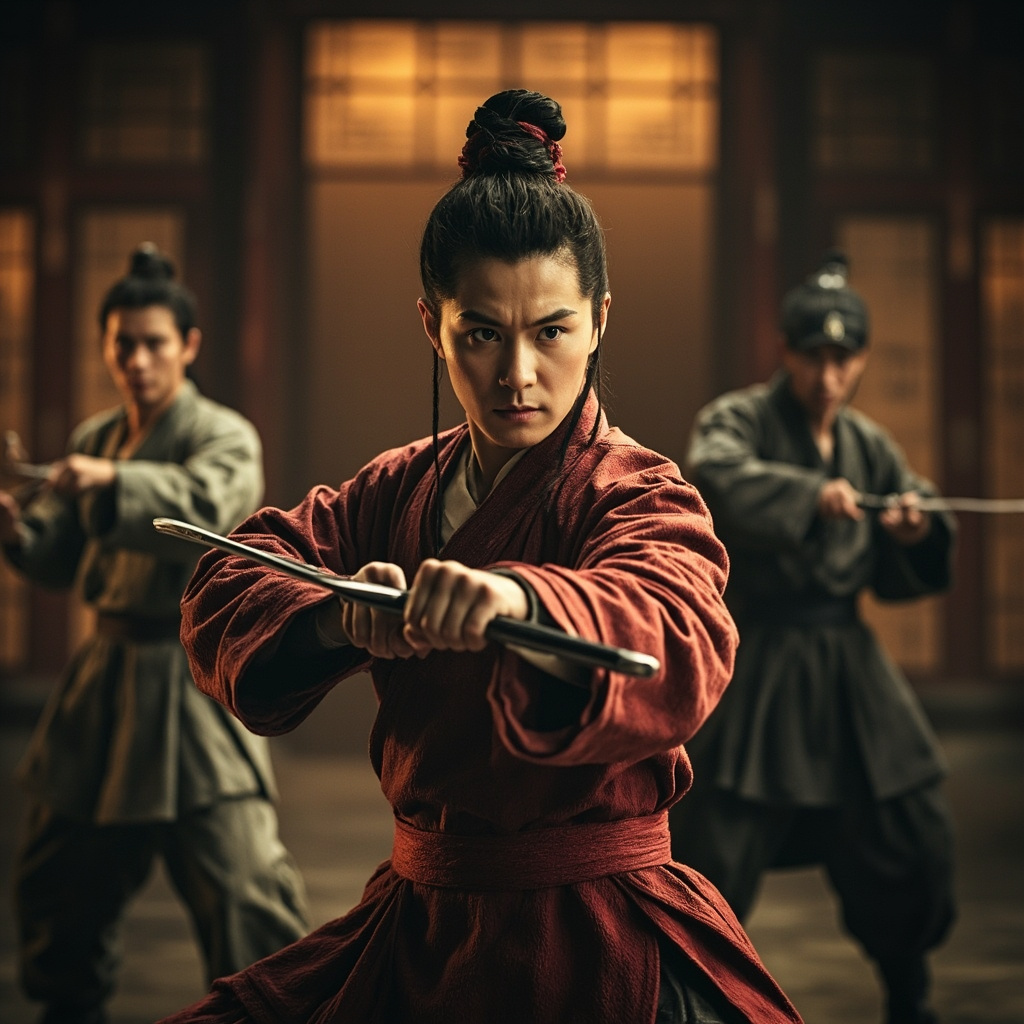
The echoes of ancient warriors still reverberate through the mountains and temples of China, where centuries of martial tradition have shaped not only combat techniques but an entire philosophy of life. Chinese martial arts history represents one of humanity’s most enduring and sophisticated systems of physical and spiritual development, spanning thousands of years of continuous evolution, refinement, and cultural significance. From the mist-covered peaks of Wudang Mountain to the legendary grounds of the Shaolin Temple, these arts have transformed from battlefield necessities into global phenomena that attract practitioners from every corner of the world.
Understanding the kung fu origins requires us to journey through dynasties, philosophical movements, and cultural transformations that have collectively created what we recognize today as the comprehensive tradition of Chinese martial arts. This comprehensive exploration will trace that remarkable journey from ancient warriors honing their skills for warfare to modern masters teaching techniques that balance physical fitness with mental discipline and spiritual growth.
## The Ancient Origins of Chinese Martial Arts
The roots of Chinese martial arts history stretch back into the mists of prehistory, long before written records documented the sophisticated systems we recognize today. Archaeological evidence suggests that armed and unarmed combat techniques were being developed in ancient China as early as 4000 BCE, with primitive weapons and fighting forms depicted in pottery artifacts and cave paintings discovered throughout the region. These early martial practices emerged not from any single source but from the practical necessities of survival, hunting, and tribal conflict that characterized early human societies.
The Shang Dynasty (1600-1046 BCE) marks one of the earliest documented periods where martial training became systematized. The ancient Chinese warriors of this era were expected to master archery, chariot warfare, and hand-to-hand combat as essential skills for nobility and military service. Bronze weapons from this period show remarkable craftsmanship, and inscriptions suggest that formal training methods were already being developed to hone combat effectiveness.
As Chinese civilization expanded and evolved, so too did its martial traditions. The Spring and Autumn Period (770-476 BCE) and subsequent Warring States Period (475-221 BCE) saw an explosion of martial philosophy and technique. It was during this transformative era that figures like Sun Tzu codified strategic thinking in “The Art of War,” a text that would influence military and martial thinking for millennia. The philosophical foundations laid during these centuries-emphasizing discipline, respect for opponents, and the integration of mental and physical preparation-continue to underpin Chinese martial arts philosophy today.
## The Rise of the Shaolin Temple and Its Legendary Warriors
No institution has more profoundly shaped Chinese martial arts history than the legendary Shaolin Temple, founded in 495 CE in Henan Province under the guidance of the Indian Buddhist monk Bodhidharma. Shaolin history represents a fascinating fusion of Indian Buddhist meditation practices with indigenous Chinese combat techniques, creating what would become the most famous martial tradition in the world.
[IMAGE: Ancient Shaolin Temple exterior with traditional architecture and monks in traditional robes]
Bodhidharma, known in Chinese as Da Mo, is traditionally credited with founding both Chan (Zen) Buddhism and the Shaolin martial arts tradition. According to legend, he taught the monks a series of exercises designed to strengthen their bodies for extended meditation sessions, as well as the legendary “Yijin Jing” (Muscle/Tendon Changing Classic) and “Xisui Jing” (Marrow/Brain Washing Classic). These foundational practices evolved into what we now recognize as Shaolin Kung Fu, characterized by explosive, dynamic movements combined with deep breathing and spiritual awareness.
The Shaolin Temple’s location along the Silk Road brought it into contact with diverse martial influences, and over centuries, the monks developed an extraordinarily comprehensive fighting system. By the Ming Dynasty (1368-1644), Shaolin boxing had become legendary throughout China, with monks serving as protectors of the temple and sometimes as military advisors to emperors. The Five Animals style-mimicking the movements of the dragon, tiger, leopard, snake, and crane-exemplifies how Shaolin martial artists drew inspiration from nature to create rounded, comprehensive combat systems.
Throughout Shaolin history, the monastery faced numerous challenges, including destruction and forced closures during various political upheavals. Yet the tradition persisted, with monks continuously preserving, practicing, and evolving their martial heritage through generations of dedication. Today, the rebuilt Shaolin Temple serves as both a living monastery and a global ambassador for Chinese martial arts, training thousands of students annually in the comprehensive fighting arts that have made Shaolin synonymous with martial excellence.
## The Development of Internal Martial Arts: Tai Chi and Wudang Boxing
While Shaolin martial arts became renowned for their explosive external power and dynamic movements, a parallel tradition was developing that would eventually be recognized as equally significant-the internal martial arts. This represents one of the most important divisions in Chinese martial arts history, with internal styles emphasizing qi (vital energy) cultivation, fluid movements, and internal power generation as opposed to the muscular, external approaches of styles like Shaolin boxing.
Wudang boxing and the broader Wudang Mountain martial tradition emerged from Taoist temples located in what is now Hubei Province. Unlike the Buddhist Shaolin tradition, Wudang martial arts developed primarily from Taoist spiritual and health practices, including meditation, breathing exercises, and the cultivation of internal energy. The legendary figure Zhang Sanfeng, a Taoist immortal credited with creating Tai Chi (Taijiquan), represents the mythical founder of the internal martial arts tradition, though historical evidence suggests these arts evolved gradually through the contributions of many practitioners.
[IMAGE: Misty Wudang Mountain with Taoist temple and practitioner performing flowing Tai Chi movements]
The five major internal martial arts-Tai Chi Chuan, Xingyiquan, Baguazhang, Liu He Da Xiong Jin, and Yi Jin Jing-each developed distinct characteristics while sharing fundamental principles of qi cultivation and body mechanics. Wudang boxing specifically encompasses a family of martial styles that emphasize Taoist concepts of naturalness, softness overcoming hardness, and the integration of martial technique with spiritual cultivation.
The practical applications of these internal arts extend far beyond combat effectiveness. Modern practitioners increasingly gravitate toward these styles for their remarkable health benefits, including improved balance, reduced stress, enhanced circulation, and increased flexibility. The slow, meditative practice of Tai Chi, in particular, has gained recognition from Western medical practitioners as an effective therapy for conditions ranging from arthritis to anxiety, demonstrating how ancient martial wisdom continues to offer relevant benefits in contemporary contexts.
## The Golden Age of Chinese Warriors During Imperial China
The imperial periods of Chinese history, particularly the Tang (618-907), Song (960-1279), Ming (1368-1644), and Qing (1644-1912) dynasties, represent the golden age of Chinese martial arts development and proliferation. During these centuries, combat techniques evolved from purely military applications into sophisticated civilian systems, martial arts philosophy deepened and diversified, and the figure of the warrior-scholar became idealized in Chinese culture.
The Tang Dynasty stands out as particularly significant in Shaolin history and broader martial development. Emperor Taizong famously utilized Shaolin monks as military auxiliaries, and the monks’ reputation for martial prowess grew to legendary status. This period saw the codification of many fundamental Shaolin techniques, the expansion of temple martial arts programs, and the beginning of martial arts’ spread from monasteries into broader Chinese society.
Song Dynasty China witnessed the emergence of martial arts guilds and schools outside the temple context, as techniques began passing from military specialists to civilian instructors. The famous “108 Moves of the Long Fist” style and other comprehensive systems developed during this period, reflecting a growing civilian interest in martial training for personal development, self-defense, and sport. The distinction between martial arts for warfare and martial arts for personal cultivation became increasingly pronounced, setting the stage for the diverse landscape of Chinese martial arts we recognize today.
Imperial China’s later periods saw continuous refinement of technique, the development of regional styles reflecting local geography and temperament, and the emergence of legendary martial figures whose stories have become part of Chinese cultural heritage. The Qing Dynasty, despite its Manchu origins, eventually embraced and preserved Han Chinese martial traditions, leading to an extraordinary flourishing of technique and philosophy in the centuries before the dynasty’s fall.
## The Spread of Kung Fu Across China and the World
The geographical vastness of China and the diverse cultures within its borders led to the development of an extraordinarily rich tapestry of regional martial arts traditions. As traders, monks, soldiers, and refugees traveled throughout the empire, martial knowledge spread and evolved, creating localized styles that reflected the unique characteristics of their regions of origin.
Southern Chinese martial arts, exemplified by traditions like Hung Gar, Wing Chun, and Choy Li Fut, developed in the more populated and commercially active southern provinces. These styles often emphasize close-quarters combat, powerful hand techniques, and stable, rooted stances suited to the crowded environments of southern cities and the boat-dwelling populations of coastal regions. Wing Chun, with its direct, efficient techniques and focus on close-range combat, exemplifies how regional needs shaped martial development.
Northern styles, including Northern Shaolin, Eagle Claw, and Praying Mantis, evolved in the expansive northern plains where open-ground fighting and longer-range techniques held greater practical value. The dramatic high kicks and flying techniques associated with Northern styles reflect the need for combat across greater distances and the physical conditioning necessary for movement across uneven northern terrain.
The migration of Chinese communities worldwide, particularly during the 19th and 20th centuries, carried martial arts to every continent. Kung fu schools appeared in Chinatowns across North America, Europe, and Southeast Asia, adapting traditional techniques to new contexts while preserving core philosophical and technical principles. This diaspora created unprecedented cross-cultural exchange, as non-Chinese practitioners began learning traditional arts and, eventually, contributing their own interpretations and developments to the evolving tradition.
## Chinese Martial Arts in the Modern Era
The 20th century brought revolutionary changes to Chinese martial arts history, as traditional practices faced unprecedented challenges from political upheaval, modernization, and global cultural shifts. The fall of the Qing Dynasty in 1912, followed by decades of conflict and revolution, threatened to sever the transmission of traditional arts, yet martial practitioners proved remarkably resilient in preserving and adapting their heritage.
The Communist Revolution of 1949 created a complex situation for traditional martial arts. Initially suppressed during the Cultural Revolution (1966-1976) as “feudal remnants,” martial arts subsequently experienced official rehabilitation as the Chinese government recognized their value for promoting health, national pride, and soft power projection. The establishment of the Chinese Wushu Association and the formalization of competitive wushu represented efforts to systematize and popularize martial arts within a modern institutional framework.
Bruce Lee stands as perhaps the most transformative figure in modern martial arts history, bridging traditional Chinese martial philosophy with contemporary combat effectiveness and global popular culture. His development of Jeet Kune Do and his groundbreaking film career fundamentally changed how the world perceived Chinese martial arts, creating unprecedented interest and establishing martial arts films as a major cinematic genre.
Today, Chinese martial arts continue to evolve, incorporating elements from other combat traditions while remaining rooted in traditional philosophy and technique. The International Wushu Federation has standardized forms for competitive purposes, while traditional styles maintain dedicated followings. The cultural significance of martial arts within Chinese society remains profound, with millions practicing Tai Chi in public parks, children learning basic kung fu in schools, and temples continuing to train monks in ancient warrior traditions.
## Practical Training Methods for Modern Practitioners
For contemporary readers inspired by this rich heritage, implementing practical martial arts training into modern life offers remarkable benefits for physical health, mental clarity, and personal development. Whether access to formal instruction is available or not, fundamental principles from Chinese martial arts history can enhance anyone’s fitness routine and daily awareness.
Beginning practitioners should prioritize foundational conditioning regardless of which style interests them. The traditional emphasis on basic forms (jibengong) remains relevant-standing meditation (zhan zhuang) develops internal strength and body awareness, basic stretching improves flexibility necessary for advanced techniques, and fundamental stances build the?? strength (leg strength) that supports all Chinese martial arts. Even fifteen minutes daily of these basic practices yields noticeable improvements in balance, posture, and energy levels.
Selecting a qualified instructor represents one of the most important decisions for serious students. When evaluating potential teachers, observe their own technique and movement quality, ask about their lineage and training history, and assess whether their teaching style matches your learning preferences. Traditional transmission often emphasizes proper alignment, breathing coordination, and philosophical understanding alongside technique-qualities that distinguish authentic training from superficial imitations.
For those without access to traditional instruction, studying historical texts like Sun Tzu’s “The Art of War” provides philosophical grounding that enhances practical application, while video resources and virtual instruction offer starting points for self-study. However, genuine mastery requires in-person feedback from experienced practitioners who can correct subtle errors invisible to beginners. Building relationships with local martial arts communities, even for occasional training and consultation, accelerates progress while connecting practitioners to the living tradition that extends back through countless generations.
## Conclusion
The comprehensive journey through Chinese martial arts history reveals a tradition of extraordinary depth, resilience, and continued relevance. From ancient warriors developing combat techniques for survival through the legendary monks of Shaolin history to the internal masters of Wudang boxing and contemporary practitioners worldwide, Chinese martial arts have continuously evolved while preserving core principles that transcend any single era or style.
Understanding this history enriches practice immeasurably, connecting modern techniques to thousands of years of accumulated wisdom, refinement, and spiritual development. The emphasis on holistic training-integrating body, breath, and mind-offers benefits that extend far beyond combat effectiveness into every aspect of life. Whether your interest lies in the dynamic power of Shaolin kung fu, the flowing movements of Tai Chi, or the practical self-defense applications of any traditional style, the historical context enhances appreciation and deepens practice.
For those beginning or continuing their martial journey, remember that every technique carries centuries of cultural heritage, every form represents generations of refinement, and every practitioner contributes to the living continuation of this remarkable tradition. The ancient Chinese warriors who developed these arts would surely recognize both the fundamental principles and the contemporary expressions they see in modern practice-proof that authentic martial wisdom transcends time, remaining as vital and relevant today as it was in the mountains and temples of ancient China.
Begin your practice today, honor the tradition that precedes you, and discover how Chinese martial arts history can transform your physical capabilities, mental clarity, and spiritual understanding.