ARTICLE_TITLE: Peking Opera: A Timeless Performance and Its Cultural Heritage
ARTICLE_BODY:
Peking Opera, also known as Beijing opera, stands as one of the most celebrated forms of traditional Chinese performing arts. Combining singing, acting, martial arts, and elaborate costumes, it reflects centuries of cultural evolution and remains a living emblem of China’s artistic heritage. This article explores the origins, performance elements, musical structure, storytelling traditions, preservation efforts, and modern ways to experience Peking Opera.
## History of Peking Opera
### Origins in the Qing Dynasty
The roots of Peking Opera trace back to the late 18th century when the Anhui and Hubei opera troupes converged in Beijing. These groups brought regional melodies, known as “Xiangshan” and “Yuefu,” which blended with the musical idioms of the imperial court. By the mid‑19th century, the convergence gave rise to a new theatrical style that integrated singing, dialogue, acrobatics, and stylized movement, forming the foundation of what we now call Peking Opera.
### Synthesis of Local Styles
Peking Opera is not a monolithic art; it is a synthesis of various local opera traditions. The “Four Great Kindnesses” (the four major role types) emerged from the interplay of comedic, tragic, and heroic narratives that traveled along trade routes. The result is a hybrid language of voice, gesture, and stagecraft that accommodates both historical chronicles and folk legends.
## Core Elements of a Peking Opera Performance
### Vocal Techniques and Singing Styles
A Peking Opera performance is built on a sophisticated vocal system that emphasizes “gong” (metal tone) and “drum” (percussive rhythm). Singers employ a falsetto technique that creates a resonant, high‑pitched timbre, allowing the voice to cut through the accompaniment of the orchestra. The lyrical content often intertwines poetic verses with colloquial speech, delivering both emotional depth and narrative clarity.
### Movement, Gesture, and Combat
Physical expressiveness is paramount. Actors train for years to master the “chops” (hand movements), “shouts” (body jolts), and “horse stance” (stable footwork). Combat scenes, known as “wusheng,” incorporate stylized martial arts that blend acrobatics with rhythmic timing, making fights appear both dangerous and aesthetically choreographed.
### Facial Makeup and Symbolic Costumes
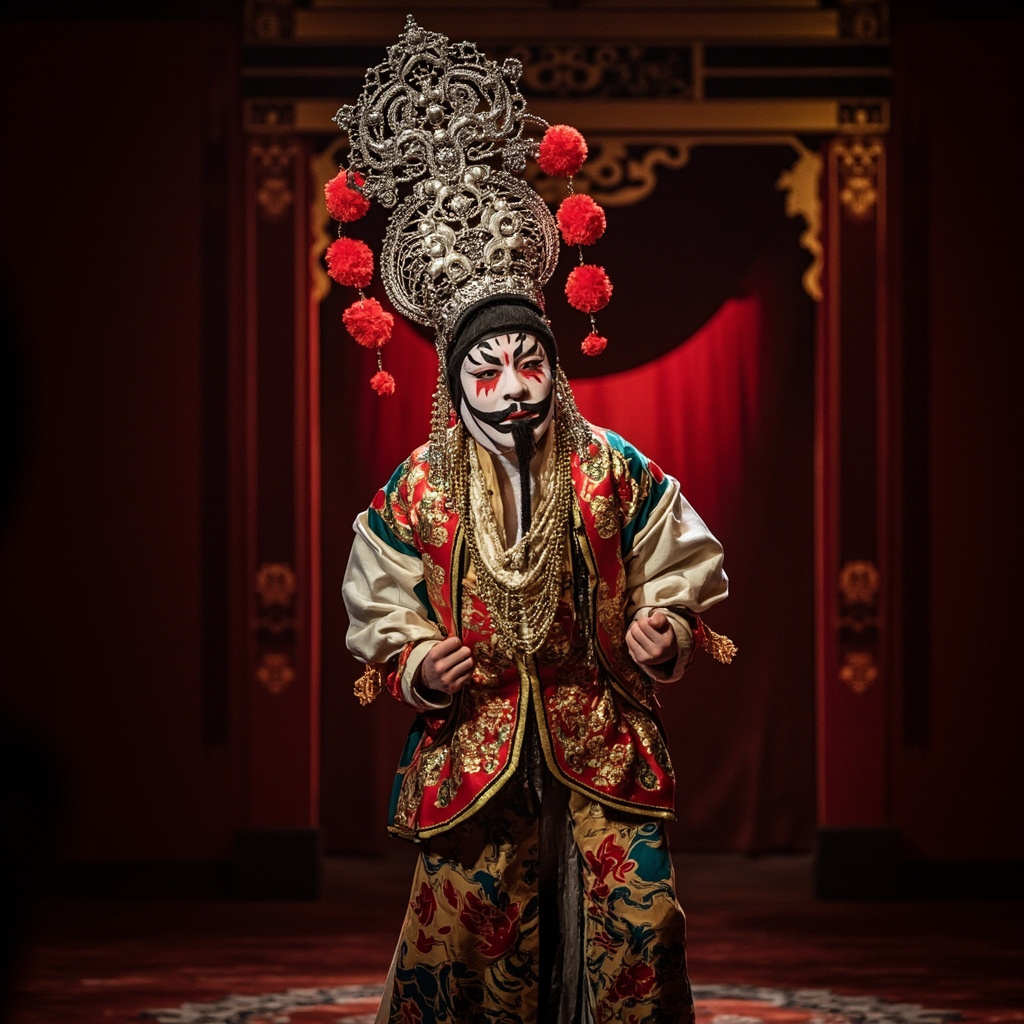
One of the most recognizable features of Peking Opera is the elaborate facial makeup. Each color denotes a character’s moral alignment: red for loyalty, black for integrity, white for treachery, and gold for divinity. Costumes follow strict codes: the “pao” (robe) for scholars, the “ku” (trousers) for warriors, and the “shen” (decorative sash) for officials. These visual cues enable the audience to instantly grasp the personality and status of a role without a word being spoken.
## Musical Framework and Instrumentation
### The Role of the Orchestra
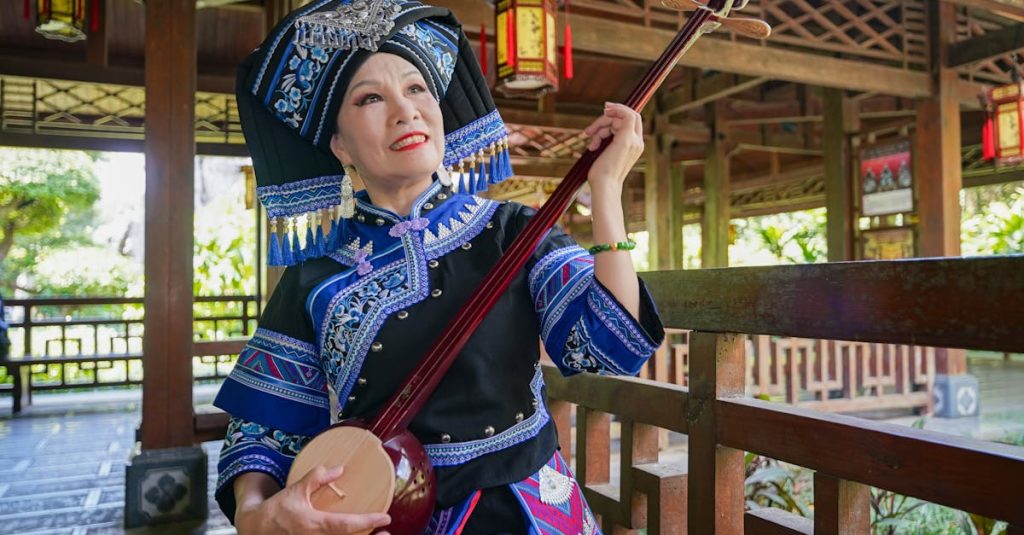
A traditional Peking Opera orchestra, or “wenhua,” consists of two main sections: the “wen” (civil) and the “wu” (martial). The civil ensemble includes the *jinghu* (two‑stringed bowed instrument), the *sanxian* (three‑stringed lute), and the *pipa* (four‑stringed Chinese lute). The martial ensemble features drums, cymbals, gongs, and the occasional *suona* (double‑reed instrument). The interplay of these instruments supports the narrative pace, accentuating dramatic tension or lighthearted moments.
### Melodic Patterns and Rhythms
Melodic patterns in Peking Opera are organized into “qu” (tunes) that dictate pitch, ornamentation, and phrasing. The *erhuang* and *xipi* are the two primary melodic modes, each used for specific emotional contexts. The rhythmic structure relies heavily on percussive cues, where a skilled drummer can accelerate or decelerate the tempo to mirror an actor’s emotional arc.
## Symbolic Storytelling and Iconic Plays
### Classic Tales from History and Myth
Many Peking Opera narratives draw from historical chronicles, folklore, and classical novels. Stories such as “The Legend of the White Snake,” “The Battle of Red Cliffs,” and “The Tale of the General” are performed repeatedly, each production offering fresh interpretation through nuanced acting and updated staging. These tales serve as vehicles for moral instruction, reflecting Confucian values of filial piety, loyalty, and honor.
### Character Archetypes and Role Types
Peking Opera categorizes characters into five main role types: *sheng* (male lead), *dan* (female lead), *jing* (painted face male), *mo* (middle‑aged male), and *chou* (clown). Each category carries a set of predetermined gestures, vocal ranges, and movement patterns, ensuring consistency across performances. The *jing* roles, with their bold face paintings, often portray powerful, resolute figures, while *chou* characters inject humor and social commentary.
## Preservation Efforts and UNESCO Recognition
### Documentation and Training Programs
In 2006, Peking Opera was inscribed on the UNESCO Representative List of the Intangible Cultural Heritage of Humanity. This designation prompted a wave of preservation initiatives, including the digitization of historical recordings, the establishment of specialized academies, and the funding of apprenticeship programs where veteran masters pass their skills to younger generations. Government support also extends to scholarships for students who commit to a multi‑year curriculum focused on voice, movement, and costume design.
### Global Outreach and Contemporary Adaptations
Beyond China’s borders, Peking Opera has inspired cross‑cultural collaborations. International theater companies have incorporated Peking Opera elements into modern productions, blending Western staging techniques with traditional Chinese motifs. Digital platforms now stream live performances, making the art form accessible to a worldwide audience. Moreover, contemporary composers experiment with electronic soundscapes layered over traditional instrumentation, creating hybrid works that appeal to younger demographics while respecting the core aesthetic.
## Experiencing Peking Opera Today
### Visiting Traditional Theaters in Beijing
The historic Lao She Teahouse, the National Centre for the Performing Arts, and the strictly traditional Mei Lanxiang Theatre offer audiences the chance to witness authentic Peking Opera. These venues often provide bilingual subtitles, enabling non‑Chinese speakers to follow the storyline while appreciating the visual spectacle. Special “VIP” packages may include backstage tours, where visitors can observe makeup application and costume preparation, deepening their understanding of the artistic process.
### Online Streaming and Educational Resources
For those unable to travel, numerous streaming services host high‑definition recordings of classic and modern Peking Opera productions. Educational portals, such as the China Cultural Heritage Foundation, offer online courses that cover the fundamentals of singing, movement, and stagecraft. Interactive apps allow users to practice basic gestures and learn the significance of different facial makeup patterns, fostering a hands‑on connection with the art form.
## Conclusion
Peking Opera remains a vibrant testament to China’s cultural heritage, seamlessly weaving together history, music, movement, and visual artistry. Its unique blend of stylized performance, symbolic costume, and narrative depth continues to captivate audiences worldwide. By supporting preservation projects, embracing modern adaptations, and providing accessible platforms for learning, we ensure that the legacy of Peking Opera endures for future generations. Whether you attend a live performance in Beijing or explore an online workshop, engaging with Peking Opera offers a profound insight into the enduring spirit of Chinese performing arts.