ARTICLE_TITLE: Chinese Fan Dance: Art Form and Performance Traditions
ARTICLE_BODY:
## Introduction to Chinese Fan Dance
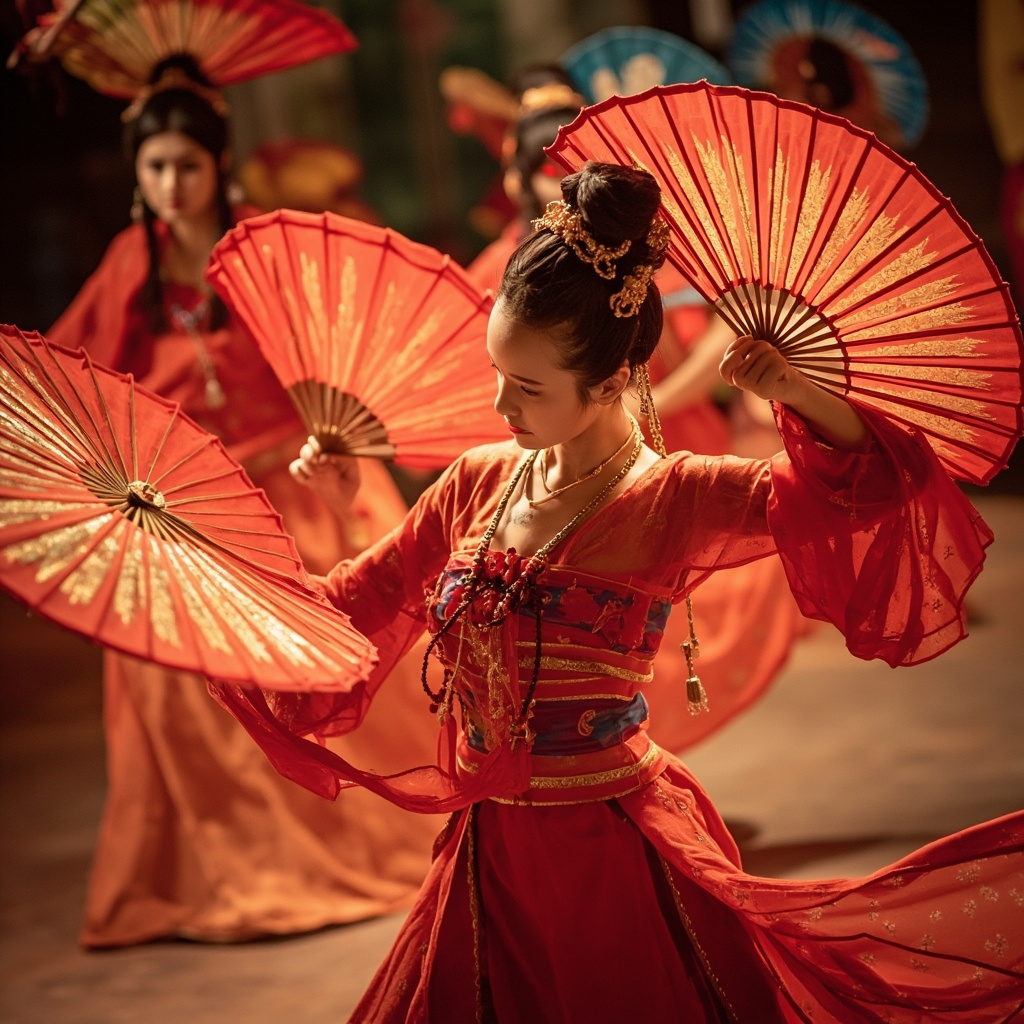
Chinese fan dance, known in the realm of traditional performing arts as a graceful marriage of movement, music, and visual symbolism, has captivated audiences for centuries. This art form employs ornamental fans as both prop and extension of the dancer’s body, turning each performance into a living canvas of flowing silk and intricate choreography. In cultural festivals, theatrical productions, and community celebrations, the Chinese fan dance stands out as a vivid expression of heritage, storytelling, and collective identity.
## Historical Origins and Cultural Significance
### Early Dynasties and Evolution
The roots of fan dance trace back to the Tang Dynasty (618–907), when court musicians first paired delicate paper fans with ritual songs. Over successive dynasties, the practice migrated from imperial courts to local folk traditions, adapting to the changing social fabric of China. By the Ming Dynasty (1368–1644), the fan became a recognized symbol of elegance, and dancers began to incorporate sophisticated hand gestures that mirrored the fan’s opening and closing motions. This evolution transformed a simple household item into a theatrical instrument capable of expressing complex emotions.
### Symbolism of the Fan
In Chinese culture, the fan carries layers of meaning. Its circular shape evokes the concept of completeness and the cycle of life, while the act of opening and closing the fan mirrors the ebb and flow of fortune. Colors painted on the fan—red for joy, gold for prosperity, and green for harmony—add a visual language that enriches the narrative of each dance. As a result, the fan is not merely a decorative accessory; it functions as a narrative device that conveys themes of renewal, hospitality, and the interconnectedness of humanity with nature.
## Core Elements of Fan Dance Technique
### Hand Movements and Gestures
A dancer’s hands become a conduit for storytelling. The basic “fan snap” signals a dramatic pause, while the “fan flutter” creates a ripple effect that resembles wind moving through a bamboo grove. More advanced techniques include the “fan glide,” where the performer slides the fan along the forearm, and the “fan spin,” a rapid rotation that emphasizes the dancer’s agility. Each movement is choreographed to align with the musical phrasing, ensuring a seamless dialogue between gesture and sound.
### Body Alignment and Posture
Posture in Chinese fan dance is grounded in the principles of balance and poise. Dancers maintain a slight forward tilt of the torso, allowing the shoulders to stay relaxed while the core engages. The spine remains elongated, facilitating fluid transitions between poses. A strong lower body supports the upper body’s expansive motions, enabling the fan to travel through wide arcs without breaking the line of the silhouette. This alignment not only prevents injury but also amplifies the visual impact of the performance.
### Rhythm and Musical Accompaniment
Traditional performances are typically accompanied by a small ensemble of instruments—pipa, erhu, and guzheng—each contributing to a layered soundscape. The rhythm often mirrors the dancer’s breath, with crescendos aligning with the opening of the fan and decrescendos matching its closure. In contemporary settings, composers may incorporate electronic beats or orchestral arrangements, expanding the artistic vocabulary while preserving the underlying rhythmic structure.
## Traditional Costumes and Props
### Fabric Choices and Color Meanings
Costumes for fan dance blend silk, satin, and lightweight cotton to allow unrestricted movement. Outfits frequently feature flowing sleeves that echo the fan’s motion, creating a harmonious visual flow. Color palettes are deliberate: imperial yellow signifies royalty, jade green reflects nature, and deep crimson conveys passion. These hues not only complement the fans but also reinforce the thematic content of the dance.
### Fan Construction and Materials
Fans used in performances range from hand‑painted silk on bamboo ribs to lacquered wooden frames adorned with intricate carvings. The size and weight of the fan influence the difficulty of the choreography; larger fans demand stronger arm control, while smaller fans enable rapid, delicate gestures. Many professional troupes commission custom fans from artisans, ensuring that each piece meets the specific aesthetic and functional needs of the dance.
## Regional Variations and Styles
### Northern and Southern Schools
Northern Chinese fan dance emphasizes bold, sweeping movements and dramatic flair, reflecting the region’s climatic extremes and historical emphasis on martial arts. Performances often incorporate high jumps and expansive arm extensions. In contrast, southern schools prioritize lyrical, flowing lines and subtle wrist action, mirroring the region’s lush landscapes and poetic traditions. Both schools share a common reverence for the fan as a storytelling tool, yet each interprets its possibilities through distinct cultural lenses.
### Contemporary Adaptations
Modern choreographers have taken the classical foundations of Chinese fan dance and fused them with ballet, contemporary dance, and even hip‑hop. These hybrid works preserve the core techniques—such as the fan snap and flutter—while exploring new spatial dynamics and narrative themes. International dance festivals now showcase these innovative pieces, highlighting the adaptability of the art form without erasing its traditional identity.
## The Role of Fan Dance in Modern Performance
### Stage Productions and Festivals
From the grand opera houses of Beijing to community fairs in rural provinces, fan dance appears in a spectrum of venues. Large‑scale stage productions often feature elaborate sets, multimedia projections, and ensemble casts of dozens, creating a spectacle that appeals to both local audiences and tourists. Smaller festivals, meanwhile, emphasize intimacy, allowing performers to interact directly with spectators, sharing the cultural significance behind each gesture.
### International Exchanges and Global Reach
Cultural exchange programs have introduced Chinese fan dance to audiences across Europe, North America, and Oceania. Workshops, master classes, and collaborative performances foster cross‑cultural understanding and inspire new generations of dancers. As a result, the art form now occupies a dual role: a living heritage within China and a global ambassador of Chinese performing arts.
## Learning and Training for Fan Dance
### Training Institutions and Programs
Several dedicated academies across China offer structured curricula that combine theoretical study of dance history with intensive practical training. Students progress from foundational fan handling to advanced choreography, often participating in annual recitals that serve as assessment milestones. These institutions frequently partner with universities, enabling dancers to earn academic credits while pursuing professional certification.
### Community Workshops and Cultural Preservation
Grassroots initiatives bring fan dance to neighborhoods, schools, and senior centers, ensuring that the tradition remains accessible to all ages. Volunteer instructors teach basic movements during weekend workshops, emphasizing the cultural narratives embedded in each step. Such community‑driven efforts play a crucial role in preserving the art form’s authenticity while encouraging intergenerational transmission of knowledge.
## Conclusion: Preserving a Living Heritage
Chinese fan dance endures as a vibrant expression of cultural identity, blending historical symbolism with contemporary creativity. Its intricate interplay of fan, movement, music, and costume creates a multifaceted art experience that resonates both locally and globally. By supporting formal training programs, fostering community participation, and embracing innovative interpretations, society can ensure that this centuries‑old practice continues to flourish—delighting audiences and safeguarding a living heritage for future generations.