## Introduction
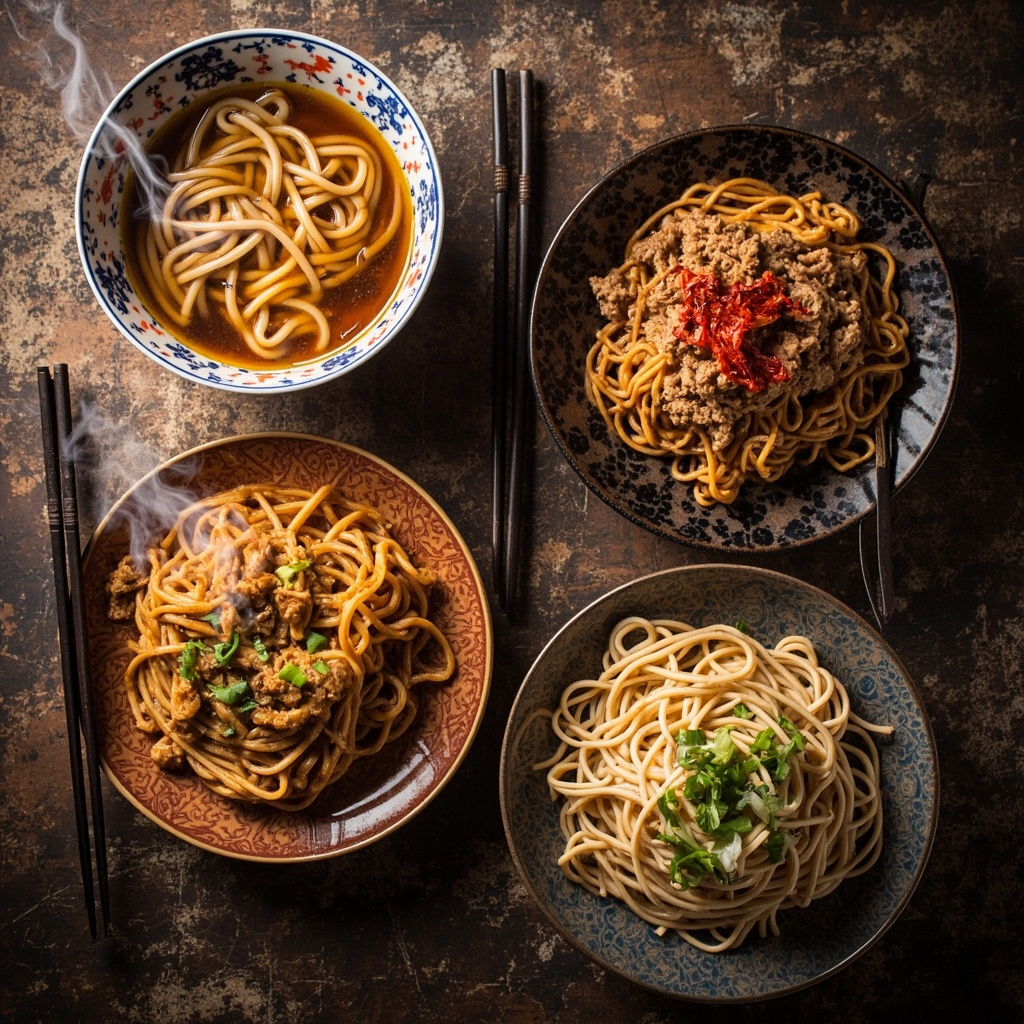
Chinese noodles, or *miàn* as they are often called in the West, are one of the oldest and most versatile staples in the vast tapestry of Chinese cuisine. From the bustling street stalls of Beijing to the fragrant kitchens of Chengdu, noodles appear in breakfast congees, lunchtime soups, and evening stir‑fries. Their appeal lies not only in their chewy texture and ability to absorb flavors, but also in the deep cultural meanings they carry. This article explores the many types of Chinese noodles, provides step‑by‑step recipes for classic dishes, and delves into the cultural significance that makes a simple bowl of noodles a symbol of community, celebration, and tradition.
## Types of Chinese Noodles
### Fresh vs. Dried Noodles
The first distinction any home cook encounters is whether to use fresh or dried noodles. Fresh noodles are made from dough that is rolled and cut or hand‑pulled shortly before cooking, offering a tender bite and a subtle wheat aroma. Dried noodles, on the other hand, have been dehydrated to extend shelf life; they rehydrate quickly and are ideal for pantry storage. Both forms can be used interchangeably in many recipes, though fresh noodles typically require a shorter cooking time.
### Wheat‑Based Noodles
Wheat noodles form the backbone of northern Chinese noodle culture. They are generally made from a simple dough of flour, water, and sometimes a small amount of alkali (like kansui) that gives the noodles their characteristic golden hue and springy texture. Common varieties include:
– **Lamian** – hand‑pulled noodles that can be stretched into strands of varying thickness.
– **Dan Dan** – a spicy noodle dish featuring a sauce of Sichuan pepper, soy, and ground pork, but the term also sometimes refers to the thin, round noodles used in the recipe.
– **Zha Jiang** – thick wheat noodles served with a savory soybean sauce and julienned vegetables.
### Rice Noodles
Rice noodles are predominant in southern China, where the humid climate favors rice cultivation over wheat. They are produced by soaking rice flour, steaming it into sheets, and then slicing it into strands of varying widths. Popular forms include:
– **Rice Vermicelli (Mi Fen)** – thin, translucent noodles often used in spring rolls, salads, or light soups.
– **Rice Stick (Ho Fun)** – broad, flat noodles that absorb broth beautifully, perfect for dishes like Pad Thai’s Chinese cousin, *Guangdong‑style Beef Chow Fun*.
– **Rice Noodle Sheets** – used for rolls such as *Bánh Cuốn*, though these are less common in noodle‑focused recipes.
### Egg Noodles
Egg noodles incorporate eggs into the dough, enriching the flavor and giving a golden color. They are frequently found in both fresh and dried forms. The higher protein content provides a firmer bite, making them a favorite for soups and braised dishes. Chinese egg noodles range from thin wonton noodles to medium‑thick lo mein strands.
### Specialty Noodles
China’s regional ingenuity has produced a handful of unique noodles:
– **Cellophane (Glass) Noodles** – made from mung bean or sweet potato starch, they become translucent when cooked and have a delicate, slightly chewy texture.
– **Soba (Buckwheat) Noodles** – while more associated with Japan, Chinese versions use buckwheat flour mixed with wheat for a nutty flavor.
– **Mung Bean Noodles** – similar to glass noodles but with a slightly firmer bite, often featured in spicy cold dishes.
## Regional Noodle Traditions
### Northern China: Hand‑Pulled Lamian
In the cold provinces of Shanxi and Shaanxi, hand‑pulled lamian is both an art and a daily ritual. The dough is repeatedly stretched and folded, producing long, elastic strands that are boiled and then dressed with simple soy‑based broths, sliced vegetables, and sometimes a splash of chili oil. The technique is mesmerizing to watch and creates noodles that are prized for their resilience in hearty stews.
### Sichuan: Dan Dan Noodles
Sichuan cuisine is famous for its bold, numbing flavors. Dan Dan noodles feature a sauce of fermented soybeans, Sichuan peppercorn oil, minced pork, and pickled vegetables, all tossed over thin wheat noodles. The dish delivers a tongue‑tingling heat that is balanced by the savory richness of the pork, exemplifying the Sichuan principle of “ma” (numbing) and “la” (spicy).
### Guangdong: Wonton Noodles
In Guangdong (Cantonese) cooking, thin egg noodles are paired with delicate pork‑filled wontons in a clear, light broth. The noodles are cooked just until al dente, then placed in a bowl with a few wontons, a drizzle of sesame oil, and a sprinkle of green onions. This dish showcases the Cantonese preference for subtle, fresh flavors.
### Taiwan: Taiwanese Beef Noodles
Taiwan’s contribution to the noodle world is a hearty, aromatic soup featuring thick, chewy wheat noodles, tender braised beef, and a deeply flavored broth seasoned with soy sauce, star anise, and ginger. The dish is a comforting staple found in night markets and family kitchens alike, reflecting Taiwan’s blend of mainland Chinese influences and local tastes.
## Classic Chinese Noodle Recipes
### Lo Mein – Vegetable and Tofu Lo Mein
**Ingredients**
– 250 g dried lo mein noodles (or fresh if available)
– 2 cups mixed vegetables (snap peas, carrots, bell peppers)
– 200 g firm tofu, cubed
– 3 tablespoons soy sauce
– 1 tablespoon oyster sauce
– 1 tablespoon sesame oil
– 2 cloves garlic, minced
– 1 teaspoon fresh ginger, grated
– 2 tablespoons vegetable oil
**Instructions**
1. **Cook the noodles** according to package directions; drain and toss with a splash of sesame oil to prevent sticking.
2. **Stir‑fry the tofu** in hot oil until golden on all sides, about 4 minutes. Remove and set aside.
3. **Sauté garlic and ginger** in the same pan for 30 seconds, then add the vegetables. Cook for 3–4 minutes until crisp‑tender.
4. **Return the tofu** to the pan, add soy sauce and oyster sauce, and toss everything together.
5. **Add the cooked noodles**, drizzle with sesame oil, and toss over medium heat for 2 minutes until the sauce is absorbed. Serve hot.
### Chow Mein – Classic Chicken Chow Mein
**Ingredients**
– 300 g fresh chow mein noodles (or substitute lo mein)
– 200 g chicken breast, thinly sliced
– 1 cup cabbage, shredded
– ½ cup bean sprouts
– 2 tablespoons soy sauce
– 1 tablespoon dark soy sauce
– 1 tablespoon oyster sauce
– 1 teaspoon sugar
– 2 green onions, sliced
– 2 tablespoons neutral oil
**Instructions**
1. **Boil noodles** until just al dente, rinse under cold water, and set aside.
2. **Season chicken** with a pinch of salt and pepper. Heat oil in a wok over high heat, cook chicken until browned, about 3 minutes. Remove.
3. **Add cabbage** to the wok, stir‑fry for 2 minutes, then toss in bean sprouts and green onions.
4. **Return chicken**, add noodles, and pour over soy sauces, oyster sauce, and sugar. Toss vigorously for 3–4 minutes until everything is heated through and slightly caramelized. Serve immediately.
### Dan Dan Noodles – Spicy Sichuan Style
**Ingredients**
– 200 g thin wheat noodles (or ramen)
– 150 g ground pork
– 3 tablespoons Chinese sesame paste (or tahini)
– 2 tablespoons soy sauce
– 1 tablespoon Chinese black vinegar
– 1 tablespoon chili oil (adjust to taste)
– 1 teaspoon Sichuan peppercorns, toasted and ground
– 2 cloves garlic, minced
– 1 tablespoon scallions, chopped
– 1 teaspoon sugar
**Instructions**
1. **Cook noodles** according to package, drain, and set aside.
2. **Brown the pork** in a skillet, breaking it into small pieces. Once cooked, stir in garlic and cook for another minute.
3. **Mix the sauce**: whisk together sesame paste, soy sauce, black vinegar, chili oil, Sichuan pepper, sugar, and 3 tablespoons of water until smooth.
4. **Combine** the sauce with the hot noodles, toss to coat evenly.
5. **Top** with pork mixture and garnish with scallions. Serve hot, optionally with extra chili oil on the side.
### Sesame Noodles – Quick Cold Dish
**Ingredients**
– 250 g thin wheat noodles
– 3 tablespoons sesame paste (or smooth peanut butter)
– 2 tablespoons soy sauce
– 1 tablespoon rice vinegar
– 1 tablespoon honey or sugar
– 2 teaspoons sesame oil
– 1 clove garlic, minced
– 1 teaspoon fresh ginger, grated
– ½ cup cucumber, julienned
– 1 tablespoon crushed peanuts
**Instructions**
1. **Cook noodles** until al dente, rinse under cold water, and drain thoroughly.
2. **Whisk together** sesame paste, soy sauce, rice vinegar, honey, sesame oil, garlic, and ginger until smooth. Add a splash of water to reach a pourable consistency.
3. **Toss noodles** with the sauce, ensuring each strand is coated.
4. **Top** with cucumber and peanuts. Serve chilled or at room temperature.
### Beef and Broccoli Noodles
**Ingredients**
– 300 g fresh egg noodles
– 200 g flank steak, thinly sliced against the grain
– 2 cups broccoli florets
– 3 tablespoons oyster sauce
– 2 tablespoons soy sauce
– 1 tablespoon cornstarch, dissolved in 2 tablespoons water
– 2 cloves garlic, minced
– 1 teaspoon fresh ginger, grated
– 2 tablespoons vegetable oil
**Instructions**
1. **Cook noodles** according to package, drain, and set aside.
2. **Marinate steak** with a teaspoon of soy sauce and a pinch of cornstarch for 10 minutes.
3. **Blanch broccoli** in boiling water for 1 minute, then shock in ice water to keep vibrant.
4. **Heat oil** in a wok, sear steak until browned, about 2 minutes. Add garlic and ginger, stir for 30 seconds.
5. **Add broccoli**, soy sauce, oyster sauce, and the dissolved cornstarch. Toss for 1–2 minutes until sauce thickens.
6. **Add noodles**, toss everything together until heated through. Serve immediately.
## Cooking Tips and Techniques
### Selecting Noodles
– **Texture**: Choose thin noodles for light broths and thick noodles for hearty sauces.
– **Ingredients**: Check labels for “egg,” “wheat,” or “rice” content. Egg noodles add richness; rice noodles are gluten‑free.
– **Fresh vs. Dried**: Fresh noodles work best for quick soups; dried noodles are more forgiving in stir‑fries.
### Boiling and Rinsing
– **Water Ratio**: Use plenty of water (at least 4 liters per 500 g noodles) to prevent clumping.
– **Salt**: Adding a pinch of salt enhances flavor but does not significantly affect cooking time.
– **Rinsing**: Rinse fresh noodles under cold water after draining to stop cooking and remove excess starch; dried noodles generally do not need rinsing.
### Stir‑Frying Basics
– **High Heat**: Ensure your wok is smoking hot before adding oil and ingredients.
– **Layering**: Cook proteins first, set aside, then cook vegetables, and finally combine with noodles and sauce.
– **Tossing**: Use tongs or chopsticks to toss noodles, ensuring even coating.
### Sauce Balance
– **Umami**: Soy sauce, oyster sauce, and fermented pastes provide depth.
– **Acidity**: A splash of rice vinegar or Chinese black vinegar brightens heavy sauces.
– **Sweetness**: A small amount of sugar or honey balances salt and spice.
– **Texture**: Adding a small amount of cornstarch slurry thickens sauces, allowing them to cling to noodles.
## Cultural Significance of Noodles in China
### Noodles for Celebrations
Across China, noodles are a centerpiece during birthdays, the Lunar New Year, and other festivals. The tradition of serving long noodles—symbolizing a long life—dates back centuries. During the Spring Festival, families gather around a pot of hot broth, each person receiving a bowl of uncut, extra‑long noodles to be eaten without cutting, a practice meant to wish for longevity and prosperity.
### Symbol of Longevity
The Mandarin word for noodle, *cháng miàn* (长寿面), literally translates to “longevity noodles.” This symbolic association is so strong that the act of slurping a bowl of long noodles is considered auspicious. In many homes, the final bite is deliberately left unfinished to leave a “future” and a sense of anticipation for the next year.
### Noodles in Folk Stories
Chinese folklore is peppered with noodle references. The legend of the “Noodle Maker of Luoyang” tells of a humble craftsman whose skill at pulling delicate strands earned him respect and patronage from the emperor. Such stories reinforce the noodle’s place not just as food, but as a marker of skill, humility, and social cohesion.
### Noodles and Social Bonds
Sharing a noodle dish often fosters community. Street vendors in Beijing serve “刀削面” (knife‑cut noodles) with friends gathering around a single large pot, each reaching for the same bowl. In rural areas, communal noodle pulling is a cooperative activity, where families work together to stretch dough, a metaphor for pulling together in life’s challenges.
## Conclusion
Chinese noodles are far more than a convenient meal; they embody centuries of culinary innovation, regional diversity, and timeless cultural values. From the hand‑pulled lamian of northern China to the delicate rice vermicelli of the south, each variety tells a story of local ingredients, climate, and traditions. By mastering a handful of classic recipes—Lo Mein, Chow Mein, Dan Dan Noodles, Sesame Noodles, and Beef and Broccoli Noodles—you can bring the rich flavors and warm spirit of Chinese noodle culture into your own kitchen. Whether you are celebrating a birthday, seeking comfort on a chilly evening, or simply exploring new tastes, a bowl of Chinese noodles offers a delicious bridge between past and present, family and community. So grab a pot, boil some water, and let the noodles become a part of your culinary journey.