## Introduction
Chinese dumplings, known as “jiaozi” in Mandarin, represent one of the most iconic and beloved foods in Chinese culinary culture. These delightful parcels of dough filled with savory or sweet contents have been savored for over 1,800 years, with origins tracing back to the Han Dynasty. More than just a delicious meal, dumplings embody Chinese traditions, family bonds, and the spirit of celebration. Whether you are a seasoned food enthusiast or new to Chinese cuisine, understanding the rich world of dumplings opens doors to appreciating centuries of culinary craftsmanship and the deep cultural significance these humble morsels hold in Chinese households worldwide.
This comprehensive guide explores the fascinating varieties of Chinese dumplings across different regions, provides detailed instructions on mastering essential folding techniques, and examines the cherished festival traditions that make dumplings an indispensable part of Chinese celebrations. By the end of this article, you will have the knowledge and confidence to explore the wonderful world of dumplings, whether at a restaurant, during a cultural festival, or in your own kitchen.
## Varieties of Chinese Dumplings
### Regional Varieties
China’s vast geographic expanse and diverse climates have given rise to remarkably different dumpling traditions across the country. Understanding these regional variations reveals how local ingredients, climate conditions, and cultural preferences shape culinary practices.
Northern China, particularly around Beijing and the Hebei province, is considered the heartland of dumpling culture. The northern style features thicker, more substantial wrappers made from wheat flour and water, designed to withstand the harsh, cold winters. These dumplings are typically filled with cabbage and pork, reflecting the region’s agricultural staples. The most famous variety is undoubtedly Beijing’s “jiao shi” style, characterized by generous pleats and a crescent shape that has become synonymous with Chinese dumplings worldwide.
Northeastern China, including the provinces of Liaoning, Jilin, and Heilongjiang, takes dumpling making to an industrial scale. The climate here is even colder than Beijing, and dumplings serve as essential winter sustenance. Harbin, the capital of Heilongjiang, is particularly famous for its large, meaty dumplings often filled with pork and chives. The region also developed the tradition of freezing dumplings outdoors during winter, creating a practical method of food preservation that continues today.
Southern China presents a contrasting approach to dumplings. In Guangdong and surrounding provinces, dumplings tend to be smaller, with thinner, more delicate wrappers. The Cantonese dim sum tradition features “har gow” (shrimp dumplings) and “siu mai” (pork and shrimp dumplings), which are steamed rather than boiled. These dumplings emphasize the freshness and quality of their fillings, often featuring seafood as the primary protein.
Shanghai and the Jiangsu-Zhejiang region contribute their own specialties, including “xiaolongbao,” the famous soup dumplings filled with pork and aspic that creates a savory broth when steamed. These delicate dumplings require expert technique to construct, as the thin wrapper must hold both the filling and the hot liquid without breaking.
Sichuan province puts its characteristic spicy stamp on dumplings with varieties like “suan la tang bao” (spicy and sour dumplings), which feature a sesame-based sauce with vinegar and chili oil. The filling often includes ground pork with vegetables, seasoned with Sichuan peppercorns for that distinctive numbing-spicy flavor.
### Varieties by Cooking Method
The method of cooking dramatically transforms the character of dumplings, giving rise to several distinct categories that are enjoyed throughout China and worldwide.
Boiled dumplings, or “shui jiao,” represent the most traditional and widely consumed style. The dumplings are cooked in vigorously boiling water until they float to the surface and the wrappers become translucent. This method produces dumplings with a soft, slightly chewy texture that pairs perfectly with dipping sauces.
Steamed dumplings, including the beloved xiaolongbao and har gow, retain more moisture in their filling and develop a slightly sticky, tender wrapper. This method is particularly popular in southern China and is often featured in dim sum restaurants. The steaming process requires careful timing to ensure the filling is cooked through without overcooking the delicate wrappers.
Pan-fried dumplings, known as “guo tie” or “potstickers,” combine boiling and frying techniques. Initially cooked in a hot skillet with a small amount of oil and water, they develop a crispy, golden-brown bottom while the upper portion steams. This method creates an appealing textural contrast between the crunchy base and the tender top.
Deep-fried dumplings, while less common, offer an indulgent variation with an exceptionally crispy exterior. These are often smaller in size and served as appetizers or street food. The frying process requires careful temperature control to ensure the wrapper cooks evenly without burning.
### Varieties by Filling
The filling defines the soul of a dumpling, and Chinese cuisine has developed an impressive range of combinations that reflect regional tastes, seasonal ingredients, and personal preferences.
Pork is the most popular dumpling filling across China, valued for its fatty content that keeps the meat moist and flavorful. Traditional Beijing-style dumplings typically combine ground pork with Chinese cabbage, ginger, soy sauce, and sesame oil. The pork-to-vegetable ratio is crucial, with a higher vegetable content creating a lighter filling while a meatier ratio produces richer, more substantial dumplings.
Beef dumplings are particularly popular in northern and northwestern regions, where cattle raising is more common. The meat is often ground finely and combined with onions, carrots, and aromatic spices. Some varieties incorporate lamb, especially in the Muslim-influenced cuisines of Western China.
Seafood varieties showcase the culinary sophistication of Chinese dumpling making. Shrimp dumplings, or har gow, feature whole or chopped shrimp combined with bamboo shoots and a touch of pork fat for moisture. Fish dumplings, particularly those made with cod or flounder, are popular in coastal regions and often include ginger and scallions to complement the delicate fish flavor.
Vegetarian and vegan dumplings reflect Buddhist culinary traditions and the growing demand for plant-based options. Common vegetable fillings include Chinese cabbage, tofu, mushrooms (especially shiitake), carrots, and glass noodles. These fillings are seasoned with soy sauce, sesame oil, and white pepper to create satisfying meat-free alternatives.
Sweet dumplings, though less common, hold special significance during certain festivals. Fillings may include red bean paste, black sesame paste, or sweet lotus seed paste. These varieties are often served as desserts or during celebratory occasions.
## Folding Techniques
### Basic Folding Method
Mastering the art of dumpling folding requires practice, patience, and attention to detail. The basic crescent fold serves as the foundation for most dumpling varieties and can be learned with a few simple steps.
Begin by placing a small spoonful of filling in the center of a round wrapper. The amount of filling should be roughly the size of a large marble, roughly one teaspoon for standard-sized wrappers. Too much filling will make folding impossible, while too little produces limp, unimpressive dumplings.
Moisten the entire edge of the wrapper with water using your fingertip. This creates a seal when the edges are pressed together. Fold the wrapper in half over the filling, creating a semicircle with the filling trapped inside.
Starting at one end, pleat the edge of the wrapper by folding small amounts of dough forward and pressing them against the back portion of the wrapper. Create approximately 5-8 evenly spaced pleats along the curved edge, pressing each firmly to ensure a tight seal. As you pleat, the dumpling should begin to curve naturally into its characteristic crescent shape.
Finally, press the two straight edges of the wrapper firmly together and twist slightly to seal any remaining gaps. Place the finished dumpling on a floured surface and continue with the remaining wrappers and filling.
### Common Pleating Styles
Beyond the basic fold, Chinese dumpling making has developed several distinctive pleating styles that serve both aesthetic and functional purposes.
The “flat edge” fold creates a simple but elegant dumpling with no pleats. Simply fold the wrapper in half and press the edges firmly together. This style is easier for beginners and is often used for potstickers, where a smooth bottom ensures maximum contact with the frying pan.
The “single pleat” style involves creating one or two pleats at the center of the curved edge, leaving the remaining edge smooth. This creates a dumpling with a more decorative appearance while remaining relatively simple to execute.
The “multi-pleat” style produces the classic pleated dumplings seen in restaurants, with 8-12 small, evenly spaced pleats running the length of the curved edge. This style requires more practice but results in beautiful, professional-looking dumplings.
Regional variations exist throughout China, with some areas favoring tighter, more numerous pleats while others prefer a looser, more casual appearance. The key is consistency—dumplings that are uniform in size and appearance cook evenly and present beautifully on the plate.
### Specialty Folding Techniques
Advanced dumpling folding techniques produce stunning shapes that transform dumplings into edible art. These specialty folds require practice but reward the dedicated student with impressive results.
The “twist” fold involves pleating only the center portion of the dumpling and twisting the two ends together, creating a bundle-like shape. This style is traditional for certain northern varieties and produces dumplings that hold their shape exceptionally well.
The “flower” fold creates a decorative edge that resembles a flower blossom. After completing the basic crescent fold, pinch and fold the outer edge at regular intervals to create petal-like protrusions. This decorative style is often used for special occasions and festivals.
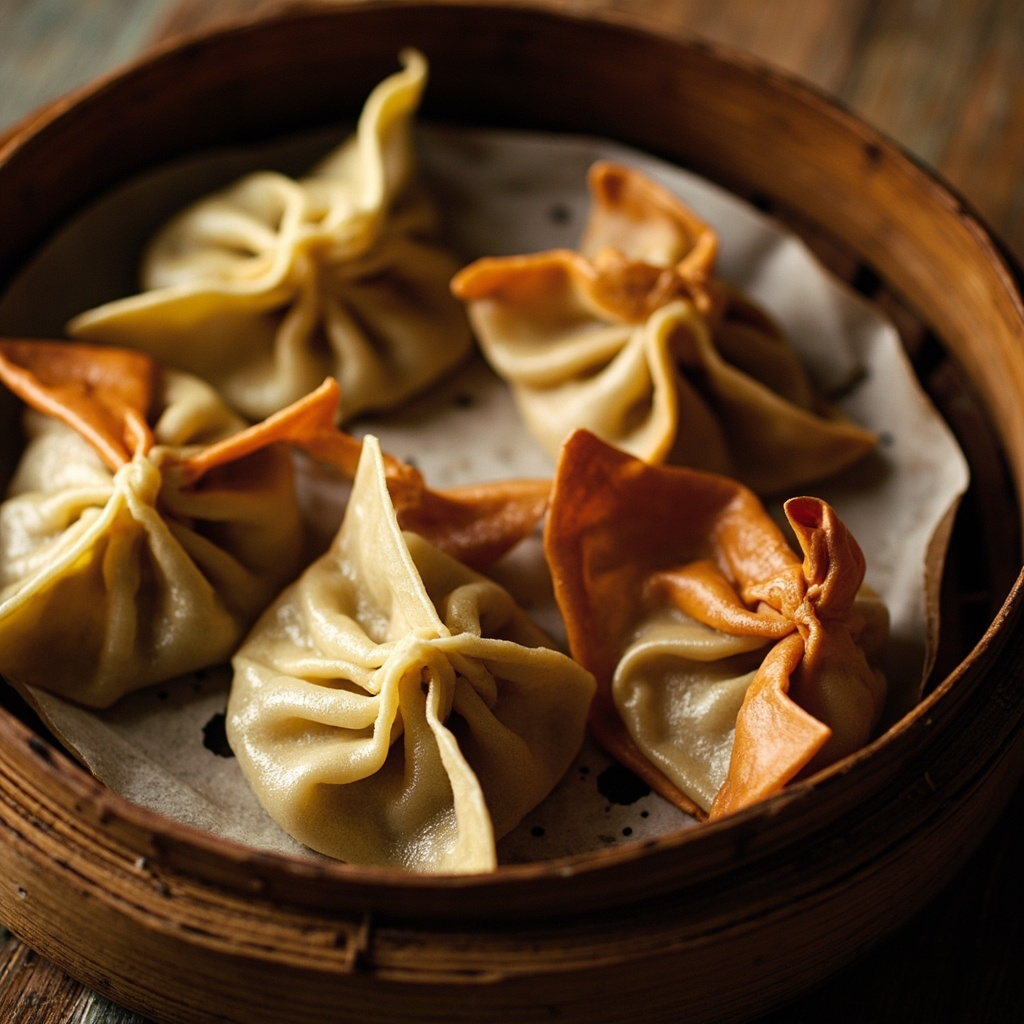
The “money bag” style gathers the wrapper at the top around the filling, secured with a small piece of green onion or a chive leaf as a “tie.” This shape resembles a traditional Chinese money pouch and is considered particularly lucky.
The “boat” fold creates dumplings shaped like small boats, with the sides pinched high to hold the filling securely. This style is traditional for certain regional varieties and works particularly well for dumplings with moist fillings.
### Tips for Beginners
Developing dumpling-making skills takes time, but several practical tips can accelerate the learning curve and improve results.
Practice with water first. Before committing filling to your wrappers, practice the folding motion with plain water on the wrapper edges. This allows you to focus on technique without worrying about spills or wasted ingredients.
Keep your workspace organized and flour-dusted. Dumpling wrappers dry out quickly, and sticky surfaces make folding difficult. Having everything within reach and maintaining a clean, floury workspace prevents frustration.
Work quickly once you start folding. The wrappers will begin to dry and crack if left sitting too long. Prepare all your wrappers and filling before beginning, and complete the folding process efficiently.
Use a dumpling maker for consistent results. Crescent-shaped dumpling presses create uniform dumplings quickly and are excellent tools for beginners or when making large quantities.
Do not overfill. It is better to have smaller dumplings with less filling than to struggle with overstuffed dumplings that burst during cooking. Start with smaller amounts and adjust as you become more comfortable.
## Festival Traditions
### Chinese New Year
Chinese New Year, the most important celebration in the Chinese calendar, centers heavily on dumplings as symbols of wealth, prosperity, and good fortune. The tradition of eating dumplings during this festival dates back centuries and carries profound cultural significance.
The dumpling’s shape, resembling ancient gold ingots used as currency, symbolizes wealth and financial success for the coming year. Families traditionally make and eat dumplings together on New Year’s Eve, with the sound of wrapping and folding dumplings said to welcome prosperity into the home. Some families hide coins inside certain dumplings; whoever finds a coin is believed to have exceptional luck for the year ahead.
The tradition extends to the composition of the filling, with certain ingredients carrying symbolic meanings. Cabbage represents “bountiful wealth,” while radish signifies “auspiciousness.” Fish, which sounds like the word for “surplus,” is sometimes included for its connotation of abundance.
On New Year’s Day, dumplings are typically served for breakfast, and tradition holds that the more dumplings you eat, the more prosperous your year will be. Some families make dumplings shaped like ancient gold ingots specifically for this occasion, emphasizing the connection between food and fortune.
### Winter Solstice
The Winter Solstice, known as “Dongzhi,” is another occasion when dumplings take center stage in Chinese celebrations. This festival, which marks the shortest day and longest night of the year, has been celebrated in China for over 2,500 years.
In northern China, the tradition of eating dumplings on Winter Solstice is nearly universal. The saying “in winter, eat dumplings to prevent frostbite of ears” reflects the belief that dumplings, with their ear-like shape, protect against cold weather. This whimsical connection between the dumpling’s appearance and its supposed protective properties has made dumplings an essential part of the Winter Solstice feast.
The Winter Solstice dumpling tradition varies by region, with some areas emphasizing specific ingredients believed to provide warmth and energy during the coldest time of year. Ginger, lamb, and certain vegetables are popular choices for this occasion.
### Other Festivals and Occasions
Beyond Chinese New Year and Winter Solstice, dumplings appear throughout the Chinese calendar as part of various celebrations and customs.
The Lantern Festival, which marks the end of the Chinese New Year period, sometimes features dumplings as part of the celebratory meal. While sweet rice balls (tangyuan) are more traditional for this occasion, dumplings remain a popular choice in many regions.
Qingming Festival, a tomb-sweeping day in spring, occasionally includes dumplings made with fresh seasonal vegetables. This connects the dumpling tradition to the arrival of new ingredients and the renewal of nature.
Throughout the year, dumplings serve as a focal point for family gatherings and social occasions. Weekend dumpling-making sessions are a beloved tradition in many Chinese households, providing opportunities for family members of all ages to participate in meal preparation and enjoy quality time together.
### Regional Festival Customs
Festival traditions involving dumplings vary significantly across China’s diverse regions, reflecting local customs and cultural influences.
In Northeastern China, the cold winter months make dumplings especially important. Some rural families prepare thousands of dumplings each autumn, freezing them outdoors for winter consumption. The annual “dumpling making” becomes a major household event involving extended family and neighbors.
In Shandong province, dumplings are traditionally shaped slightly differently, with a distinctive pinched edge that is considered unique to the region. This regional variation reflects the pride local residents take in their dumpling-making heritage.
Some ethnic minority regions have developed unique dumpling traditions. In Mongolian-influenced areas, dumplings may be larger and filled with lamb and vegetables, reflecting the pastoral lifestyle of the region. In Muslim communities, pork is replaced with beef or lamb, and the dumplings adhere to halal dietary requirements.
## Conclusion
Chinese dumplings represent far more than a simple food item—they embody centuries of culinary innovation, regional cultural identity, and the deep importance of family and tradition in Chinese society. From the thick, hearty dumplings of frozen northern winters to the delicate, translucent varieties of southern dim sum houses, the diversity of dumpling traditions across China tells the story of a vast and varied nation united by a shared love for these delicious parcels.
Mastering dumpling folding techniques opens doors to a rewarding culinary skill that can be shared with family and friends. Whether you are creating basic crescent dumplings or attempting more elaborate specialty folds, the process of making dumplings by hand connects you to traditions that have been passed down through countless generations.
Understanding the festival traditions surrounding dumplings adds depth to the culinary experience, transforming each bite into a connection with Chinese culture and history. As you celebrate Chinese New Year by eating dumplings or commemorate Winter Solstice with a steaming pot of jiaozi, you participate in rituals that have brought families together for millennia.
We encourage you to explore the world of Chinese dumplings with curiosity and enthusiasm. Visit authentic Chinese restaurants, attend dumpling-making classes, or try your hand at creating dumplings in your own kitchen. Each variety, each fold, and each festival tradition offers new insights into one of the world’s most beloved foods. The journey of discovering Chinese dumplings is one that rewards the curious palate and enriches the understanding of Chinese cultural heritage.
Embrace the art of dumpling making, and let these humble yet profound creations bring joy, connection, and delicious flavors into your life.