# Chinese Cooking Techniques: Mastering the Art of Stir-Fry
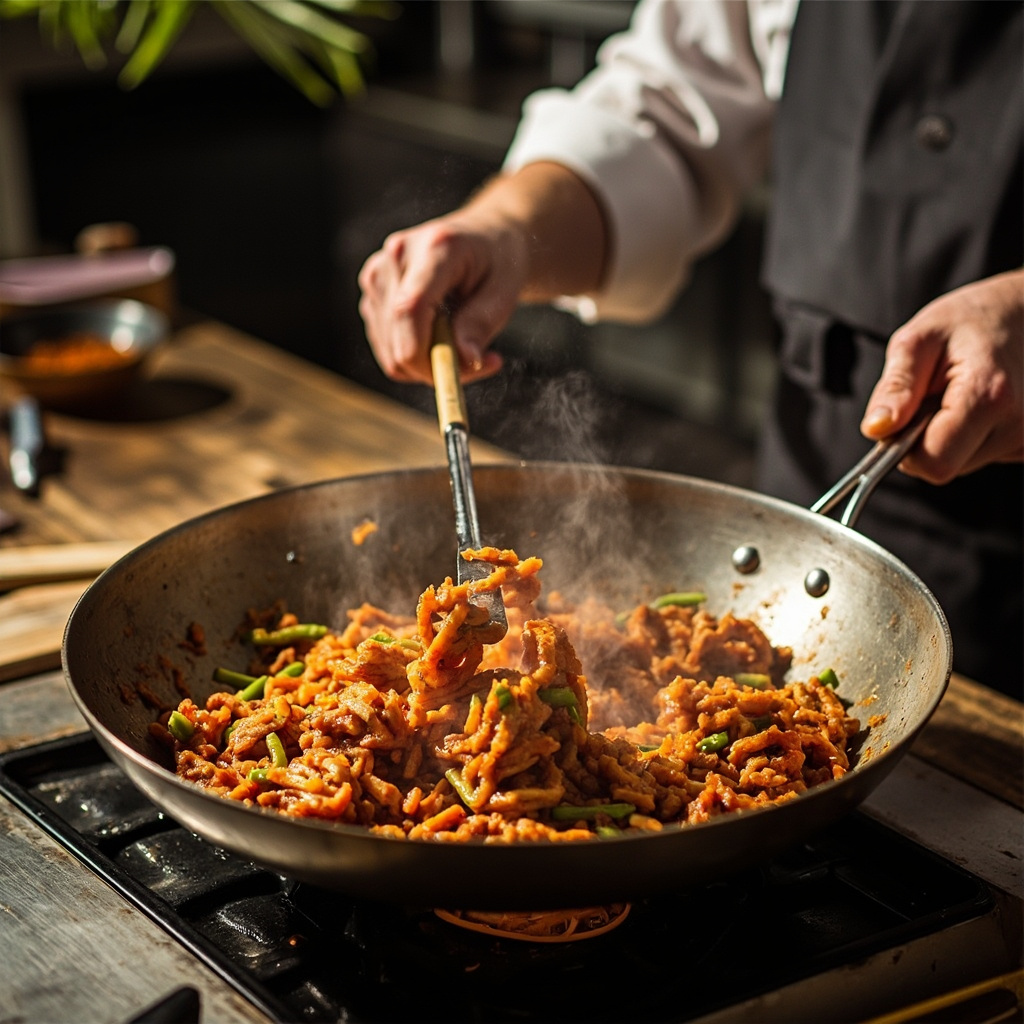
The moment a seasoned cook picks up a well-worn wok, centuries of culinary tradition come alive. Oil hits the smoking-hot iron surface with a satisfying hiss, vegetables tumble in with a sizzle that seems to whisper secrets passed down through countless generations. This is the sound of authentic Chinese food culture in motion—a symphony of heat, technique, and timing that has fed over a billion people for more than five thousand years.
Understanding **Chinese cooking techniques** means diving into one of the world’s most sophisticated culinary systems, one that treats balance, texture, and seasonal ingredients not as afterthoughts but as the very foundation of what makes a dish worthy of the table.
## The Ancient Origins of Chinese Culinary Arts
Chinese cuisine didn’t emerge overnight. archaeological evidence suggests that by 4000 BCE, Neolithic Chinese communities were steaming food in pottery vessels and fermenting grains for alcohol. The earliest Chinese cooking methods centered on boiling, steaming, and roasting over open flames—techniques that remain fundamental to this day.
During the Zhou Dynasty (1046–256 BCE), Chinese scholars first codified the principles of culinary balance, dividing flavors into five categories: sweet, sour, bitter, salty, and pungent. This philosophical framework, still taught in cooking schools across China, dictated that any satisfying meal must incorporate all five tastes in harmonious proportions.
The Han Dynasty (206 BCE–220 CE) marked a turning point. Diplomatic missions to Central Asia introduced soybeans, sesame seeds, and new cooking implements that would revolutionize how Chinese cooks approached their craft. Emperor Wu reportedly maintained a kitchen staff of over ten thousand people, with specialized chefs assigned to each cooking method—some dedicated solely to steaming, others to braising or wok cooking.
What makes traditional Chinese cuisine remarkable isn’t just its antiquity but its continuous evolution. The Silk Road brought peppers from the Americas in the sixteenth century; Western contact in the nineteenth century introduced new vegetables and techniques. Yet through all this change, the core philosophy remained constant: respect ingredients, honor tradition, and pursue balance above all else.
## The Eight Great Culinary Traditions
China’s vast geography—spanning nearly 6,000 kilometers from east to west—spawned radically different regional cooking styles. Chinese culinary scholars generally recognize eight distinct regional traditions, each shaped by local climate, available ingredients, and cultural preferences.
### Northern School: Shandong and Beijing
The frigid northern winters demanded hearty, oil-rich dishes. Shandong province, with its long coastline, developed a seafood-heavy cuisine characterized by light cooking methods that preserve natural flavors. The region’s signature techniques include bao (quick searing) and liu (rapid oil frying). Beijing cuisine, meanwhile, evolved around imperial court preferences, giving us the world-famous Peking duck—prepared using a multi-day process involving air-drying, honey glaze, and multiple oven temperatures reaching 270°C (520°F).
### Eastern Powerhouses: Jiangsu and Zhejiang
Jiangsu cuisine, or Huaiyang cooking, prizes subtlety and presentation. Dishes here might be seasoned with just enough soy sauce and sugar to enhance rather than mask the main ingredient. Zhejiang cooking, from the water-rich region south of Shanghai, favors softness, freshness, and a slightly sweet finish. The famous Dongpo pork, braised for hours in soy and rice wine until the pork belly achieves a melt-on-your-tongue texture, exemplifies the Jiangsu approach to slow, patient cooking.
### Southern Sophistication: Cantonese and Fujian
Across the spectrum, **traditional Chinese cuisine** reaches perhaps its most refined expression in Guangdong. Cantonese cooking emphasizes the quality of ingredients above all—chefs here prefer to cook only what’s fresh, which is why dim sum culture emerged here, with small portions of precisely prepared delicacies enjoyed communally over morning tea. The technique of “white cooking” (baozhi), using minimal seasoning and quick cooking times, showcases the natural flavors of top-quality ingredients.
Fujian cuisine, separated from Guangdong by mountains and a distinct dialect, prioritizes umami—achieving this through careful stock-making and the liberal use of FIS sauce, a fermented seafood product that provides the deep, savory backbone of dishes like Buddha Jumps Over the Wall, a complex soup requiring twelve or more premium ingredients simmered for up to eight hours.
### Western Fire: Sichuan and Hunan
Sichuan and Hunan provinces share a passion for bold flavors but achieve it through very different means. Sichuan cuisine deploys the famous málà (numbing-spicy) sensation, combining Sichuan peppercorns with dried chilies to create a distinctive facial-tickle effect. The region’s cooking techniques include “dry wok” methods that concentrate flavors through high-heat evaporation, producing dishes like mapo tofu with its characteristic oily, chili-laden sauce. Hunan cooking, meanwhile, relies on direct heat and smoke, with smoked and cured ingredients lending a deeper, earthier intensity to the food.
## Mastering the Stir-Fry Technique
When most Westerners think of **Chinese cooking techniques**, stir-frying comes first to mind. This high-heat, short-cooking method has become synonymous with Chinese food worldwide, though authentic wok cooking differs significantly from the version many home cooks attempt.
The word “stir-fry” entered English from the Chinese chao, meaning to sauté or stir. Ancient texts describe this technique appearing during the Ming Dynasty (1368–1644 CE), when lightweight iron woks became widely available. The method’s genius lies in efficiency: high heat and constant motion cook food in minutes, preserving nutrients, textures, and colors that slower methods would destroy.
### The Science of Wok Heat
Proper stir-frying requires temperatures between 200°C and 240°C (390°F–465°F). At these temperatures, moisture on ingredient surfaces vaporizes instantly, creating a brief steaming effect that begins cooking the interior even as the exterior browns. This is why wok hei—that distinctive smoky, slightly charred flavor found in restaurant-quality dishes—develops only when the wok is hot enough to cause ” Leidenfrost effect,” where water droplets hover on the surface rather than pooling and cooling the metal.
Professional kitchens achieve this with industrial burners producing 50,000 to 100,000 BTUs. Home kitchens typically max out around 12,000 to 15,000 BTUs, but proper technique can still produce excellent results. The key lies in heating the empty wok for several minutes before adding oil, cooking in small batches to prevent overcrowding (which drops temperature and creates steaming instead of searing), and keeping ingredients moving constantly.
### Essential Stir-Fry Movements
Authentic stir-fry technique involves specific wrist movements that might feel foreign to Western cooks accustomed to sautéing:
**Tossing**: A sharp upward flick of the wrist flips ingredients without a spatula, exposing all surfaces to intense heat and creating the characteristic “wok kiss” marks.
**Scooping**: The wok ladle (chao shao) gathers ingredients from the bottom of the wok, bringing seared pieces back to the surface while pushing less-cooked portions toward the hot center.
**Scraping**: A flat wok spatula sweeps ingredients in circular motions around the wok surface, preventing sticking and ensuring even cooking.
These movements work together in a fluid sequence, typically completed in 90 seconds to three minutes for an entire dish.
## Essential Equipment and Ingredients
No discussion of **wok cooking methods** would be complete without addressing the tools of the trade.
### Choosing Your Wok
Traditional woks are made from carbon steel, which heats quickly and evenly while developing a natural non-stick patina over years of use. Cast iron woks retain heat exceptionally well but take longer to reach cooking temperature. Non-stick woks have their place for beginners but cannot achieve the high temperatures or authentic sear that carbon steel provides.
Wok shape matters. Traditional round-bottomed woks (wan) sit directly on gas burners, maximizing heat contact. Flat-bottomed versions accommodate electric and induction cooktops but require slightly different technique. For home use, a 14-inch (35-centimeter) carbon steel wok with wooden handle offers the best balance of maneuverability and cooking surface.
Before first use, season your carbon steel wok by coating it with high-smoke-point oil and heating it until it smokes, then wiping clean. Repeat this process several times to build up the protective layer that prevents rust and creates natural non-stick properties.
### The Five Mother Sauces of Chinese Cooking
While French cuisine speaks of mother sauces, Chinese cooking has its own foundational seasonings:
**Soy Sauce (Jiangyou)**: Fermented soybeans and wheat, providing salt, umami, and color. Light soy sauce seasons; dark soy sauce adds color and mild sweetness.
**Oyster Sauce (Haoyou)**: Made from reduced oyster broth, this provides deep umami and a hint of sweetness essential to many Cantonese dishes.
**Rice Wine (Meijiu/Huangjiu)**: Used during cooking to cut rich flavors and add fragrance. Shaoxing wine, aged rice wine from Zhejiang province, appears in nearly every stir-fry recipe.
**Sesame Oil (Mayou)**: Added at the end of cooking, this fragrant oil provides aromatic finish rather than cooking function.
**Cornstarch Slurry**: Mixed with water or stock, this thickener creates the glossy sauce coatings on dishes like gongbao chicken. Always mix cornstarch with liquid before adding to prevent clumping.
### Building Your Chinese Pantry
Stock your pantry with these essentials for authentic cooking:
– Chinese black vinegar (Chinkiang vinegar) for tangy, complex acidity
– Chili bean paste (Doubanjiang) for Sichuan depth
– Hoisin sauce for sweetness and body
– Dried shiitake mushrooms for concentrated umami
– Fresh ginger, garlic, and scallions—the aromatic foundation of nearly every stir-fry
## Bringing It All Together: Your First Authentic Stir-Fry
Armed with understanding of Chinese cooking techniques, you can now approach stir-frying with confidence. The process follows a predictable rhythm that, once internalized, allows improvisation based on whatever ingredients you have available.
First, mise en place everything. Unlike Western sautéing, where ingredients might be added sequentially from a cutting board, wok cooking requires all components prepped and within arm’s reach because the cooking happens too fast for chopping mid-process. Slice proteins and vegetables to uniform thickness—this ensures even cooking.
Second, heat your wok until it begins to smoke slightly. Add oil and swirl to coat, then add aromatic ingredients (ginger, garlic, scallions) for just ten to fifteen seconds before introducing the main protein. Cook protein until nearly done, then remove and set aside.
Third, add vegetables in order of cooking time. Dense vegetables like broccoli and carrots go first; quick-cooking items like bean sprouts and leafy greens enter last. If sauce is needed, add it now, allowing it to thicken slightly before returning the protein to the wok.
Finally, finish with a drizzle of sesame oil, a splash of vinegar for brightness, or a handful of toasted nuts for crunch. The goal is layering textures and flavors that complement rather than overwhelm.
This method, refined over thousands of years in kitchens from Sichuan to Shanghai, transforms simple ingredients into something far greater than the sum of their parts.
## Key Takeaways for Your Chinese Cooking Journey
Understanding **traditional Chinese cuisine** means embracing a philosophy as much as a set of techniques. Balance remains paramount—the interplay of flavors, textures, colors, and cooking methods must create harmony on the plate. Regional traditions offer endless inspiration, each province presenting a distinct answer to the question of what food should be.
Mastering stir-fry demands patience with your equipment and practice with your movements. Don’t expect restaurant results immediately; like any skill, wok cooking improves with repetition. Invest in a quality carbon steel wok, season it carefully, and commit to learning its personality.
Most importantly, approach Chinese cooking with curiosity and respect. This is a living tradition, continuously evolving while remaining rooted in thousands of years of accumulated wisdom. Every technique tells a story about the land, the people, and the values they hold dear.
Your next meal can be more than sustenance. It can be a connection to one of the world’s greatest culinary heritages—one wok, one stir-fry, one delicious bite at a time.