# Sichuan Cuisine: Authentic Dishes That Define Spicy Chinese Food
The moment you step into a bustling Sichuan restaurant, your senses come alive. The air carries the unmistakable fragrance of numbing Sichuan peppercorns mingling with fiery dried chilies, while the sizzle of a mapo tofu order signals the arrival of one of China’s most complex and beloved regional cuisines. For travelers and food enthusiasts seeking the soul of Chinese gastronomy, Sichuan province delivers an experience that transcends mere eating—it represents a culinary philosophy built over two thousand years of refinement.
Sichuan cuisine, sometimes spelled Szechuan, commands respect as one of China’s Eight Great Culinary Traditions. What sets it apart from other regional styles isn’t simply the heat—it’s the masterful interplay between seven distinct flavor profiles, the ancient tradition of “málà” (numbing-spicy), and a pantry of fermented ingredients that date back to the Han dynasty. This guide takes you deep into the heart of authentic Sichuan cooking, from its historical roots to the dishes that define its global reputation.
## The Ancient Roots of a Spicy Revolution
Sichuan’s culinary identity didn’t emerge overnight. The province’s cooking traditions evolved through centuries of trade, migration, and cultural exchange along the ancient Southern Silk Road. Historical records show that Sichuanese cooks were experimenting with pickled vegetables and fermented bean pastes as early as the third century BCE, creating flavor foundations that still underpin dishes today.
The geography of Sichuan itself shaped its cuisine dramatically. The province’s misty mountains, fertile Sichuan Basin, and proximity to the Tibetan Plateau created a microclimate prone to dampness—conditions locals believed required aggressive seasoning to counteract. Ancient physicians and food theorists, including the legendary scholar and poet Su Shi (also known as Su Dongpo), championed spicy ingredients for their supposed health benefits, weaving food culture into the broader tapestry of Sichuanese life.
The Ming and Qing dynasties brought additional sophistication to the kitchen. Peppercorns, native to Sichuan for millennia, became central to regional cooking during this period. Cookbooks from the 1800s document the emergence of the “one dish, one flavor” philosophy—where each preparation highlights a single, distinct taste rather than muddling flavors together. This approach distinguishes Sichuan cooking from other Chinese regional styles and reflects a philosophy of culinary precision that still guides chefs today.
## The Seven Flavors: Understanding Sichuan’s Culinary Logic
Mastering Sichuan cuisine requires understanding its foundational flavor system, often called the “Seven Flavors” (七味). This framework gives Sichuanese cooking its intellectual rigor and distinguishes it from the common perception that Sichuan food is merely “spicy.”
**Bitter (苦)** appears in medicinal herbs and certain leafy greens, valued for supposed cleansing properties. **Salty (咸)** comes from soy sauce, pickle brine, and the prized preserved vegetables of Zigong, a city famous for its salt production since ancient times. **Sour (酸)** manifests through rice vinegar, smartweed, and the fermented vegetables that accompany countless dishes. These three flavors provide the building blocks, while the remaining four create the sensory experience Sichuan is famous for.
**Numbing (麻)** derives exclusively from Sichuan peppercorns, whose hydroxy-alpha-sanshool compound creates a tingling, almost electric sensation on the tongue. This unique physical reaction has no equivalent in Western cuisine, making it a revelation for first-time visitors. **Spicy (辣)** comes from multiple chili varieties, each contributing different heat profiles—some immediate and fierce, others delayed and building. The combination of numbing and spicy elements creates what Sichuanese call “málà,” a taste experience that simultaneously assaults and delights the palate.
The final two flavors, **fragrant (香)** and **fresh (鲜)**, emerge from careful technique rather than specific ingredients. Aromatic compounds released through high-heat wok cooking (called “bao” in Chinese) and umami-rich stocks define these subtle but essential dimensions of authentic Sichuan cuisine.
## Iconic Dishes That Made Sichuan Famous
No exploration of Sichuan cooking can skip its signature dishes, each representing a masterclass in the region’s flavor philosophy. These preparations have traveled far from their provincial origins, appearing on Chinese restaurant menus worldwide—though rarely with the authenticity or technique of the originals.
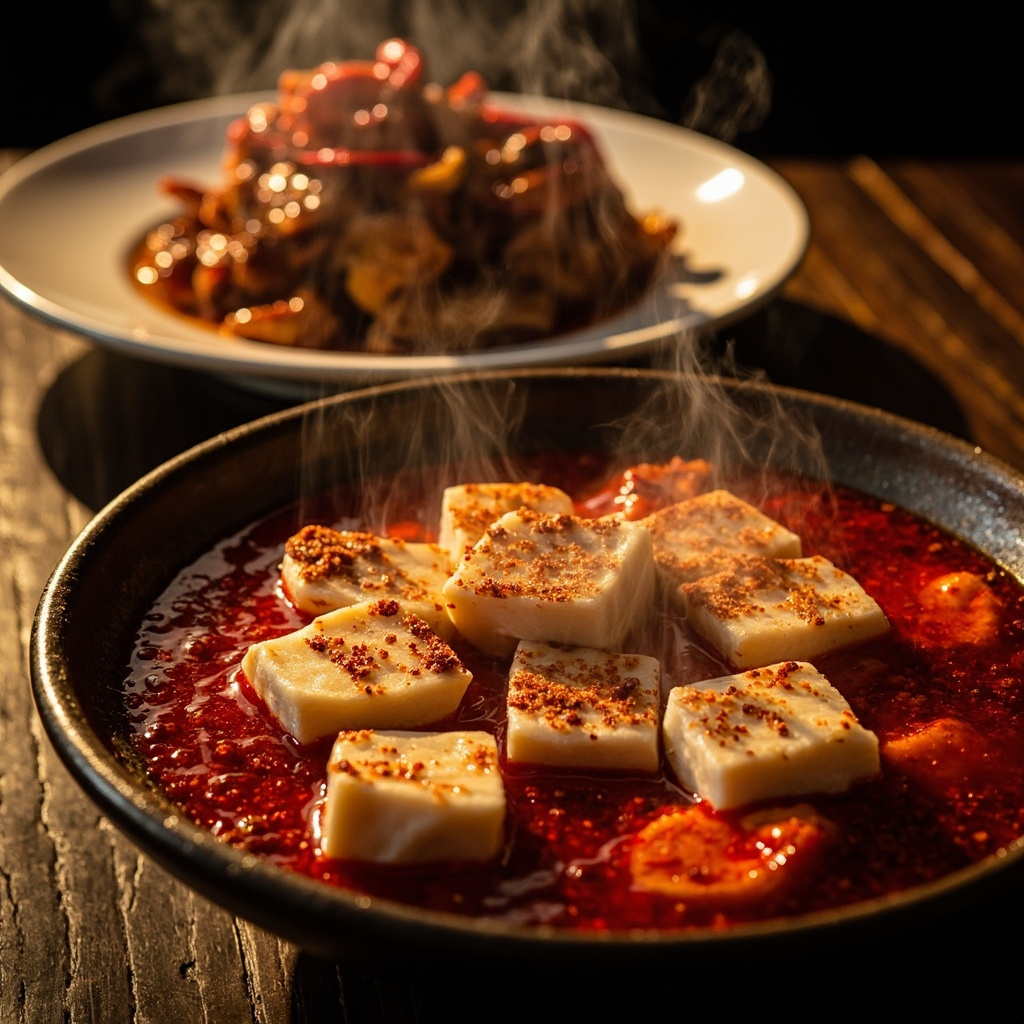
**Mapo Tofu** (麻婆豆腐) stands as perhaps Sichuan’s greatest ambassador. This 1862 creation by a Chengdu woman named Chen Mapo combines silky tofu cubes with minced pork, fermented broad bean paste (doubanjiang), and a volcanic red oil that would make any spice enthusiast weak at the knees. The dish’s complexity—simultaneously numbing, spicy, savory, and tender—demonstrates how Sichuan cooking balances seemingly contradictory textures and temperatures.
**Kung Pao Chicken** (宫保鸡丁) tells a story of imperial politics and culinary adaptation. Originally prepared for Qing dynasty official Ding Baozhen, this dish of diced chicken, peanuts, and dried chilies has been tamed for international palates over the decades. In authentic Sichuan restaurants, expect significantly more heat, whole Sichuan peppercorns providing textural crunch, and a savory-sweet sauce that clings to every piece of meat.
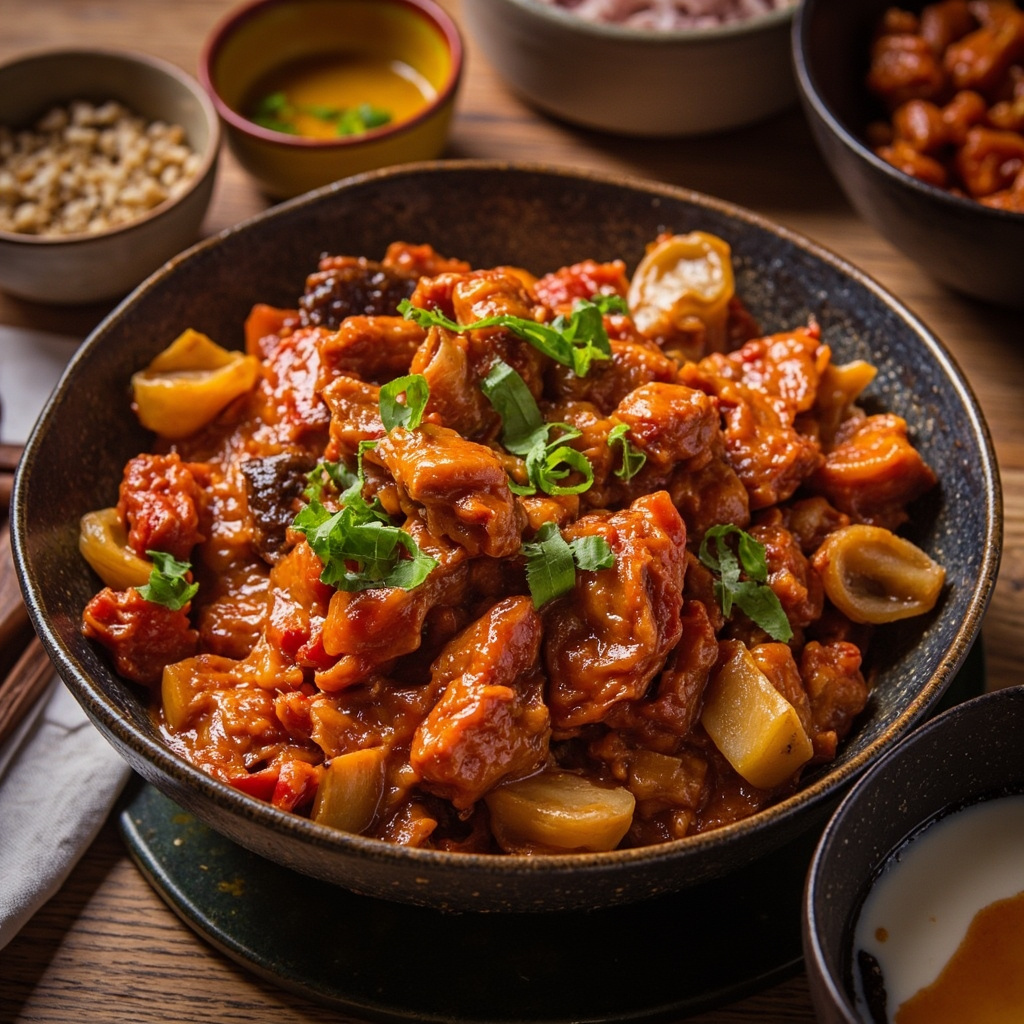
**Twice-Cooked Pork** (回锅肉) represents the elegant simplicity that defines home-style Sichuan cooking. Pork belly is first boiled, then sliced thin and stir-fried with broad bean paste, sweet soybean sauce, and蒜苗 (scallion greens). The technique transforms an inexpensive cut into something transcendent, with crispy edges and melt-in-your-mouth fat layers that have made this dish a comfort food for generations of Sichuan families.
**Water-Boiled Fish** (水煮鱼) showcases Sichuan’s mastery of spice presentation. Introduced in the 1980s, this relatively modern creation features thick fish slices swimming in a crimson pond of chili oil, Sichuan peppercorns, and Sichuan excited vegetable (zi rán jiāo). Despite its intimidating appearance, the dish delivers layers of flavor rather than simple heat, with the fish’s delicate sweetness providing counterpoint to the aggressive seasoning.
## Regional Variations Within Sichuan Province
Sichuan cuisine’s reputation for uniformity misleads visitors. The province encompasses diverse landscapes—from the bamboo forests of Ya’an to the river valleys of Chongqing—that produce distinctly different cooking styles. Understanding these regional nuances elevates any culinary journey through Sichuan.
**Chengdu cuisine** emphasizes refinement and subtlety. Capital city cooking tends toward lighter preparations that highlight the “seven flavors” framework with intellectual precision. Chengdu chefs prize knife skills and presentation, creating dishes that please both the eye and palate. The city’s famous snack culture—featuring wontons, cold noodles, and sugar-baked goods—offers endless opportunities for grazing between major meals.
**Chongqing cuisine**, technically a separate municipality but culturally intertwined with Sichuan, takes a darker, earthier approach. Here, hot pot dominates the culinary landscape, with bubbling brass vats filled with oily, chili-laden broth that seems designed to preserve meat indefinitely. The use of cow brain, duck blood, and various offal in Chongqing cooking reflects a no-waste philosophy and a preference for bold, assertive flavors over Chengdu’s subtlety.
**Rong county and Yibin** contribute the region’s beloved “burnt-side” cooking style. The unique soil composition and climate of this宜宾 area produce distinctive soy sauce and vinegar that form the backbone of local specialties. Guests to the area shouldn’t miss 燃面 (ran mian, literally “burnt noodles”), whose name derives from the cooking technique rather than the heat level.
## Practical Guide: Experiencing Authentic Sichuan Cuisine
Armed with historical and cultural knowledge, visitors can now approach Sichuan’s culinary landscape strategically. These practical insights help transform a simple meal into a meaningful cultural experience.
**Choosing restaurants** matters enormously. In Chengdu and other major cities, follow locals to unpretentious spots in neighborhoods far from tourist zones. Look for establishments with steam rising from open kitchens, chalkboard menus listing seasonal specials, and customers actively enjoying their food. The best mapo tofu often comes from tiny family operations where the recipe has been passed down for generations. In Chongqing, seek out 马路边的火锅店 (hot pot restaurants on street corners)—the more weathered the exterior, the more likely the broth has been fermenting for decades.
**Understanding menu navigation** prevents disappointment. Request the daily special or ask what the chef recommends—the Chinese phrase 特色菜 (tè sè cài) works universally. Don’t rely on translated menus; learn key characters: 辣 (spicy), 麻 (numbing), 酸 (sour), 苦 (bitter). For the authentic numbing experience, specifically request “正宗四川花椒” (authentic Sichuan peppercorns) if your dish doesn’t automatically include them.
**When to visit** affects the culinary calendar significantly. Autumn brings the harvest of Sichuan peppercorns and the beginning of hot pot season. Spring offers wild vegetable dishes unavailable at other times of year. Summer’s heat encourages the cooling dishes that Sichuan cuisine has perfected—cold noodle salads, cucumber preparations, and tofu pudding served with syrup. Major festivals like the Lantern Festival feature special foods unavailable commercially.
**Learning basic cooking techniques** enriches appreciation. The high-heat “dry-wok” method called 干煸 (gan bian) creates the caramelized flavors of不怕辣 (spicy不怕辣) dishes. Understanding “tian mian jiang”—the sweet soybean paste that provides depth without heat—helps explain how Sichuan chefs balance their aggressive seasonings.
For those committed to bringing Sichuan flavors home, sourcing authentic ingredients requires effort. Sichuan peppercorns should be bright reddish-brown with a strong aroma; dull or brown specimens have lost their potency. Doubanjiang (fermented broad bean paste) from郫县 (Pixian county) near Chengdu represents the gold standard for authenticity. Quality peppercorn oil and chili flakes from specialized Asian grocers or online suppliers make reproducing Sichuan flavors possible.
## Conclusion: The Enduring Legacy of Sichuan’s Kitchen
Sichuan cuisine endures not because of its spiciness alone but because it represents a complete philosophy of flavor, health, and pleasure that has developed over millennia. The next time you encounter mapo tofu with its characteristic oil-slick surface, or encounter the tongue-numbing electric quality of properly prepared water-boiled fish, you’re tasting centuries of refinement and a culture that treats food as one of life’s essential arts.
The region’s influence extends far beyond China’s borders, reshaping global perceptions of what Chinese food can be. Yet authentic Sichuan cuisine remains distinctly provincial at heart—a product of Sichuan’s particular climate, philosophy, and people’s passionate relationship with flavor. For travelers willing to venture beyond familiar territory, Sichuan promises an education in what food can achieve when technique, ingredients, and tradition align perfectly.
Start with one dish. Master its flavors. Then let curiosity guide you deeper into a cuisine that rewards exploration with some of the most complex, satisfying, and utterly unique tastes the culinary world offers.