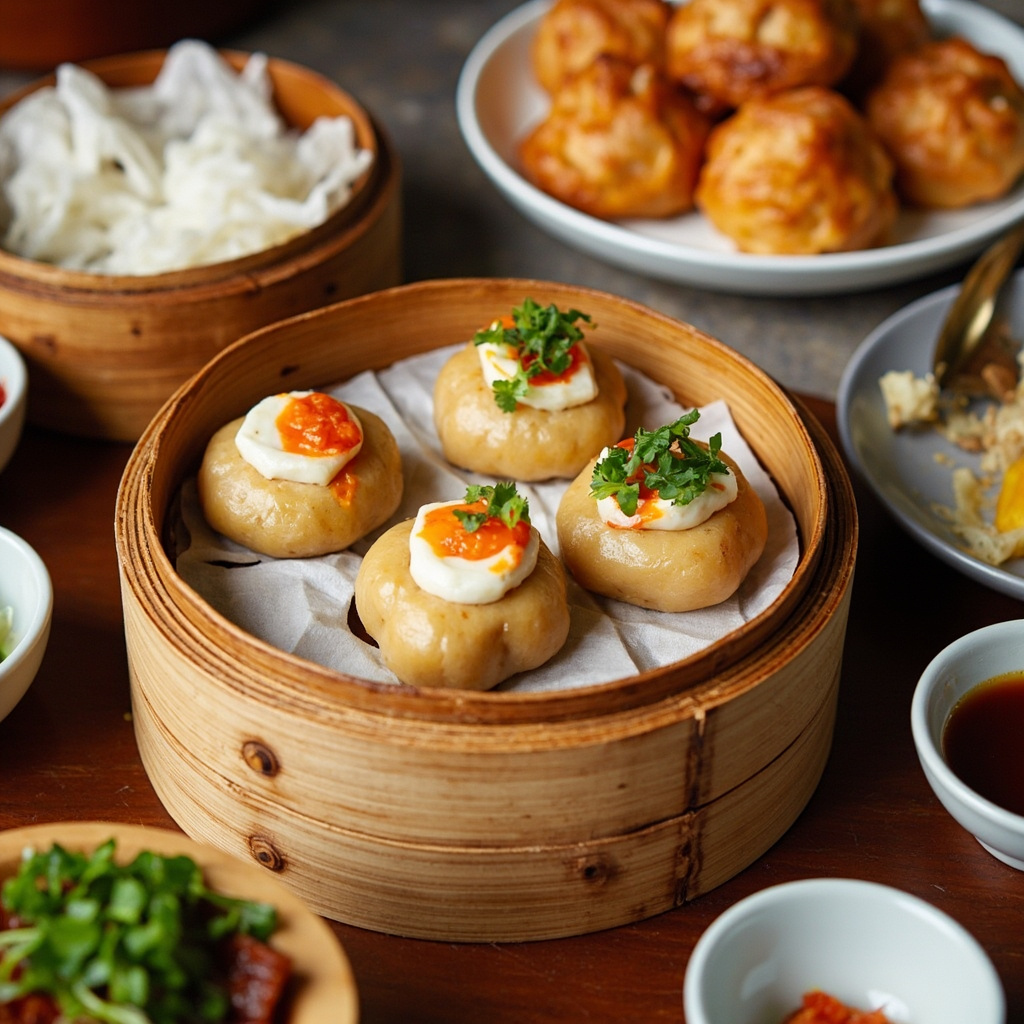
# Cantonese Dim Sum: A Complete Guide to Traditional Cantonese Small Dishes
The morning light filters through bamboo blinds as elderly Cantonese gentlemen unfold their newspapers at Formica tables, steam rising between them in fragrant curtains. Cart pushers navigate the narrow aisles with bamboo baskets stacked high, calling out their wares in rapid Cantonese. This is yum cha—the ritual of drinking tea and eating dim sum—that has anchored southern Chinese social life for over a century. Far more than a meal, it represents a philosophy of eating, bonding, and experiencing hospitality that has traveled from Guangdong province to every corner of the globe where Chinese communities thrive.
For travelers seeking an authentic dim sum experience, the ritual offers something increasingly rare: a culinary encounter that demands presence, patience, and participation. Unlike ordering from a menu where dishes arrive simultaneously, yum cha unfolds gradually, each round of baskets prompting conversation, pouring of tea, and the unhurried pleasure of a meal that stretches across a lazy morning.
## Origins and Evolution of Cantonese Dim Sum Culture
The story of dim sum begins not in Michelin-starred restaurants but along the ancient Silk Road, where weary travelers stopped at roadside teahouses in Guangdong province. During the Tang Dynasty (618-907 CE), merchants traveling through the region discovered that sipping tea while resting eased their fatigue. Local establishments began serving small portions of food alongside the tea—simple rice cakes and buns that complemented the beverage without overwhelming it.
The practice solidified during the Song Dynasty (960-1279 CE) when tea houses proliferated throughout the Pearl River Delta. However, dim sum as we recognize it today emerged in the late 19th and early 20th centuries, coinciding with the development of Cantonese opera houses. Patrons attending lengthy performances needed sustenance, and restaurants began offering an array of bite-sized dishes designed for sharing. The bamboo steamer basket became the signature vessel, keeping food warm while allowing delicate items to steam gently.
Migration patterns transformed dim sum from regional specialty to global phenomenon. Following the Communist takeover in 1949, waves of refugees from Guangdong and Hong Kong established dim sum restaurants in Southeast Asia, North America, and beyond. By the 1960s, all-you-can-eat dim sum brunches had become fixtures in major American cities, introducing millions to Cantonese cuisine. Today, Hong Kong alone boasts over 700 dim sum establishments, with legendary institutions like Tim Ho Wan’s Michelin-starred branches attracting pilgrims from around the world.
## The Craft Behind Traditional Cantonese Small Dishes
What distinguishes authentic dim sum from mere small plates is the philosophy of *dim sum* itself—a term combining *dim* (点心), meaning “touch the heart,” and *sum* (㸃心), suggesting “to点心 one’s spirit.” Every element, from wrapper thickness to folding technique, carries generations of accumulated knowledge.
The dough for har gow (shrimp dumplings) presents perhaps the greatest test of a dim sum chef’s skill. Made from wheat starch and tapioca starch, the wrapper must be thin enough to reveal the pink shrimp beneath yet sturdy enough to hold together during steaming. Master chefs pride themselves on creating pleated edges with precisely 7-10 folds, each dumpling a tiny architectural achievement. At famous establishments like Lung King Heen in Hong Kong, customers can watch chefs through open kitchens, their hands moving with machine-like precision through 2,000 to 3,000 dumplings daily.
Folding techniques vary dramatically across the dim sum spectrum. The classic siu mai (shumai) requires pressing the wrapper into a cup shape, filling it with seasoned pork and shrimp, then gathering the edges to create an open-topped cylinder topped with a single pea or mushroom. Lo mai gai—glutinous rice wrapped in lotus leaves—demands soaking leaves for hours until pliable, then carefully layering rice, meat, and seasonings before folding into compact packages. The lotus leaf imparts a subtle earthy aroma that permeates the rice during its three-hour steam.
Timing separates adequate dim sum from exceptional. Steam too long and the wrapper becomes soggy; too brief and the dough remains raw. Most restaurants coordinate their kitchens so that baskets arrive at tables within minutes of finishing, allowing diners to experience each item at its peak. This synchronization requires years of experience and intimate knowledge of how different wrappers and fillings respond to steam.
## Essential Dishes: Navigating Your First Authentic Dim Sum Experience
The universe of dim sum encompasses hundreds of items, but certain classics define any proper yum cha session. Understanding these staples transforms an overwhelming menu into an navigable journey.
**Har Gow** (蝦餃) – translucent shrimp dumplings with pleated edges, these represent the gold standard of dim sum quality. A superior har gow has a skin that bounces back when poked, revealing curled pink shrimp within. If the dumpling sticks to the bamboo basket, the wrapper contains too much wheat flour.
**Siu Mai** (燒賣) – cylindrical pork and shrimp dumplings topped with orange fish roe, these offer a heartier contrast to delicate shrimp dishes. The best versions feature a的比例 of 70% pork to 30% shrimp, with the filling seasoned with five-spice powder and bamboo shoots for texture.
**Char Siu Bao** (叉燒包) – fluffy steamed buns filled with barbecue pork. The defining characteristic is the distinctive cross-shaped split atop the bun, which opens during steaming to reveal the glossy filling. Northern Chinese versions are baked until golden, but Cantonese tradition favors the steamed variety.
**Cheung Fun** (腸粉) – silky rice noodle rolls filled with everything from prawns to beef and coated in soy sauce and sesame oil. The best cheung fun practically melts on the tongue, requiring almost no chewing. Look for establishments that make their rice noodles fresh daily rather than purchasing pre-made rolls.
**Egg Tarts** (蛋撻) – flaky pastry shells filled with custard that caramelizes to a spotted mahogany surface during baking. Portuguese egg tarts, with their caramelized tops and flaky layered crusts, have become ubiquitous throughout Asia, though traditional Cantonese versions feature a smoother, more custardy filling.
Beyond these essentials, adventurous eaters should seek out *loh bak gou* (fried radish cake), served pan-fried with sweet soy sauce; *turnip cakes* that melt on the tongue; *phoenix claws* (chicken feet) braised in black bean sauce; and *stuffed tofu puffs* swimming in hearty broth. Each region and establishment adds its signature variations, making every yum cha outing a discovery.
## The Ritual: Mastering Cantonese Yum Cha Etiquette and Culture
Arriving at a dim sum restaurant without understanding its unwritten rules risks missing the full experience. The tea ceremony anchors the entire ritual, beginning with the ritual of warming teapots and cups with boiling water—a gesture of both cleanliness and respect for the beverage.
The eldest person at the table typically initiates tea service, pouring for others before themselves—a reflection of Confucian values still embedded in Cantonese culture. When your cup runs low, simply place the lid atop to signal the cart pusher. Should you wish to decline a particular basket, the polite phrase is *m̀h hóyi*/不好意 (don’t want), delivered with a gentle wave.
Seasonings appear on every table, but authentic dim sum requires little embellishment. Light soy sauce, thin slices of fresh ginger, and optionally black vinegar or chili oil allow the natural flavors to shine. Over-drowning your dumplings signals novice status to seasoned servers.
The pacing of yum cha deserves particular attention. Unlike Western dining where courses arrive sequentially, dim sum flows continuously until you cover your basket with its lid—a universal signal that you’ve finished. Beginning with lighter items like steamed shrimp dumplings before progressing to fried dishes and ending with sweet egg tarts follows the natural logic of Cantonese palate preferences.
Family-style sharing forms the foundation of the experience. Dishes arrive meant for two to four people, and communal eating from shared plates reflects the collectivist values underlying Cantonese hospitality. Conversation flows naturally between bites, making dim sum the preferred occasion for family reunions, business negotiations, and weekend gatherings with friends.
## Finding Authentic Dim Sum: From Hong Kong to Your Hometown
The quality gap between authentic dim sum and tourist-oriented imitations remains vast. In Hong Kong, local neighborhoods yield the most genuine experiences. Lin Heung Tea House, operating since 1928 in Sheung Wan, maintains its original character—pushcarts still navigate between tables, and handwritten order sheets track each round of baskets. Expect waits exceeding an hour on weekends, but the atmosphere and food justify the patience.
For those unable to travel, major metropolitan areas increasingly support authentic dim sum experiences. Look for establishments with visible kitchen staff folding dumplings by hand, a telltale sign of quality. In the San Francisco Bay Area, *Mandalay* in the Richmond District and *Koi Palace* in Daly City have sustained reputations for excellence. New York’s *Nom Wah Tea Parlor* in Chinatown channels pre-revolutionary dim sum traditions, while Toronto’s *Sunther* offers Dim Sum Sum delivers celebrated Cantonese fare throughout the Greater Toronto Area.
When evaluating options, price provides unreliable guidance—some of the finest dim sum costs little more than mediocre versions. Instead, observe the restaurant’s clientele. Busloads of elderly Cantonese diners reliably indicate authenticity. Fresh-made bamboo baskets, slightly charred from the steamer, rather than synthetic alternatives, suggest proper preparation. If possible, arrive before 10 AM to experience the freshest offerings—most establishments prepare their dough and fillings each morning, with the earliest baskets featuring the day’s finest ingredients.
## Conclusion
Cantonese dim sum represents far more than an alternative breakfast—it’s a living tradition that has shaped how millions experience Chinese cuisine worldwide. The ritual of yum cha connects diners to centuries of regional history, Cantonese hospitality values, and culinary techniques refined across generations of dedicated practitioners.
Whether you encounter dim sum in a cramped Hong Kong teahouse where waiters have worked for forty years or in an immigrant neighborhood where second-generation owners honor their grandparents’ recipes, the essential elements remain unchanged: shared plates, endless pots of tea, and the gradual unfolding of a meal that rewards patience over efficiency.
For travelers and food enthusiasts seeking authentic experiences, dim sum offers accessibility that many cuisines withhold. Unlike restaurant tasting menus requiring reservations weeks in advance, yum cha welcomes walk-ins. Unlike chef’s concepts designed to impress, dim sum seeks to nourish and comfort. The bamboo baskets carry not just food but a philosophy—that meals matter most when enjoyed slowly, with company, and without pretense.
The next time you find yourself before a steaming basket of har gow, surrounded by the clamor of Cantonese conversation and the gentle percussion of serving spoons, remember that you’re participating in a tradition stretching back to the Silk Road caravanserais of the Tang Dynasty. Each bite connects you to something larger than any individual ingredient—a cumulative heritage of hospitality, craft, and the simple human need to gather, share, and nourish one another over a pot of good tea.