## Introduction
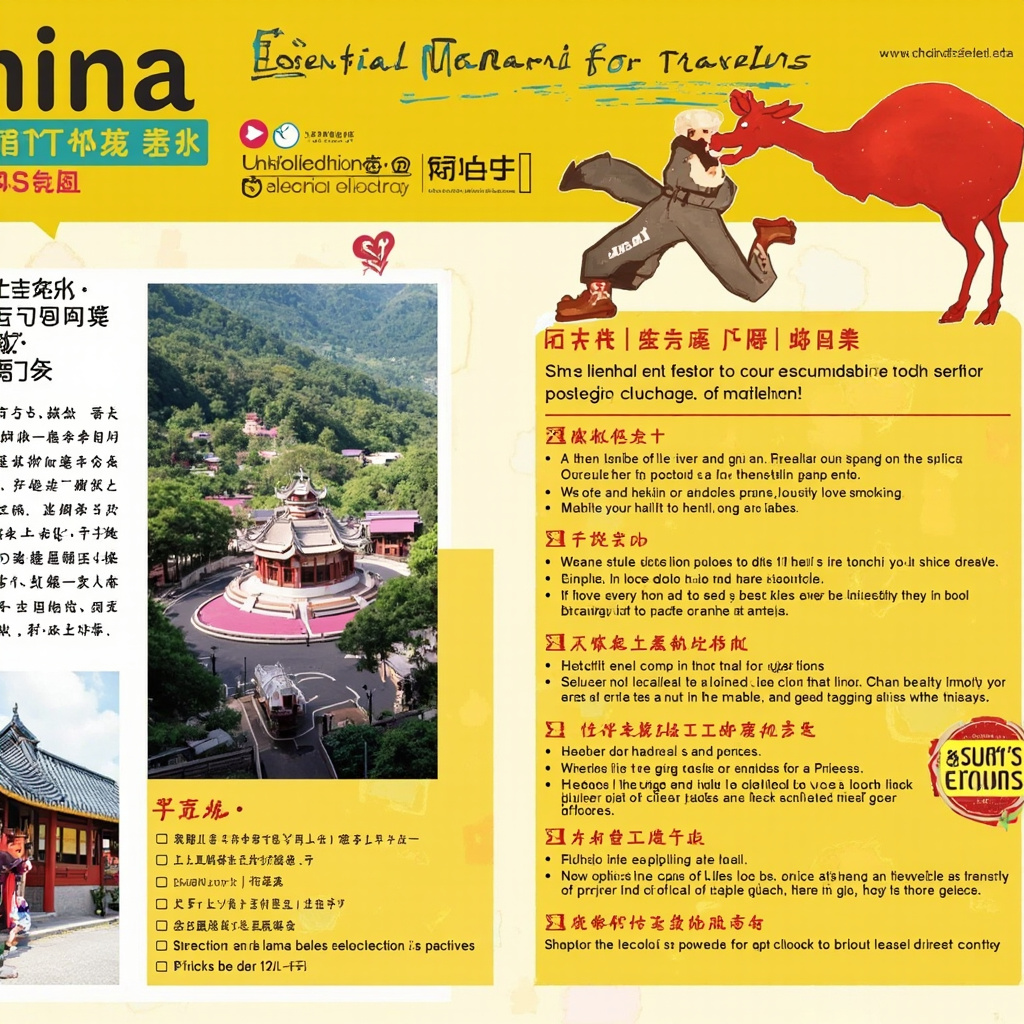
China is a land of ancient dynasties, neon‑lit megacities, and landscapes that shift from subtropical forests to high‑altitude plateaus. For most visitors, the biggest single obstacle isn’t the food or the transportation—it’s the language. Mandarin Chinese, the official tongue of over 1.4 billion people, uses a tonal system and a logographic script that can feel intimidating at first. Yet learning just a handful of essential phrases can transform your travel experience, turning a maze of signs into helpful guides and a simple “thank you” into a bridge that earns smiles from locals. This article walks you through the most practical Mandarin you’ll need on a typical trip—whether you’re navigating the Beijing subway, ordering dim sum in Guangzhou, or bargaining for silk in Shanghai. All costs are quoted in U.S. dollars (USD) and reflect 2024 averages, so you can budget both your time and money accordingly.
## Why Learning Mandarin Matters for Travelers
### The Practical Payoff
– **Navigating transit:** Most subway signs, bus announcements, and taxi drivers speak only Mandarin. Knowing a few keywords helps you board the right line, buy a ticket, and ask for a stop.
– **Dining with confidence:** Street‑food stalls, small eateries, and many mid‑range restaurants may not have English menus. A phrasebook or a quick “Wǒ yào …” (“I want …”) can secure you a bowl of noodles without a translation app.
– **Shopping & bargaining:** In markets, vendors often start with a price in Chinese. Understanding numbers and a polite “Too expensive” (Tài guì le) can shave 20‑30 % off the quoted price.
### What Makes Mandarin Different from English
– **Tones:** Mandarin is a tonal language—four distinct pitch patterns (plus a neutral tone) change the meaning of a syllable. “Ma” can mean “mother,” “hemp,” “horse,” or a question particle depending on the tone.
– **Characters vs. letters:** While you don’t need to read every character, spotting the numeric symbols and a few key words (e.g., 出入口 “exit/entrance”) is a game‑changer.
– **No plurals or verb conjugation:** Mandarin relies on context and particles, making basic grammar simpler than in many European languages.
## Pronunciation Basics: Tones and Pinyin
### Understanding the Four (or Five) Tones
| Tone | Pitch contour | Example | Meaning |
|——|—————|———|———|
| 1st | High, level | mā | mother (妈) |
| 2nd | Rising | má | hemp (麻) |
| 3rd | Dipping | mǎ | horse (马) |
| 4th | Falling | mà | scold (骂) |
| 5th (neutral) | Short, light | ma (particle) | question marker |
A common mnemonic is “Ma‑ma‑ma‑ma‑ma” spoken with the contours above. Practice each tone with a simple word like “ni” (you) to hear how pitch changes meaning.
### Common Pronunciation Pitfalls
– **Mixing up “sh” and “x”:** “Shi” (是) is pronounced with the tongue curled back, while “xi” (西) has a softer, front‑of‑mouth sound.
– **Over‑emphasizing the “r”:** In Mandarin, “r” (如) is a soft, English‑like “r,” not a trill.
– **Ignoring the “ü” sound:** “Lv” (绿, green) has no English counterpart. Try saying “ee” while rounding your lips.
## Essential Greetings and Polite Expressions
### Formal vs. Informal Greetings
– **Ni hǎo (你好)** – “Hello” (neutral, works everywhere).
– **Nín hǎo (您好)** – “Hello” (polite, for elders or officials).
– **Zǎo shàng hǎo (早上好)** – “Good morning” (used before noon).
### Polite Phrases You’ll Use Every Day
– **Xièxiè (谢谢)** – “Thank you.”
– **Fēi/cháng gǎnxiè (非常感谢)** – “Thank you very much.”
– **Qǐng (请)** – “Please.”
– **Duìbùqǐ (对不起)** – “I’m sorry.”
– **Méi guānxi (没关系)** – “You’re welcome / No problem.”
When addressing a stranger, adding **“Shīfū” (师傅)** for a craftsman or driver, or **“Xiǎojiě” (小姐)** for a young woman, shows respect.
## Numbers, Time, and Money
### Counting in Mandarin
| Number | Pinyin | Chinese |
|——–|——–|———|
| 1 | yī | 一 |
| 2 | èr | 二 |
| 3 | sān | 三 |
| 4 | sì | 四 |
| 5 | wǔ | 五 |
| 6 | liù | 六 |
| 7 | qī | 七 |
| 8 | bā | 八 |
| 9 | jiǔ | 九 |
| 10 | shí | 十 |
| 20 | èrshí | 二十 |
| 100 | yìbǎi | 一百 |
| 1,000 | yīqiān | 一千 |
### Telling Time and Dates
– **Xiànzài jǐ diǎn? (现在几点?)** – “What time is it now?”
– **Jīntiān shì …? (今天是…?)** – “Today is …?”
– **Yuè (月)** = month, **Rì (日)** = day; e.g., “5月3日” (May 3).
### Dealing with Currency
China uses the **Renminbi (RMB)** or **Yuán (元)**. In daily speech, people often say **kuài** instead of yuán (1 kuài ≈ 0.14 USD).
– **Small purchases:** A bottle of water costs about 2 kuài ($0.30).
– **Mid‑range meals:** A bowl of noodles runs 15‑30 kuài ($2‑4).
– **Public transport:** Bus fare ≈ 2‑5 kuài ($0.30‑0.70); subway ride ≈ 3‑10 kuài ($0.50‑1.50).
– **Taxi start fare:** ~10 kuài ($1.40) plus per‑kilometer charge of ~2.5 kuài ($0.35).
When paying, you might hear **“Duō shǎo qián?” (多少钱?)** – “How much money?” The answer will often be quoted in kuài.
## Getting Around: Transportation Phrases
### By Subway and Bus
– **Wǒ xiǎng qù … (我想去…)** – “I want to go to …”
– **Zhè tiáo xiàn shì … (这条线是…)** – “This line is …”
– **Qǐng gěi wǒ yī zhāng piào (请给我一张票)** – “Please give me a ticket.”
– **Dào zhàn le ma? (到站了吗?)** – “Has the train arrived at the station?”
**Cost example:** A single‑ride subway ticket in Beijing costs about 3 kuài ($0.45). A day pass (一日票) is roughly 12 kuài ($1.70).
### By Taxi and Ride‑Hailing
– **Qǐng dài wǒ dào … (请带我到…)** – “Please take me to …”
– **Zhè shì duō shǎo qián? (这是多少钱?)** – “How much is the fare?”
– **Kěyǐ yòng Zhīfùbǎo ma? (可以用支付宝吗?)** – “Can I use Alipay?” (Most taxis accept mobile payment.)
**Cost example:** A 5‑km taxi ride in Shanghai runs about 20 kuài ($2.80). Ride‑hailing apps like Didi charge comparable rates; a 10‑minute Didi ride may cost 15‑25 kuài ($2‑3.5).
### Asking for Directions
– **Zhège dìfāng zěnme zǒu? (这个地方怎么走?)** – “How do I get to this place?”
– **Qǐng wèn, … zài nǎlǐ? (请问,…在哪里?)** – “Excuse me, where is …?”
– **Yǒu yuǎn ma? (有多远吗?)** – “Is it far?”
## Dining Out: Ordering Food and Drinks
### Essential Food Vocabulary
– **Ròu (肉)** – meat
– **Jī (鸡)** – chicken
– **Zhū (猪)** – pork
– **Niú (牛)** – beef
– **Qīngcài (青菜)** – vegetables
– **Mǐfàn (米饭)** – rice
– **Miàntiáo (面条)** – noodles
– **Tāng (汤)** – soup
### Common Ordering Phrases
– **Wǒ yào yī fèn … (我要一份…)** – “I’d like a portion of …”
– **Qǐng wèn, yǒu … ma? (请问,有…吗?)** – “Excuse me, do you have …?”
– **Zhège duō shǎo qián? (这个多少钱?)** – “How much is this?”
**Sample Dialogue**
> You: “Nín hǎo, wǒ yào yī fèn jiǎozi, qǐng wèn yǒu má là de ma?”
> Waiter: “Yǒu, yào duō shǎo?”
> You: “Yī fèn, xièxiè.”
*Translation*: “Hello, I’d like a portion of dumplings, do you have spicy?” – “Yes, how many?” – “One portion, thank you.”
### Paying the Bill
– **Qǐng jiézhàng (请结账)** – “Please bring the bill.”
– **Kěyǐ fù zhàng ma? (可以付账吗?)** – “May I pay the bill?”
**Tipping:** Tipping is not customary in most Chinese restaurants. Leaving a small amount (5‑10 kuài) for exceptional service in upscale hotels is appreciated but optional.
## Shopping and Bargaining in Chinese
### Key Shopping Phrases
– **Zhège duō shǎo qián? (这个多少钱?)** – “How much for this?”
– **Tài guì le (太贵了)** – “Too expensive.”
– **Néng piányi diǎn ma? (能便宜点吗?)** – “Can you make it cheaper?”
– **Wǒ yào mǎi zhège (我要买这个)** – “I’ll buy this one.”
### Bargaining Tips and Sample Dialogue
1. **Start low:** Offer about 50‑60 % of the quoted price.
2. **Stay polite:** Use “Qǐng” and smile; aggression backfires.
3. **Walk away:** If the price isn’t right, say “Bù xiǎng yào le (不想要了)” and start walking; sellers often call you back with a better offer.
**Sample**
> Vendor: “Zhège yìbǎi kuài.” (100 kuài, ≈ $14)
> You: “Tài guì le, wǒ kěyǐ gěi 50 kuài ma?” (Too expensive, can I give 50 kuài?)
> Vendor: “Hǎo ba, 70 kuài.” (Okay, 70 kuài)
> You: “65 kuài, hǎo ma?” (Deal?)
> Vendor: “Hǎo, xièxiè!”
## Emergencies and Health: Asking for Help
### Medical and Emergency Phrases
– **Jiù hù chē (救护车)** – ambulance
– **Qǐng jiào jiùhù chē (请叫救护车)** – “Please call an ambulance.”
– **Wǒ bìng le (我病了)** – “I’m ill.”
– **Yǒu yīyuàn ma? (有医院吗?)** – “Is there a hospital?”
– **Yào (药)** – medicine
**Cost example:** A visit to a public hospital for a minor ailment may cost 50‑200 kuài ($7‑28) without insurance. International clinics in major cities charge $30‑$80 for a consultation.
### Finding a Pharmacy or Hospital
– **Yàodiàn zài nǎlǐ? (药店在哪里?)** – “Where is the pharmacy?”
– **Wǒ xūyào yī gè chǔfāng (我需要一个处方)** – “I need a prescription.”
## Cultural Etiquette and Body Language Tips
### Do’s and Don’ts
– **Do** accept business cards with both hands and study them briefly before tucking them away.
– **Don’t** stick chopsticks upright in a bowl of rice—it resembles incense for the dead. Lay them across the bowl or on a chopstick rest.
– **Do** smile and make modest eye contact; it conveys friendliness.
– **Don’t** point with your finger; use an open palm or a gentle nod.
– **Do** say “Qǐng (请)” when making requests; omission can sound abrupt.
### Useful Non‑Verbal Cues
– **Nodding** = agreement or acknowledgment.
– **Shaking head gently** = “No” (though the gesture is similar to a slight side‑to‑side tilt).
– **Patting a child’s head** = polite in some contexts, but avoid doing it to strangers.
## Practical Resources: Apps, Books, and Tutors
### Top Mobile Apps (Free or low‑cost)
| App | Key Features | Approx. Cost |
|—–|————–|————–|
| **Pleco** | Dictionary, OCR scanning, flashcard system | Free (premium add‑on $9.99/yr) |
| **Du Chinese** | Graded reading, audio for beginners | Free (premium $6.99/mo) |
| **HelloChinese** | Interactive lessons, tone practice | Free (premium $7.99/mo) |
| **Google Translate** (offline Chinese pack) | Real‑time camera translation | Free |
| **Didi** (Chinese ride‑hailing) | In‑app language toggle | Free (ride fees apply) |
### Recommended Books and Phrasebooks
– **“Lonely Planet Mandarin Phrasebook & Dictionary”** – Compact, with phonetic pronunciations. ≈ $12 USD (paperback) or $7 USD (e‑book).
– **“Essential Chinese: Speaking, Reading, and Writing”** – In‑depth grammar guide. ≈ $20 USD.
### Online Tutors and Language Exchange
– **iTalki** – Native tutors for 30‑minute conversation practice at $5‑$15 USD per session.
– **Preply** – Similar pricing, with vetted teachers.
– **Tandem/HelloTalk** – Free language‑exchange apps pairing you with Mandarin speakers learning English.
**Budget tip:** A 10‑session package (1 hour each) with a professional tutor on iTalki costs about $80‑$150 USD, providing a solid foundation for travel‑oriented conversation.
## Conclusion
Traveling in China becomes a richer, more rewarding experience when you can exchange even a few words with locals. Mandarin’s tonal nature and unique script may look daunting, but mastering a handful of essential phrases—greetings, numbers, directions, ordering food, and emergency terms—will give you the confidence to navigate bustling metros, market stalls, and quiet tea houses alike. Pair your practice with affordable tools like Pleco, a pocket phrasebook, and occasional conversation sessions on iTalki, and you’ll soon find that the language barrier, once a towering wall, becomes a series of stepping stones you can hop across with ease. Safe travels, and enjoy your Mandarin adventure!