
When travelers step into a historic theater in Beijing or Shanghai, they are often greeted by a swirl of vivid silks, the sharp crack of a wooden clapper, and the hauntingly melodic tones of a huqin fiddle. This is the world of Chinese opera, a centuries鈥憃ld art form that blends song, spoken dialogue, dance, and acrobatics into a theatrical experience unlike any other. Within this broad family, Peking opera (also known as Jingju) stands out as the most celebrated style, celebrated for its refined singing techniques, stylized acting, elaborate costume design, and the iconic art of face painting. In this article, we explore the origins, core elements, role types, regional variations, and the modern revival of this mesmerizing traditional Chinese theater.
Origins and History
The roots of Chinese opera stretch back more than a thousand years, weaving together folk songs, religious rituals, and narrative storytelling from the Han, Tang, and Song dynasties. Early forms such as the “zaju” of the Yuan dynasty introduced the concept of combining singing and acting within a structured plot. Over time, regional styles proliferated, each adopting local dialects, music, and performance customs.
Peking opera emerged in the late 18th century, during the Qing dynasty, when the convergence of the popular “hui” (hui opera) from Anhui and the “qin” (qin opera) from Hubei gave rise to a new synthesis. The capital, Beijing, became the crucible where this hybrid style was refined, codified, and eventually promoted as the national performing art. By the mid鈥?9th century, Jingju had become the court’s preferred entertainment, and its repertoire expanded to include historical dramas, mythic legends, and romantic tales.
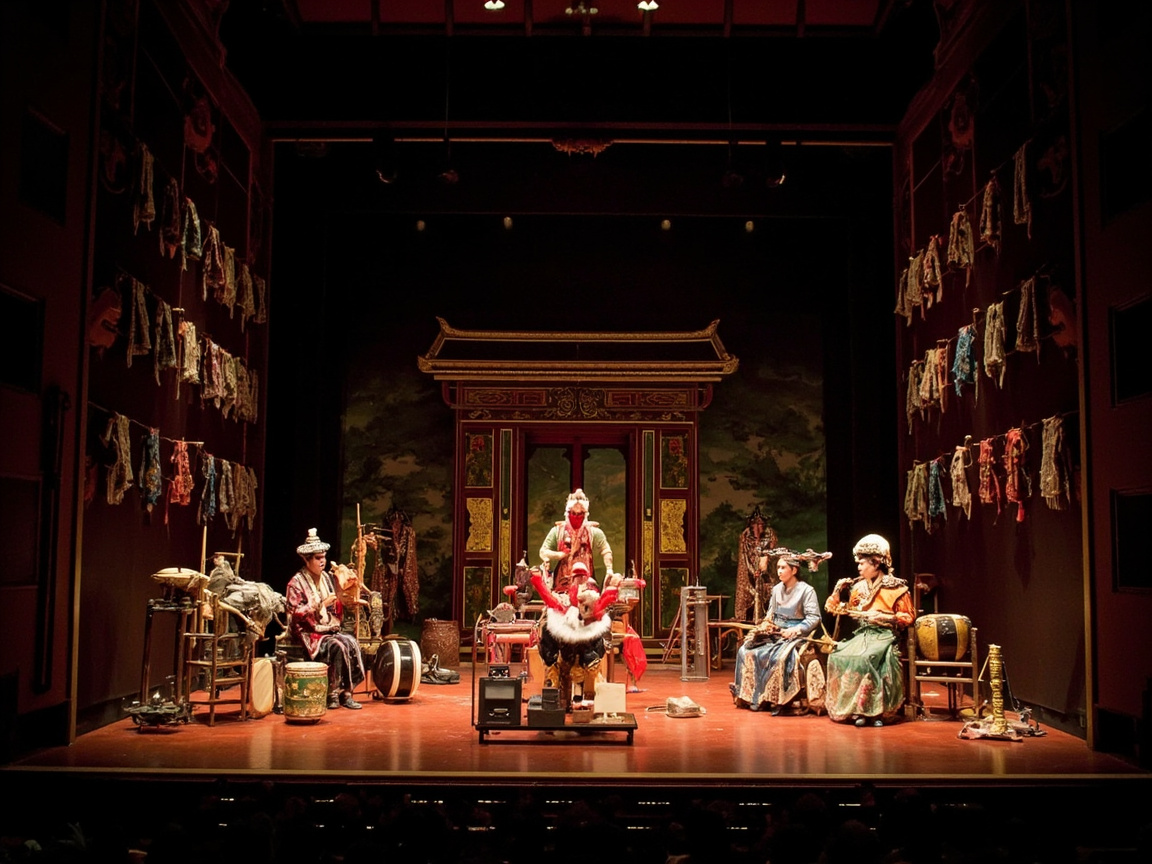
Core Elements of Peking Opera
Peking opera is renowned for its balanced integration of four fundamental pillars, each demanding years of rigorous training. The harmonious blend of these elements creates the distinctive aesthetic that defines traditional Chinese theater.
Singing
The vocal component of Peking opera is both highly stylized and emotionally expressive. Performers employ a technique known as “gechang,” which involves precise pitch control, resonant timbre, and the strategic use of breath. The primary singing styles include erhuang and xipi, each associated with different emotional registers. Singing techniques are often accompanied by a small ensemble of instruments鈥?em>jinghu (a bowed string instrument), yuanxian (a lute), and percussion鈥攖hat provide melodic and rhythmic support.
Acting
In Peking opera, “zuo” (acting) is not merely spoken dialogue; it encompasses a full range of gestures, facial expressions, and stylized movements. Actors communicate inner feelings through minute changes in eye contact, hand positioning, and body posture. The acting style is deliberately exaggerated to convey meaning to audiences seated far from the stage, a convention inherited from ancient Chinese performance traditions.
Martial Arts
Many Peking opera stories draw from martial legends, and thus martial arts are integral to the performance. Performers train in swordplay, staff fighting, and hand鈥憈o鈥慼and combat, employing choreographed sequences that echo the fluidity of Chinese martial arts. The combination of combat and dance creates a visual spectacle that showcases both physical prowess and artistic grace.
Acrobatics
Acrobatic elements, known as “qiangong,” add an extra layer of excitement. Skilled artists execute flips, somersaults, and juggling acts, often while maintaining the elaborate costume and makeup. These feats serve both narrative purposes鈥攕ignifying a character’s alertness or a scene’s climax鈥攁nd provide pure visual delight for the audience.
Role Types and Characters
Peking opera organizes its cast into four primary role types, each with distinct vocal, movement, and costume conventions. Understanding these categories helps audiences appreciate the nuanced characterization that defines the art form.
Sheng (Male Roles)
The sheng encompasses all male characters, from scholars and officials to warriors and merchants. Training focuses on developing a clear, resonant voice and a graceful, restrained physicality. The wensheng (civil male) often speaks softly and moves with poise, while the wusheng (military male) performs demanding combat sequences.
Dan (Female Roles)
The dan represents female characters, ranging from virtuous maidens to fierce empresses. Historically played by men, modern dan performers are now predominantly women. The huadan (young, vivacious female) emphasizes bright, lilting singing and lively gestures, whereas the qingyi (virtuous, stoic woman) showcases a more restrained, melancholic style.
Jing (Painted Face Roles)
The jing includes male characters with heavily stylized, often brightly colored faces. Each hue and pattern conveys personality traits鈥攔ed for loyalty, white for treachery, black for honesty, and gold for divinity. The face painting is a visual shorthand that instantly informs the audience about the character’s moral compass and emotional state.
Chou (Comedian or Clown Roles)
The chou provides comic relief, acting as the witty fool, servant, or cunning trickster. Performers adopt a white patch around the nose, a distinctive makeup that signals their comedic function. Their role often involves rapid speech, exaggerated facial expressions, and spontaneous improvisation.
Famous Peking Opera Performances
Over centuries, certain works have become touchstones of the repertoire, revered for their dramatic depth and technical brilliance.
- “The Legend of the White Snake” (Bai She Zhuan) 鈥?A timeless love story that blends romance, tragedy, and supernatural intrigue.
- “The Drunken Concubine” (Zui Hou) 鈥?Showcases the emperor’s indulgence and the consequent chaos, featuring spectacular martial choreography.
- “The Battle of Red Cliffs” (Chi Bi Zhi Zhan) 鈥?Depicts a pivotal historical conflict, highlighted by elaborate battle scenes and strategic dialogue.
- “The Monkey King” (Sun Wukong) 鈥?A high鈥慹nergy tale of rebellion and magic, celebrated for its acrobatic stunts and vibrant costume design.
Regional Chinese Opera Styles
While Peking opera commands the national stage, China’s vast geography has given rise to a dazzling array of regional opera forms, each reflecting local dialects, music, and cultural narratives.
- Cantonese Opera (Yueju) 鈥?Known for its lush melodies, ornate costumes, and integration of contemporary themes.
- Sichuan Opera (Chuanju) 鈥?Famous for its “face鈥慶hanging” technique, where performers swap masks in an instant, and comedic “fire鈥憇pitting” effects.
- Qinqiang Opera (Qinqiang) 鈥?Originating in Shaanxi, it features powerful vocal delivery and dramatic narratives rooted in ancient folklore.
- Yun Opera (Yunju) 鈥?A blend of singing, dancing, and martial arts, noted for its graceful movements and poetic lyrics.
These styles often exchange influences with Jingju, creating a dynamic, ever鈥慹volving landscape for Chinese performing arts.
Peking Opera Today
In the 21st century, Peking opera faces both challenges and opportunities. Younger audiences, accustomed to digital media, may view the slow, stylized pacing as archaic. Nevertheless, a renewed interest in cultural heritage has sparked numerous revival initiatives.
- Education and Training: State鈥憆un academies preserve rigorous training regimens, teaching traditional singing, acting, martial arts, and acrobatics to the next generation.
- Contemporary Adaptations: Directors blend classic arias with modern staging, multimedia projections, and cross鈥慶ultural collaborations, making traditional Chinese theater accessible to global audiences.
- Tourism and Cultural Festivals: Beijing’s Lao She Teahouse and the National Centre for the Performing Arts regularly host Peking opera performances, drawing tourists eager to experience authentic costume design and face painting up close.
- Digital Preservation: High鈥慸efinition recordings and online streaming platforms allow fans worldwide to explore classic repertoire, ensuring the survival of Chinese opera in the digital age.
Conclusion
Chinese opera, and its crown jewel Peking opera, encapsulate centuries of artistic evolution, cultural storytelling, and theatrical innovation. From the delicate gechang of its singing techniques to the dazzling acrobatics and martial prowess of its performers, the art form offers a window into China’s rich past and vibrant present. As audiences around the world discover the magic of Jingju鈥攖hrough live stage shows, cultural festivals, or online archives鈥攖hey help keep a timeless tradition alive, ensuring that the resonant notes of the huqin and the brilliant colors of face painting continue to inspire future generations.
Whether you are a seasoned traveler seeking authentic cultural experiences or an art enthusiast eager to explore the depths of Chinese performing arts, Peking opera promises a memorable journey into the heart of China’s theatrical heritage.