
When travelers step into a quiet gallery or a tea house in China, they are often drawn to the elegant lines that seem to dance across paper, silk, or stone. Those fluid, rhythmic strokes are more than decoration鈥攖hey are the visual language of Chinese calligraphy, an art form that has shaped the nation’s aesthetic, philosophy, and identity for millennia. In this comprehensive guide we trace the calligraphy history, explore the main calligraphy styles, examine the tools that make brush writing possible, and discover why this ancient practice still resonates with modern audiences.
Ancient Origins
The story of Chinese calligraphy begins with the earliest forms of written expression, which date back to the Shang dynasty (c. 1600鈥?046 BC). The first characters appeared on oracle bones and bronze vessels, etched as pictographs that captured the essence of objects, animals, and rituals. These primitive marks set the stage for a writing system that would evolve dramatically over centuries.
During the Zhou dynasty, the script began to standardize, giving rise to the “bronze inscriptions” that recorded royal decrees, sacrificial rites, and historical events. This early period is crucial because it introduced the concept of visual balance between structure and spontaneity鈥攁 tension that still defines Chinese calligraphy today. The gradual shift from pictograms to abstract symbols laid the foundation for the diverse calligraphy styles that emerged later.
Classical Script Styles
From the Warring States period through the Han dynasty, scholars and scribes refined and diversified the written characters. Four major script forms stand out as milestones in the calligraphy history:
Seal Script (Zhuanshu)
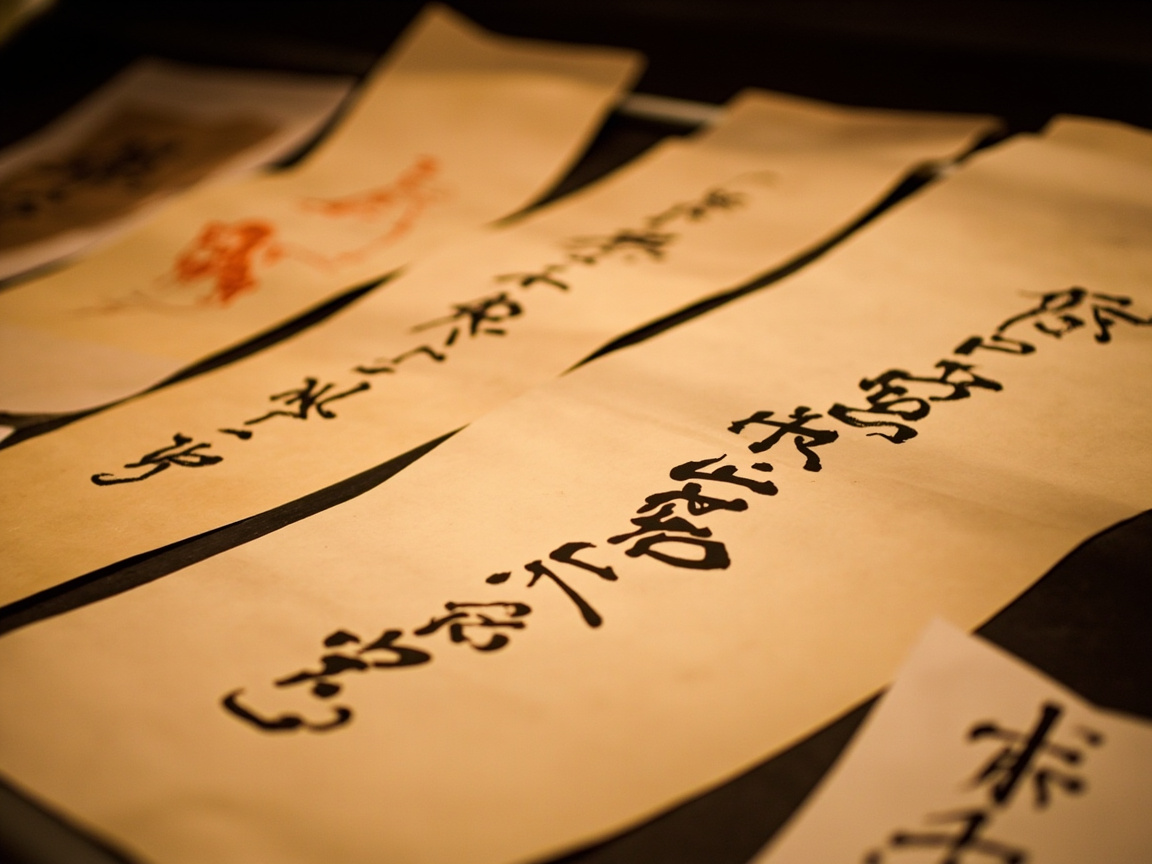
Seal script, also known as zhuan shu, is the earliest standardized form of Chinese writing. Developed during the Qin dynasty (221鈥?06 BC), it was characterized by uniformly thick strokes, rounded corners, and a strong sense of symmetry. The script was originally used for official seals鈥攕tamped onto clay to authenticate documents and royal edicts. Its compact, almost ornamental quality makes it a favourite for decorative engravings on jade, bronze, and stone. Even today, many traditional Chinese seals feature elegant seal script that imparts authority and timelessness.
Clerical Script (Lishu)
As the empire expanded, the need for faster, more legible writing grew. The clerical script emerged in the early Western Han, offering a more flowing, horizontally oriented style. Characters became wider, with a distinct “head” and “tail” that facilitated rapid copying on bamboo slips and later on paper. The clerical script introduced the concept of “brush strokes” that could be modified in thickness and curvature, marking a decisive step toward the expressive potential of calligraphy.
Regular Script (Kaishu)
The regular script, or kaishu, reached its mature form during the Tang dynasty (618鈥?07 AD). It is the most widely taught and recognized style in modern China, known for its balanced, square structure and clear, well鈥慸efined strokes. Regular script demands precise control of the brush, making it a benchmark for technical mastery. Its legibility made it the standard for printing, official documents, and scholarly texts, and it remains the foundation for most contemporary calligraphy education.
Running Script (Xingshu) and Cursive Script (Caoshu)
Two more expressive forms evolved from regular script: running script and cursive script. Running script retains the overall structure of regular script but allows for more fluid connections and abbreviated strokes, creating a sense of natural movement. Cursive script, on the other hand, pushes the brush to its limits, with highly abstracted forms that prioritize speed and personal expression over legibility. Together, these styles demonstrate the range of emotional tones that Chinese calligraphy can convey鈥攆rom the serene to the wildly dynamic.
Tools and Materials
The art of brush writing is inseparable from the tools used to produce it. Traditional Chinese calligraphy relies on the “four treasures of the study” (鏂囨埧鍥涘疂): the brush, the ink, the paper, and the inkstone.
The Brush
Calligraphy brushes are crafted from a variety of hairs鈥攊ncluding goat, weasel, and rabbit鈥攅ach offering a different degree of stiffness and absorbency. The handle, often made of bamboo or wood, provides the grip that allows calligraphers to execute fine details as well as bold, sweeping gestures. The brush’s tip, when loaded with ink, becomes a living instrument capable of producing thin hairlines, thick bursts, and everything in between.
Ink and Inkstone
Ink is traditionally ground from a solid stick (澧? on a slanted stone slab known as an inkstone. The grinding process, which mixes soot with water, yields a rich, velvety black liquid that clings to the brush. The inkstone itself is prized for its smooth surface and subtle grain, which influence the ink’s flow and the eventual texture of the strokes. While liquid bottled ink is convenient today, many calligraphers still prefer the ritual of grinding their own, believing it helps focus the mind鈥攁 practice central to the meditative side of ink art.
Paper and Seals
Chinese paper, especially xuan paper from Anhui province, is renowned for its absorbency and durability. Its texture allows ink to spread just enough to create delicate gradations, yet it holds the pigment firmly, preserving the integrity of brush strokes over centuries. Seals, often carved from stone or jade, are dipped in red paste and stamped at the end of a piece. The seal’s impression adds both a signature and a symbolic seal of approval, linking the artwork to centuries of tradition.
Techniques and Practice
Posture and Grip
Correct posture is the cornerstone of effective brush writing. Calligraphers sit upright, with the paper positioned straight ahead, and hold the brush vertically, allowing gravity to assist the flow of ink. The grip is relaxed yet firm, akin to holding a delicate bird鈥攖ight enough to control, light enough to feel the brush’s response.
Brush Strokes and Rhythm
Each character is built from a set of fundamental strokes: the dot (鐐?, the horizontal (妯?, the vertical (绔?, the hook (閽?, and the sweep (鎾?. Mastering these elements involves learning the proper order, angle, and pressure. The rhythm of the brush鈥攕teady, accelerating, or decelerating鈥攃reates visual dynamism. Practicing “copybooks” (瀛楀笘) of masterworks helps learners internalize these patterns, while improvisation nurtures personal style.
From Copybooks to Freehand
Traditionally, students begin by tracing characters from historic models, such as the Lanting Xu by Wang Xizhi, before gradually moving to freehand composition. This progression reflects the broader philosophy of Chinese art: respect for tradition, followed by personal expression. Regular practice cultivates not just skill but also a deep connection to cultural heritage.
Calligraphy in the Modern Era
While the digital age has transformed many aspects of daily life, Chinese calligraphy remains a vibrant cultural force. Contemporary artists blend traditional techniques with modern media, creating installations that incorporate video, neon, and even 3D printing.
Revival and Globalization
In major cities worldwide, cultural centers and museums host workshops that introduce foreigners to the beauty of ink art. For travelers, participating in a calligraphy class can become a highlight of a visit to China, offering insight into the discipline and mindfulness that characterize this traditional Chinese art.
Digital Frontiers
Digital platforms have also given rise to virtual galleries and online tutorials, allowing enthusiasts to study the nuances of brush strokes without leaving home. Nevertheless, the tactile experience of dipping a brush in ink and watching the characters materialize on paper remains irreplaceable.
Calligraphy in Travel and Public Spaces
From the towering inscriptions on the walls of the Forbidden City to the quiet elegance of a tea house, Chinese calligraphy shapes the visual landscape. Hanging scrolls, a classic format for displaying calligraphy, can be found in heritage sites, boutique hotels, and modern art museums. These scrolls not only showcase artistic skill but also serve as cultural ambassadors, inviting viewers to contemplate the harmony of form and meaning.
Masterpieces and Notable Calligraphers
Classical Masters
- Wang Xizhi (303鈥?61 AD) 鈥?Known as the “Sage of Calligraphy,” his Lanting Xu is considered the pinnacle of running script and remains a model for generations.
- Yan Zhenqing (709鈥?85 AD) 鈥?Famous for his powerful regular script, his style conveys moral integrity and strength, as seen in works like the Duobao Pagoda Stele.
- Zhao Mengfu (1254鈥?322 AD) 鈥?A Yuan dynasty scholar鈥慳rtist who revived the ancient seal script, bridging classical forms with his own elegant fluidity.
Modern and Contemporary Artists
- Qi Baishi (1864鈥?957) 鈥?Though primarily a painter, his calligraphy is celebrated for its spontaneous, lively brushwork.
- Zhang Daqian (1899鈥?983) 鈥?A prolific master who experimented with both traditional and avant鈥慻arde styles, pushing the boundaries of Chinese calligraphy.
- Wang Dongling (b. 1935) 鈥?A living legend who continues to teach the intricacies of seal script and regular script at the Zhejiang Academy of Fine Arts.
These figures, among many others, illustrate how Chinese calligraphy evolves while preserving its core aesthetic values.
Conclusion
From the ancient markings on oracle bones to the luminous ink art displayed in contemporary galleries, Chinese calligraphy is more than a means of writing鈥攊t is a living embodiment of cultural continuity, artistic expression, and philosophical thought. Whether you encounter a serene hanging scroll in a temple courtyard or try your hand at brush writing in a local workshop, the experience offers a profound connection to China’s rich heritage. By understanding the historical evolution, mastering the essential tools, and appreciating the mastery of renowned calligraphers, travelers and art lovers alike can fully grasp why this millennia鈥憃ld practice remains a cornerstone of traditional Chinese art and an enduring source of inspiration worldwide.