
The Chinese New Year, also known as the Spring Festival or Lunar New Year, stands as the most significant celebration in Chinese culture. This grand festival marks the beginning of the new year according to the lunar calendar and honors family, heritage, and ancient traditions that have been passed down through thousands of years. For travelers seeking authentic cultural experiences and for those wanting to understand the heart of Chinese heritage, the Spring Festival offers an unparalleled window into the soul of this ancient civilization.
Every year, billions of people around the world participate in festivities that span fifteen days, transforming cities and villages into spectacular displays of red decorations, traditional performances, and communal joy. From the bustling streets of Beijing and Shanghai to the vibrant communities of San Francisco and Singapore, the Chinese New Year transcends borders and oceans, uniting people of Chinese descent in a shared celebration of their cultural identity.
History of the Spring Festival
The origins of the Chinese New Year stretch back over 4,000 years to the Shang Dynasty, when people first began observing rituals to honor gods and ancestors at the turn of the lunar year. Ancient Chinese believed that the beginning of a new year was a crucial moment鈥攁 time when the heavens and earth aligned, and the boundary between the mortal world and spiritual realm grew thin.
Traditional origin stories speak of a mythical beast called Nian, who would emerge from the sea or mountains each year to devour villagers, particularly children. The legend tells us that Nian feared the color red, loud noises, and bright lights. Thus, the villagers began decorating their homes in red, setting off firecrackers, and illuminating the night with lanterns鈥攖raditions that persist strongly in modern celebrations. These precautions eventually drove Nian away for good, and the festival became known as Guo Nian, meaning “surviving Nian” or “celebrating the new year.”
Throughout Chinese history, the Spring Festival evolved from primitive harvest celebrations into a sophisticated ritual system. The Han Dynasty (206 BCE鈥?20 CE) established many of the formal traditions we recognize today, including the grand sacrifices to ancestors and the emperor’s ceremonial visits to pray for national prosperity. By the Tang Dynasty, the festival had become a nationwide holiday, with the imperial court organizing elaborate entertainments and common people enjoying days of feasting and celebration.
Main Traditions
The Chinese traditions associated with the Spring Festival form a rich tapestry of customs, each carrying deep symbolic meaning. These practices serve not merely as entertainment but as meaningful expressions of hope, gratitude, and familial bonds.
The Reunion Dinner
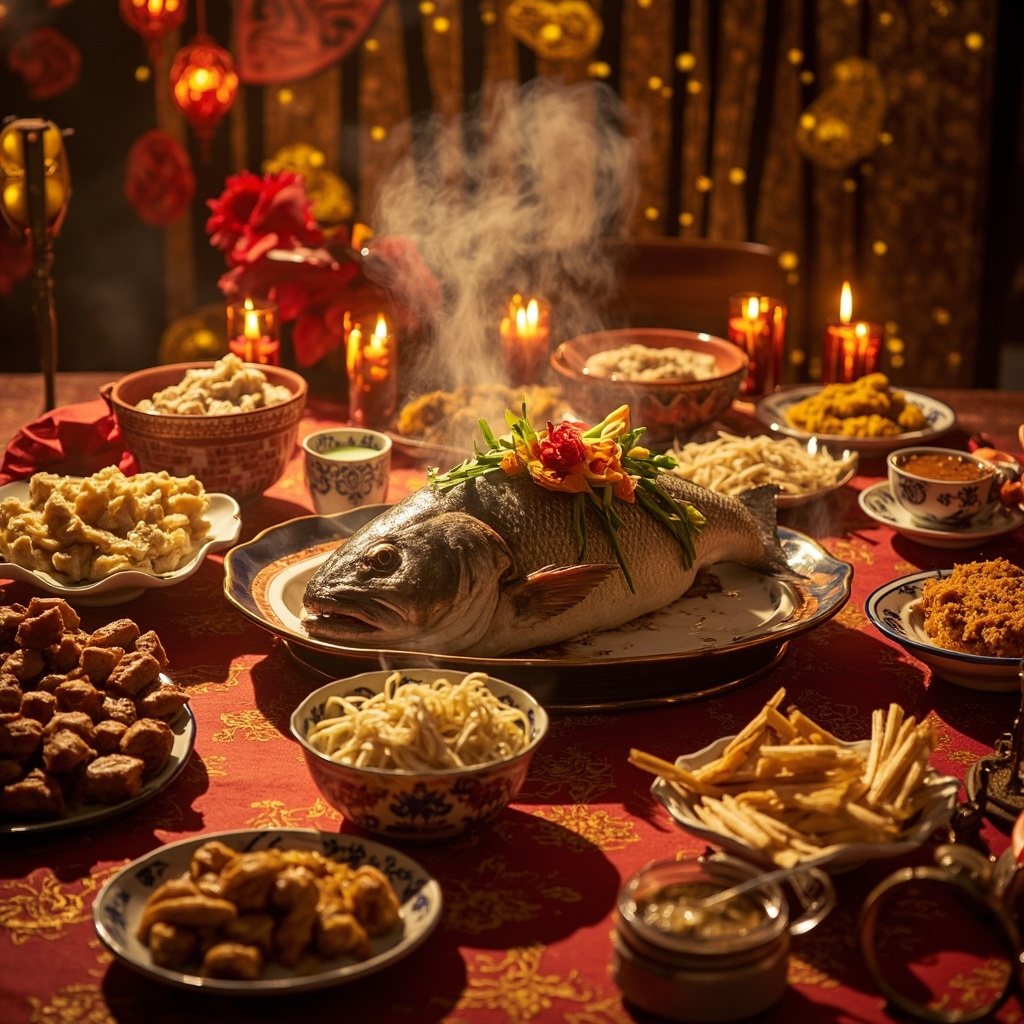
The reunion dinner, known as “Nian Ye Fan,” represents the most important meal of the Chinese New Year and typically takes place on the evening of Lunar New Year’s Eve. This grand feast brings together family members from near and far, embodying the Confucian value of family unity that lies at the heart of Chinese culture.
Every dish served during the reunion dinner carries symbolic significance. Fish, pronounced “yu” in Mandarin, sounds like the word for surplus or abundance, making it an essential dish representing prosperity for the coming year. Dumplings, shaped like ancient gold ingots, symbolize wealth and good fortune. Long noodles represent longevity and a long life, while鍦嗗瓙 (yuanzi) or glutinous rice balls signify family unity and completeness.
The preparation of this meal often involves multiple generations working together in the kitchen鈥攁 beautiful expression of family cooperation that strengthens bonds between grandparents, parents, and children. For many Chinese families, the reunion dinner is the only time during the year when the entire extended family gathers in one place, making it an emotionally charged and deeply meaningful occasion.
Red Envelopes and Gift-Giving
The tradition of giving red envelopes, called “hongbao” in Mandarin, dates back centuries to the Song Dynasty. These small red packets, typically decorated with gold characters for luck and prosperity, contain monetary gifts given from elders to younger family members and from employers to employees.
The tradition carries profound symbolic meaning beyond the monetary value. Red represents good fortune, happiness, and vitality in Chinese culture, and the act of giving red envelopes symbolizes the transference of blessing and protection from the giver to the recipient. The money inside is meant to suppress evil spirits and bring good luck to children and young people as they enter the new year.
Modern variations of this tradition have emerged with digital red envelopes, particularly popular in China through mobile payment platforms like WeChat. Younger generations now exchange virtual hongbao during family gatherings and New Year messages, blending technological innovation with ancient customs.
Fireworks, Firecrackers, and Light Displays
The use of fireworks and firecrackers during the Chinese New Year connects directly to the ancient legend of Nian. The loud bangs and brilliant colors were originally intended to scare away evil spirits and bring good fortune to households. Today, while the superstitious elements have diminished for many, the tradition remains a spectacular highlight of the celebrations.
In many Chinese cities, the countdown to midnight on New Year’s Eve triggers an extraordinary synchronized display of fireworks that can last for hours. The sky illuminates with cascading colors, and the sound creates a festive atmosphere that brings communities together in shared wonder. Major celebrations in places like Hong Kong, Taipei, and Singapore attract international visitors who come specifically to witness these breathtaking displays.
Lion Dance Performances
The lion dance represents one of the most visually striking and culturally significant traditions of the Spring Festival. This art form combines martial arts, acrobatics, and music to create performances where dancers manipulate elaborate lion costumes, bringing the mythical creature to life in a dance that can last from a few minutes to several hours.
Lion dance troupes typically perform during the Chinese New Year period, visiting businesses and homes to bring good luck and fortune. The lion “eats” green vegetables hung high above doorways, symbolically consuming and dispelling bad luck while spitting out the greens to distribute prosperity. The drumming, cymbals, and gongs that accompany the performance are believed to welcome the new year with joyful noise and drive away negative energies.
Regional Variations
While the core Chinese traditions remain consistent across the diaspora, fascinating regional variations have developed based on geography, dialect, climate, and local customs. Understanding these differences enriches one’s appreciation of the Spring Festival’s cultural complexity.
In northern China, people traditionally eat dumplings during the reunion dinner鈥攖housands of them, often prepared collectively by the whole family. The dumplings’ shape, resembling ancient gold ingots, symbolizes wealth and prosperity. In contrast, southern Chinese favor dishes like Nian Gao (sticky rice cake), which represents growth, improvement, and a higher year-over-year existence. The sweet rice cake’s pronunciation “nian gao” also puns with “getting higher every year.”
Northern and southern regions also differ in their approach to temple fairs, traditional markets that spring up during the festival period. Northern temple fairs emphasize traditional folk performances, camel caravans, and acrobatic shows, while southern versions often feature elaborate flower markets, particularly in cities like Guangzhou where cherry blossoms and orchids take center stage.
Ethnic minorities within China also observe the Spring Festival with unique variations. The Zhuang people, China’s largest minority group, celebrate with singing competitions and ritual dances. Mongolian communities incorporate traditional wrestling and horse racing into their festivities, while Tibetan celebrations include distinctive butter lamp ceremonies and prayer flag ceremonies.
Modern Celebrations
The Chinese New Year celebrations have evolved significantly in the 21st century, incorporating technology, global influences, and contemporary social practices while maintaining their essential spiritual and familial character.
Globalization has transformed the Spring Festival into an internationally recognized celebration. Cities like London, New York, Sydney, and Toronto host large-scale celebrations featuring traditional performances, street fairs, and elaborate decorations that attract millions of visitors. These international observances serve both the overseas Chinese community and curious locals, promoting cross-cultural understanding and appreciation.
Technology has reshaped how people participate in the celebrations. Digital greeting cards, video calls connecting families across continents, and social media posts sharing New Year wishes have become standard practice. The Spring Festival Gala, a massive television broadcast watched by hundreds of millions in China and overseas, now streams live online and features interactive elements that engage younger audiences.
Environmental consciousness has prompted some communities to reduce fireworks displays due to air quality concerns and noise pollution. This has led to creative alternatives like laser light shows, drone performances, and virtual reality experiences that attempt to maintain the festive atmosphere while addressing modern environmental concerns.
Significance of the Spring Festival
The Chinese New Year carries profound significance that extends far beyond mere celebration. This festival serves as a vital connection between generations, a reinforcement of cultural identity, and a ritual of renewal that provides psychological and social benefits to participants.
At its core, the Spring Festival embodies the Chinese philosophical emphasis on family and community. The reunion dinner, the giving of red envelopes, and the visits to relatives and friends all reinforce social bonds that might otherwise weaken in modern, urbanized societies. For many Chinese families, the festival is the only time when multiple generations come together, creating memories and transmitting cultural values from older to younger family members.
The festival also serves important psychological functions. The act of cleaning one’s home before the new year, paying off debts, and resolving conflicts represents a kind of ritual purification鈥攕etting aside the troubles of the old year to begin fresh. The decorations of red and gold, the sounds of celebration, and the abundance of special foods all work together to create an atmosphere of hope and optimism for the coming year.
Economically, the Spring Festival has become one of the world’s largest annual human migrations, as hundreds of millions of people travel to their hometowns for family reunion celebrations. This period, known as Chunyun, represents the world’s largest annual migration and has significant impacts on transportation, retail, and hospitality industries across Asia and throughout the global Chinese community.
Conclusion
The Chinese New Year stands as a remarkable testament to the enduring power of tradition, family, and cultural identity. From ancient origins in mythological protection against evil spirits to modern global celebrations involving billions of participants, the Spring Festival continues to evolve while maintaining its essential character as a time of renewal, reunion, and rejoicing.
For travelers and cultural enthusiasts, experiencing the Chinese New Year offers an extraordinary opportunity to witness living traditions that have been continuously practiced for millennia. Whether watching the spectacular lion dance performances, joining in the reunion dinner festivities, or simply marveling at the sea of red decorations that transform entire cities, the Spring Festival provides unforgettable insights into Chinese culture and values.
As China continues to rise as a global economic and cultural power, the Spring Festival gains increasing international recognition, sharing the joy of Chinese traditions with audiences worldwide. In embracing both ancient customs and modern innovations, the Chinese New Year demonstrates how cultural heritage can remain vibrant and relevant in an ever-changing world鈥攑roving that some traditions are truly universal, celebrating the human need for connection, hope, and renewal.