
China’s rich tapestry of Chinese festivals weaves together thousands of years of history, mythology, agricultural traditions, and spiritual beliefs into vibrant annual celebrations that continue to captivate both locals and visitors from around the world. These traditional Chinese holidays follow the lunar calendar, creating a rhythmic pattern of festivities that mark the changing seasons, honor ancestors, and strengthen community bonds.
For travelers seeking to understand authentic Chinese culture, attending one of these annual celebrations offers an unparalleled glimpse into the heart of Chinese society. From the explosive excitement of the Spring Festival to the serene beauty of the Mid-Autumn Festival, each celebration carries profound meaning while providing spectacular entertainment and culinary traditions that have been perfected over centuries.
Spring Festival (Chinese New Year)
The Spring Festival, also known as Chinese New Year or the Lunar New Year, stands as the most important and widely celebrated of all traditional Chinese holidays. Falling on the first day of the first month of the lunar calendar, typically between late January and mid-February, this festival marks the beginning of a new year and a fresh start for families across China and Chinese communities worldwide.
Historical Origins and Significance
The origins of the Spring Festival trace back to ancient times when villagers would offer sacrifices to the gods and ancestors at the start of a new harvest season. According to legend, the festival also serves to ward off the mythical beast Nian, who would emerge at the turn of the year to terrorize villages. Over time, the traditions evolved into the elaborate celebrations we know today, incorporating elements of ancestor worship, family reunions, and hopes for prosperity in the coming year.
Modern Traditions and Celebrations
Modern Spring Festival celebrations begin weeks before the actual holiday with extensive cleaning of homes (symbolizing the removal of bad luck), purchasing new items, and preparing special foods. The Eve of the Spring Festival, known as Chuxi, brings families together for an elaborate reunion dinner featuring dishes that symbolize wealth, good fortune, and longevity.
During the celebration period, streets come alive with traditional lion dances, dragon processions, fireworks, and red decorations symbolizing good luck. Red envelopes containing money are given to children and unmarried adults by elders. Major cities like Beijing, Shanghai, and Guangzhou host spectacular flower fairs, temple fairs, and cultural performances that attract millions of visitors annually.
Mid-Autumn Festival
The Mid-Autumn Festival, also called the Moon Festival, celebrates the harvest moon and family reunion. Held on the 15th day of the 8th lunar month, usually in September or early October, this festival represents one of the most romantic and aesthetically beautiful Chinese festivals.
Cultural and Mythological Roots
The festival’s origins blend agricultural harvest celebrations with the beautiful legend of Chang’e, the Moon Goddess. According to Chinese mythology, Chang’e consumed the immortality elixir and floated to the moon, where she now resides as its eternal guardian. The round shape of the full moon during this festival symbolizes completeness and family unity, making it the perfect occasion for family gatherings.
Traditional Activities and Foods
Modern Mid-Autumn celebrations feature moon-watching parties, where families gather outdoors to admire the allegedly fullest and brightest moon of the year. Elaborate lanterns in various shapes and sizes illuminate parks and streets, particularly in southern China. The quintessential food of this festival is the mooncake, a round pastry filled with sweet or savory ingredients that represents the full moon and family unity.
Dragon Boat Festival (Duanwu Festival)
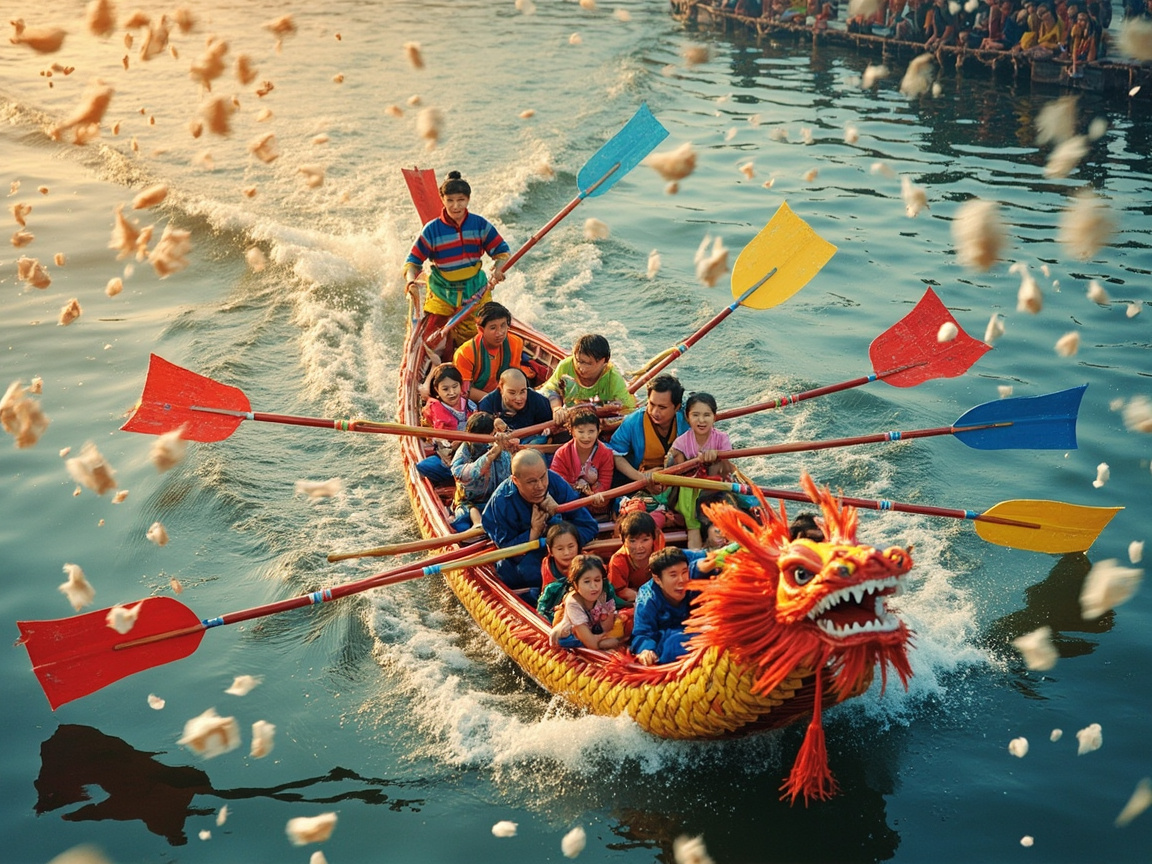
The Dragon Boat Festival, observed on the 5th day of the 5th lunar month, is one of China’s most exciting annual celebrations. This festival combines ancient water rituals, commemoration of a beloved poet, and beliefs about warding off evil spirits that have been maintained for over 2,000 years.
Historical Background
The festival is most commonly associated with the memory of Qu Yuan, a poet and statesman of the Warring States period (475-221 BCE). Qu Yuan served the Chu kingdom with distinction but was eventually exiled by jealous rivals. Unable to bear seeing his homeland decline, he drowned himself in the Miluo River on the fifth day of the fifth lunar month.
Legend states that local villagers raced out in boats to search for his body, throwing rice dumplings into the water to prevent fish from consuming it. These traditions evolved into the dragon boat races and zongzi (rice dumplings) that remain central to the celebration today.
Modern Celebrations
Contemporary Dragon Boat Festival celebrations feature dramatic dragon boat races that have become international sporting events, with competitions held in North America, Europe, and Australia. The boats, often decorated with dragon heads and tails, require coordinated teamwork from dozens of paddlers racing to the beat of drums.
Traditional activities include hanging calamus and mugwort on doors to ward off evil, wearing perfumed sachets, and drinking realgar wine. Families prepare and enjoy zongzi, glutinous rice dumplings wrapped in bamboo leaves, with both savory and sweet fillings reflecting regional preferences.
Qingming Festival (Tomb-Sweeping Day)
The Qingming Festival, also known as Tomb-Sweeping Day, typically falls on April 4th or 5th and represents one of the most solemn yet beautiful traditional Chinese holidays. This festival honors ancestors and departed loved ones through careful grave maintenance, offerings, and memorial ceremonies.
Ancient Origins and Meaning
The festival originated from the ancient Hanshi Day (Cold Food Festival), which commemorated Jie Zitui, a loyal follower who died protecting his lord by hiding in a forest and ultimately burning himself. Over time, the festival merged with Qingming, a solar term marking the onset of warmer weather and spring plowing, creating a celebration that honors both ancestors and the renewal of nature.
Contemporary Observances
During the Qingming Festival, families travel to ancestral gravesites to clean the areas, remove weeds, and make offerings of food, tea, wine, and paper money. Traditional foods include tangyuan (sweet rice balls) and cold foods prepared without fire, following the ancient custom. Many people also fly kites during this period, including some that make sounds in the wind, symbolizing the release of troubles and illnesses.
In modern urban China, where families may live far from ancestral villages, the festival has adapted to include online memorial services and virtual offerings, demonstrating how ancient cultural traditions continue to evolve while maintaining their essential purpose of honoring the departed.
Lantern Festival (Yuanxiao Festival)
The Lantern Festival marks the final day of the Chinese New Year celebrations, falling on the 15th day of the first lunar month. This enchanting festival transforms cities across China into magical wonderlands of light, color, and celebration.
Historical Significance
The origins of the Lantern Festival date back over 2,000 years to the Han Dynasty, when Buddhist monks began illuminating lanterns on the 15th day of the lunar month to honor the Buddha. The Emperor eventually made this a court tradition, which spread throughout Chinese society and evolved into the spectacular celebration it is today.
Festival Traditions
The centerpiece of the Lantern Festival is, naturally, the lantern. Families hang red lanterns outside their homes, while public parks and temples display elaborate lanterns shaped like animals, flowers, and famous characters from Chinese mythology. In some cities, enormous lantern exhibitions attract visitors from around the world.
Traditional activities include solving lantern riddles (guessing puzzles written on lanterns), performing dragon dances, and eating yuanxiao or tangyuan鈥攕weet glutinous rice balls filled with various fillings that symbolize family unity and completeness. The festival provides a magical conclusion to the Spring Festival period, with fireworks often lighting up the night sky.
Double Ninth Festival (Chongyang Festival)
The Double Ninth Festival occurs on the 9th day of the 9th month of the lunar calendar, usually in October. The Chinese word for nine (jiu) sounds similar to the word for forever, making this a day associated with longevity and the wishes for extended life for elders.
Cultural Context
According to Chinese folklore, the number nine represents yang energy (the male, positive principle), and the Double Ninth is considered an inauspicious date. Ancient customs involving climbing high places, drinking chrysanthemum wine, and wearing cornel plants developed to counteract these negative influences. The festival has evolved into a day specifically devoted to honoring elders and expressing wishes for their health and longevity.
Modern Celebrations
Contemporary Double Ninth Festival celebrations often involve family outings to hills, parks, and scenic areas to enjoy autumn scenery. Many communities organize activities specifically designed for senior citizens, including cultural performances, health checks, and special discounts at restaurants and attractions. Chrysanthemum exhibitions are popular, and eating chongyang cakes (rice cakes layered to represent the elevation of the festival) has become a cherished tradition.
Other Notable Celebrations
Laba Festival
The Laba Festival, held on the 8th day of the 12th lunar month, serves as a precursor to the Spring Festival. The name derives from the Buddhist tradition of offering Laba porridge, a rice and mixed grain congee, to the Buddha. Families traditionally prepare this nutritious dish and share it with neighbors, creating a warm sense of community before the New Year festivities begin.
Winter Solstice Festival (Dongzhi)
Celebrated around December 21st or 22nd, the Winter Solstice marks the shortest day of the year in the Northern Hemisphere. In Chinese culture, this astronomical event holds great significance as the return of yang energy and the gradual lengthening of days. Families gather to eat tangyuan (sweet rice balls) and dumplings, with northern regions preferring dumplings and southern areas favoring tangyuan.
Qixi Festival (Chinese Valentine’s Day)
Often called Chinese Valentine’s Day, the Qixi Festival falls on the 7th day of the 7th lunar month. Based on the romantic legend of the Cowherd and Weaver Girl, who are separated by the Milky Way and allowed to meet only once per year on this date, the festival has become an occasion for lovers to express their devotion through gifts, romantic dinners, and special declarations of love.
Conclusion
The Chinese festivals and annual celebrations outlined in this guide represent far more than mere holidays鈥攖hey embody the living heart of Chinese civilization, connecting modern society with thousands of years of accumulated wisdom, artistic achievement, and communal values. Each festival offers a unique window into the Chinese soul, revealing deep respect for ancestors, harmony with nature, the importance of family bonds, and hopes for prosperity and happiness.
For travelers interested in experiencing authentic Chinese culture, timing a visit to coincide with one of these celebrations provides an unforgettable opportunity. Whether watching dragon boats race across a river during the Dragon Boat Festival, admiring the full moon during the Mid-Autumn Festival, or joining millions of families in the spectacular chaos of the Spring Festival, these traditional Chinese holidays offer experiences that no museum or historical site can replicate.
As China continues to modernize, these festivals evolve and adapt while maintaining their essential purpose: bringing people together to celebrate life, honor the past, and embrace the future with hope and joy. Understanding and participating in these celebrations offers the most genuine and rewarding insight into the culture, values, and spirit of the Chinese people.