ARTICLE_TITLE: Chinese Calligraphy: History, Art, and Modern Practice
ARTICLE_BODY:
## Introduction
Chinese calligraphy, often called the “art of the brush,” is one of the oldest and most revered visual art forms in the world. It blends rhythm, balance, and the expressive quality of the human hand to transform simple ink strokes into a language of beauty. While the practice originated as a method of recording information, it quickly evolved into a sophisticated art that captures the spirit of Chinese culture, philosophy, and aesthetic values. Today, Chinese calligraphy remains a vibrant practice that bridges ancient tradition and contemporary expression, attracting enthusiasts worldwide who seek to master its nuanced brushwork and timeless elegance.
## Historical Origins of Chinese Calligraphy
### Early Inscriptions
The roots of Chinese calligraphy stretch back to the Shang dynasty (c. 1600–1046 BC), when scribes carved characters onto oracle bones and turtle shells. These early inscriptions, known as oracle bone script, reveal the first attempts to standardize written symbols, laying the groundwork for later calligraphic evolution. Though crude by later standards, the deliberate placement and rhythmic repetition of these marks demonstrate an innate sense of balance and purpose.
### Bronze and Stone
During the Zhou dynasty (c. 1046–256 BC), the use of bronze vessels for ritual inscriptions introduced a more refined aesthetic. Inscriptions on bronze, often commemorating royal achievements, displayed greater fluidity and decorative flair. Simultaneously, stone engravings—such as those found on the famous “Stone Drum” (Shigu) texts—began to showcase the harmonious relationship between the brush and the stone surface, hinting at the future development of brush‑on‑paper techniques.
## Evolution Through the Dynasties
### Qin and Han: The Birth of Standard Scripts
The unification of China under the Qin dynasty (221–206 BC) prompted the creation of a standardized script, known as “small seal” or Xiao Zhuan. This script enforced uniformity across the empire, establishing a baseline for future styles. The subsequent Han dynasty (206 BC–220 AD) refined these forms, giving rise to “official” (lishu) and “regular” (kaishu) scripts. The emphasis on legibility and consistency during this era set the stage for the artistic flourish that would define later periods.
### Tang Dynasty: The Golden Age
The Tang dynasty (618–907 AD) is frequently regarded as the golden age of Chinese calligraphy. Master calligraphers such as Yan Zhenqing and Liu Gongquan elevated the art to new heights, creating works that balanced vigor and grace. Their practice emphasized the “bone‑structure” of characters, where each stroke conveyed inner strength and outward elegance. The Tang period also saw the rise of distinct schools, each championing particular aesthetic ideals, from the bold, expansive strokes of the “狂草” (wild cursive) to the disciplined, measured forms of the “楷书” (regular script).
### Song and Yuan: The Literati Tradition
During the Song (960–1279) and Yuan (1271–1368) dynasties, scholars turned calligraphy into a personal, meditative pursuit. The literati (wenren) regarded brushwork as an extension of one’s moral character and inner cultivation. Works by Su Shi, Mi Fu, and Zhao Mengfu illustrate the merging of poetry, painting, and calligraphy, reinforcing the concept that mastery of the brush reflects one’s spiritual discipline. The “running script” (xingshu) gained popularity for its dynamic yet readable flow, bridging the gap between formal and cursive styles.
### Ming and Qing: Decorative Flourish
The Ming (1368–1644) and Qing (1644–1912) dynasties brought a surge of decorative complexity. Imperial patronage led to lavish scrolls, where calligraphic verses were intertwined with elaborate landscapes. Calligraphers such as Wang Shizhen and Zheng Xueqian experimented with bold, dramatic strokes, often incorporating vibrant inks and decorative seals. While the aesthetic grew more ornate, the underlying principles of balance, rhythm, and structural integrity remained paramount.
## The Art of Brush and Ink
### Tools and Materials
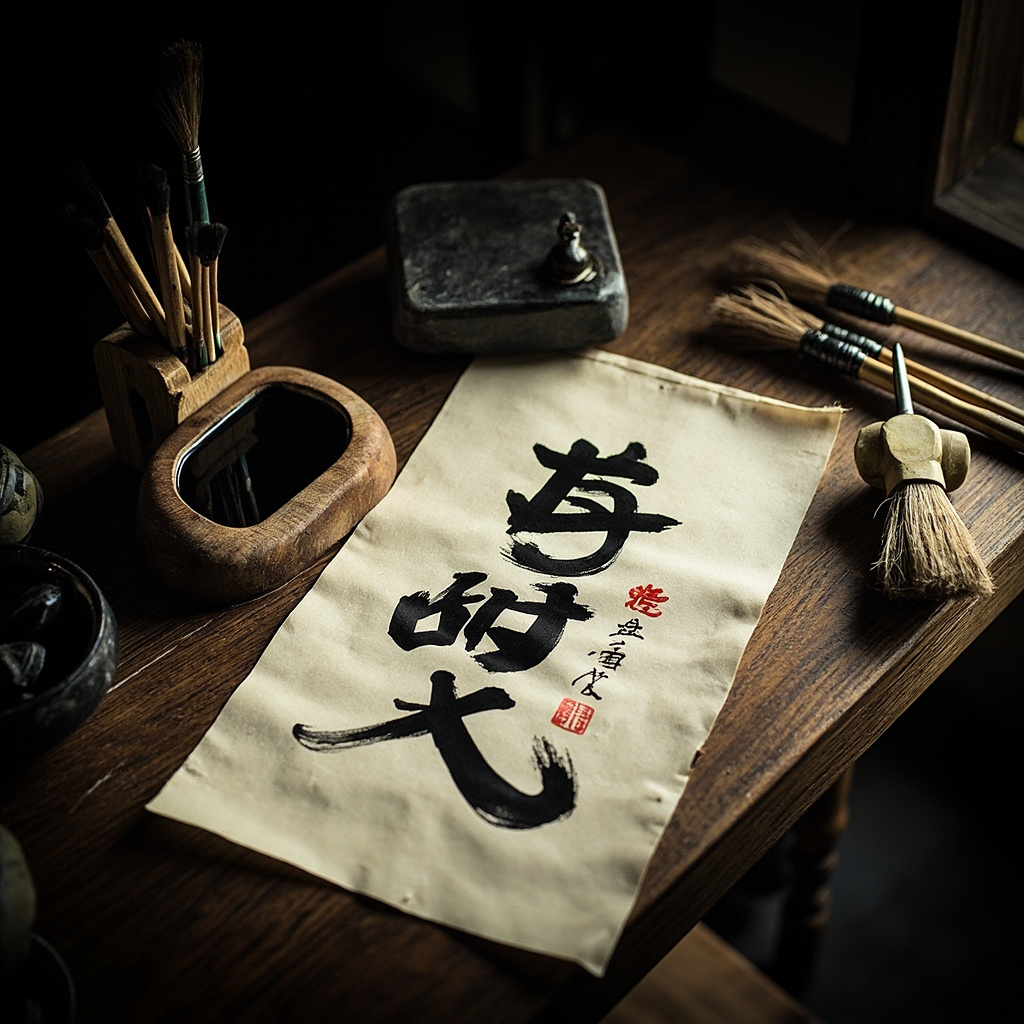
The quality of Chinese calligraphy hinges on the harmonious interaction of several key tools: the brush (maobi), ink (mo), paper (xuan paper), and the inkstone (zhutan). Traditional brushes are crafted from a mix of animal hair and bamboo, each contributing distinct flexibilities and control. Ink, traditionally made from pine soot mixed with animal glue, provides a rich, velvety tone that can be diluted for subtle gradations. Xuan paper, renowned for its absorbency and texture, allows the ink to glide smoothly while preserving the crispness of each stroke.
### Techniques and Stroke Dynamics
Mastering Chinese calligraphy involves understanding the “four treasures”: the brush’s pressure, speed, angle, and lift. A calligrapher learns to modulate these variables to produce “方” (square) and “圆” (round) strokes, each embodying distinct energies. The “pull‑and‑push” technique creates dynamic tension, while the “flying‑white” effect—a dry‑brush effect revealing paper fibers—adds texture and visual intrigue. Repetition and mindfulness are essential; each character is practiced until the movement feels natural, almost meditative.
## Styles and Schools
### Regular Script (Kaishu)
Kaishu, or regular script, is the most legible and widely taught style. Developed during the Tang dynasty, it emphasizes uniform stroke width and balanced spacing. Its clarity makes it the foundation for literacy and formal documents, and many modern learners begin their journey here.
### Running Script (Xingshu)
Xingshu, the running script, strikes a balance between the speed of cursive and the clarity of regular script. It features interconnected strokes that flow smoothly across the page, requiring both dexterity and control. Its elegance has made it a favorite among scholars and artists alike.
### Cursive Script (Caoshu)
Caoshu, known as “grass script,” is the most abstract and expressive style. Strokes are highly simplified, often reduced to flowing loops and slashes that capture the essence of a character rather than its literal form. Mastery of Caoshu demands a deep understanding of the underlying structure and a fearless approach to improvisation.
### Seal Script (Zhuanshu)
Zhuanshu, or seal script, harks back to the earliest forms of Chinese writing. Characterized by uniform line thickness and rounded forms, it is used primarily for seals, signatures, and decorative purposes. Its timeless aesthetic continues to inspire contemporary designers seeking a classical touch.
## Calligraphy as Spiritual Practice
### Meditation in Motion
For many practitioners, Chinese calligraphy is a form of moving meditation. The focused attention required to coordinate breath, hand, and brush cultivates mindfulness and inner calm. In Taoist and Buddhist traditions, the act of writing becomes a spiritual discipline, aligning the practitioner with the natural flow of qi (vital energy).
### Cultural Significance
Calligraphy is deeply woven into Chinese cultural identity. It appears on temple banners, imperial decrees, wedding scrolls, and everyday objects. Its aesthetic principles—harmony, balance, and the pursuit of perfection—echo broader philosophical ideals such as Confucian respect for order and Taoist harmony with nature.
## Modern Practice and Digital Age
### Contemporary Artists
In the 21st century, Chinese calligraphy has transcended its traditional boundaries. Artists like Wang Dongling and Liu Shouhong blend classical techniques with modern themes, creating installations that incorporate multimedia elements, large‑scale murals, and even performance art. These innovators demonstrate that calligraphy can remain relevant while honoring its heritage.
### Digital Tools and Online Communities
The rise of digital platforms has democratized access to Chinese calligraphy. Apps such as “i‑Brush,” “Calligraphy‑Master,” and online video tutorials provide interactive feedback on stroke order, pressure, and timing. Social media groups on Instagram, YouTube, and dedicated forums enable enthusiasts worldwide to share progress, exchange tips, and showcase their work, fostering a global community of practice.
## Learning Chinese Calligraphy Today
### Choosing the Right Supplies
Beginners should start with a medium‑hard brush, a high‑quality ink stick or bottled ink, and a sheet of xuan paper or practice paper with a slight texture. Investing in a sturdy inkstone or an ink‑grinding stone can enhance the meditative experience of preparing ink by hand.
### Finding a Teacher or Online Course
While self‑study is possible, guidance from an experienced instructor accelerates skill development. Many calligraphy societies and cultural centers offer workshops, and reputable online courses—often taught by master calligraphers—provide structured lessons ranging from basic strokes to advanced composition.
### Practicing Consistently
Consistency is key. Dedicating even 15–30 minutes each day to practice basic strokes, character formation, and copywork of classic models yields steady improvement. Keeping a practice journal, noting areas of difficulty, and reviewing progress regularly helps track growth and refine technique.
## Conclusion
Chinese calligraphy is far more than a writing system; it is a living art form that encapsulates centuries of cultural evolution, aesthetic refinement, and spiritual introspection. From its origins on oracle bones to its contemporary digital manifestations, the practice continues to inspire both East and West. By understanding its history, embracing its artistic principles, and engaging with modern tools, today’s learners can keep this timeless discipline alive and vibrant for future generations. Whether you are drawn by the elegance of brush strokes, the meditative rhythm of ink on paper, or the desire to connect with a rich cultural heritage, Chinese calligraphy offers a profound and rewarding journey.