ARTICLE_TITLE: Peking Opera Performance and Cultural Heritage: A Deep Dive into China’s Timeless Art Form
ARTICLE_BODY:
## Introduction
Peking Opera, also referred to as Beijing opera or Jingju, stands as one of the most iconic symbols of Chinese culture and performing arts. This sophisticated theatrical tradition combines singing, dialogue, acrobatics, martial arts, and mime to narrate stories drawn from Chinese history, folklore, and literature. Recognized worldwide for its distinctive vocal style, elaborate costumes, and dramatic face painting, Peking Opera is more than entertainment; it is a living repository of China’s cultural heritage and national identity. This article explores the origins, core elements, preservation efforts, and contemporary relevance of Peking Opera, providing a comprehensive overview for readers interested in traditional Chinese theater, performance art, and cultural preservation.
## History and Origins
### Early Influences and Development
The roots of Peking Opera can be traced back to the late 18th century when the Hui (Anhui) and Han (Hubei) opera troupes converged in Beijing. These regional styles merged with the musical traditions of the Imperial court, giving rise to a new form that incorporated vocal techniques, instrumental accompaniment, and stylized movement. The term “Peking Opera” itself reflects the city’s historic name, highlighting the art form’s deep association with the capital’s cultural milieu. Over time, the genre absorbed elements from other Chinese opera families, including Kunqu, Yue opera, and Pingju, creating a unique synthesis that emphasized both lyrical beauty and dramatic intensity.
### The Evolution of Performance Style
During the Qing Dynasty, the Imperial court patronized the art, leading to refined techniques and standardized repertoire. The early 20th century witnessed a surge in public performances, as opera houses opened to broader audiences beyond the aristocracy. Political upheavals in the 20th century forced adaptations, yet the core aesthetic of Peking Opera remained resilient. In recent decades, scholars and artists have worked to document classic pieces, ensuring that the historical narratives and performance conventions are not lost to time.
## Core Elements of Peking Opera
### Vocal Techniques and Melodic Patterns
A defining feature of Peking Opera is its vocal delivery, which relies on a restricted set of melodic patterns known as “xian” and “yuan.” Singers employ a resonant, falsetto-like voice that can convey both subtle emotion and heroic vigor. The text is often poetic, using four‑tone rhythmic structures that emphasize clarity and musicality. This vocal style, combined with precise articulation, allows performers to communicate complex character traits—such as loyalty, betrayal, or youthful exuberance—through sound alone.
### Instrumental Accompaniment
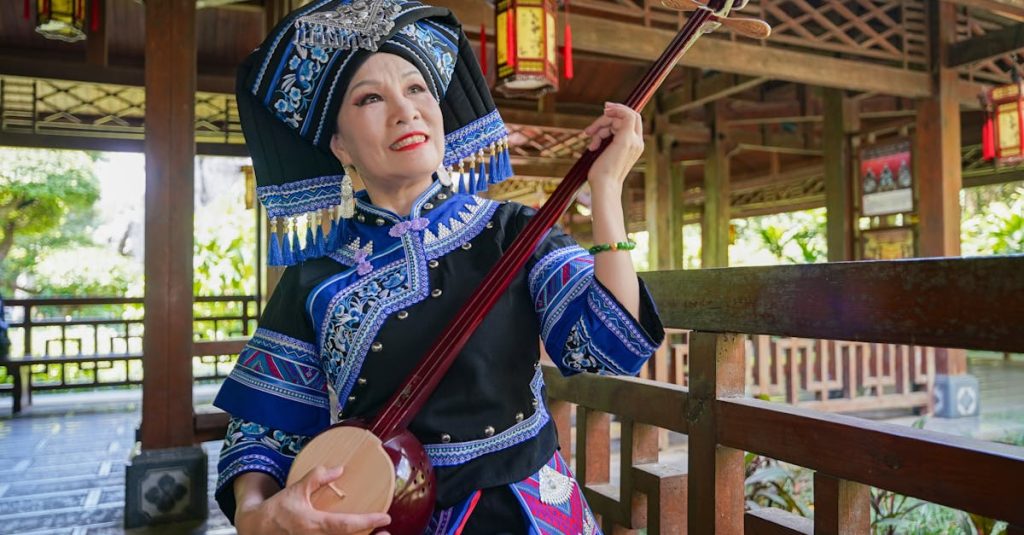
The musical landscape of a Peking Opera performance is shaped by a small ensemble of traditional Chinese instruments. The primary melodic instrument is the *jinghu*, a spiked fiddle that provides a bright, high‑pitched lead. Complementing the *jinghu* are the *yueqin* (moon lute), *dizi* (bamboo flute), and a variety of percussion devices, including the *ban* (wooden clappers) and *gong*. The rhythmic pulse of the percussion guides the actors’ movements and punctuates dramatic moments, creating an immersive sonic environment that heightens audience engagement.
### Costumes, Makeup, and Face Painting
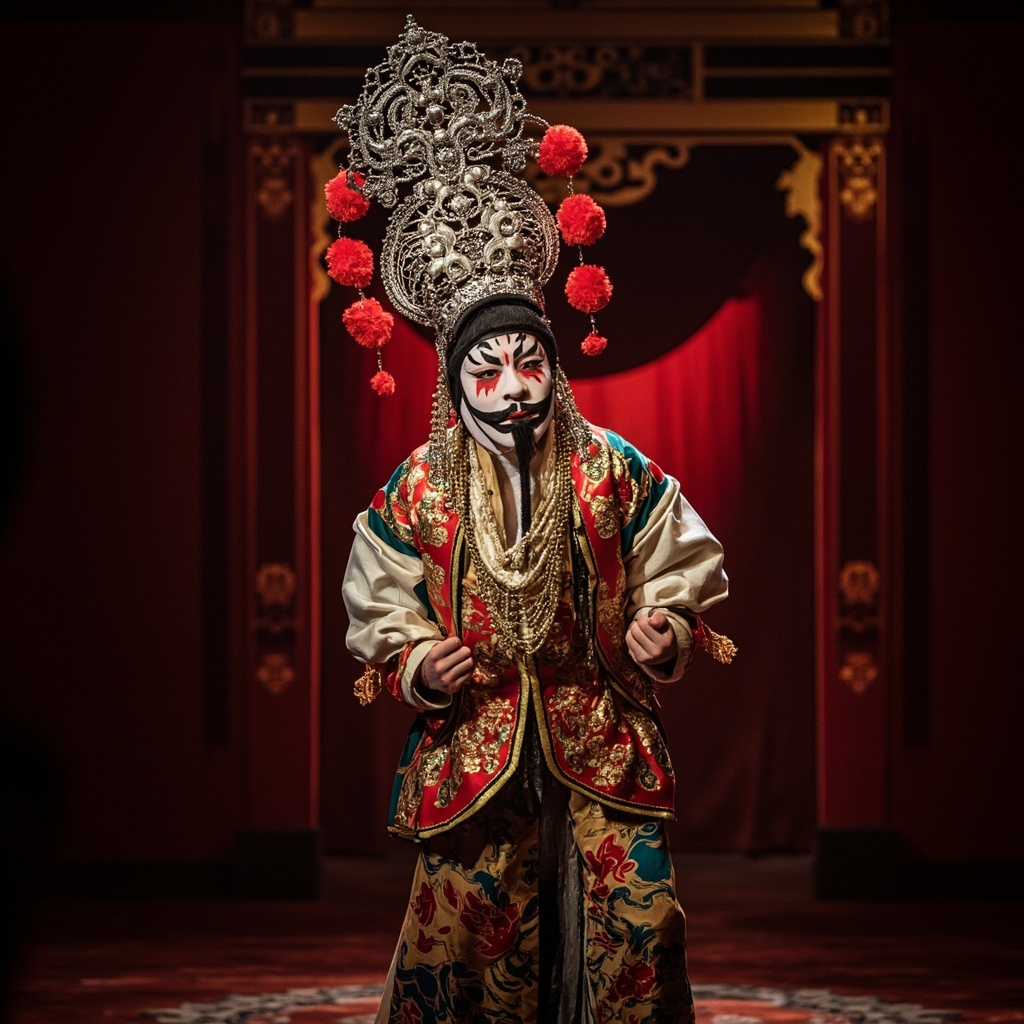
Visual spectacle is central to Peking Opera. Costumes are highly stylized, employing vibrant silks, embroidered motifs, and symbolic colors that denote social status, moral alignment, or character type. For instance, a red face may signify loyalty and courage, while a white face often denotes treachery or cunning. Face painting, known as *lianpu*, is a sophisticated art form that translates a character’s inner disposition onto the exterior. Elaborate headdresses, intricate jewelry, and ceremonial robes further enrich the visual storytelling.
### Stagecraft and Choreography
The Peking Opera stage is sparse, relying on minimal set pieces to allow the actors’ gestures and movements to dominate. The “four skills” (singing, speaking, acting, and combat) are integrated into choreographed sequences that combine martial arts, acrobatics, and rhythmic pantomime. Symbolic props—such as a whip representing a horse or a banner indicating a battle—enable performers to convey sweeping scenes without realistic scenery. This minimalist approach encourages audience imagination and highlights the performers’ technical mastery.
## The Role of Cultural Heritage
### UNESCO Recognition and Preservation Efforts
In 2006, Peking Opera was inscribed on the UNESCO Representative List of the Intangible Cultural Heritage of Humanity, underscoring its significance as a living tradition that embodies Chinese identity. International recognition has spurred governmental and non‑governmental initiatives aimed at safeguarding the art form. These include the establishment of specialized schools, the digitization of historical recordings, and the creation of public outreach programs that introduce Peking Opera to younger generations. Preservation efforts also focus on maintaining the authenticity of traditional repertoire while permitting limited artistic innovation.
### Transmission and Training Institutions
Formal training in Peking Opera typically begins in dedicated academies where young students receive rigorous instruction in voice, movement, and scholarly knowledge of dramatic texts. Renowned institutions such as the National Academy of Chinese Theatre Arts and the Beijing Dance Academy’s opera department serve as incubators for future talent. Apprenticeship models, where seasoned masters mentor apprentices, remain a vital pathway for acquiring nuanced skills that cannot be fully captured through classroom lectures alone.
## Experiencing a Peking Opera Performance
### What to Expect as an Audience Member
Attending a live Peking Opera show is a multisensory experience. The performance usually opens with a ceremonial flourish of percussion, setting an anticipatory mood. The first act often showcases a “civil” piece featuring lyrical singing and refined gestures, while later acts may escalate into “martial” sequences with combat and acrobatics. Audience participation is encouraged through applause and occasional calls of appreciation, reflecting the communal nature of the art. The performance length can vary; a full program may last several hours, with intermissions that allow patrons to converse and savor traditional refreshments.
### Popular Stories and Repertoire
Classic tales from Chinese literature dominate the repertoire. Works such as “The Legend of the White Snake,” “The Drunken Concubine,” and “The Battle of Red Cliffs” are performed repeatedly, each rendition offering fresh interpretations through subtle variations in vocal nuance, costume detail, and choreography. Contemporary productions sometimes adapt modern narratives, blending traditional singing with spoken dialogue in Mandarin, thereby broadening appeal without sacrificing authenticity.
## Contemporary Challenges and Global Outreach
### Modern Adaptations and Fusion
While preserving traditional techniques, artists have experimented with cross‑genre collaborations. Modern Peking Opera may incorporate multimedia projections, Western orchestral instruments, or contemporary dance, resulting in hybrid performances that attract diverse audiences. These adaptations, however, must navigate the fine line between innovation and dilution, ensuring that the core aesthetic remains recognizable to purists and newcomers alike.
### Tourism and Cultural Exchange
Peking Opera has become a cornerstone of cultural tourism in China. International visitors flock to historic theaters in Beijing, Shanghai, and Xi’an to witness performances that highlight the nation’s artistic legacy. Moreover, touring companies bring Peking Opera to global stages, fostering cultural exchange and increasing awareness of Chinese performing arts abroad. Educational workshops, demonstrations, and language programs further facilitate dialogue between cultures, reinforcing Peking Opera’s role as a diplomatic soft‑power tool.
## Conclusion
Peking Opera is far more than a theatrical genre; it is a living embodiment of Chinese cultural heritage, artistic excellence, and historical memory. Through its distinctive vocal techniques, instrumental accompaniment, elaborate costumes, and symbolic stagecraft, it communicates stories that have resonated for centuries. Ongoing preservation efforts, educational initiatives, and international exposure ensure that Peking Opera continues to thrive in an ever‑changing world. For anyone interested in traditional Chinese theater, the performing arts, or the broader concept of intangible cultural heritage, engaging with Peking Opera offers a profound insight into the heart of China’s artistic soul.