
Tai Chi, also known as Taijiquan, represents one of China’s most treasured health practices, combining gentle, flowing movements with meditation and breathing techniques to promote physical wellness, mental clarity, and spiritual balance. This ancient martial art has evolved from its origins as a combat system into a comprehensive wellness practice embraced by millions worldwide for its remarkable health benefits and calming effects on daily life.
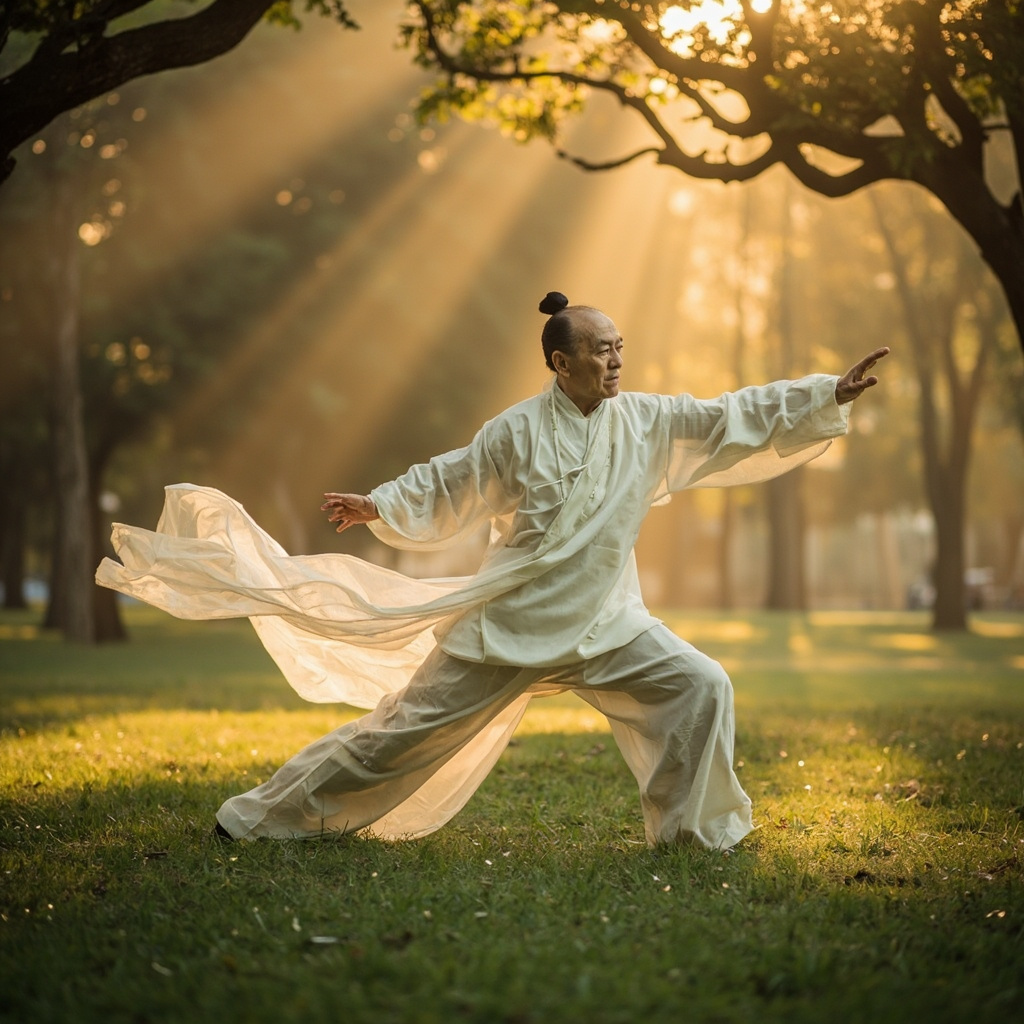
The practice of Tai Chi involves performing sequences of slow, graceful movements coordinated with deep breathing and mental focus. These movements flow into one another without interruption, creating a meditative state that calms the mind while gently exercising the entire body. Unlike vigorous exercise programs that stress the body, Tai Chi works with natural body mechanics to develop strength, flexibility, and balance without strain or impact.
Understanding Tai Chi Philosophy
Tai Chi philosophy derives from Taoist principles of naturalness, balance, and the cultivation of qi (vital energy) through movement and meditation. The concept of yin and yang, representing complementary opposites that balance and transform into each other, provides foundational framework for understanding Tai Chi practice. The practice itself embodies these principles through movements that balance expansion and contraction, tension and relaxation, movement and stillness.
The goal of Tai Chi practice extends beyond physical fitness to encompass the cultivation of what Taoist practitioners call “centeredness” – a state of mental calm and physical relaxation that supports overall wellbeing. This meditative aspect distinguishes Tai Chi from purely gymnastic exercise, creating holistic benefits that address mind and body together rather than treating them as separate entities.
Traditional Chinese medicine holds that qi flows through the body along specific pathways called meridians, and that blockages or imbalances in this flow produce illness and discomfort. Tai Chi practice supposedly maintains and unblocks these pathways, promoting health and preventing disease through the cultivation of smooth qi flow. While Western medicine continues studying these claims, the documented psychological and physiological benefits of Tai Chi practice stand on their own evidence.
Documented Health Benefits
Scientific research has documented numerous health benefits associated with regular Tai Chi practice. Studies consistently demonstrate improvements in balance, flexibility, and functional mobility among practitioners, particularly elderly individuals at risk for falls. The slow, controlled movements developproprioception (awareness of body position) and strengthen muscles used in everyday activities, reducing fall risk in aging populations.
Research has documented stress reduction and improved mood among Tai Chi practitioners. The meditative focus required during practice promotes relaxation and mental clarity that carry over into daily life. Studies show reductions in anxiety and depression symptoms among regular practitioners, with benefits comparable to conventional exercise programs and relaxation techniques.
Cardiovascular benefits have also been documented, with regular practice associated with reduced blood pressure and improved heart rate variability. The gentle intensity of Tai Chi makes it suitable for individuals who cannot tolerate more vigorous exercise, providing cardiovascular benefits without the strain of high-impact activities. This accessibility explains Tai Chi’s popularity among older adults and those with chronic health conditions.
Basic Principles and Techniques
Authentic Tai Chi practice follows specific principles that distinguish it from simple calisthenics or imitative movement. These principles provide guidance for executing movements in ways that maximize benefits while avoiding common errors that can undermine practice effectiveness or cause injury.
Relaxation represents the first and most fundamental principle. Tension interferes with the smooth flow of movement and qi, so practitioners consciously release unnecessary tension throughout practice. This relaxation extends beyond physical muscles to encompass mental tension and emotional stress, creating a state of comprehensive ease that supports both movement and meditation.
Straight spine posture provides foundation for all Tai Chi movements, with the head suspended as if pulled upward by an invisible string. This posture alignment allows qi to flow freely while distributing weight evenly through the body. Deviations from proper posture accumulate over time and can cause discomfort or injury, making correct alignment essential from the beginning of practice.
Natural breathing coordinates with movement, with breaths typically extending through multiple movements in a pattern that promotes relaxation and focus. Breathing should be deep and abdominal rather than shallow and chest-based, drawing air into the lower lungs where it most effectively supports oxygen exchange and relaxation response.
Continuous movement without interruption distinguishes Tai Chi from other exercise forms. Movements flow into one another without pauses or stops, creating a rhythmic pattern that induces meditative state while developing coordination and balance. This continuity requires concentration that provides cognitive benefits while making practice more meditation than mere exercise.
Getting Started with Practice
Beginning Tai Chi practice requires no special equipment, clothing, or fitness level beyond basic mobility. Comfortable, loose-fitting clothing that allows unrestricted movement supports practice, while flat, flexible shoes protect feet while allowing natural foot function. Practicing on grass, sand, or other soft surfaces reduces joint stress compared to hard surfaces.
Finding qualified instruction significantly enhances beginning practice, providing correct modeling of movements and immediate feedback on common errors. Local community centers, senior centers, and martial arts schools frequently offer beginning classes suitable for new practitioners. Online resources supplement in-person instruction, though the absence of feedback on personal movement patterns makes complete self-instruction challenging.
Beginning practitioners should start with simple movements and short practice sessions, gradually extending duration and complexity as proficiency develops. Even five to ten minutes of daily practice provides benefits, with fifteen to thirty minutes representing typical practice duration for intermediate practitioners. Consistency matters more than duration, with regular brief practice superior to occasional lengthy sessions.
Common Beginning Movements
Classic Tai Chi sequences include numerous movements, each with specific names and symbolic associations. Beginning practitioners typically learn foundational movements that establish proper posture, alignment, and movement quality before progressing to complete forms.
Ward Off (ju ru) exemplifies the principle of yielding, using gentle resistance rather than direct opposition to redirect incoming force. This movement introduces the concept of using opponent’s energy rather than meeting force with force, embodying the tactical wisdom of the martial tradition underlying Tai Chi philosophy.
Roll Back (luai) continues the yielding theme, rolling arm movement that redirects force in circular patterns. This movement develops the coordinated hip and torso rotation that characterizes advanced Tai Chi, while providing practical exercise for posture and balance.
Press (an) introduces the principle of issuing energy outward through gentle pushing movements. This movement develops the ability to coordinate whole-body movement in directed energy expression, while providing practical benefit for balance and coordination.
These foundational movements, combined with proper breathing and relaxation, provide sufficient practice for beginning students to experience Tai Chi benefits while developing foundation for more advanced practice.
Incorporating Practice into Daily Life
Integrating Tai Chi practice into daily routines requires commitment and creativity, particularly for those with demanding schedules. Morning practice sessions establish tone for the day while ensuring practice completion before competing demands interfere. Evening practice provides opportunity to release accumulated stress and prepare for restful sleep.
Even brief moments of Tai Chi practice during daily activities can reinforce benefits of formal practice. Waiting in lines, experiencing stress, or simply having a moment of transition between activities provides opportunity to return to Tai Chi awareness and breathing. This integration of practice principles into daily life represents advanced application of Tai Chi philosophy.
Finding practice community significantly supports long-term practice through social connection, shared learning, and mutual encouragement. Senior centers, parks, and community centers frequently host informal practice groups that welcome newcomers and provide ongoing support for regular practice.
Conclusion
Tai Chi provides accessible, gentle practice offering comprehensive benefits for physical health, mental clarity, and emotional balance. The meditative movements suit practitioners of all ages and fitness levels, from young adults seeking stress relief to seniors working on balance and mobility. This inclusiveness explains Tai Chi’s growing popularity as population ages and interest in holistic wellness continues expanding.
Beginning practice opens pathway to deeper engagement with Taoist philosophy, traditional Chinese medicine, and internal martial arts that have influenced Chinese culture for centuries. The journey of developing Tai Chi skill provides ongoing rewards that extend far beyond the physical benefits of exercise to encompass mental and spiritual development enriching every aspect of daily life.