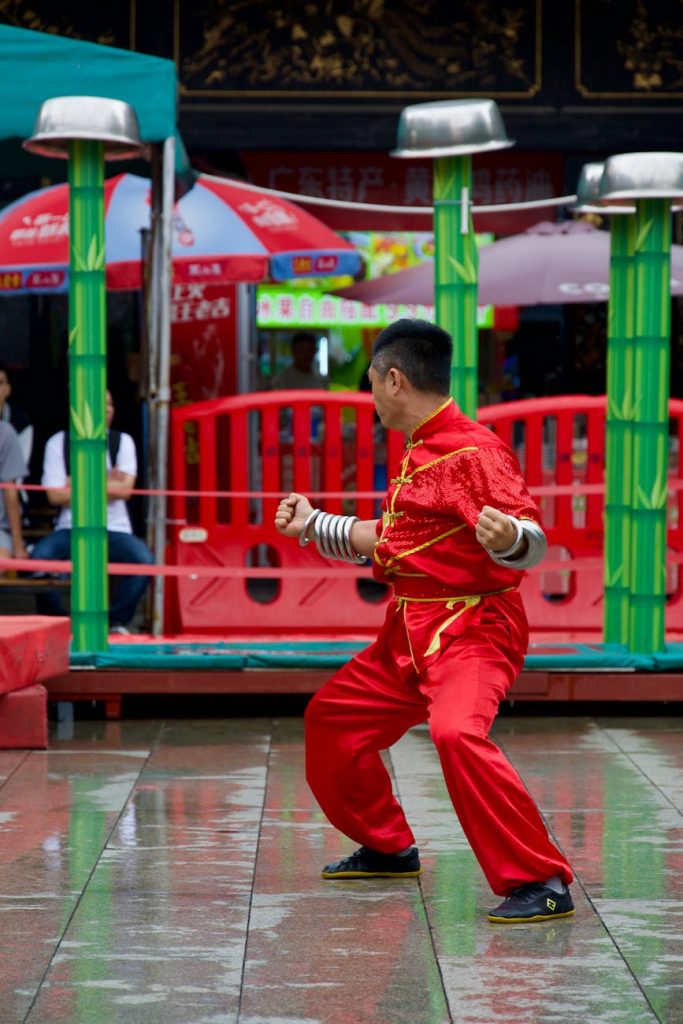
Bruce Lee transformed martial arts and popular culture globally, creating a legacy that extends far beyond his remarkable fighting abilities to encompass philosophy, fitness methodology, and cross-cultural influence that continues inspiring people worldwide. His journey from a small, sickly child in San Francisco to international martial arts icon represents one of the most remarkable personal transformations in modern history.
Beyond his screen presence and physical capabilities, Bruce Lee embodied principles of self-expression, adaptability, and continuous self-improvement that have transcended his martial arts to influence diverse fields including business, psychology, and personal development. His philosophy of “being water” has become synonymous with the idea of cultivating adaptive capability and personal authenticity that enables individuals to achieve their full potential.
Early Life and Initial Training
Bruce Lee was born in San Francisco on November 27, 1940, during a brief停留of his Hong Kong actor parents in the United States. He spent most of his childhood in Hong Kong, where his streetwise nature led him into fighting and physical activities that would eventually channel into martial arts training. As a teenager, he encountered Wing Chun gung fu under the legendary master Yip Man, beginning the transformation from restless youth to martial artist.
Despite his small stature as a young man, Bruce Lee trained obsessively, developing speed and power that exceeded any physical expectations his early years might have suggested. His training journals from this period reveal the extraordinary dedication that characterized his approach to martial arts development. He trained whenever possible, sometimes practicing on rooftops to avoid police interference with his street fighting activities.
His early martial arts development included diverse influences beyond Wing Chun, including Western boxing, fencing, and other styles he encountered in Hong Kong’s eclectic martial arts environment. This openness to different approaches would later characterize his philosophical rejection of style limitations in favor of pragmatic effectiveness.
Journey to America
Bruce Lee emigrated to the United States in 1959, initially settling in Seattle where family friends provided support as he established himself in his new country. He worked in his father’s restaurant while attending college, eventually opening his own martial arts school in Seattle that would become testing ground for his developing martial philosophy.
During this period, Bruce Lee began teaching gung fu to American students, an unusual choice given prevailing attitudes toward Asian martial arts in 1960s America. His teaching approach differed significantly from traditional methods, emphasizing practical application, physical conditioning, and philosophical understanding over traditional forms and ceremonies. This innovative approach attracted students who became converts to his evolving martial vision.
He later moved to Oakland, California, where his growing reputation brought increasing numbers of students and opportunities for public demonstrations. These demonstrations showcased his extraordinary physical capabilities and introduced his approach to martial arts to wider audiences that would eventually include Hollywood producers seeking new talent for television and film projects.
Philosophy of Jeet Kune Do
Bruce Lee’s martial arts philosophy crystallized in the concept of Jeet Kune Do (JKD), meaning “the way of the intercepting fist.” This philosophy rejected the rigid boundaries and traditional limitations of established martial arts styles in favor of adaptive, pragmatic approaches focused on practical effectiveness in actual combat situations.
Central to JKD philosophy was the concept of expressing oneself completely rather than imitating limited style parameters. Bruce Lee criticized martial artists who became trapped by traditional forms, arguing that authentic self-expression required transcending style limitations to achieve genuinely personal martial expression. This philosophy applied equally to life beyond martial arts, promoting authenticity and continuous self-development in all endeavors.
The famous phrase “be water, my friend” captured this adaptive philosophy in memorable imagery. Like water that takes the shape of its container while remaining fundamentally itself, the ideal martial artist adapts to circumstances without losing essential identity. This principle of adaptive capability rather than fixed technique represented revolutionary thinking that continues influencing martial arts development worldwide.
Film Career and International Stardom
Bruce Lee’s transition to film began with television appearances, including his role as sidekick in the series “The Green Hornet” that introduced him to American audiences. His martial arts demonstrations in this role created unprecedented interest in Asian martial arts among mainstream American viewers who had never witnessed such capabilities before.
His film career reached international stardom with “Enter the Dragon” (1973), produced by Warner Bros. in collaboration with Hong Kong’s Golden Harvest studio. This film showcased Bruce Lee’s unique combination of martial arts prowess and screen charisma, creating a template for martial arts cinema that subsequent performers would follow for decades.
Tragically, Bruce Lee died on July 20, 1973, at age 32, just weeks before “Enter the Dragon” premiered and introduced him to worldwide audiences. He never witnessed the extraordinary impact his final film would have on global martial arts appreciation or the lasting fame it would bring him. His death added to the legendary status he had already achieved, creating a permanent memorial in the form of his films and philosophical writings.
Legacy and Continuing Influence
Bruce Lee’s legacy extends far beyond martial arts to encompass fitness methodology, philosophical principles, and cross-cultural representation that have influenced countless individuals across diverse fields. His approach to training, emphasizing functional strength, flexibility, and continuous adaptation, anticipated modern fitness thinking by decades while remaining grounded in martial arts fundamentals.
The explosion of global interest in martial arts following his films created unprecedented opportunities for Asian martial artists while inspiring subsequent generations of performers who cite Bruce Lee as their primary inspiration. Mixed martial arts (MMA) development owes significant debt to Bruce Lee’s early advocacy for cross-style training and practical effectiveness over traditional boundaries.
In popular culture, Bruce Lee remains an iconic figure transcending martial arts to represent broader concepts of personal achievement, cultural bridge-building, and authentic self-expression. His films continue inspiring new audiences, while his philosophical writings provide guidance for those seeking to apply martial arts principles to personal development and achievement.
Conclusion
Bruce Lee showed that martial arts transcend physical technique to encompass philosophy, personal development, and cross-cultural understanding. His message of self-expression, adaptability, and continuous improvement inspires people worldwide regardless of their interest in martial arts per se.
The legacy Bruce Lee created through his films, writings, and personal example continues growing more than fifty years after his death. He demonstrated the extraordinary potential of human dedication and authenticity, showing that authentic self-expression requires courage to transcend limitations and chart personal paths to achievement and fulfillment.