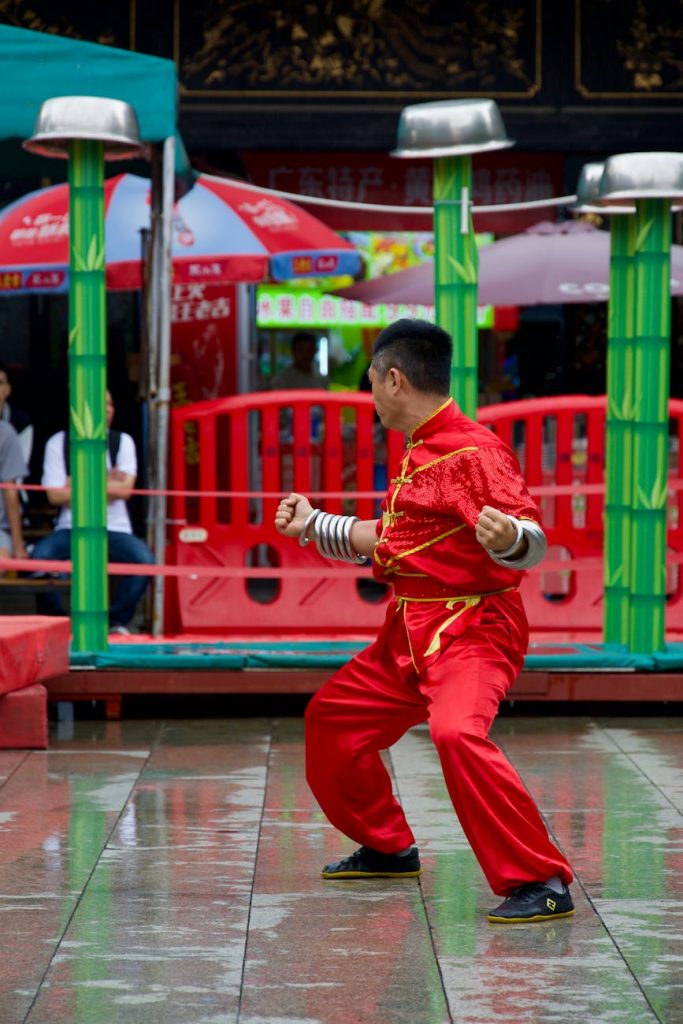
Learning basic Kung Fu moves provides foundation for advanced training and everyday fitness, establishing fundamental patterns of movement, balance, and body mechanics that support all subsequent development. These fundamental techniques appear across all martial arts styles, making them essential knowledge for any serious martial arts practitioner regardless of chosen specialization.

Basic Kung Fu training develops body awareness, coordination, and physical capabilities that benefit daily life far beyond martial applications. The discipline, focus, and patience developed through mastering fundamentals prepare practitioners for challenges both martial and personal. This comprehensive approach to fundamental training distinguishes Chinese martial arts from mere fighting techniques to encompass holistic personal development.
Understanding Stances
Stances form the foundation of all Kung Fu techniques, providing stable platforms from which strikes, kicks, and defensive movements execute. Proper stance development requires dedicated attention to foot positioning, weight distribution, and body alignment that may seem tedious but proves essential for advanced capability.
Horse stance (ma bu) requires feet positioned shoulder-width apart with toes pointing forward, knees bent deeply to lower center of gravity, and weight distributed evenly between both legs. This stance builds leg strength and stability while training body awareness that supports all movement. Holding horse stance for extended periods develops the strength and endurance necessary for sustained combat readiness.
Bow stance (gong bu) positions one leg forward in a long, low lunge while the back leg straightens with heel lifted. This stance develops balance, leg strength, and the ability to generate power through coordinated body positioning. The forward knee should align with the toes while the back leg provides pushing power for launching attacks or absorbing force.
Cat stance (xu bu) places most weight on the back leg with the front foot touching lightly with toes, allowing quick weight transfer for evasive movement. This stance supports defensive techniques while maintaining readiness for counterattack. Proper cat stance requires the back leg to support nearly all body weight while the front leg provides only directional guidance.
Essential Punching Techniques
Punches represent the most direct attack methods in Kung Fu, with numerous variations designed for different tactical situations and target selections. Proper punching technique requires coordination of the entire body rather than merely arm movement, generating power from the ground up through coordinated kinetic chain activation.
The straight punch (zhi quan) represents the most fundamental striking technique, driving the fist directly forward with full body coordination. This punch generates power from hip rotation, shoulder extension, and fist acceleration combining to deliver maximum force at the moment of impact. The fist rotates palm-down during execution, creating proper alignment for effective force transfer.
Back fist (bei quan) extends horizontally to strike side targets while maintaining guard position with the striking arm. This technique proves particularly useful for striking opponents at angles or disrupting their attacks before transitioning to other techniques. Speed and precision matter more than power for effective back fist application.
Palm strikes using the heel of the palm target large areas and deliver substantial force without risk of hand injury that can accompany fist strikes. This technique proves particularly useful for attacks to the chest, face, or throat where palm heel alignment provides optimal force distribution.
Fundamental Kicking Methods
Kicks extend combat range while developing flexibility, balance, and leg strength essential for comprehensive martial capability. Beginning kick training emphasizes basic techniques before progressing to more advanced variations that build upon fundamental patterns.
Front kick (deng jiao) raises the knee before extending the leg to strike with the ball of the foot. This kick emphasizes speed and precision over power, serving as practical tool for maintaining distance and disrupting opponent attacks. The kicking leg returns quickly to guard position, preventing opponent opportunity to capture the extended limb.
Side kick (ce ti) delivers lateral strikes with the heel or blade of the foot, generating substantial power through hip abduction and leg extension. This kick proves particularly effective for creating separation from aggressive opponents or attacking targets at angles. Chambering the kick high before extension improves power and makes the kick more difficult to counter.
Crescent kick (yue yao) sweeps across targets in circular patterns, useful for disrupting attacks or striking multiple opponents. This kick requires flexibility and coordination but provides unique tactical options unavailable through linear kicks. Practitioners develop crescent kick capability through dedicated stretching and progressive training.
Defensive Blocking Techniques
Blocks redirect or deflect incoming attacks, using opponent force against them while creating opportunities for counterattack. Proper blocking technique requires minimal effort for maximum effectiveness, conserving energy while achieving defensive objectives through positioning rather than strength.
High block (gao ge) raises the forearm overhead to deflect attacks targeting the head. This block uses the bone of the forearm to redirect force, typically angling the block to deflect attacks outward. The opposite hand maintains guard position throughout, ready to execute counterattack following successful defense.
Low block (di ge) sweeps the forearm downward to deflect attacks targeting the body or legs. This technique may also strike the attacking limb, disrupting opponent’s offensive rhythm. The block continues through the attack path to ensure complete deflection rather than meeting force with force.
Inside block (nei ge) moves from outside to inside, deflecting attacks while positioning the blocking arm for subsequent control or grappling techniques. This block often transitions directly into grabbing or trapping techniques that immobilize the opponent’s limb for follow-up actions.
Training Methods and Progression
Effective basic training requires consistent practice, patient attention to detail, and progressive difficulty increase as fundamentals solidify. Beginning practitioners should focus on perfecting basic movements before attempting combinations or advanced techniques that require foundation strength and coordination.
Daily practice of stance work develops the strength and endurance necessary for sustained training and combat application. Beginning practitioners might hold stances for thirty seconds, progressing to multiple minutes as capability develops. Horse stance holds of five minutes or more represent intermediate capability requiring months of dedicated development.
Shadow boxing without partners allows practice of technique combinations and movement patterns while developing conditioning and coordination. These solo training sessions complement partner work by building reflexive responses that activate without conscious direction during actual combat.
Partner training provides essential experience applying techniques against resistance, developing timing, distance awareness, and adaptive capability that solo training cannot develop. Beginning partners should move slowly and cooperatively, focusing on correct technique rather than competitive success.
Common Mistakes and Corrections
Beginning practitioners commonly make errors that undermine training effectiveness and can cause injury if not corrected. Awareness of these common mistakes allows self-assessment and correction that accelerates development while preventing bad habits that require later remediation.
Failure to properly chamber kicks before extension reduces power and creates openings for counterattack. Dedicated practice of proper chambering, even when not executing full kicks, develops reflexive positioning that improves both power and defensive capability. The high chamber position also makes kicks more difficult to see and counter.
Excessive tension in non-essential muscle groups wastes energy and reduces speed and power. Complete relaxation except in muscles actively generating movement represents advanced capability that beginning practitioners should cultivate even if they cannot yet achieve it fully. Progressive relaxation training supports martial development while reducing fatigue during extended practice.
Poor posture during stance training transfers improper patterns to technique execution, undermining power generation and balance. Constant attention to spine alignment, weight distribution, and body positioning during stance practice develops postural habits that support proper technique throughout martial development.
Conclusion
Mastering basics enables advanced techniques, with dedicated attention to fundamental patterns creating foundation for all subsequent martial development. Practice consistently, focus on form, and build progressively for best results that serve martial capability and personal development for years of rewarding training.
The discipline, patience, and attention developed through basic Kung Fu training provide benefits extending far beyond martial technique to enrich every aspect of daily life. These foundational skills and the character developed through their acquisition represent the true value of traditional martial arts training that distinguishes it from mere combat training.