
Chinese martial arts embody philosophical principles that extend far beyond combat, creating comprehensive systems for personal development that have influenced Chinese culture for millennia. Understanding these teachings enriches practice and life, revealing dimensions of martial training that transform combat technique into path of self-cultivation and wisdom development.
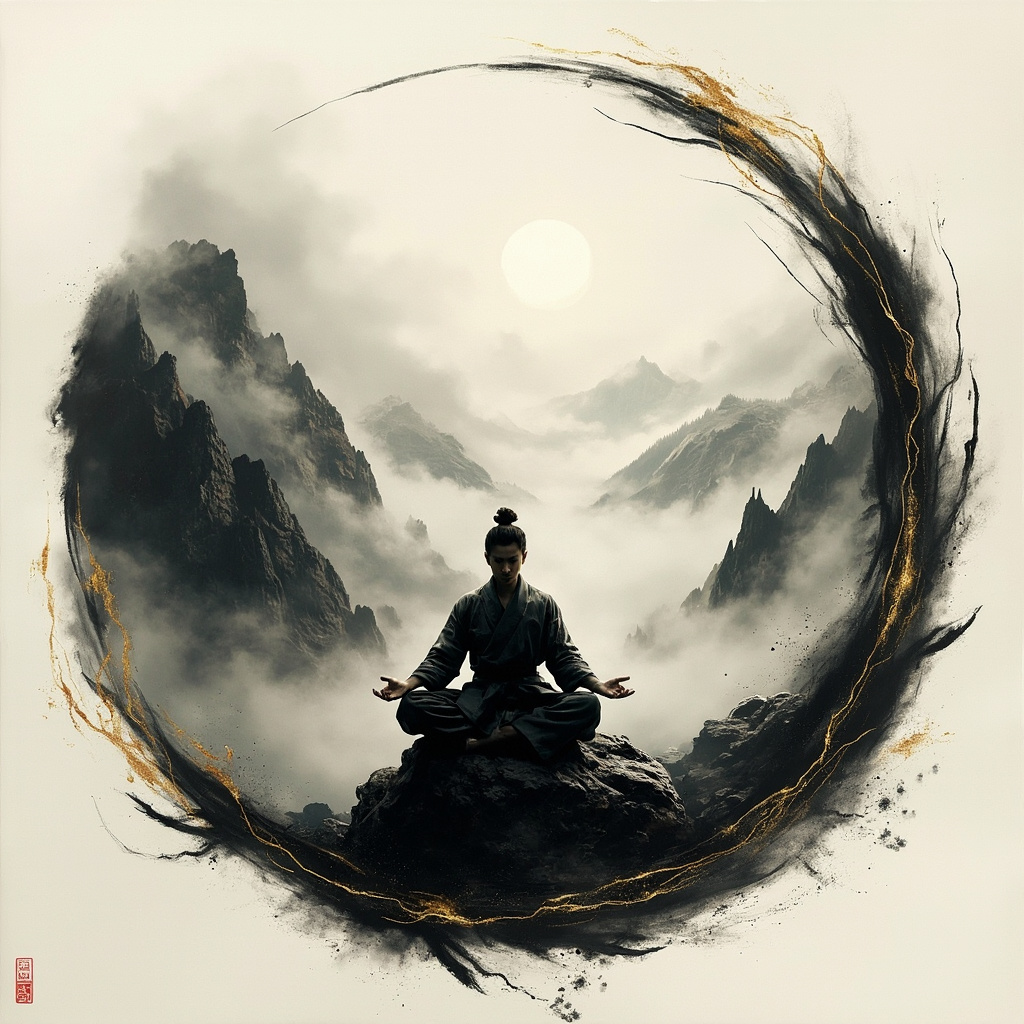
The philosophical depth of Chinese martial arts distinguishes them from combat systems focused purely on physical technique, creating traditions that address mental discipline, moral development, and spiritual advancement alongside physical training. This holistic approach to martial development attracts practitioners seeking meaning beyond mere self-defense capability, creating communities united by shared philosophical understanding rather than tactical commonality.
Yin and Yang in Martial Practice
The concept of yin and yang, representing complementary opposites that balance and transform into each other, provides fundamental framework for understanding Chinese martial arts. Every technique, movement, and tactical approach embodies阴阳principles that guide proper practice and application. The balance of opposite qualities creates effectiveness that neither extreme could achieve alone.
In combat application, yin-yang principles manifest through the interplay of hardness and softness, rigidity and yielding, direct and circular approaches. Pure hardness overwhelms quickly but exhausts the practitioner, while pure softness yields without effective counter. The integration of both qualities creates adaptive capability that responds appropriately to varying circumstances rather than applying fixed patterns regardless of context.
Physical conditioning develops yin qualities of stability and groundedness while skill training develops yang qualities of dynamic movement and offensive capability. The practitioner cultivates both qualities until they integrate naturally, enabling spontaneous response that embodies wisdom without conscious calculation. This integration represents the goal of philosophical training that distinguishes master from mere technician.
Daoist Influence and Naturalness
Daoism’s emphasis on naturalness, spontaneity, and alignment with natural patterns profoundly influences Chinese martial arts philosophy. The Daoist concept of wu wei, often translated as “non-action” or “effortless action,” guides martial practice toward responses that arise naturally rather than from deliberate calculation. This state represents the goal of training where technique becomes instinctive rather than intellectual.
The metaphor of water represents ideal martial practice, demonstrating how water yields to obstacles while maintaining essential nature and eventually overcoming all opposition through persistent, patient action. Like water finding paths around and through obstacles, the skilled martial artist adapts to circumstances without losing fundamental purpose or direction.
Daoist rejection of artificiality and social convention reflects in martial arts emphasis on authentic expression rather than imitative performance. Practitioners develop unique expressions of common principles rather than copying external forms that do not arise from genuine understanding. This individuality within tradition creates the diversity of styles and approaches that characterize Chinese martial arts.
Respect, Discipline, and Moral Development
Traditional Chinese martial arts emphasize moral development alongside physical training, requiring practitioners to cultivate character qualities that distinguish martial artists from mere fighters. The concept of武德 (martial virtue) establishes ethical standards that practitioners must uphold, with violations bringing shame to both individual and school.
Respect for teachers represents fundamental obligation, acknowledging the gift of knowledge received and the sacrifices teachers made to preserve and transmit martial traditions. This respect extends to senior practitioners, whose experience and dedication warrant recognition regardless of personal feelings. Eventually, respect for the art itself, its history, and its future transmission becomes part of practitioner’s responsibility.
Discipline in training develops habits that support all aspects of life, transforming martial practitioners into people of consistent action and reliable character. The daily commitment to practice, the attention to detail in technique, and the patience to develop gradually all cultivate habits valuable beyond martial context. This discipline creates practitioners who accomplish goals in all endeavors, not merely martial ones.
Meditation and Internal Cultivation
Traditional martial arts training incorporates meditation and breathing practices that develop internal energy (qi) and mental clarity. These practices complement physical training, developing dimensions of capability that purely physical approaches cannot access. The integration of external and internal cultivation creates comprehensive development that addresses all aspects of human potential.
Breathing exercises develop lung capacity, oxygen efficiency, and the subtle coordination between breath and movement that characterizes advanced martial capability. The martial breathing practice directs qi throughout the body, supporting physical technique with internal energy cultivation that enhances power, endurance, and healing capability beyond ordinary limits.
Standing meditation (zhan zhuang) develops leg strength, postural alignment, and sensitivity to internal energy flow through motionless practice of specific postures. These seemingly simple standing positions create profound internal effects through sustained attention to subtle body mechanics and energy circulation. Advanced practitioners report extraordinary capabilities developed through dedicated standing meditation practice.
Martial Arts in Daily Life
The principles cultivated through martial arts training extend naturally into daily life applications that benefit all aspects of personal and professional activity. The focus, discipline, and adaptive capability developed through training serve practitioners in business, relationships, and personal challenges far removed from martial context.
Conflict resolution principles taught in martial training apply to verbal and psychological conflict where physical technique proves inappropriate. The awareness of positioning, timing, and appropriate response that guides combat application equally guides navigation of daily interpersonal challenges. Martial wisdom becomes life wisdom when properly integrated into character development.
The confidence developed through martial training affects how practitioners carry themselves, speak, and interact with others in ways that deter aggression and command respect. This presence arises naturally from genuine capability rather than mere simulation, creating authentic confidence that others recognize and respond to appropriately.
The Integration of Martial and Spiritual Practice
Chinese martial arts developed within Buddhist, Taoist, and Confucian contexts that all contributed philosophical frameworks still influencing training today. Shaolin Temple’s integration of Buddhist meditation practice with martial training created the pattern for monastic martial arts that emphasizes spiritual development alongside physical technique.
Daoist internal alchemy developed martial and spiritual practices that cultivate extraordinary capabilities through systematic development of body, breath, and mind. These practices, originally developed for spiritual advancement, produce martial benefits as byproducts of the cultivation process, demonstrating the integration of martial and spiritual paths.
Confucian emphasis on proper conduct, respect for hierarchy, and social responsibility influenced martial arts ethics and community organization. The master-student relationships, school hierarchies, and transmission systems that characterize traditional martial arts reflect Confucian social values that provided structure for martial transmission across generations.
Conclusion
Chinese martial arts offer paths to physical mastery and personal growth that extend far beyond combat technique to encompass philosophical understanding and spiritual development. Their philosophical depth distinguishes them from mere fighting systems, creating traditions that serve human development comprehensively rather than addressing only physical capability.
The wisdom traditions embedded in Chinese martial arts continue offering guidance for contemporary practitioners seeking meaning and development beyond narrow tactical training. These ancient teachings address timeless human questions of purpose, relationship, and personal growth that remain relevant regardless of historical period or cultural context.