ARTICLE_TITLE: Chinese Architecture: Traditional Design and Ancient Structures
ARTICLE_BODY:
## Introduction
Chinese architecture is a living testament to centuries of cultural evolution, philosophical thought, and engineering prowess. From the imperial palaces of the Ming dynasty to the humble courtyard houses of the Siheyuan, traditional design reflects a deep respect for symmetry, natural harmony, and cosmic order. This article explores the historical milestones, core principles, and iconic ancient structures that define Chinese architecture, while highlighting the SEO‑focused keywords that connect modern audiences to this timeless heritage.
## Historical Overview of Chinese Architecture
### Prehistoric and Early Dynastic Periods
In the earliest eras, Chinese building techniques were shaped by local materials—mudbrick, thatch, and timber. Settlements like Banpo near the Yellow River reveal circular pits and simple wooden frames, marking the first steps toward organized spatial planning. The Shang dynasty introduced rammed earth walls and bronze décor, establishing a precedent for monumental construction that would later flourish under imperial patronage.
### The Classical Period: Qin, Han, and the Rise of Monumental Architecture
The Qin dynasty unified China in 221 BC and launched massive projects such as the original Great Wall, a defensive marvel built from compressed earth and stone. The Han dynasty expanded this legacy, perfecting the use of timber and post‑and‑lintel systems, and establishing the first formal imperial academies that codified architectural standards. During this time, the concept of “central axis” became a hallmark of palace design, influencing centuries of Chinese architectural symmetry.
### Tang and Song: The Golden Age of Innovation
The Tang dynasty (618–907) celebrated cosmopolitanism, bringing foreign influences into Chinese architecture while advancing building technology. Multi‑storeyed pavilions, curved roof eaves, and intricate glazed tiles emerged as distinctive features. The Song dynasty refined these ideas, emphasizing scholarly gardens and the integration of landscape with built form—an early expression of what we now call Chinese garden design.
### Ming and Qing: The Zenith of Imperial Architecture
The Ming dynasty (1368–1644) introduced the classic grey‑tile roofs, vermillion columns, and the sprawling complexes of the Forbidden City, now a UNESCO World Heritage site. The Qing dynasty added opulent decorations, lacquered surfaces, and the elaborate “three‑quarters” roof style. Both periods perfected Chinese timber construction, showcasing mortise‑and‑tenon joints that eliminated the need for nails, a hallmark of traditional Chinese building techniques.
## Core Principles of Traditional Chinese Design
### Symmetry and Axis Alignment
One of the most recognizable Chinese architectural features is the strict adherence to symmetry. Buildings are arranged along a north–south central axis, reflecting the cosmic order and the ruler’s authority. This symmetry is evident in palace complexes, temple courtyards, and even residential Siheyuan, where identical wings flank a central hall.
### The Use of Wood and Timber Construction
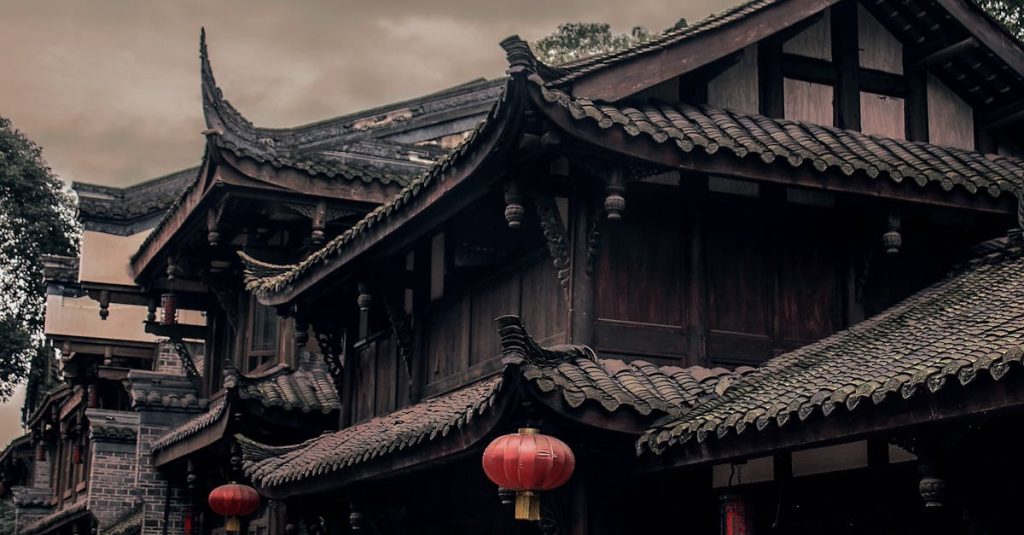
Timber has been the primary material for Chinese architecture, owing to abundant forests and sophisticated joinery. The “dougong” (bracket sets) system allows heavy roofs to be supported by interlocking wooden pieces, providing both structural stability and decorative elegance. This method of Chinese timber construction has been celebrated for its earthquake resilience and adaptability.
### The Significance of the Roof
The roof is arguably the most iconic element of Chinese architecture. Curving eaves, upturned corners, and layered tiles create a visual rhythm that distinguishes Chinese roof design worldwide. Roofs often carry symbolic meaning: the double‑eaved hip roof signifies dignity, while the simple gable roof denotes modest dwellings.
### Courtyard Layouts and Spatial Harmony
Traditional Chinese houses and palaces revolve around courtyards that bring light, ventilation, and a sense of openness to the interior. The courtyard acts as a micro‑garden, allowing residents to experience nature within an otherwise dense urban fabric. This integration of indoor and outdoor space is a cornerstone of Chinese architectural heritage.
## Iconic Ancient Structures and Their Features
### The Forbidden City and Imperial Palaces
The Forbidden City in Beijing exemplifies imperial Chinese palace architecture. Its 980 buildings cover 720,000 square meters, arranged in a precise grid that underscores the emperor’s role as the Son of Heaven. Massive wooden columns, glazed tile roofs, and golden ornamentation showcase the grandeur of Ming and Qing craftsmanship.
### The Great Wall as Defensive Architecture
Stretching over 13,000 miles, the Great Wall incorporates watchtowers, garrison stations, and fortified gates. Its construction utilized rammed earth, stone, brick, and wood—demonstrating the adaptability of Chinese building techniques to varied terrain. The wall’s strategic layout embodies ancient Chinese defensive philosophy.
### Traditional Temple Complexes: Taoist and Buddhist
Temples such as the White Horse Temple and the Temple of Heaven illustrate religious Chinese architecture. They feature symmetrical courtyards, altars, and distinctive roof forms that denote sacred spaces. Ornate carvings, painted beams, and symbolic motifs highlight the spiritual significance of each structure.
### Pagodas and Multi‑Tiered Towers
Pagodas, with their tiered eaves and tapering silhouettes, serve both religious and commemorative purposes. The Giant Wild Goose Pagoda in Xi’an, built during the Tang dynasty, stands nine stories high and exemplifies Chinese timber construction and masonry integration.
### Classical Gardens: Suzhou’s Landscape Design
Suzhou’s classical gardens, such as the Humble Administrator’s Garden, are celebrated for their Chinese garden design. They employ rockeries, water features, winding paths, and carefully placed pavilions to create a miniature landscape that reflects the philosophical ideal of harmony between humanity and nature.
## Influence of Feng Shui and Cosmology
Feng shui, the ancient Chinese art of placement, profoundly influences traditional design. Architects select sites based on natural energy flows, orient buildings to capture auspicious qi, and arrange interior spaces to promote balance. The orientation of a home’s main hall, the placement of a courtyard, and even the direction of a roof ridge are all guided by feng shui principles, reinforcing the connection between architecture and cosmic order.
## Preservation and Modern Revival of Chinese Architectural Heritage
Today, many ancient structures have been recognized as UNESCO World Heritage sites, prompting extensive restoration efforts. Contemporary architects draw inspiration from traditional Chinese architectural features, blending them with modern materials to create sustainable, culturally resonant buildings. Exhibitions, digital archives, and academic programs continue to disseminate knowledge about Chinese building techniques, ensuring that this heritage endures for future generations.
## Conclusion
Chinese architecture is a rich tapestry woven from centuries of artistic expression, technological innovation, and philosophical belief. From the monumental imperial palaces of the Ming dynasty to the serene courtyard houses of the Siheyuan, each element reflects a deep commitment to symmetry, harmony, and respect for the natural world. By understanding the core principles and iconic ancient structures that define traditional design, we gain insight into a cultural legacy that continues to inspire architects, historians, and enthusiasts worldwide. Embracing the keywords—Chinese architecture, traditional design, ancient structures, Chinese building techniques, Chinese palace architecture, Chinese temple architecture, Chinese garden design, Chinese roof design, and more—helps connect modern audiences to this enduring heritage.