Chinese street food represents one of the world’s greatest informal culinary traditions. From the sizzling stovetops of Chengdu’s night markets to the steaming baskets of Shanghai’s morning rush, street food vendors have been feeding China — and developing some of its most iconic flavors — for thousands of years.
The Culture of Chinese Street Food
Street food in China is not fast food in the Western sense. Each vendor typically specializes in a single item — one family might have spent three generations perfecting their jianbing (煎饼, Chinese crepe). This depth of specialization creates quality that most restaurant chains can never match. The best street food is not cheap fast food; it is concentrated expertise.
The Essential Street Foods You Must Know
Jianbing (煎饼): China’s answer to the breakfast burrito. A thin mung bean and wheat crepe spread with sweet bean paste, chili sauce, and crispy wonton wrappers, wrapped around a fried egg and fresh scallions. Found on virtually every street corner in northern China. The “full version” (煎饼果子) with cilantro and Chinese sausage is the definitive breakfast on the go.
Grilled Lamb Skewers (羊肉串): Central to the food culture of Xinjiang and now found nationwide. Cubes of lamb marinated in cumin, salt, and chili, grilled over charcoal until charred and intensely fragrant. The smell alone can stop traffic.
Stinky Tofu (臭豆腐): Perhaps the world’s most divisive snack — fermented tofu with an aroma that has been compared to rotting garbage. But those who get past the smell find a crispy-skinned, savory, umami-packed treat, especially when served with Sichuan chili sauce.
xiaolongbao (小笼包): Shanghai’s gift to the world — delicate soup dumplings with a thin but sturdy skin, containing a generous amount of pork broth (yes, the broth is inside the dumpling) and seasoned pork. Eating one requires technique: bite a small hole, sip the broth, then eat the whole thing.
Fried Rice (炒饭): At its best, Chinese fried rice is a masterclass in wok hei — the smoky breath of the wok. The best versions use day-old rice, extremely high heat, and minimal sauce. Each grain should be distinct.
Chuan’r (串儿): Small cubes of meat or vegetables on bamboo skewers, seasoned with cumin and chili, grilled over charcoal. The definitive street food of Beijing’s nanmen (南门) night markets.
Night Market Culture
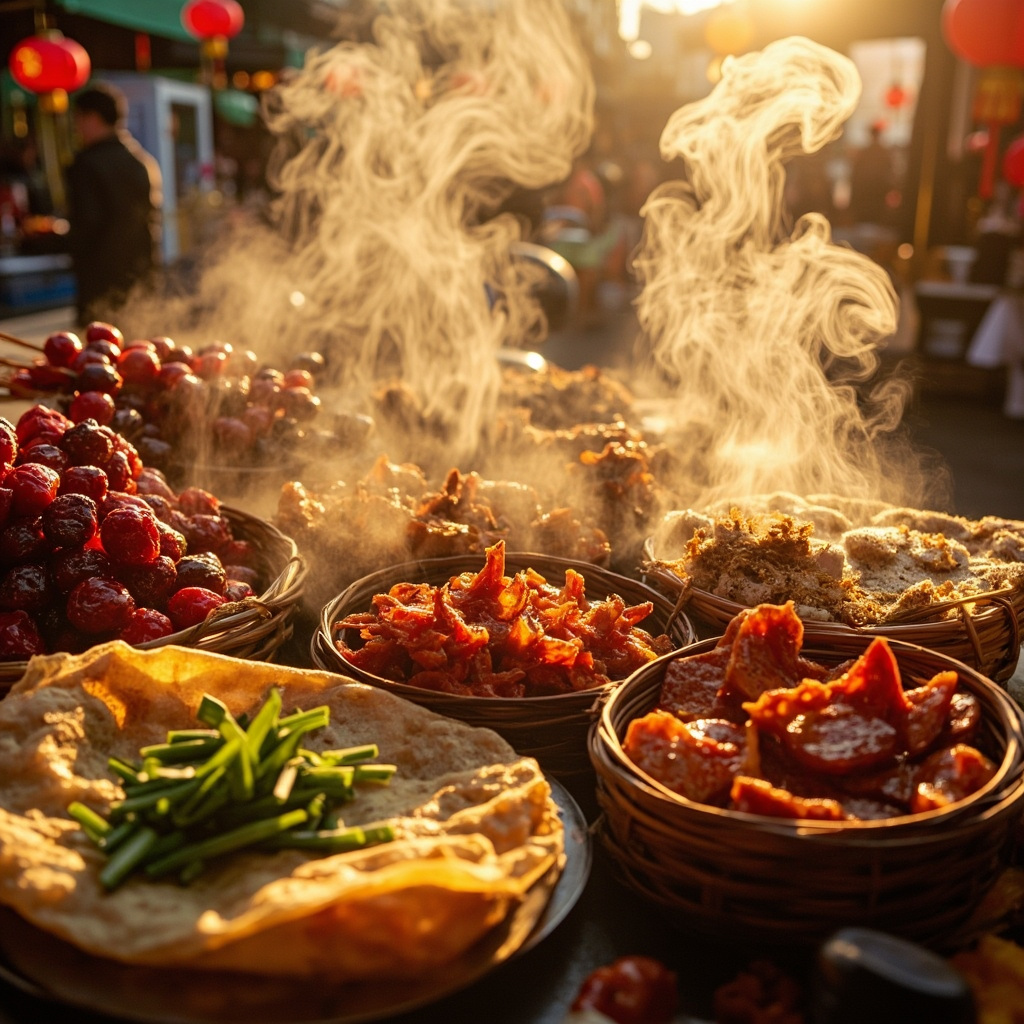
China’s night markets (夜市) are among the most exciting food destinations on Earth. The Donghuashi Night Market in Beijing, Jinli Street in Chengdu, and the vast Xi’an Night Market offer hundreds of vendors in a single location. Night markets are social spaces as much as food destinations — entire families, couples, and groups of friends come to eat, drink, and soak in the atmosphere.
For a deeper exploration of regional specialties, see our Chinese Food Complete Guide — your comprehensive guide to understanding the full breadth of Chinese food culture.
Featured image: A Chinese street food vendor preparing jianbing on a hot griddle in Beijing. Image: Cyber China Editorial.