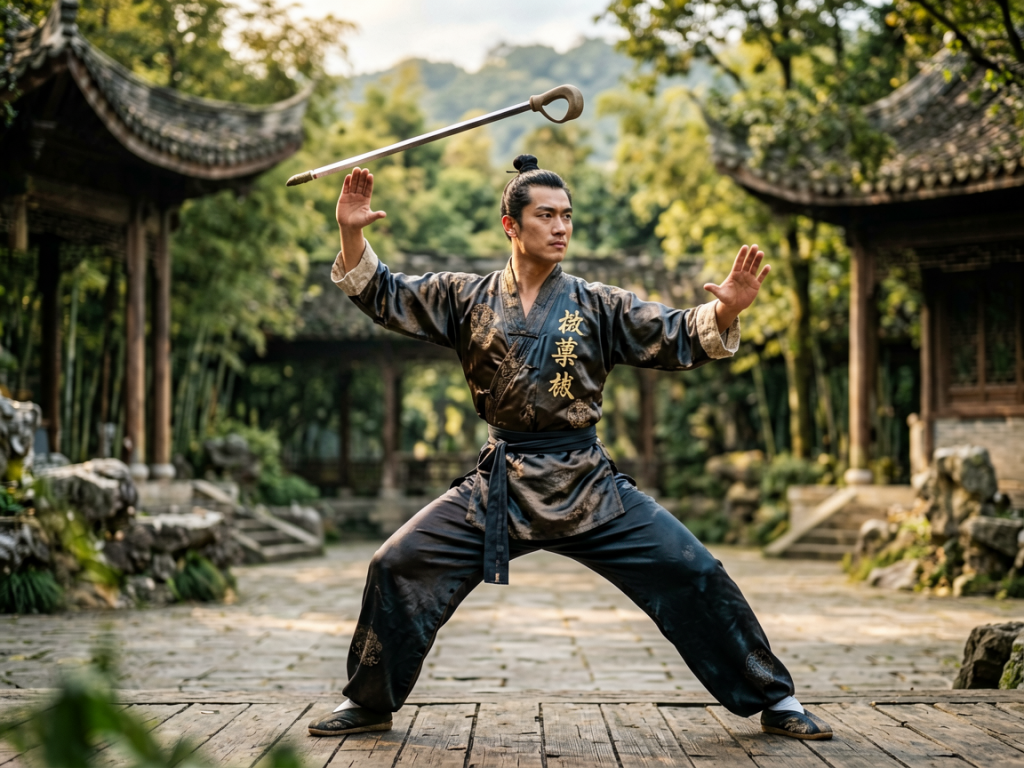
The smell hits you before you even step through the wooden gate. It’s sharp, medicinal, and smells like something a wizard would brew in a copper pot. I stood outside a small training hall in Dengfeng, staring at a plastic jug labeled in faded red characters.
My instructor, Master Lin, just smirked and handed it over. “This is your best friend,” he said. “Treat it right, and you’ll walk through fire.” I was twenty-six then, fresh off a backpacking trip through Henan province. I’d spent months watching monks throw themselves against wooden posts until their shins turned into calloused wood.
It looked brutal. It still looks brutal. But nobody ever explained the liquid that saved them from turning into actual wood. Here’s the thing. You don’t learn kung fu without learning about Dit Da Jow. This thick, amber-colored herbal liniment has been the backbone of Chinese martial arts for centuries.
They call it bone-settling wine, but that name barely scratches the surface. It’s a bruise remedy, a circulation booster, and basically the only reason Iron Body training doesn’t end in a hospital trip. I remember walking into a traditional Chinese medicine clinic in Xi’an, desperate after my third week of heavy bag work.
The shelves were lined with bottles that cost anywhere from thirty to eighty yuan. I picked one up and nearly gagged. It smelled like camphor, old boots, and something distinctly earthy.
The pharmacist explained it simply enough. The base is usually high-proof baijiu, which pulls the active compounds straight through your skin. Then they add herbs like safflower, notoginseng, and frankincense. Some recipes throw in animal parts too.
Rhino horn is illegal now, obviously, so they use antelope horn or deer musk instead. To be fair, I’m no herbalist. But the logic holds up surprisingly well. The alcohol acts as a solvent and a vasodilator.
It opens up your blood vessels right where you’re pouring it. The herbs do their quiet work down there, calming inflammation and pushing stagnant blood back into circulation. That’s why your bruises fade in days instead of weeks.
Sound interesting? Wait until you see how it fits into the bigger picture of martial conditioning. Iron body training isn’t just about toughening your skin. It’s a systematic rewiring of your nervous system and connective tissue.
And Dit Da Jow is the safety net that keeps you from tearing yourself apart. We spent an entire afternoon at a small gym outside the Shaolin temple complex. The owner, Lao Chen, let me watch a group of teenagers practice what they call iron shirt and iron palm drills.
They weren’t doing anything flashy. Just rhythmic tapping, light strikes, and deep breathing exercises. It’s easier than you’d expect, once you stop trying to hit like a heavyweight boxer. Chen kept yelling, “Lighter! Let the Qi move through the meridians!”
I rolled my eyes at first. But then I watched his own forearms. The skin was tough as leather, but not rigid. It had this weird, dense resilience that defied normal muscle tissue.
The whole process relies on controlled micro-trauma. You strike soft targets first. Rice bags, sandbags, padded rolls. You build up collagen density over months.
Then you graduate to harder surfaces. Wooden poles, rubber mats, eventually bare earth. The key is consistency. You never go full force until your body actually accepts the stress.
I tried tapping a heavy sandbag myself. My knuckles hurt within ten minutes. Chen slapped my wrist with a wet towel and poured a few drops of the amber liquid over my reddened skin.
The cool burn was instant. Within seconds, the throbbing subsided into a dull warmth. I swear it felt like the pain just got routed elsewhere.
That’s the real magic of traditional Chinese medicine here. It doesn’t just mask discomfort. It actively accelerates recovery.
Western sports rehab uses ice and compression. These guys use heat, friction, and herbal infusion. Both work, but the Chinese method feels more integrated.
You’re treating the whole system, not just the injury site. I made the mistake of going a full week without applying the wash. My ego took over.
I thought I could tough it out naturally. Big mistake. By day four, my forearms were swollen purple.
My joints ached every time I flexed my fingers. Sleeping felt impossible because rolling over pulled at the stiff muscles. I looked like I’d gone twelve rounds with a street fighter.
Instead of feeling tougher, I felt completely broken. Master Lin didn’t even say “I told you so.” He just handed me the bottle again and showed me how to massage it in properly.
Circular motions. Light pressure. Let it soak. Within three days, the swelling went down.
By day five, I was back to hitting the heavy bag. Same intensity, zero lingering pain. I could be wrong about some things, but I’m pretty sure that’s why Iron Body training survived for thousands of years.
It’s not some mystical superpower. It’s just smart pain management backed by generations of trial and error. You can’t condition your body if you’re constantly sidelined by bruises and joint inflammation.
The wash keeps you in the game. I’ve also noticed how the recipe changes depending on the region. The northern styles lean heavier on warming herbs to combat winter chill.
Southern schools often add cooling botanicals to handle the humid summer sweat. You buy a bottle in Guangzhou and it tastes completely different than the one from Beijing.
I used to think those variations were just marketing. Now I know they’re practical adaptations. The climate dictates the chemistry.
It’s brilliant in a quiet, unspoken way. Modern combat sports have plenty of options now. I’ve seen MMA gyms stock up on premium CBD balms, cryotherapy chambers, and compression sleeves.
They’re fancy. They’re expensive. And they work fine for most athletes. But there’s something about the traditional wash that just sticks.
Maybe it’s the ritual. Maybe it’s the fact that you’re using the exact same formula your grandfather used. Or maybe it’s just the sheer efficiency of it.
Thirty yuan buys you a month’s supply. You rub it in, you breathe through the soreness, you train again tomorrow. I bought a bottle from a street vendor in Chengdu last spring.
Weighs about half a kilo, costs forty-five yuan, and smells like a pharmacy crossed with a spice market. I keep it in my