Landing at five in the morning after a fourteen-hour flight does something strange to your brain. You stop caring about saving twenty yuan. Your only goal is to find a bed. I learned this the hard way on my very first trip to China back in 2016.
I followed the signs for the airport metro like a good little tourist. I downloaded the subway map. I packed light. I felt smart. Then I got to Terminal 3 at Beijing Capital International Airport and realized the walk to the train station was longer than my actual flight from London to Shanghai.
Sound interesting? Maybe not. But trust me, that two-kilometer stroll across a heated underground corridor with a rolling suitcase changes everything.
We’ve all heard the golden rule of traveling in China. Take the metro. It’s cheap, it’s clean, and it gets you everywhere. The line is technically true. But it’s missing half the story. Especially when you’re dragging three suitcases, traveling with kids, or arriving after midnight.
Let’s talk about why the cheapest option isn’t always the metro, and how to actually survive the airport transition without getting fleeced or exhausted.
The Real Math Behind Airport Transfers
I’m no expert on transportation economics, but I do know how my body reacts after long-haul flights. The metro ticket might cost twelve yuan. A shared ride through Didi might set you back forty. A private taxi could run a hundred and fifty.
On paper, the metro wins every time. In practice, it feels like a different game. You have to check in, go through security again sometimes, wait for the express line, transfer across multiple stations, and finally hunt down an elevator because half the city center stations were built before stairs were mandatory.
It’s better than most alternatives when you’re young, nimble, and carrying nothing but a backpack. But once you factor in time and physical strain, the math flips. I’d rather pay a few extra yuan to sit down and breathe.
Plus, the metro doesn’t stop at your hotel door. It stops at a random exit on a major avenue. You’ll still need a short cab ride or a long walk. That’s where the so-called savings quietly evaporate.
When you actually add up those last miles, the gap between options shrinks faster than you’d expect. I stopped stressing over the base fare years ago. Now I just calculate what I’m willing to endure.
My First PEK Taxi Nightmare (and How It Changed Me)
I’ll be honest, my first taxi experience in Beijing nearly ruined me for the whole country. I was staying in Dongcheng district and needed to get to my guesthouse. A man in a bright orange vest approached me near the exit.
He spoke broken English and pointed to a black car waiting outside. He said forty yuan flat to the city center. I thought I had won. I threw my bags in the trunk and climbed into the front seat.
Halfway there, he told me the meter was broken. Then he showed me a receipt printed from a calculator app on his phone. It read four hundred and eighty yuan. I was horrified. I had a tiny backpack and zero leverage. I paid half and practically ran out the door.
That moment taught me everything I needed to know about spotting a taxi scam at PEK. The orange vests are usually legitimate shuttle workers, but they push hard. The real scammers are the guys wandering the curb offering rides before you hit the official queue.
You can easily avoid this by ignoring anyone who approaches you inside the terminal. Walk straight to the marked taxi rank. Look for the illuminated glass booths. Find the driver sitting calmly in a uniformed sedan.
It takes exactly three minutes longer. It’s infinitely safer. I never second-guess that route anymore. I just stand in line, tap my card, and watch Beijing scroll past the window.
PVG’s Official Taxis Versus The Helpful Strangers
Shanghai Pudong International Airport operates differently than Beijing. The layout forces you further away from the trains, which makes the metro feel even more punishing. I remember standing in that massive underground concourse wondering why I didn’t just book a driver in advance.
The taxi system here is surprisingly organized. The official counter hands you a numbered receipt. You follow the number to the correct lane. The car waiting there matches your slip. It sounds like bureaucracy, but it works beautifully.
Still, you’ll see plenty of touts near the arrivals hall. They’ll smile, offer a car, and promise you beat the traffic. Most of them will drive you to a souvenir shop first. Or charge you double because you look exhausted and unfamiliar.
I spotted a common trick last year near Terminal 2. A driver claimed the meter was out of order again and demanded a fixed price of two hundred yuan to Lujiazui. The normal rate should’ve been around one hundred and thirty. I politely declined, walked back to the official booth, and paid the correct fare.
Always keep your eyes on the meter. Press the button as soon as you close the door. If he resists, switch cars. There are plenty of licensed drivers waiting. The shortage is a myth we tell ourselves when we’re too tired to argue.
Having Alipay or WeChat linked beforehand saves you from that awkward fumbling moment anyway. I don’t carry cash unless I’m heading somewhere truly remote. Even the taxi meters accept QR codes now.
When the Metro Actually Wins
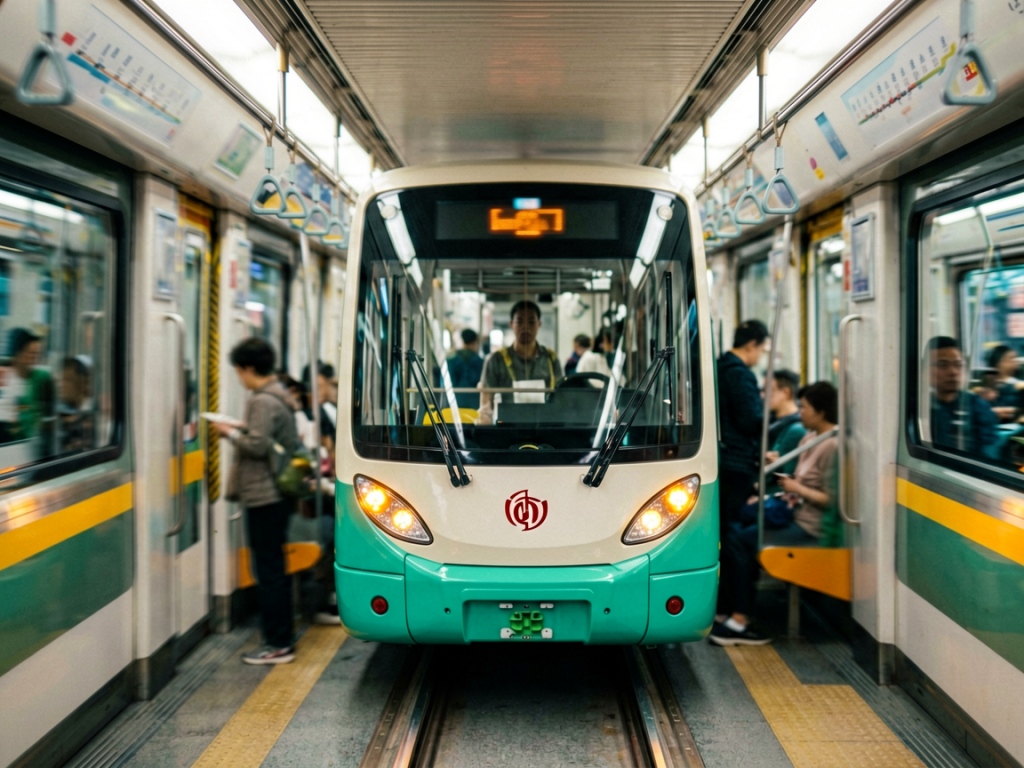
To be fair, the subway system deserves its reputation. I love riding the Shanghai Metro during rush hour. The AC blasts cold air straight into your face. The announcements switch between Mandarin and English without skipping a beat. Trains arrive every two minutes.
If you’re visiting during summer and sweating through your clothes, the metro becomes a lifesaver. The underground routes bypass the gridlocked highways entirely. You’ll glide past bumper-to-bumper traffic without even noticing.
I also take the train when I’m meeting friends in unfamiliar neighborhoods. I’ll hop on Line 2 at Hongqiao, ride straight to Century Avenue, and catch the metro over to my buddies’ apartment. It’s reliable, predictable, and completely stress-free.
You just need to pack light and know which exit leads closest to your destination. Maps work perfectly on Baidu or Amap. I screenshot the route before I even land. That habit alone cuts my confusion in half.
Surprised how often I recommend public transit? Don’t be. I live by efficiency whenever possible. But efficiency isn’t just about speed. It’s about matching the tool to your actual situation.
What I Do Now After Eight Years On The Ground
My system has evolved way beyond trial and error. I now pre-install the Didi Chuxing app and link my foreign credit card before I ever board the plane. The English interface is surprisingly smooth, and the surge pricing rarely hits during standard travel windows.
When I land, I ignore everything except the official signs. I walk past the coffee shops, skip the SIM card vendors, and head straight to the ground transport level. I either queue for the taxi or hail a Didi right outside the arrivals door.
I always confirm the destination in Mandarin before moving my bags. I keep my phone charged and ready to scan the driver’s license plate. Safety feels automatic when you build routines around it.
There’s a quiet comfort in knowing exactly how you’ll reach your hotel. You land, you breathe, you move forward. You don’t have to negotiate with strangers or decipher broken translations while fighting jet lag.
I could be wrong about other travelers, but I’ve found that paying a little more upfront buys you sanity. The city rewards you later when you actually have energy to explore instead of collapsing on the couch.
Next time you touch down at PEK or PVG, give yourself permission to skip the train. Grab a licensed cab, settle in, and watch the skyline blur past. Your shoulders will thank you tomorrow.