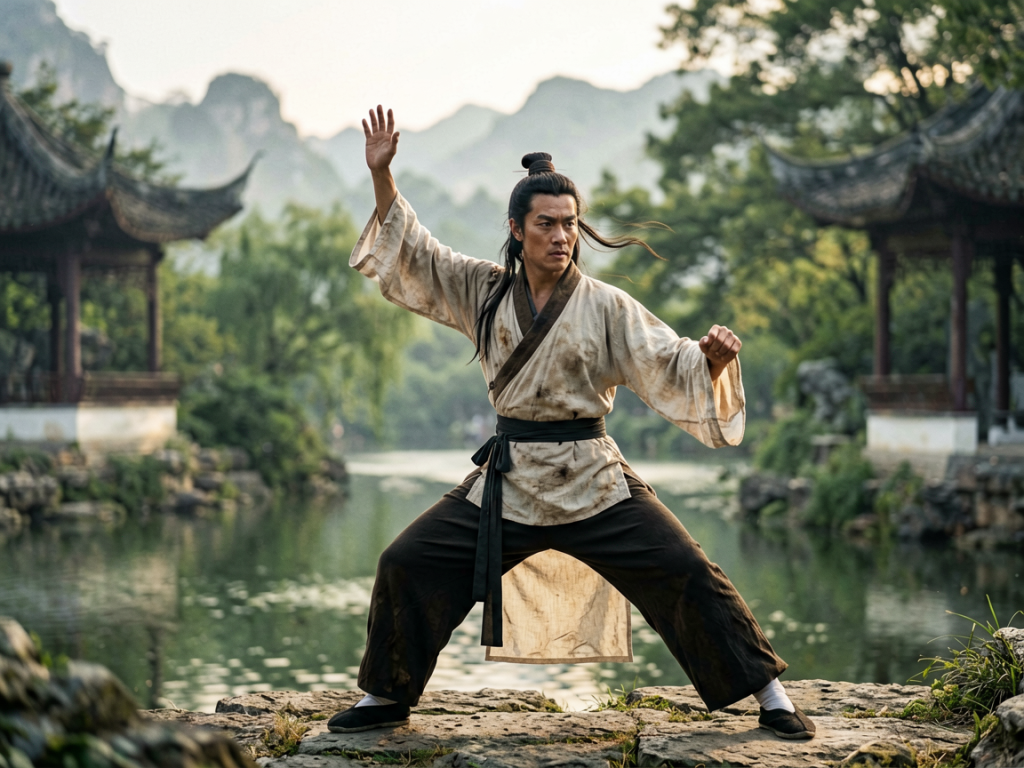
I used to think I knew Kung Fu. I’d watched the Shaw Brothers films. I’d seen Jet Li flip through the air like he had springs in his shoes. I figured I had the whole picture locked down.
I was dead wrong. Turns out, the flashy stuff I see in movies is just the tip of a very weird, very beautiful iceberg. There’s a whole world of Chinese martial arts that look less like fighting and more like high-stakes performance art. They’re acrobatic, bizarre, and utterly mesmerizing.
If you want to skip the boring basic boxing and get into the stuff that makes tourists drop their cameras in shock, stick with me. I’m going to walk you through Hua Quan and five other styles that most people have never even heard of.
Hua Quan: The Dance That Looks Like War
Let’s start with the big one. Hua Quan, often translated as “Flower Fist,” is basically what happens when Shaolin monks decide to put on a Broadway show. It’s incredibly theatrical. The movements are graceful, fluid, and ridiculously complicated.
I remember watching a demonstration of Hua Quan in a small town outside Shanghai. The performers weren’t just punching; they were spinning, leaping, and twisting their bodies in ways that made my own yoga instructor look stiff.
The key here is the “flower.” It’s not about hitting hard. It’s about the visual spectacle. The practitioners wear colorful costumes, often with long sleeves or ribbons, which accentuate every movement. When they spin, the fabric trails behind them like a comet.
It sounds soft, right? Don’t be fooled. Underneath the pretty exterior, there’s serious martial intent. The strikes are quick, the blocks are precise, but they’re disguised as dance steps. It’s a masterclass in misdirection. If you’re in China and you see a group of elders doing slow, flowing movements in the park, it might be Tai Chi. But if they’re flipping, spinning, and wearing bright silks, that’s Hua Quan.
Monkey Kung Fu: Because Why Be Serious?
Next up, let’s talk about the primate-inspired style. Monkey Kung Fu, or Hou Quan, is probably the most fun style to watch. And yes, it involves a lot of hunching over and scratching yourself.
I first saw this in a temple in Shaolin. The master didn’t just teach punches; he taught attitude. He screeched. He climbed the walls. He rolled around on the ground like a kid in a sandbox.
The stance is unique. Practitioners keep their hands clasped together like paws near their mouths. This isn’t just for looks. It protects the face while keeping the arms free for grappling and striking. They use their legs and feet more than their hands, mimicking the way monkeys kick and scramble.
What’s crazy is the agility required. You need to be light on your feet, quite literally. The jumps are high, the landings are silent. It’s exhausting to watch, let alone perform. I tried mimicking the crouching walk for ten minutes and my knees screamed at me. These guys have been doing it for decades.
Why does it exist? Well, historically, it was designed to confuse opponents. A swinging, rolling, unpredictable fighter is a nightmare to pin down. Plus, let’s be honest, it’s just entertaining. I haven’t seen a martial artist cry-laugh at a lecture before, but Monkey Kung Fu does that regularly.
The Eight Extreme Fists: Pain as a Weapon
If Monkey Kung Fu is comedy, Eight Extreme Fists (Ba Ji Quan) is pure aggression. This isn’t about grace. It’s about power. It’s one of the oldest styles, and it relies heavily on close-range combat.
I met an instructor in Beijing who specialized in this. He grabbed my wrist and squeezed. Just a little bit. It felt like my bones were trying to escape my skin. He smiled politely and said, “That’s how you break an arm.”
The style uses elbows, knees, and shoulders as primary weapons. It’s brutal. The name “Eight Extremes” refers to the eight main hand techniques, but also the idea of pushing the body to its physical limits. Practitioners train by hitting sandbags, wooden posts, and sometimes each other. Hard.
What makes it distinct from Western boxing is the angle of attack. They don’t just punch straight. They hook, they sweep, they smash downward. It’s efficient violence. No wasted motion. Every move has a purpose, usually involving breaking something.
I’ll be honest, I don’t want to learn this style. I like my joints intact. But watching a skilled Ba Ji practitioner move is like watching a freight train change directions. It’s terrifying and impressive all at once.
Tiger Style: Strength Over Speed
Okay, let’s switch gears to something heavy. Tiger Style, or Hu Quan, is all about raw power and intimidation. Unlike the agile Monkey, the Tiger is slow, deliberate, and overwhelmingly strong.
I practiced this for a weekend workshop in Hangzhou. The instructor made us hold a low horse stance for twenty minutes. My legs shook. I sweated through my shirt. Then he made us strike.
The hand form is crucial here. You don’t just make a fist. You curl your fingers tightly, creating a claw-like shape. This concentrates force into the tips of the fingers and the palm. It’s designed to tear and crush rather than poke.
The psychological aspect is huge too. Tigers roar. Or rather, Tiger Kung Fu practitioners exhale sharply with a guttural sound to project power and focus qi (energy). It sounds weird until you feel the vibration in your chest.
It’s a style built on stability. While other styles might dodge or spin, Tiger stands its ground and overwhelms. It’s the brawler of the kung fu world. And trust me, you don’t want to get brawled by someone who knows how to use their center of gravity like a wrecking ball.
Crane Style: Balance and Precision
After the brute force of the Tiger, Crane Style is like a breath of fresh air. Or rather, a gentle breeze. This style mimics the white crane, a bird known for its elegance and balance.
I watched a woman perform Crane Style in a park in Chengdu. She stood on one leg for nearly two minutes without wobbling. Her arms moved slowly, gracefully, blocking imaginary attacks with feather-light touches.
The technique relies on deflecting force rather than meeting it head-on. Practitioners use open palms and extended fingers to parry strikes. It’s defensive, fluid, and requires incredible core strength.
One of the coolest parts is the footwork. Cranes are light. They don’t stomp; they glide. In combat, this means you can circle an opponent, looking for an opening without committing to a heavy strike.
It’s often considered easier to start for beginners because it doesn’t require explosive power. But don’t let the slowness fool you. Maintaining that balance while under pressure is hard. I tried it once and nearly fell over when someone poked my shoulder. Grace is harder than it looks.
Snake Style: The Silent Strike
Finally, we have Snake Style, or She Quan. This is the stealthiest of the bunch. Snakes don’t telegraph their moves. They strike quickly, retract, and disappear.
In Snake Kung Fu, the hand shape is narrow and pointed, like a snake’s head. Strikes are aimed at vital points: eyes, throat, solar plexus. It’s not about knocking someone out with a big punch; it’s about disabling them instantly.
I learned this in a private class with a sifu who used to compete in Wushu. He taught me how to relax my hand completely so it could snap forward like a whip. It’s a counterintuitive concept. To strike hard, you have to be loose.
The body mechanics are also unique. Practitioners often keep their lower body static while the upper body twists and coils. This allows for rapid changes in direction. You can be facing left and strike right in a split second.
It’s a style for the clever fighter. Not the biggest, not the strongest, but the smartest. It’s about efficiency and precision. Watching a snake style demo is like watching a magic trick. One moment they’re still, the next, you’ve been hit.
Why These Obscure Styles Matter
You might be wondering why I’m bothering you with these weird styles instead of just talking about Wing Chun or Taekwondo. It’s simple. These styles tell you more about Chinese culture.
They reflect the diversity of the landscape. The Monkey style comes from rural areas where agility is prized. The Tiger style comes from northern regions where open space allows for powerful movements. The Crane style is linked to southern coastal areas, emphasizing balance and grace.
They also show that Kung Fu isn’t just fighting. It’s philosophy. It’s art. It’s a way to understand the world through the lens of animal behavior and natural forces.
When I travel now, I don’t just look for the famous schools. I look for the small studios in back alleys. I look for the old masters teaching Hua Quan to kids in parkas. That’s where the real magic happens.
So, the next time you see a movie with flying monks, remember that the real thing is weirder, better, and way more fun. You don’t have to become a master. Just watching is enough to blow your mind.
Have you ever seen any of these styles in person? Or maybe you’ve got a favorite obscure move you’ve tried? Let me know in the comments. I read them all, even the ones about people trying to fight tigers.