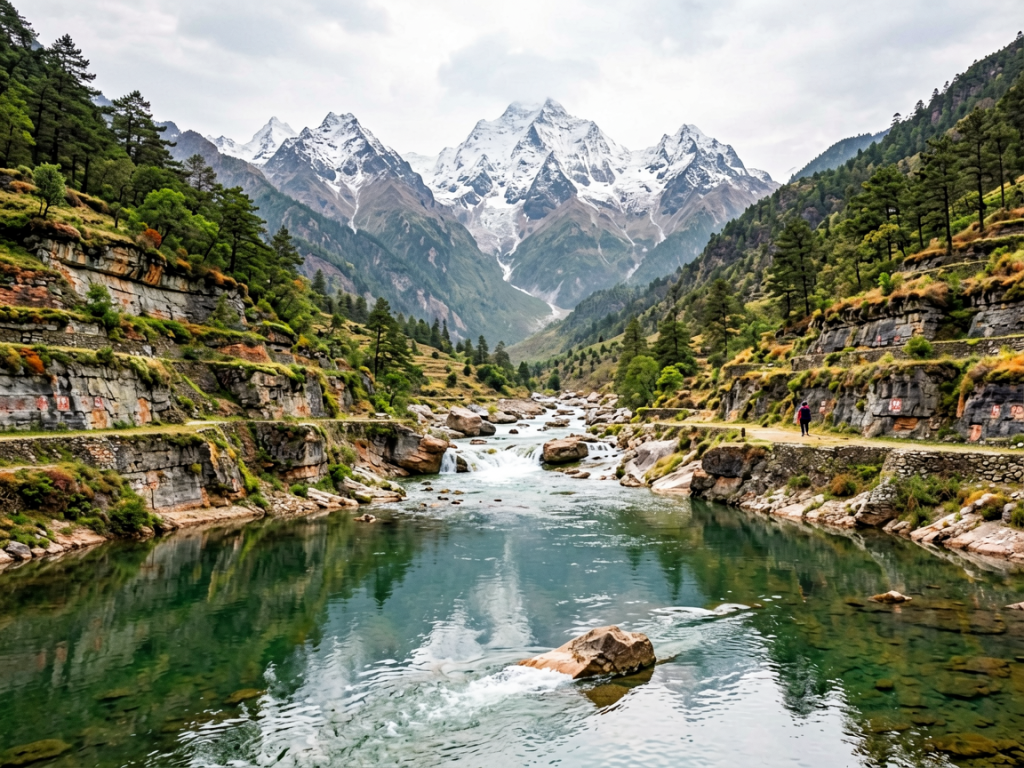
I still remember the first time I saw the water in Jiuzhaigou Valley. It wasn’t just blue. It was this impossible, electric turquoise that seemed to glow from within. I stood there, shivering in the thin mountain air, and thought, “How is nature even allowed to look this good?”
That was ten years ago. Since then, the 2017 earthquake shook up more than just the rocks. It changed the landscape, the access roads, and honestly, the soul of the place. A lot of people have been asking me lately if they should still go. They’ve heard rumors of collapsed peaks and closed trails.
So, here’s the truth. If you’re planning a trip for 2026, you need to know what’s actually changed. The valley didn’t disappear. In fact, it’s recovering in ways that are quite remarkable. But it’s not the same easy walk it used to be.
The Quake Left Its Mark, But Not Everywhere
Let’s get the scary stuff out of the way. The 2017 earthquake was real. It caused massive landslides. Some lakes drained completely. New ones formed. It was chaotic. For a while, huge sections of the scenic area were shut down for safety.
If you look at old photos from before 2017, you’ll notice differences now. Long Lake, for instance, lost about half its volume because of the debris dams. It’s shallower. The water is less deep in some spots. It’s not the pristine, mirror-like sheet it was a decade ago.
But here’s the thing: you’re not going there to measure water depth. You’re going for the colors, the waterfalls, and the Tibetan villages. And guess what? Those are mostly intact.
The Five Flower Lake is still there. It’s still vibrant. The Nuorilang Waterfall is still roaring. Yes, parts of it fell off during the quake, but the main cascade is stronger than ever. The rock face was exposed, making the water look even whiter against the grey stone. It’s raw. It’s powerful.
Travelers often worry that the scenery is “ruined.” I’m here to tell you it’s transformed. Nature doesn’t get stuck in the past. It adapts. Jiuzhaigou adapted, and it’s become more dramatic as a result.
Navigating the New Access Roads
Getting there is a story in itself. The journey to Jiuzhaigou has always been an adventure. Before the quake, it was a long, winding bus ride from Huanglong Airport or a train to Jiuzhai Huanglong Station.
Now, in 2026, the infrastructure is much better. The highway is wider. The tunnels cut through the mountains where landslides used to be a constant threat. The drive from the airport is smoother. Less nausea-inducing hairpins, thank goodness.
I took the high-speed rail to the station a few years back. From there, I hopped on a shuttle bus. It’s efficient. It’s clean. It costs about 30 yuan. The drivers know the new routes well. They’ve avoided the unstable zones since the initial recovery phase.
Just don’t expect the old dirt roads. Those are gone. Modernization has swept through the valley entrance. The ticketing center is huge. There are plenty of shops. It feels more like a theme park entry than a wild national park entrance. I know some purists hate that. I get it.
But consider the trade-off. You’re safer. You’re warmer. The shuttle buses have heating. In February, when it’s -10 degrees Celsius outside, that heated seat is a miracle. Don’t complain about the commercialization if you’re grateful for the convenience.
What’s Actually Open in 2026?
This is the question everyone asks. Is the whole valley open? No. But is enough open to make it worthwhile? Absolutely.
The main trunk of the valley, the Y-shaped route, is fully accessible. You can take the official electric buses to every major stop. The Green Peak Lake, the Pearl Shoal Waterfall, the Mirror Lake–these are all in business. The queues can be long in July and August, but the rest of the year? It’s manageable.
The areas that remain closed are mostly the high-altitude forests near the landslide zones. You won’t see those unless you’re a mountaineer with special permits. For 99% of tourists, those closures don’t matter. You’re walking on wooden boardwalks anyway.
I spent three days there last autumn. Day one was the upper branch. Day two, the lower branch. Day three, I just wandered. I found quiet spots where the tour groups didn’t go. The boardwalks extend far beyond the main viewpoints. If you hike 20 minutes past the crowd, you’ll have the lake to yourself.
One tip: avoid the weekends. Locals come from nearby towns. The traffic jams at the entrance gate are legendary. Go on a Tuesday. Walk in early. Catch the sunrise at Five Flower Lake. It’s magical. The mist rises off the water, and the light hits the maple trees just right.
Food and Stay: Beyond the Tourist Trap
Let’s talk about the practical stuff. Where do you sleep? There are hotels inside the scenic area, but they’re expensive and book up months in advance. I prefer staying in Zhangzha Town. It’s about 40 minutes from the entrance.
Zhangzha is a small Tibetan town. It’s gritty. It’s real. The hotels aren’t five-star luxury, but they’re clean and cozy. I stayed at a place called Jiuzhai Stone Guesthouse. It’s run by a local family. The owner speaks broken English but warm heart.
You save money by staying outside. More importantly, you eat better. Inside the park, food is overpriced instant noodles. Outside, you get yak hotpot. Real yak meat. Slow-cooked for hours. The broth is rich and savory. I ate it three nights in a row. My stomach thanked me, but my soul rejoiced.
Try the butter tea. It’s salty. It tastes weird at first. Like soup with milk in it. But after a day of hiking in the cold, it warms you from the inside out. It’s an acquired taste, sure. But don’t knock it until you’ve had it at altitude.
If you want fancy, there are boutique hotels popping up near the airport. They’re stylish. They have underfloor heating. But I miss the character of the older guesthouses. The creaky floors. The view of the snow-capped peaks from your window. That’s the charm.
Is It Still Worth It?
I’ll be honest. I was skeptical. I missed the untouched feel of the pre-2017 valley. I worried the beauty had faded.
Then I went back. And I realized something. The beauty wasn’t in the perfection. It was in the resilience. Seeing the water flow over the new rock formations, seeing the trees grow back through the debris, seeing the locals rebuild their lives–it moved me more than a pretty picture ever could.
Jiuzhaigou is tougher now. It’s scarred. But it’s alive. The colors are still insane. The waterfalls still thunder. The air still smells like pine and cold stone.
Don’t expect a fairy tale. Expect a place that’s healing. A place that’s showing you that even after disaster, nature finds a way to shine.
Book the trip. Go in October for the leaves. Go in June for the green water. Just go. And maybe, just maybe, bring a warm pair of socks. The mornings will kick your butt.
I promise you, once you see that turquoise water, you’ll forget every inconvenience. The long lines. The crowded buses. The salty butter tea. None of it matters. The view stays with you. It sticks in your memory like a tattoo.
So, are you ready? Pack your bags. Leave the skepticism at home. Jiuzhaigou is waiting. And it’s better than you remember.