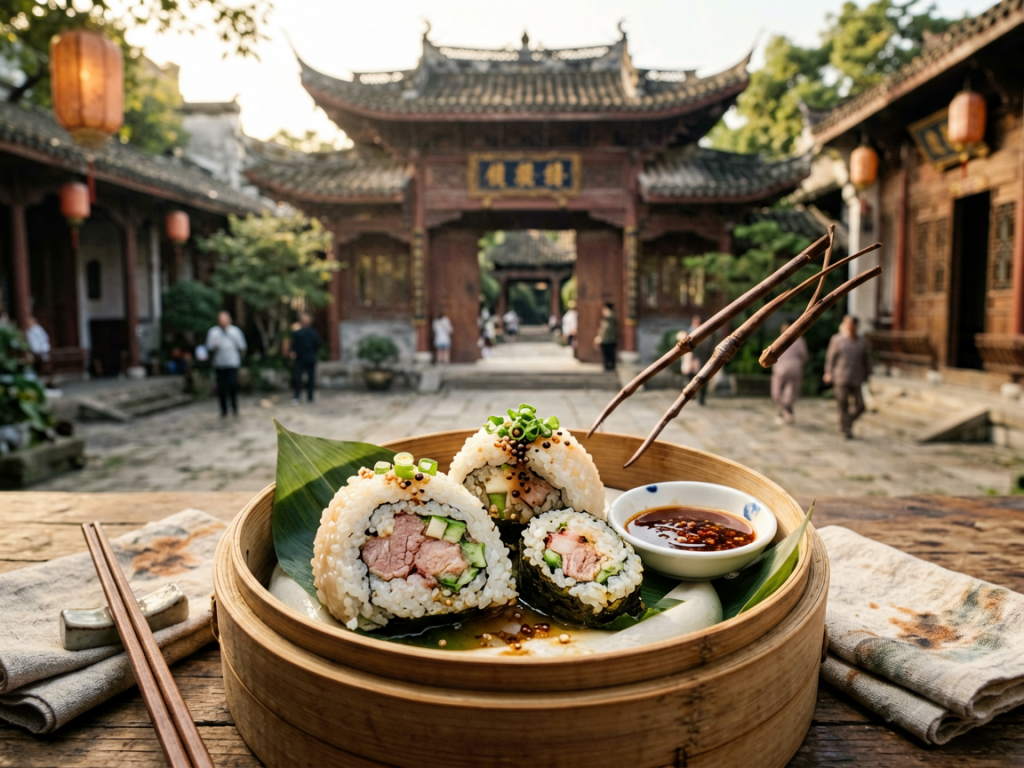
Honestly, there’s nothing quite like the smell of steaming bamboo hitting your nose at 9 AM on a Sunday.
I’ve lived in Hong Kong for eight years now. I’ve walked its streets, eaten at fancy Michelin spots, and navigated the metro during rush hour. But nothing beats the chaotic, beautiful noise of a dim sum hall on a weekend morning.
You know the drill. The clatter of ceramic bowls. The shouting of “Lai Fan!” (Quickly!). The tea water being poured from high above into small cups. It’s sensory overload in the best possible way.
To outsiders, it looks like just cheap, tasty breakfast. But trust me, that’s not it. This ritual is the heartbeat of Cantonese culture. It’s where business deals are sealed, families reconcile, and tourists finally understand why locals treat weekends like holy days.
The Great Steamer Race
Let’s start with the logistics, because if you’re new here, it can feel overwhelming. You walk into a place like Tim Ho Wan or a local hole-in-the-wall in Mong Kok. You grab a cart, or sometimes you just wait for the trolley to come to you.
The key? You need to get there early. Like, before 10 AM early.
I remember my first proper attempt at dim sum solo. I arrived at 10:30 AM thinking I’d be clever. Big mistake. The popular items–the har gow (shrimp dumplings) and siu mai (pork dumplings)–were already gone. I ended up eating plain congee and feeling like a failure.
Now, I show up at 9:15 AM sharp. I watch the staff push those metal carts loaded with porcelain dishes. It’s a race. You spot a dish you want, you snatch the little red card they leave behind, and you hope the server sees you before someone else does.
It’s intense. It’s competitive. And it’s absolutely fun.
If you don’t know which cards to grab, don’t panic. Look at what others have taken. If everyone is reaching for the char siu bao (barbecue pork buns), they’re probably good. Follow the crowd. It’s the safest bet when you’re starting out.
Tea is the Anchor
Here’s the thing about dim sum: it’s incomplete without tea.
In Chinese culture, tea isn’t just a beverage. It’s a tool. Specifically, a tool for tipping off the waiter.
I learned this the hard way. Early on, I’d finish my tea and stare at my empty cup. The waiter would walk past, ignore me, and I’d feel foolish waving my hand like a maniac. Then I watched an old local gentleman tap his fingers on the table.
He tapped two fingers twice. I asked him later what that meant. He smiled and said it was the “finger kowtow.”
The legend goes back to Emperor Qianlong. When he traveled incognito, his servants couldn’t bow to him openly. So, they tapped their fingers on the table to mimic the act of kneeling. Today, it’s just polite etiquette.
When someone pours tea for you, tap two fingers on the table in gratitude. It’s a small gesture. But it signals respect. And it keeps the conversation flowing without interrupting the meal.
As for the tea itself? Stick to Pu’er or Jasmine. They cut through the grease of the fried items. Oolong is great too. Avoid green tea unless you prefer a very light flavor. The tea also serves a practical purpose: it cleanses your palate between the rich, fatty dumplings and the spicy, savory congee.
Beyond the Dumplings
Most people think dim sum is just about the little buns and dumplings. That’s a rookie mistake.
If you only order har gow and siu mai, you’re missing half the experience. You need to broaden your horizons. You need to try the things that make the locals line up around the block.
Take chicken feet, for example. Or “feng zhao” as they call it. The first time I saw a plate of dark, braised chicken feet, I hesitated. They looked… weird. Chewy.
I took a bite. Wow.
The skin is gelatinous. The meat falls off the bone. The sauce is sweet, soy-heavy, and aromatic with star anise and cinnamon. It’s not for everyone. But it’s iconic. It’s the taste of tradition.
Then there’s the egg tarts. “Dan tat.” Flaky, buttery crust with a custard center so smooth it feels like eating air. I’ve had them in Lisbon and Macau, but none compare to the ones in Hong Kong. They’re usually served hot. If they’re cold, send them back.
Don’t sleep on the congee either. “Jook” is the ultimate comfort food. Some places serve it plain. Others load it with preserved egg, pork, and century egg. Century egg looks scary–it’s dark and jelly-like–but the flavor is complex and savory. It pairs perfectly with youtiao (fried dough sticks).
Dip the crispy dough into the hot, thick porridge. It’s a texture dream. Crunchy outside, soft inside. Hot, creamy congee on the tongue. It’s simple, yet it blows my mind every single time.
A Social Glue
Why do we do this? Why spend three hours and $50 USD to eat small plates?
Because it’s social. Dim sum is designed for sharing. Unlike Western dining, where you order your own plate and eat in silence, dim sum forces interaction.
You have to pass dishes. You have to ask, “Do you want some?” You have to coordinate who grabs the last sausage roll. It breaks down barriers.
I’ve seen CEOs discussing mergers over shrimp dumplings. I’ve seen grandparents teaching their grandkids how to peel oranges properly. I’ve seen couples arguing softly over whether to order the spicy chili oil or not.
It’s a level playing field. In the dim sum hall, the boss and the intern sit at the same table. The hierarchy dissolves. Everyone is hungry. Everyone is waiting for the same cart.
This egalitarian nature is rare in modern Hong Kong. The city is fast, expensive, and often lonely. But on a Sunday morning, the dim sum hall brings people together. It’s a refuge from the concrete jungle.
For me, it’s also a way to slow down. The process takes time. You sip tea. You chat. You watch the steam rise from the bamboo baskets. In a city that never sleeps, this is our sanctioned pause button.
Where to Start
If you’re visiting, you might be tempted to go to the tourist traps near the Peak or Victoria Harbour. Sure, the view is nice. But the food? Often mediocre.
Instead, head to the neighborhoods. Go to Central if you want variety. There are dozens of options within a few blocks.
But for authentic vibes, try Wong Tai Sin or Sham Shui Po. These areas have older buildings and older crowds. The prices are lower. The portions are generous. And the food tastes like it’s been made the same way for fifty years.
I recently ate at a small spot in Kwun Tong. No English menu. No signboard. Just a wooden board with prices written in chalk. I sat next to a group of uncles playing cards and drinking tea. They didn’t speak English. I didn’t speak Cantonese. But we nodded at each other when the waiter brought out the fresh turnip cakes.
That connection? That’s the real prize.
Don’t be afraid to eat with your hands. Don’t be afraid to order too much. Leftovers are common. In fact, it’s considered polite to order slightly more than you think you’ll eat. It shows generosity.
If you leave hungry, you failed. If you leave stuffed and happy, you succeeded.
The Verdict
Dim sum is more than food. It’s a weekly reset. It’s a cultural lesson. It’s a taste of home for expats and locals alike.
I love that it’s evolved. You see vegan dim sum now. You see fusion items like matcha siu mai. But the core remains. The steam, the noise, the shared plates.
So next time you’re in Hong Kong on a Sunday, skip the brunch cafe. Skip the hotel buffet. Go find a steamer cart.
Order the chicken feet. Try the century egg. Tap your fingers when someone pours your tea. And let the chaos wash over you.
You’ll come out full, tired, and completely satisfied. And you’ll be wondering why you didn’t do this sooner.
It’s not just a meal. It’s the Sunday ritual that holds this city together, one dumpling at a time.