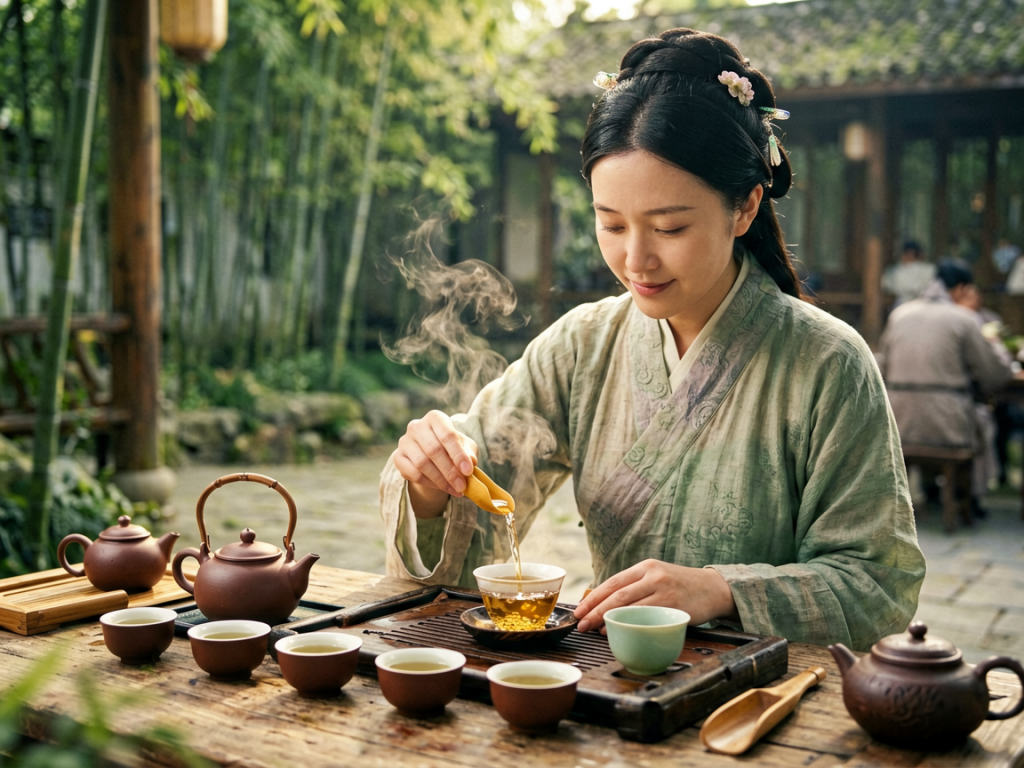
I still remember my first time sitting through a full Gongfu Cha session in Foshan. I was twenty-two, fresh off a backpacking trip through Southeast Asia, and hungry for “authenticity.” I thought authenticity meant sipping ancient leaves from tiny cups while listening to guzheng music.
I was wrong. So wrong it almost hurt.
The master didn’t even look at me. He just poured. Hot water hit the leaves with a hiss that sounded like a angry snake. Then he poured it out. He did it again. And again. For five minutes, I sat there watching him wash dirt off leaves while my own curiosity evaporated faster than the steam rising from the gaiwan.
“Drink,” he finally said. It wasn’t a question.
I took a sip. It tasted like… well, it tasted like wet dirt and flowers mixed together. It wasn’t bad. But it wasn’t magic either. What happened next, though? That changed everything.
The Ritual Is The Real Ingredient
Here’s the thing about Chinese tea culture that gets missed by almost every Western guidebook: the ceremony isn’t theater. It’s not Instagram bait. It’s a pacing mechanism.
In China, speed is the enemy. Life moves fast. You can order dinner, pay for it, and have it delivered to your door in twelve minutes. We’ve all seen the videos of the express lanes in Shanghai. But tea? Tea demands you slow down. Or rather, it demands you wait.
The process of brewing Gongfu Cha–using a small pot or gaiwan and many small cups–is inherently slow. You heat the water. You rinse the leaves. You steep for thirty seconds. You pour. You drink. Then you rinse again. Each step takes intention. You can’t rush the water pouring. If you rush, the tea gets bitter. If you rush the conversation, the room feels tense.
I realized this over a series of dinners in Chengdu. Every time things got awkward or business negotiations stalled, someone would stand up, walk to the kettle, and start brewing Pu’er. Suddenly, the pressure valve released. Everyone leaned in. The air cleared. The tea didn’t fix the problem, but it gave us five minutes to breathe.
Sound interesting? Or maybe just weird? Trust me, it works.
The tea itself is secondary because the leaves are just the catalyst. They trigger the ritual. Without the ritual, you’re just drinking hot leaf water. With it, you’re participating in a social contract that says, “We have time. We have space. We care about this moment.”
Power Dynamics in a Small Cup
Let’s talk about hierarchy. This is where things get spicy. In many Western coffee shops, everyone pays their own tab. It’s egalitarian. It’s casual. In traditional Chinese tea service, who pours for whom matters more than what you’re drinking.
If you’re the host, you serve everyone else. You never serve yourself first. You watch the cups. You make sure no one’s empty. This isn’t just politeness; it’s a display of control and generosity. By controlling the flow of the tea, you control the flow of the conversation.
I once watched a junior sales manager try to pour tea for his boss during a lunch meeting in Beijing. Big mistake. The boss gently tapped two fingers on the table. Two fingers. That’s the “finger tap thank you.” It’s an ancient gesture dating back to the Qing Dynasty, supposedly invented by an Emperor who didn’t want to kneel to his subjects.
The junior guy froze. He didn’t know the rule. He felt the shift in the room immediately. The boss smiled, but it wasn’t a warm smile. It was the kind of smile you give a puppy that just peed on the rug.
Why does this stick with me? Because it showed me that tea is a language. You don’t need to speak Mandarin to understand it. You just need to know how to hold the cup. If you hold it with both hands, you show respect. If you hold it with one, you might seem arrogant. If you point at someone with your finger while holding the cup, well, let’s just say you’re inviting trouble.
It’s easier than you’d expect to learn the basics, but the stakes feel higher than they should. That’s the power of the ceremony. It raises the temperature of the interaction without raising the volume of the voices.
The Myth of the “Perfect” Leaf
I’m no expert, but I’ve drunk enough cheap canteen tea to know that quality varies wildly. And here’s the kicker: sometimes the worst tea makes the best memories.
There was this one night in a hole-in-the-wall restaurant near the Bund in Shanghai. It was raining hard. The power went out. We were sitting there by candlelight, shivering, trying to finish a contract before the office closed the next morning. The waiter brought out a pot of jasmine green tea. It was terrible. Stale flowers. Bitter leaves. Water that probably hadn’t been boiled recently.
But we drank every drop. We laughed until our sides hurt. We solved the contract issue. That tea bonded us. It wasn’t about the taste. It was about the shared struggle. The tea was just the prop.
To be fair, premium tea exists for a reason. Single-origin Tieguanyin from Anxi can taste like orchids and honey. It’s delicate. It’s expensive. You treat it with reverence. But do you *need* to buy a $200 tin of leaves to have a meaningful tea experience?
No. You absolutely do not.
The obsession with “terroir” and “aging potential” often scares people away from tea culture. It turns something simple into a snob’s hobby. I’ve met collectors who keep ledgers of their tea bins. I respect their passion, but I don’t envy their stress. Tea is supposed to be relaxing! If it gives you anxiety, you’re doing it wrong.
We’ve seen this happen with wine too. People judge others for drinking the “wrong” vintage. It’s silly. If it tastes good to you, and it brings you joy, that’s what matters. In China, the concept of “he” (harmony) is central. If the tea creates harmony among friends, it’s perfect tea. End of story.
Tea As Social Lubricant
In the West, we use alcohol for social lubrication. Beer after work. Wine with dinner. Cocktails at parties. Alcohol lowers inhibitions. It makes you louder, looser, maybe a bit reckless.
Tea does something different. It keeps you present. It sharpens focus. It doesn’t blur the edges; it clarifies them.
When I’m meeting old friends in Guangzhou, we go to a dim sum place, but we always order extra tea. Not just for the food, but for the gap between the dumplings. We talk. We catch up. We don’t check our phones. The steam from the tea creates a barrier between us and the rest of the noisy restaurant. It’s a private bubble in a public space.
This is crucial. China is crowded. Loud. Intense. Finding quiet moments is hard. Tea ceremonies, even informal ones at a street-side stall, create those pockets of calm. They allow us to reconnect without the noise of modern life drowning out the signal.
I was honestly skeptical at first. I thought, “How can hot water change anything?” But after eight years here, I see it differently. The water doesn’t change. The context changes. You’re taking a group of people who might be strangers, rivals, or distant relatives, and you’re forcing them to sit, wait, and share. That act alone builds rapport.
Don’t Overthink The Leaves
If you go to China and someone offers you tea, take it. Drink it. Don’t worry if you don’t know the difference between Longjing and Biluochun. Don’t worry if you spill a little on the table. Don’t worry if the tea is weak.
Worry about making eye contact. Worry about saying “thank you” properly. Worry about enjoying the company.
The tea will come and go. The leaves will be discarded. But the memory of sitting there, the warmth of the cup in your hands, and the sound of voices around you? That sticks.
I used to think I needed to understand the philosophy behind every cup. Now I realize the philosophy is in the sharing. The Zen isn’t in the plant. It’s in the pause.
So next time you’re in a tea house, or a hotel lobby, or a random street stall, watch the pour. Watch the steam. Watch the faces of the people around you. That’s where the real flavor is. It’s not in the water. It’s in the connection.
And honestly? That’s way more valuable than any expensive antique leaf ever could be.