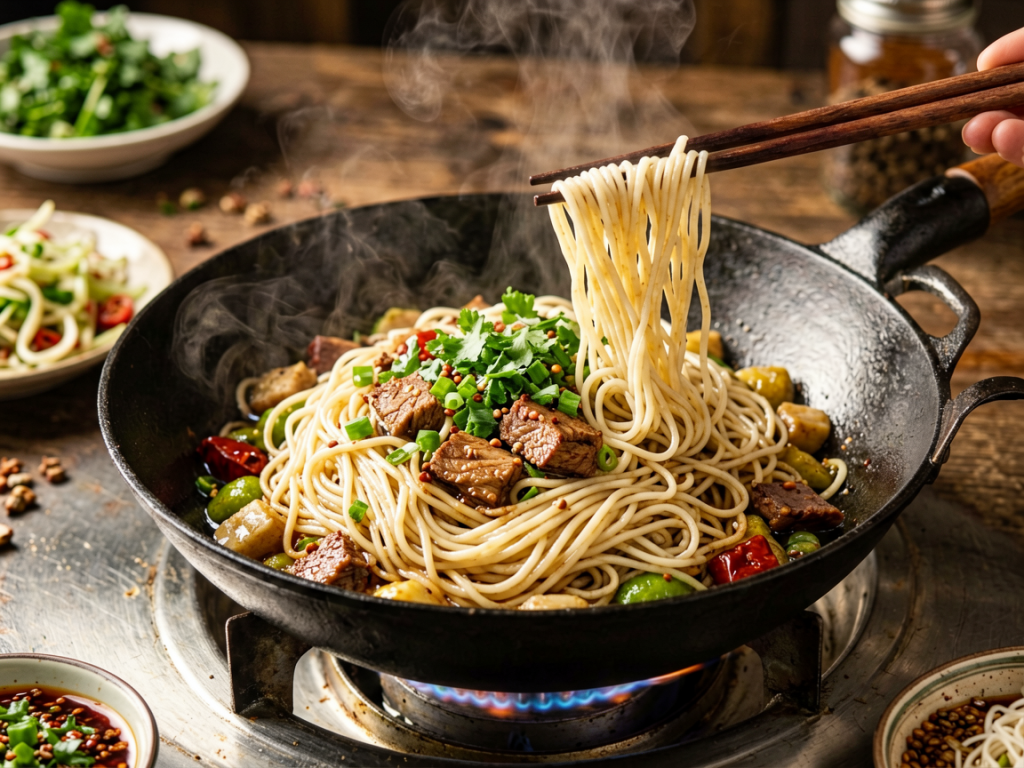
I still remember the first time I bit into a bowl of Lanzhou beef noodles in Xi’an. It wasn’t just food. It was an event. The noodles were slippery, bouncy, and had a chew that felt alive under my teeth. My companion, a local university student named Wei, watched me struggle with chopsticks and laughed.
“You’re eating dried stuff,” he said, pointing to a packet in my bag from the supermarket back home. “That’s not noodle. That’s pasta waiting to happen.”
I was offended. I thought I knew about noodles. I’d made spaghetti, udon, and even some basic dumpling wrappers. But sitting there in that steamy, noisy shop, surrounded by the clatter of bowls and the smell of star anise and chili oil, I realized I had been doing it wrong. Or rather, I had been doing it poorly.
The difference between fresh and dried noodles in Chinese cooking isn’t just about texture. It’s about chemistry, history, and respect for the ingredient. If you want to cook like a local, you need to understand why fresh usually wins, and when dried actually has a point.
The Alkaline Kick
Here’s the thing about Chinese noodles that most Western recipes ignore: alkali. If you buy fresh hand-pulled noodles, or even the refrigerated kind from a good Asian market, you’ll notice they have a slight yellow tint. That’s not turmeric. That’skansui, or alkaline water.
Kansui is usually a mix of sodium carbonate and potassium carbonate. When you add it to the dough, it changes the gluten structure. It tightens up. It makes the noodle springy rather than soft. This is why ramen tastes different from Italian pasta, and why Sichuan hot pot noodles have that distinct snap.
I spent months trying to replicate this at home. I bought kansui powder online because our local supermarkets never stocked it. The first batch I made was a disaster. It tasted like soap and felt like rubber. I almost gave up.
But then I found a trick. You don’t need to buy expensive powders. A pinch of baking soda in your boiling water helps, but mixing baking soda with baking powder creates a closer approximation of the pH balance needed. It’s not perfect, but it gets you 80% there. And that 80% makes all the difference.
Without alkali, you’re making pasta. With it, you’re making Chinese noodles. The flavor profile shifts too. Alkaline noodles have a subtle bitterness that cuts through rich broths. It balances the fat. It lifts the saltiness. It’s why dry fried beef noodles taste so much better with fresh noodles than with the dried blocks you see in every aisle.
Dried Noodles Are Not Just Emergency Food
Let’s address the elephant in the room. Dried noodles get a bad rap. We’ve been conditioned to think they’re cheap, low-quality filler. And sure, the instant noodle cubes are garbage. But traditional dried noodles? They’re a marvel of preservation.
In the north of China, wheat is king. In the south, rice dominates. But everywhere, people needed a way to store grain through the winter. So they made noodles, dried them out, and stored them in jars. This wasn’t laziness. It was necessity.
When you rehydrate a high-quality dried wheat noodle, the texture changes completely. It becomes denser. More rustic. It holds sauce better because it’s porous. Think of it like sourdough versus white bread. Both are bread, but one has character.
I tried this last week with a recipe for Scallion Oil Noodles. I used two types. One was fresh, straight from the vendor downstairs. The other was a premium dried variety labeled “longevity noodles.” The fresh ones were silky. They slid off the spoon. The dried ones gripped the oil. They coated every strand evenly.
For a light broth dish, the fresh noodles win. They let the soup shine. But for a heavy, oily, spicy dish, the dried noodles are superior. They absorb the flavor without getting mushy. They provide a structural integrity that fresh dough often lacks after ten minutes of cooking.
So, don’t dismiss the dried box. Just pick the right kind. Look for brands that list ingredients as flour, water, salt, and alkali. Avoid the ones with preservatives and artificial colors. Those are for college students in dorms, not for your dinner table.
The Handmade Factor
You can buy fresh noodles in a package. You can buy dried ones in a bundle. But nothing beats the real deal: the hand-pulled or hand-cut noodle.
I went to a small stall in Chengdu once. The owner didn’t use a machine. He just slapped dough on the counter. Slap, fold, slap, fold. Then he stretched it. His arms moved like a whip. Within seconds, a thick rope became dozens of thin strands.
He dropped them into boiling water. Cooked them for exactly thirty seconds. Scooped them out. Poured a ladle of spicy beef broth over them. Added cilantro, green onion, and a dollop of Sichuan pepper paste.
I ate that in three minutes. It was gone before I could take a photo. But I remember the texture. It was uneven. Some strands were thicker. Some were thinner. And that imperfection was beautiful. It meant the noodle was alive. It meant a human being had touched it.
Machines make uniform noodles. They’re efficient. They’re consistent. But they lack soul. When you make noodles by hand, even if you’re clumsy like me, you connect with the process. You feel the resistance of the gluten. You hear the slap of the dough.
It’s meditative. It’s satisfying. And the result is worth the effort. I still mess up my hand-pulled noodles. They sometimes turn into flat ribbons instead of round strings. But the taste is undeniable. It’s richer. More complex. It tastes like care.
Choosing the Right Flour Matters More Than You Think
This is where most people fail. They buy all-purpose flour and expect restaurant quality results. It doesn’t work. Chinese noodles require specific proteins.
If you want chewy, bouncy noodles, you need high-protein flour. Bread flour works well. It develops strong gluten networks. If you want softer, silkier noodles, like those in Cantonese dim sum, you need lower protein flour. Cake flour or pastry flour is better. Or just use all-purpose as a middle ground.
I learned this the hard way. I made dumplings using bread flour. The skins were tough. I couldn’t bite through them easily. My wife laughed and handed me the cake flour bag. “Try again,” she said.
The second batch was perfect. Delicate. Thin enough to see the filling through. That’s the power of understanding your ingredients. It’s not just about following a recipe. It’s about knowing why the recipe works.
When you go to the grocery store, check the protein percentage on the bag. Aim for 12-14% for most noodle types. It might cost a dollar more, but it’s worth it. Trust me.
How to Cook Them Properly
Cooking fresh noodles is fast. Really fast. You drop them in boiling water and pull them out after two to three minutes. Don’t overcook them. They continue to cook from residual heat. If they look done, they’re done.
Dried noodles take longer. Five to seven minutes usually. But here’s the secret: rinse them. After draining, run them under cold water. This stops the cooking process and washes away excess starch. Starch makes noodles sticky. You don’t want sticky noodles unless you’re making a risotto-style dish.
For fresh noodles, rinsing is optional. Some people prefer them slightly sticky to hold sauce. But generally, rinsing gives you a cleaner taste. It removes that raw flour smell. It makes the noodles pop.
And never save leftover cooked noodles for later. They clump together. They turn into a brick. If you’re meal prepping, cook the noodles separately when you’re ready to eat. It takes extra time, but it saves the dish.
My Final Verdict
Is fresh always better? Mostly. Yes. It’s fresher. It’s tastier. It’s more versatile. But dried noodles have their place. They’re convenient. They’re shelf-stable. They’re great for quick meals when you’re tired.
But if you really want to taste the depth of Chinese cuisine, make fresh noodles. Even if you buy the dough and roll it out yourself. Even if you just cut it with a knife. It changes everything.
I’m no chef. I’m just a guy who loves eating. But I know this: the next time you make a noodle dish, skip the dried block. Go to the market. Ask for fresh. Watch the vendor pull the dough. Buy some kansui. Try it your way.
You’ll be surprised. Your friends will be jealous. And you’ll finally understand why Wei was laughing at me that day in Xi’an. It wasn’t mockery. It was an invitation. To join the club. To taste the real thing.
So go ahead. Make a mess. Flour will fly. Water will splash. But when you take that first bite, you’ll know. You’re not just eating noodles. You’re eating culture. You’re eating history. And honestly, that’s pretty damn delicious.