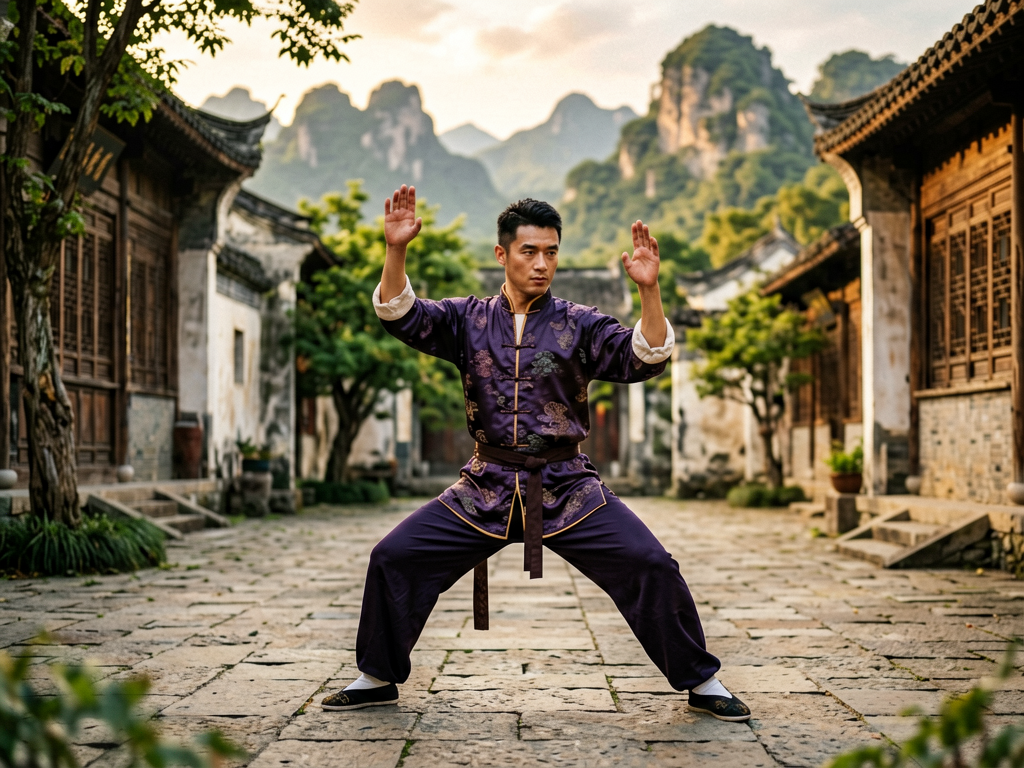
The dust hung in the air like a thick, golden fog. It was 5:30 AM in Henan province, and the silence was heavy enough to cut with a knife. Then, a thousand pairs of wooden shoes slapped against the concrete courtyard in perfect unison. *Thwack. Thwack. Thwack.*
I stood there, shivering in my down jacket, watching a sea of black uniforms move as one entity. There were no teachers shouting commands. There were no whistles. Just the rhythmic, terrifying precision of three thousand children drilling basic stances.
This isn’t a movie set. This is a real Kung Fu school, and it’s where I went to understand a cultural phenomenon that baffles almost every Westerner who first encounters it.
You see the news headlines sometimes. “Tiger Mom,” “Gaokao Pressure,” “Involution.” We think we know why Chinese parents are so strict. We assume it’s all about grades. It’s not. At least, not entirely.
I spent three days wandering through these compounds, talking to exhausted parents and bruised teenagers. I wanted to know why, in an era of iPads and online gaming, families are sending their eight-year-olds to live in monasteries of muscle and meditation.
Here’s the thing. It’s not just about discipline. It’s about survival.
The Gaokao Wall
Let’s be real for a second. The Chinese education system is brutal. I’ve seen it. I’ve watched friends of mine cry in hospital parking lots after their kids bombed the *Gaokao*, the national college entrance exam that determines everything.
The pressure starts early. By the time kids are ten, they’re already juggling school, cram schools, and piano lessons. It’s a machine designed to filter the best out of millions.
But here’s the twist. For many parents, the academic rat race is becoming too expensive, too stressful, and frankly, too risky. They’re looking for an exit ramp. And Kung Fu schools offer one.
These aren’t your grandfather’s martial arts classes. These are full-time boarding schools. They look like universities mixed with military camps. You have dorms, cafeterias, and academic classrooms. But you also have mud pits and heavy bags.
I met a father named Mr. Chen in Zhengzhou. He told me his son was a “bad kid.” Not criminal, just distracted. Can’t sit still. Always in trouble for talking during class.
“He couldn’t focus on math,” Mr. Chen told me, sipping from a thermos. “He couldn’t focus on anything. But when he kicks? He focuses.”
That’s the first reason parents send their kids here. It’s behavioral correction. In a society that values harmony and quiet obedience, a hyperactive, rebellious child is a nightmare. Kung Fu schools promise to grind that rebellion out through repetition.
It’s not pretty. It’s hard. But for parents who feel they’ve lost control, it’s a lifeline.
More Than Just Punching
If you think these kids are just learning to throw haymakers, you’re wrong. I watched a class on Tai Chi at noon. The sun was blazing, but the movements were slow, fluid, almost hypnotic.
“Breathe in,” the instructor said, his voice calm. “Let the anger leave your shoulders.”
I asked one of the students, a sixteen-year-old girl named Li, what she thought about the emotional side of training. She shrugged, wiping sweat from her forehead.
“At home, my parents only ask about my grades,” she said. “Here, they ask if I’m tired. If I’m hurt. If I’m okay.”
That hit me hard. In the high-stakes world of Chinese education, emotional well-being is often a luxury item. You can’t eat it. It doesn’t add points to your score.
But in these schools, it’s part of the curriculum. They teach meditation. They teach breathing. They teach that your mind and body are connected.
I tried a session myself. I’m forty years old, out of shape, and skeptical. My instructor, a stern man named Master Wu, made me stand in a horse stance for twenty minutes.
My legs shook. My back screamed. I wanted to quit. But then, something weird happened. The noise in my head stopped. I couldn’t think about my emails or my rent. I could only think about my feet.
That’s what these kids get. A mental reset. A break from the constant noise of modern life.
To be fair, it’s not magic. You still have to study math and Chinese history. The academic standards are actually quite high. These schools need good students to attract more students. It’s a business, after all.
But the balance is different. You sweat out the stress. You punch away the anxiety. And you come back to the books with a clearer head.
The Cost of Culture
I’ll be honest, I was skeptical at first. It felt like child labor. It felt like something out of a dystopian novel.
But then I talked to more parents. I talked to mothers who were weeping because they missed their kids, but also smiling because their kids were healthier.
These schools offer something rare. They offer community. In a country where families are often nuclear and isolated, these kids form brotherhoods and sisterhoods that are intense and lifelong.
I watched a night ceremony where hundreds of students performed forms under the stars. The energy was electric. It wasn’t just performance. It was a shared identity.
They belong to something bigger than themselves. And in a world that feels increasingly fragmented, that’s powerful.
Of course, there are criticisms. Some schools are poorly run. Some exploit kids for tourism photos. You have to be careful where you send your child.
But the good schools? The ones with real masters and real academics? They’re changing lives.
I saw a kid who was failing every subject transform into a confident leader. I saw a girl who was bullied find strength. I saw adults, not just kids, finding peace.
It’s not for everyone. I wouldn’t send my own kid there if I had the money to hire a tutor. But for families struggling with the pressure of modern China? It’s a valid path.
Why Now?
Why is this happening now? Why are more parents choosing this over another cram school?
I think it’s exhaustion. Parents are tired. They’re tired of fighting with their kids about homework. They’re tired of watching their children burn out before they hit puberty.
They’re looking for an alternative. And Kung Fu schools offer a return to traditional values. Respect for elders. Hard work. Perseverance.
It sounds old-fashioned. But maybe that’s the point. Maybe we’ve gone too far with technology and individualism. Maybe we need a little bit of collective struggle.
I saw a group of kids carrying heavy logs up a hill. They were laughing. They were helping each other. They weren’t on their phones.
It was simple. It was hard. It was real.
That’s what these parents are buying. Not just skills. Not just discipline. But reality.
In a digital world, they want their kids to feel the weight of a stone. To feel the burn in their muscles. To know that effort equals result.
It’s a philosophy. And it’s spreading.
The Long Game
When I left Henan, I felt different. My legs were stiff, but my mind was clear.
I looked back at the compound. The sun was rising, painting the sky in shades of orange and pink. The kids were waking up. The day was starting again.
I realized that this isn’t just about fighting. It’s about living. It’s about finding your center in a chaotic world.
Chinese parents aren’t crazy. They’re desperate. And they’re trying everything to save their kids from drowning in pressure.
If sending them to a Kung Fu school helps? Then so be it.
I don’t judge. I just watch. And I learn.
So, next time you see a video of a kid doing a backflip off a wall, don’t just scroll past. Think about the father who paid for it. Think about the mother who hugged him goodbye. Think about the pressure they’re all trying to escape.
It’s not just a sport. It’s a solution. A messy, dusty, sweat-soaked solution.
And honestly? It’s working.
I’m no expert, but I’ve seen enough. The world is changing. And so are these kids. One punch at a time.
Sound interesting? Maybe you should try a class yourself. Just don’t expect to be gentle.
Trust me, it’s better than most alternatives.
Right?