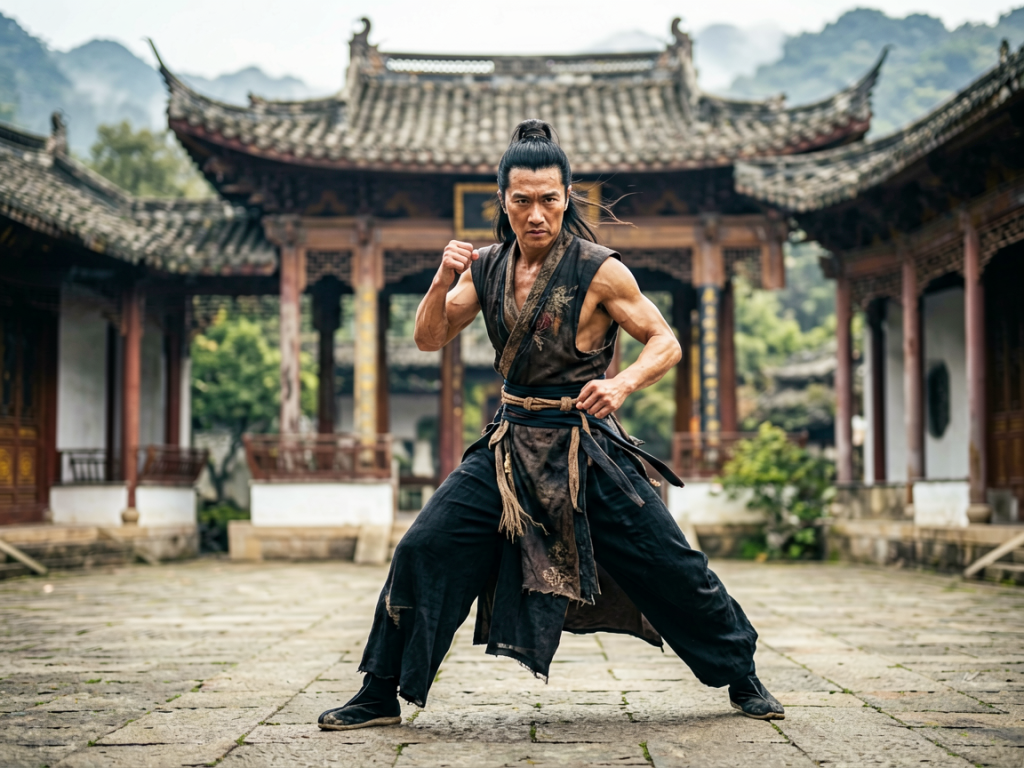
Look, I hated the forms. I really did. When I first moved to Hangzhou eight years ago, I signed up for a traditional Wushu class at a local park. I thought I was going to learn how to fight. I wanted to throw a punch that hurt. I wanted to know how to escape a grab.
Instead, I spent three months doing the same circular arm movement over and over again. My instructor, Master Chen, wouldn’t let us spar. He wouldn’t even let us practice basic punches without first doing the “Green Dragon Emerges from the Sea” form twenty times. I was frustrated. I felt like I was wasting my time.
I remember looking at the other students. There was a young guy named Lei who practiced with a ferocity that was almost scary. He’d sweat through his shirt, his movements sharp and snapping. Meanwhile, I was just going through the motions, thinking about what I’d have for lunch. I thought forms were for old men and performers, not real fighters.
I was wrong. Dead wrong. And if you’re skeptical, that’s totally fair. I was skeptical too. But after years of sparring, grappling, and a few too many bruises, I’ve come to realize something controversial. Solo forms practice isn’t just cultural preservation. It’s the most efficient way to build a functional, deadly fighting base.
The Illusion of Sparring
Let’s be honest for a second. Sparring is awesome. It’s exciting. It’s loud. You get that adrenaline dump that makes you feel alive. But here’s the thing about sparring: it’s chaotic. It’s messy. And it’s heavily dependent on your partner.
If your partner is lazy, you get lazy. If your partner is a beginner, you stay a beginner. I’ve seen guys who can spar well but have no real technical depth. They rely on reflexes and guesswork. When they hit someone with more skill, they fall apart.
Solo forms, on the other hand, are pure. There’s no excuse. You can’t blame your partner for missing a block. You can’t blame the lighting. You’re alone with your technique. This forces you to confront your own flaws. You have to fix them because there’s no one else to cover for you.
Think about it. In a real fight, you’re alone. Your attacker doesn’t care if you’re having a bad day. They don’t care if your stance is wide. They’re going to punch you in the face. Forms train you to be comfortable being alone with your technique under pressure. It builds a self-reliance that sparring simply can’t replicate.
Building the Body’s Memory
I’ll be honest, I used to think muscle memory was just a buzzword. But after spending hundreds of hours in those forms, I started to understand what my body was actually doing. It wasn’t just memorizing a sequence. It was rewiring my nervous system.
Take the “Golden Rooster Stands on One Leg” posture. On the surface, it looks like a silly pose. But hold it for five minutes, and your legs will shake like jelly. Why? Because it’s training your balance, your core stability, and your hip flexibility all at once. It’s not just about standing still. It’s about being unstable and finding equilibrium.
When I finally started sparring, I noticed something weird. My feet would move automatically. I wouldn’t even think about shifting my weight. It just happened. That’s the forms talking. They’ve conditioned my body to react before my brain has time to process the threat.
This is harder to achieve in sparring because you’re reacting to someone else’s chaos. In forms, you’re creating your own order. You’re drilling the perfect execution of a movement until it becomes as natural as breathing. I remember practicing the “Snake Creeps Down” movement. At first, I couldn’t get low without falling over. Now, I can drop to the ground and rise up in one fluid motion. That kind of body control is rare in modern combat sports.
The Art of Invisible Power
Here’s another thing that blew me away. Forms teach you about structure and power generation in a way that striking bags never does. In the gym, you punch a bag. The bag doesn’t fight back. You learn to throw your weight behind the punch. But in forms, you’re moving through imaginary resistance.
Master Chen would always yell, “Root yourself!” I didn’t get it. I thought he meant stand still. But he meant something else. He meant connect your feet to the ground, through your legs, into your spine, and out through your hands. It’s a kinetic chain.
I tried to explain this to a boxing buddy of mine last year. He laughed at me. He said, “Just punch harder.” But forms aren’t about punching hard. They’re about punching efficiently. They teach you to use leverage and momentum, not just brute force. This is why older martial artists can still hold their own against younger, stronger opponents. They know how to use the opponent’s energy against them.
When I practice the “Part the Wild Horse’s Mane” technique, I’m not just moving my arms. I’m twisting my hips, rotating my shoulders, and snapping my wrists. It’s a whole-body exercise. It generates power from the ground up. And when you learn to do that in a slow, controlled form, you can do it fast in a fight.
I tested this once in a self-defense situation. Some guy grabbed my jacket in a bar in Shanghai. I didn’t panic. I didn’t try to muscle him off. I dropped my weight, rotated my hips, and used the same rotational force I’d practiced in forms. He flew backward. I didn’t touch him hard. I just used physics. That’s the power of forms.
The Mental Game
We can’t talk about forms without talking about the mind. Forms are meditation in motion. They require focus. If your mind wanders, your technique falls apart. You lose your balance. You forget the sequence.
In a world full of distractions, this kind of deep focus is a superpower. I’ve found that the more I practice forms, the calmer I am in stressful situations. Whether it’s a business meeting or a confrontation, I have this inner stillness. It’s hard to explain, but it’s there.
Sparring can make you aggressive. It can feed your ego. Forms, by contrast, teach you humility. You can’t fake it. You either have the discipline to do it right, or you don’t. There’s no glory in doing it wrong. There’s only the quiet satisfaction of getting it right.
I remember watching Lei, that young guy from my first class, perform a form years later. He was faster than me, stronger than me. But his form was perfect. Every movement was precise. Every transition was smooth. It was like watching a piece of art. I realized then that forms aren’t just about fighting. They’re about mastery. They’re about becoming the best version of yourself.
So, Should You Stop Sparring?
No. Absolutely not. Sparring is essential. You need to test your skills against a resisting opponent. You need to learn timing and distance. But don’t neglect the forms. They’re not optional. They’re foundational.
Think of it like learning a language. Sparring is having a conversation. Forms are studying grammar and vocabulary. You can’t have a good conversation if you don’t know the basic structure of the language. Forms give you that structure. They give you the tools. Sparring lets you use them.
I’m no expert. I’m just a guy who lived in China and tried to understand its culture through its martial arts. But I can tell you this: if you’re serious about fighting, you need to embrace the boredom of forms. You need to embrace the repetition. You need to embrace the solitude.
It’s not easy. It’s not glamorous. But it works. I’ve seen it work. I’ve felt it work. And now, when I stand in the park at dawn, watching the mist rise off the West Lake, and I go through my forms, I don’t feel like I’m wasting my time. I feel like I’m sharpening a blade. And that’s a feeling I wouldn’t trade for anything.
So, the next time you’re tempted to skip the forms, don’t. Stay. Practice. Sweat. Fail. Try again. You might just discover that the secret to being a better fighter isn’t out there in the ring. It’s right here, inside you, waiting to be unlocked.