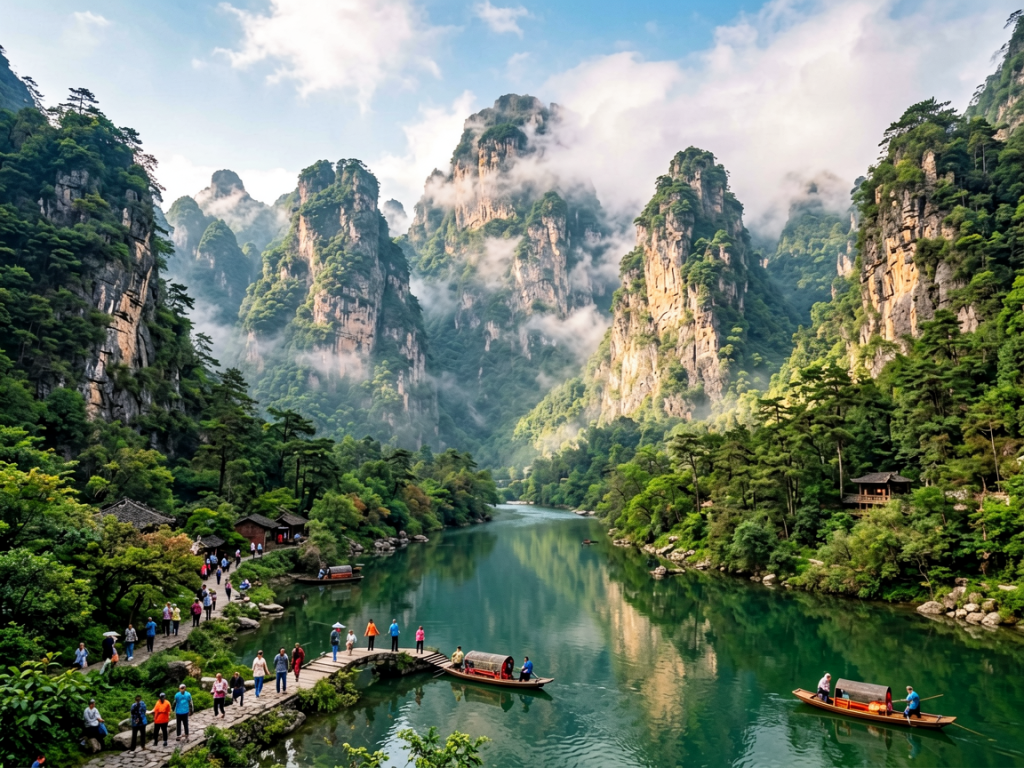
I’ll be honest. When I first packed my bags for Guilin, I was skeptical. Like most travelers, I’d seen the fifty-yuan bill. You know the one. The limestone peaks rising out of the Li River, perfect and postcard-perfect. I figured it was just a tourist trap. A place where you pay to look at a picture you already saw.
I spent three years in Shanghai before I made it down here. The city was loud, fast, and exhausting. I needed something slower. Something green. So, I booked a trip to Guangxi. I expected quiet. I expected empty bamboo rafts. I was wrong.
Guilin isn’t empty. It’s never been empty. And that’s exactly why you should go.
The Myth of the Empty Landscape
Here’s the thing. You don’t go to Guilin for silence. You go for the energy. The landscape here is so iconic that it draws millions. If you go expecting a ghost town, you’ll be frustrated. But if you go expecting a living, breathing cultural hub, you’ll love it.
I remember sitting on a bench near the Two Rivers and Four Lakes at dusk. It was packed. Locals were dancing in squares. Tourists were taking selfies. A street vendor was selling grilled skewers that smelled like cumin and chili. It wasn’t serene. It was alive.
The crowds don’t ruin the view. They validate it. When you see thousands of people staring at the same mountains, you realize why these rocks matter. They aren’t just geology. They’re a shared experience. They’re a reason for strangers to smile at each other.
I used to think solitude was the only way to appreciate nature. I was wrong. Sometimes, sharing a moment makes it heavier. More real. The mountains stand there, indifferent to the noise below. That contrast is powerful.
Escaping the Main Thoroughfare
Look, the main Li River cruise from Guilin to Yangshuo is crowded. I’m not going to lie to you. The big boats are like floating bus tours. You get on, you sit, you take a photo, you get off. It’s efficient. It’s not magical.
But Guilin is bigger than that one river route. The magic happens when you step off the beaten path. I rented a scooter and just drove. No map. Just gas and curiosity.
I ended up in a small village near Xingping. The air was thick with humidity and the smell of woodsmoke. There were no tour guides. Just old men playing chess under a banyan tree. They watched me fumble with my helmet. They didn’t speak English. I didn’t speak their dialect. But we shared a nod. That’s the connection.
You can take the bamboo raft. But don’t take the big group raft. Take the small one. Talk to the rower. Ask him about his day. He’ll probably talk about his grandson or the price of rice. It’s human. It’s warm. It’s better than any audio guide.
I remember one rower, an older man named Lao Li. He stopped paddling in the middle of a calm stretch. He pointed to a cave high up in the cliff face. He told me a story about a monk who lived there a hundred years ago. The water was still. The sun was setting. For ten minutes, it was just us. The crowd was far behind. That’s the Guilin I love.
Food That Defines the Place
Let’s talk about food. Because honestly, the food in Guilin is the best part of the trip. The landscape gets the glory, but the stomach remembers the noodles.
You have to try Guilin Rice Noodles. They’re everywhere. Cheap. Delicious. Addictive. I ate them every morning for two weeks. The broth is rich, made from pork bones and spices. The noodles are slippery and chewy. You add pickled beans, peanuts, and chili oil. It’s a flavor bomb.
There’s a small shop near the West Street area that’s always packed. Locals line up at dawn. I went at 7 AM. I waited ten minutes. The owner, a woman with a no-nonsense attitude, handed me a bowl in thirty seconds. It cost me less than two dollars. It tasted better than any Michelin-star meal I’ve had in Beijing.
Don’t skip the local dishes. Try the beer fish. It’s a Yangshuo specialty. The fish is cooked in a clay pot with local beer and ginger. The sauce is sweet and spicy. It’s served with rice. It’s heavy. It’s comforting. It’s perfect after a day of hiking.
I also loved the stuffed tofu. It’s a traditional Hakka dish. The tofu is fried until crispy, then stuffed with pork and mushrooms. It’s soft on the inside, crunchy on the outside. I dipped it in the sauce. It melted in my mouth. I ate three portions. No regrets.
The food scene reflects the people. It’s direct. It’s flavorful. It’s not trying to impress you. It’s just feeding you. And that’s refreshing.
The Mountains Are Ancient, You Are Not
There’s a philosophical angle to Guilin that most tourists miss. The karst mountains here are millions of years old. They’ve seen dynasties rise and fall. They’ve seen wars. They’ve seen tourists with cameras and tourists with hearts.
Standing at the base of Yulong River, you feel small. Not in a bad way. In a good way. Your problems seem tiny. The traffic in Shanghai doesn’t matter. The job stress doesn’t matter. The mountains don’t care about your deadline.
I spent an afternoon hiking near Moon Hill. The trail was steep. My legs burned. But when I reached the top, I saw a cave that looked like a full moon. The view stretched out for miles. Green fields, blue water, gray stone.
A local couple walked past me. They stopped to rest. The woman handed me a bottle of water. She smiled. She didn’t say anything. But the gesture meant everything. It was a reminder that we’re all just passing through.
This landscape teaches you to slow down. You can’t rush the clouds. You can’t rush the river. You just have to be there. And in a world that demands speed, that’s a gift.
Practical Tips for the Smart Traveler
So, how do you handle the crowds? How do you make the trip your own? Here’s what I’ve learned.
First, go early. Really early. I mean 6 AM early. The sunrise over the Li River is worth the sleep loss. The boats haven’t started yet. The water is glass. The air is cool. You’ll have the view to yourself for a few golden hours.
Second, stay in Yangshuo, not Guilin city. Yangshuo is more relaxed. It’s built for tourists but still has soul. You can rent bikes and ride along the Yulong River. It’s flat. It’s scenic. It’s peaceful. You’ll pass farmers working in the fields. You’ll hear roosters crowing. It’s a different pace.
Third, learn a few words. “Ni hao” is hello. “Xie xie” is thank you. Locals appreciate the effort. It breaks the ice. It opens doors. I learned that a simple greeting can turn a transaction into a conversation.
Fourth, be flexible. Weather changes fast. Rain can make the river muddy. Fog can hide the peaks. Don’t panic. Embrace it. A rainy Guilin has a misty, ink-painting vibe. It’s romantic. It’s moody. It’s different from the sunny postcards. And it’s beautiful.
Finally, talk to people. Not just guides. Taxi drivers. Hotel staff. Fellow travelers. I met a German photographer who had been coming here for twenty years. He showed me spots I never would have found. He said, “The best views are the ones you stumble upon.” He was right.
My Final Verdict
Is Guilin worth the crowds? Yes. Absolutely. But not because of the crowds.
It’s worth it because the landscape is genuine. It’s not a simulation. It’s not a theme park. It’s real rock, real water, real people. The crowds are just the price of admission for one of the most famous views on Earth.
I came here looking for peace. I found community instead. I came looking for silence. I found life. And I think that’s better.
Don’t let the fear of tourists keep you away. They’re part of the story now. They’re the modern pilgrims. And you’re welcome to join them. Just make sure you bring an empty stomach. And an open heart.
I’ll be back. And you should too. Just remember to look past the cameras. Look at the hands that row the boats. Look at the faces that smile. Look at the mountains that stand still. That’s the real Guilin. And it’s worth every minute of the wait.