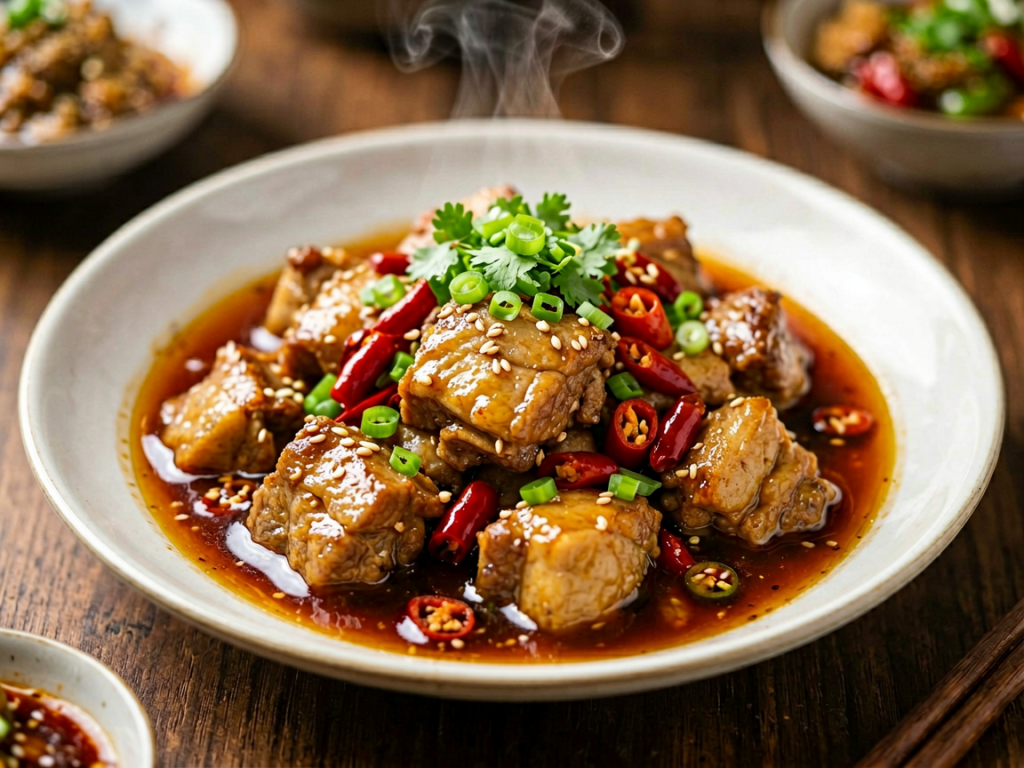
I still remember the first time I had actual Kung Pao Chicken in Chengdu. I was standing in a crowded, steam-filled alleyway restaurant in Jinli Ancient Street. The air smelled of chili oil and cumin. I ordered it because I was hungry, tired, and ready for anything that tasted like home.
When the plate arrived, I was confused. Where was the thick, glossy, orange-brown sauce? Where were the peanuts buried in sweet syrup? The dish looked dry. It looked almost burnt. It was just cubes of chicken, dried red chilies, Sichuan peppercorns, and peanuts scattered on a plate.
I took a bite. Then I took another. Then I ordered three more bowls of rice. It was spicy. It was numbing. It was incredible. That was the moment I realized everything I thought I knew about this famous dish was wrong.
If you’ve only ever had Kung Pao Chicken from an American takeout menu, you haven’t really had Kung Pao Chicken. You’ve had a delicious, sweet, saucy cousin. But the real thing? It’s a completely different animal. It’s loud, it’s aggressive, and it’s deeply rooted in Sichuan culinary philosophy.
## The Legend of Ding Baozhen
To understand the dish, you have to understand the man. Ding Baozhen was a Qing Dynasty official. He served as the Governor of Sichuan province in the late 1800s. He wasn’t just a bureaucrat; he was a man of culture and refinement.
But here’s the twist. Ding wasn’t from Sichuan. He was from Zhejiang, a province in the east known for delicate, sweet, and mild flavors. When he moved to the west, to the hot and humid land of Sichuan, his palate needed adjustment.
He couldn’t handle the intense spice of the local food. Or maybe he just missed home. So, he asked his personal chef to create a dish that combined the spicy techniques of Sichuan with the mild, savory flavors of Zhejiang.
The chef came up with “Gong Bao Ji Ding.” “Gong Bao” was the honorary title given to Ding Baozhen. “Ji Ding” means diced chicken. So, it literally translates to “Diced Chicken of Lord Gong Bao.” It’s a tribute to a man who couldn’t quite fit in, trying to bridge two very different culinary worlds.
Sound interesting? It makes the dish feel more personal, doesn’t it? It’s not just food; it’s a historical artifact on a plate. You’re eating a compromise between East and West China, sweet and spicy, mild and fiery.
## The Holy Trinity of Heat
Let’s talk about the flavor profile, because this is where most people get it wrong. In the US, Kung Pao Chicken is defined by soy sauce, sugar, and vinegar. It’s a sweet and sour dish with a kick.
In Sichuan, the definition is totally different. The soul of real Kung Pao Chicken is the “ma la” sensation. That’s the combination of numbing and spicy. You can’t have one without the other if you want to call it authentic.
The numbing comes from Sichuan peppercorns. These tiny red or green berries don’t add heat. They add a citrusy, floral aroma and a tingling vibration on your tongue. It feels like your lips are vibrating. It’s weird if you’ve never tried it. It’s addictive if you have.
The spicy comes from dried red chilies. Not fresh ones. Dried ones. Specifically, the Erjingtiao or Hua Jiao chilies. They provide a smoky, deep heat that lingers. They aren’t just for heat; they add a roasted, nutty flavor that fresh peppers just can’t match.
And then you have the chicken. In Sichuan, the chicken is usually thigh meat. It’s marinated in soy sauce, Shaoxing wine, and starch. The starch is crucial. It seals in the juices so the meat stays tender even when tossed in the hot wok.
I remember watching a local grandma make this in her kitchen in Chengdu. She didn’t use a thermometer. She didn’t measure the spices. She just tossed the chicken into the wok, added the chilies and peppercorns, and stirred for exactly forty-five seconds. That’s it. Forty-five seconds. If you leave it longer, the chicken gets tough. If you leave it shorter, it’s raw.
## The Peanut Debate
Now, let’s address the elephant in the room. Or rather, the peanut in the dish. In some versions of Kung Pao Chicken, especially the Westernized ones, peanuts are a main ingredient. They’re often coated in sugar and look like candied treats.
In Sichuan, peanuts are still used, but they’re treated differently. They’re usually fried until crispy and added at the very end. They’re not the star. They’re the crunch. They provide a textural contrast to the soft chicken and the chewy dried chilies.
Sometimes, you won’t even see peanuts in the dish. In high-end Sichuan restaurants, they might skip them entirely. Or they might use cashews, which are sweeter and softer. But the classic version always includes them.
I’m no expert on historical recipes, but from what I’ve seen in hundreds of restaurants across Sichuan, the peanut is optional. The chilies and peppercorns are not. If you order Kung Pao Chicken and there are no dried chilies, it’s not Kung Pao. It’s just stir-fried chicken with sauce.
This is where the confusion lies. People expect peanuts because they’re in the American version. But in Sichuan, the peanuts are secondary to the spice. They’re there to balance the heat, not to sweeten the dish.
## Why It’s Hard to Find in China
Here’s a funny thing. If you go to a fancy restaurant in Beijing or Shanghai, you might struggle to find a good Kung Pao Chicken. It’s not a common dish in those regions. It’s too specific to Sichuan.
In Chengdu and Chongqing, it’s everywhere. But even there, it’s not a top-tier dish. It’s a home-style dish. It’s something you’d order when you’re tired of eating hot pot or mapo tofu. It’s a comfort food, but a spicy one.
I once asked a chef in a small eatery in Chengdu why he didn’t put sugar in the dish. He looked at me like I was crazy. “Sugar?” he said. “Kung Pao is salty and spicy. Not sweet.” He shook his head and went back to chopping chilies.
To be fair, there are variations. Some chefs might add a tiny bit of sugar to balance the acidity of the vinegar. But it’s never the dominant flavor. The balance is between salt, soy sauce, vinegar, and heat. It’s a sharp, acidic, numbing profile. It’s not a hug; it’s a slap.
## How to Order It Like a Local
If you’re in China and you want to order real Kung Pao Chicken, here’s what you need to do. Don’t ask for “Kung Pao Chicken” unless you’re in a tourist trap. Instead, ask for “Gong Bao Ji Ding” in Mandarin.
And be specific. Tell the waiter you want it “Ma La” (numbing and spicy). If you don’t want the numbing sensation, you’re ordering the wrong dish. Or ask for “Bu Ma” (no numbing), but then it’s just spicy chicken.
Also, watch the price. If it’s cheap, it might be made with too much starch and not enough real meat. Good Kung Pao Chicken is relatively expensive because it uses good quality chicken and real spices. Don’t skimp on it.
I love watching people react to their first bite of real Kung Pao Chicken. They expect sweetness. They get a punch in the face. Then they smile. Then they ask for more rice. It’s a universal experience. It breaks down barriers. It forces you to pay attention to your palate.
## The Verdict
Real Kung Pao Chicken is a masterpiece of balance. It’s not just spicy; it’s complex. It’s not just sweet; it’s savory. It’s not just chicken; it’s a history lesson.
If you’ve been eating the takeout version your whole life, I urge you to try the real thing. You might be shocked. You might be scared. But you’ll never forget it.
It’s better than most alternatives because it’s honest. It doesn’t try to please everyone. It doesn’t hide behind thick sauces. It shows you exactly what it is: fire, spice, and tradition.
So next time you’re in Sichuan, or even just at a good Chinese restaurant in your city, give it a shot. Order the spicy version. Embrace the numbness. And don’t be surprised if you end up crying, laughing, and asking for seconds all at the same time.
That’s the beauty of Chinese food. It’s always challenging you. Always surprising you. And always, always worth the trouble.