While millions of visitors flock to the Badaling section of the Great Wall each year, seasoned travelers know that Mutianyu offers the most rewarding Great Wall experience in China. Located just 70 kilometers northeast of Beijing, this magnificently preserved section combines accessibility with authenticity, allowing visitors to walk along ancient ramparts without the overwhelming crowds that characterize more touristy segments. With its dense distribution of watchtowers, dramatic mountain scenery, and beautifully restored pathways, Mutianyu represents the Great Wall as it was meant to be experienced — awe-inspiring, peaceful, and profoundly connected to the landscape that shaped it.
The History Behind Mutianyu’s Magnificence
The Great Wall at Mutianyu has a history stretching back over 1,400 years, though the current structure dates primarily from the Ming Dynasty (1368–1644). Originally built during the Northern Qi Dynasty, the wall was substantially reconstructed under the direction of General Qi Jiguang, one of China’s most celebrated military strategists. Qi recognized that this mountainous corridor north of Beijing needed formidable defenses, and he oversaw the construction of the distinctive watchtowers that make Mutianyu so architecturally significant today.
What sets Mutianyu apart from other Great Wall sections is its strategic design. The wall follows the natural contours of the steep mountain ridges, creating a serpentine path that seems to breathe with the landscape itself. This organic integration of military architecture and natural terrain reflects the sophisticated engineering philosophy of the Ming Dynasty builders. Unlike the relatively straight and uniform Badaling section, Mutianyu twists and climbs through terrain that varies dramatically, offering hikers a constantly changing perspective on both the wall and the surrounding countryside.
The section stretches approximately 2.2 kilometers across the mountain tops, featuring 22 watchtowers distributed at remarkably close intervals. This density of fortifications is unique among Great Wall sections and reflects the critical importance of this particular corridor in defending the northern approaches to Beijing. Each watchtower served a specific military function — some were signal towers for relaying messages through smoke signals by day and fire by night, while others housed soldiers and stored weapons and provisions.
Getting to Mutianyu from Beijing
Reaching Mutianyu from Beijing is straightforward and can be accomplished in several ways. The most convenient option is taking a dedicated tourist bus from Dongzhimen Transport Hub, which departs regularly and takes approximately 90 minutes to reach the wall’s entrance. These buses are comfortable, affordable at around 50 yuan round trip, and eliminate the hassle of navigating unfamiliar roads.
For travelers seeking more flexibility, hiring a private driver for the day costs between 400 and 600 yuan, which can be economical for groups of three or more. The drive takes about 70 minutes via the Jingcheng Expressway, and having a driver allows you to set your own schedule, arriving early or staying late to catch the golden hour light on the wall. Many drivers also offer to stop at nearby attractions like the Hongluo Temple or the scenic countryside along the route.
Adventurous travelers can also take public bus 916 from Dongzhimen to Huairou District, then transfer to a local minibus or taxi for the final stretch to Mutianyu. This option takes longer but costs significantly less and provides a glimpse into everyday life in Beijing’s suburban districts. Regardless of your chosen transport, it is essential to start early — the wall opens at 7:30 AM, and arriving before 9:00 AM guarantees the most peaceful experience.
The Hiking Experience: What to Expect
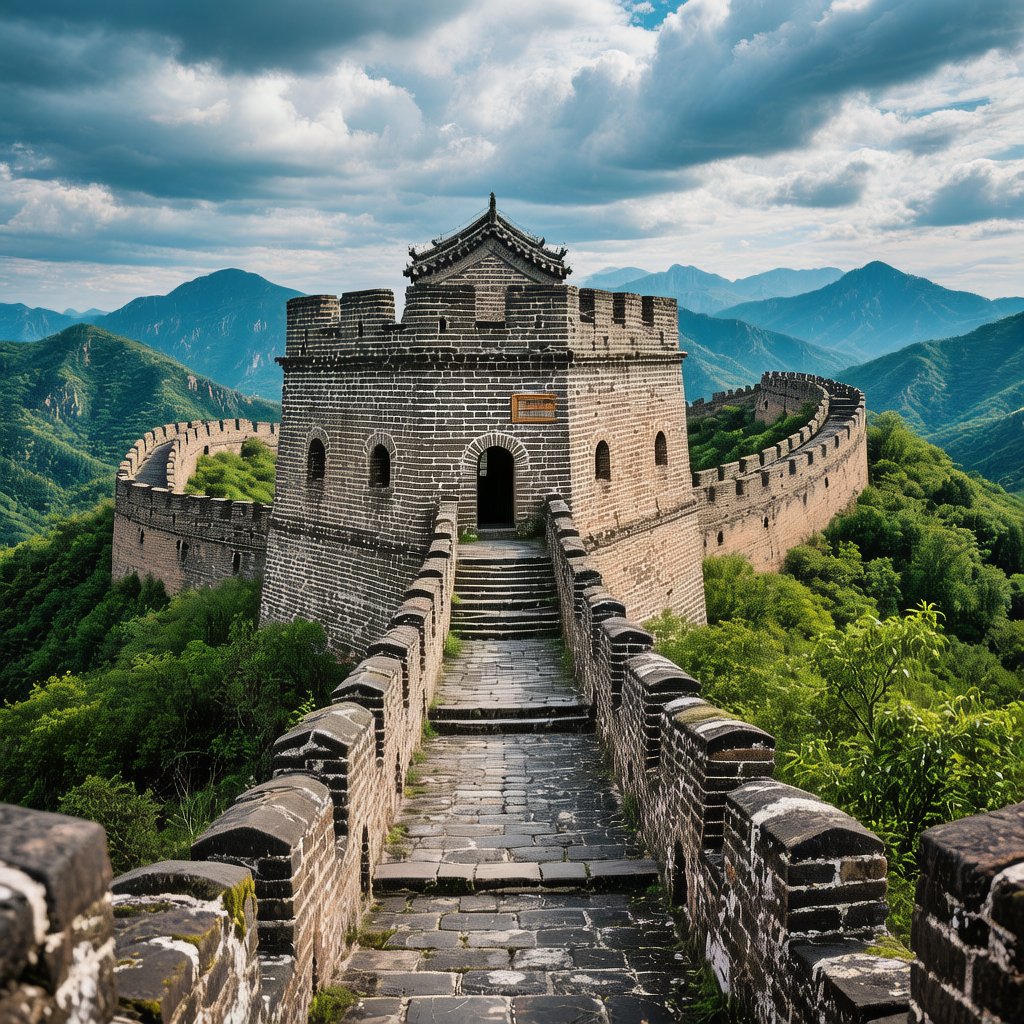
Once at Mutianyu, visitors face a choice: take the cable car, chairlift, or hike up on foot. For the full experience, hiking up is strongly recommended. The walk takes approximately 30 to 45 minutes along well-maintained stone steps through forested slopes, gradually revealing increasingly spectacular views. The physical effort adds immeasurably to the sense of accomplishment and connection with the landscape that the wall was built to defend.
The wall itself offers a variety of hiking experiences depending on which direction you choose. Walking eastward from the main entrance leads toward the more restored sections, where smooth pathways and reconstructed parapets make for easy walking. The western direction leads toward increasingly rugged terrain, where the wall’s original stonework is more visible and the crowds thin out dramatically. For serious hikers, continuing west to the unrenovated sections provides an unforgettable adventure through crumbling battlements and overgrown pathways.
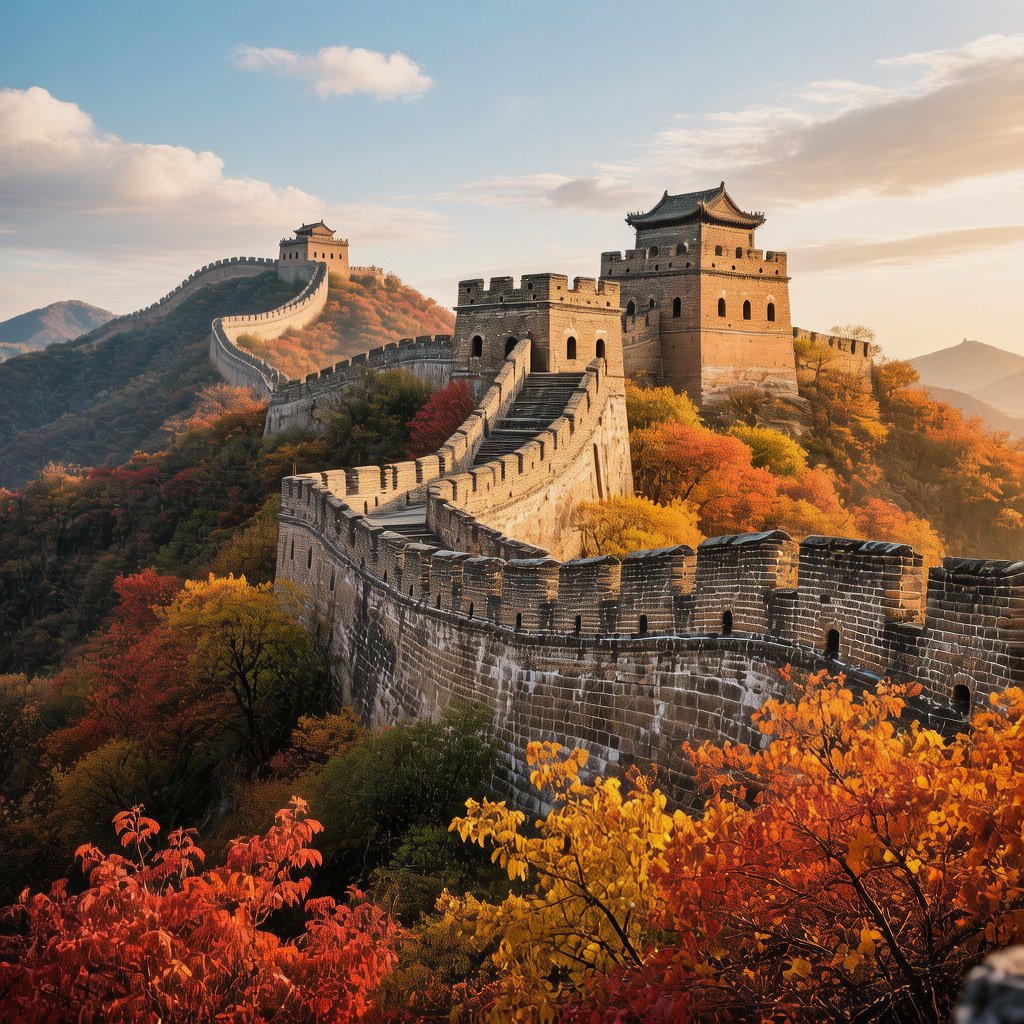
One of Mutianyu’s most photographed features is the stretch where the wall splits into two parallel branches that reconverge at a watchtower known as the Ox Horn. This unique architectural feature, designed to create a kill zone for invaders, creates a stunning visual from above and is particularly beautiful during autumn when the surrounding mountains are painted in shades of red, orange, and gold.
Seasonal Guide: When to Visit
Each season transforms Mutianyu into a different kind of wonderland. Spring brings delicate wildflowers to the mountain slopes and mild temperatures ideal for hiking. The wall seems to float above a sea of green as new leaves emerge on the deciduous trees that blanket the hillsides. Morning mist is common during spring, creating ethereal scenes where the wall materializes from the clouds like a dragon emerging from the heavens.
Summer offers lush greenery and the longest daylight hours, though temperatures can be intense. Early morning hikes are essential during this season, with the best light occurring between 6:00 and 8:00 AM. Summer thunderstorms occasionally sweep through the mountains, and while these create dramatic conditions for photography, visitors should seek shelter in watchtowers when lightning threatens.
Autumn is widely considered the best time to visit Mutianyu. From mid-October through early November, the mountain forests explode into a palette of crimson, amber, and gold that rivals New England’s famous fall foliage. The combination of the ancient grey stonework against the fiery autumn landscape creates what many photographers consider the most beautiful Great Wall scenery possible. Temperatures are comfortable, skies are typically clear, and the lower humidity makes for crisp, vivid photographs.
Winter transforms Mutianyu into a stark, solitary landscape that few tourists experience. Snow-covered walls winding through white-dusted mountains create scenes of breathtaking beauty and silence. The cold is intense, with temperatures regularly dropping below minus 10 degrees Celsius, but the reward is having the wall almost entirely to yourself. Winter visitors should dress in layers, wear sturdy boots with good traction, and be prepared for ice on the stone pathways.
Practical Tips for Your Visit
Entrance fees at Mutianyu are reasonable at approximately 40 yuan for the wall itself, with the cable car or chairlift costing an additional 120 to 140 yuan for a round trip. The toboggan slide, which offers a thrilling descent from the wall back to the parking area, costs about 100 yuan and is a favorite among families with children. Many visitors choose to take the cable car up and the toboggan down, combining convenience with adventure.
Wear sturdy hiking shoes with good ankle support, as the stone steps can be steep and uneven in places. Bring at least one liter of water per person, more during summer months. Snacks and simple meals are available at the tourist facilities near the entrance, but the selection is limited and prices are inflated. Packing your own picnic to eat in one of the watchtowers is a memorable experience.
Photography enthusiasts should arrive early morning or stay for sunset to capture the wall in the most dramatic light. A wide-angle lens is essential for capturing the sweeping curves of the wall against the mountain backdrop, while a telephoto lens allows you to isolate details like watchtower silhouettes and the texture of ancient brickwork. A polarizing filter helps manage reflections and enhances the vividness of the landscape.
Nearby Attractions Worth Exploring
The area surrounding Mutianyu offers several worthwhile attractions for visitors with extra time. The Hongluo Temple, located at the foot of the mountains, is one of northern China’s most important Buddhist sites and provides a peaceful contrast to the military grandeur of the wall. The temple’s ancient pagoda and meditation gardens are particularly beautiful during autumn.
The Mutianyu Village, a small settlement at the base of the wall, offers a glimpse into rural Chinese life and several excellent farm-to-table restaurants serving local Huairou cuisine. The village’s signature dish, roast rainbow trout caught from nearby mountain streams, is a must-try for food-loving travelers. Several family-run guesthouses in the village offer overnight accommodation for those who want to experience sunrise on the wall — an experience that rivals the famous sunrise at Huangshan for sheer visual drama.
For those interested in Chinese craft traditions, the nearby Bohai Town features workshops where local artisans practice traditional stone carving and paper cutting. These crafts have been passed down through generations of mountain-dwelling families, and the intricate designs often incorporate motifs from the Great Wall itself.
Why Mutianyu Beats Badaling
The comparison between Mutianyu and Badaling is inevitable, and for independent travelers seeking an authentic Great Wall experience, Mutianyu wins decisively. While Badaling receives up to 70,000 visitors per day during peak season, Mutianyu typically sees only 5,000 to 8,000 daily visitors, even on the busiest days. This difference is transformative — at Mutianyu, you can actually hear the wind, photograph the wall without a sea of heads in the frame, and find moments of genuine solitude on the ramparts.
The physical condition of Mutianyu is also superior for hiking. The restoration work has preserved the wall’s original character while ensuring safety, creating a balance between authenticity and accessibility that Badaling’s heavily commercialized environment fails to achieve. The natural setting is more dramatic too, with steeper mountains, denser forests, and more varied terrain providing a backdrop that feels genuinely wild despite the wall’s proximity to Beijing.
Planning Your Perfect Mutianyu Day
For the optimal Mutianyu experience, plan to spend at least four to five hours at the wall. Arrive by 8:00 AM to enjoy the quietest hours, hike eastward first to explore the restored sections while your energy is high, then venture westward toward the more rugged areas. Take time to rest in the watchtowers, where the cool stone and mountain breezes provide natural air conditioning. Pack a simple lunch to eat on the wall, and savor the experience of dining where Ming Dynasty soldiers once stood watch over the northern frontier of their empire.
Whether you are a first-time visitor to China or a seasoned traveler returning for another encounter with the wall, Mutianyu offers an experience that transcends typical tourism. Here, the Great Wall reveals itself not as a mere tourist attraction but as a living monument to human determination and architectural genius, winding through mountains that have watched civilizations rise and fall. It is, quite simply, the Great Wall at its finest.