The Forbidden City: Inside the World’s Largest Imperial Palace Complex
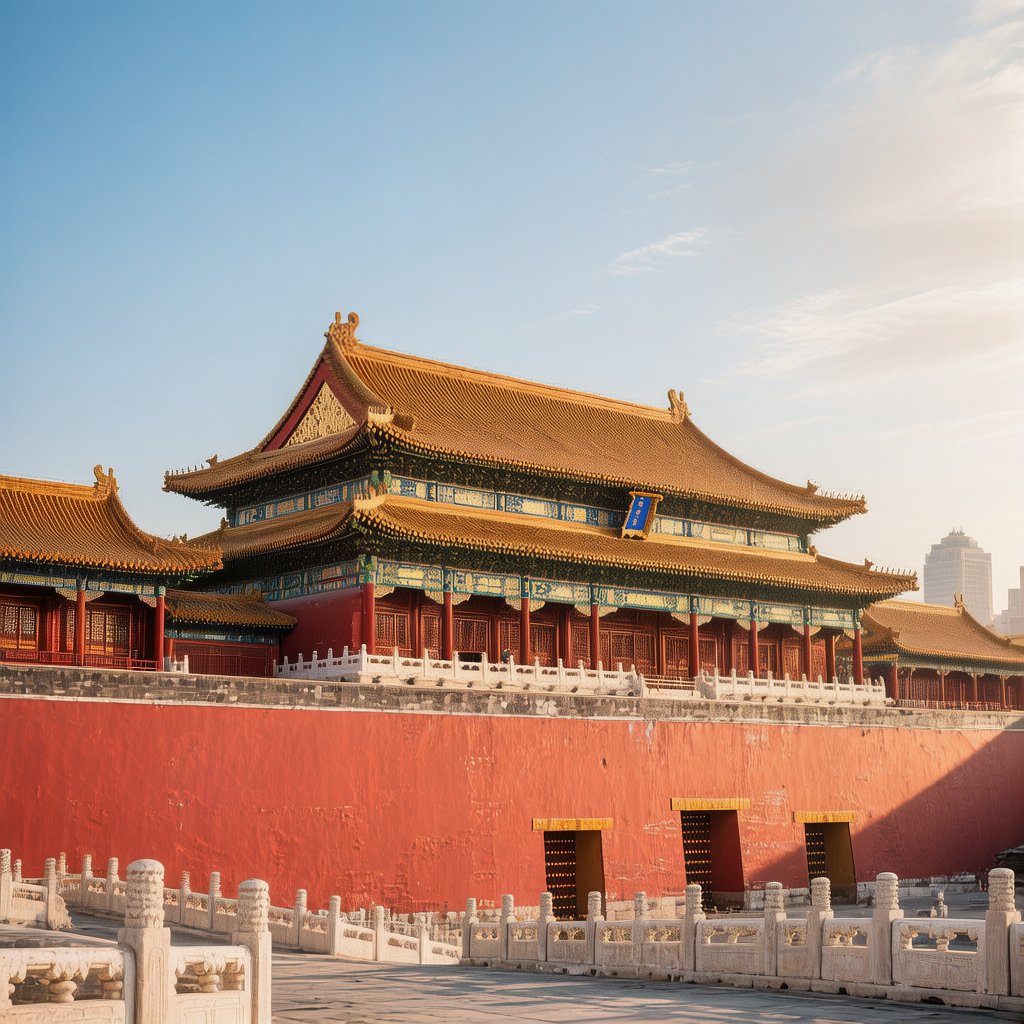
Rising from the heart of Beijing like a crimson-and-gold mirage, the Forbidden City stands as humanity’s most magnificent testament to imperial ambition. For nearly five centuries, this colossal palace complex served as the exclusive domain of Chinese emperors—a universe unto itself where absolute power resided behind walls that ordinary citizens dared not approach. Today, as the Palace Museum, it welcomes over nineteen million visitors annually, each one walking the same stone paths once reserved for emperors, concubines, and eunuchs. The Forbidden City is not merely an architectural marvel; it is the physical embodiment of Chinese cosmological thought, political philosophy, and artistic achievement compressed into 178 acres of breathtaking grandeur.
The Origins: How a Dynasty Built Its Eternal Home
The story of the Forbidden City begins with the Yongle Emperor, Zhu Di, the third ruler of the Ming Dynasty. In 1406, just six years after usurping the throne from his nephew, Zhu Di made the momentous decision to move the imperial capital from Nanjing to Beijing—his former power base in the north. This was not merely a logistical decision; it was a statement of authority. A new capital demanded a new palace, and Zhu Di envisioned something the world had never seen.
Construction began in 1407 and consumed fourteen years of labor from over one million workers, including master craftsmen recruited from across the empire. The numbers defy comprehension: one million workers, 100,000 artisans, and enough timber to strip entire forests. The finest nanmu wood was harvested from the mountains of Sichuan and transported down the Yangtze River and along the Grand Canal. Massive stones, some weighing over 200 tons, were dragged across frozen roads in winter by teams of men and mules. The scale of human effort was matched only by the precision of the result.
When the palace was completed in 1420, Zhu Di moved in with his court, and for the next 491 years—through the entire Ming Dynasty and the entirety of the Qing Dynasty—the Forbidden City remained the political and ceremonial center of Chinese civilization. Twenty-four emperors called it home, each adding his own modifications and expansions while respecting the fundamental layout that Zhu Di had ordained.
Architectural Philosophy: Heaven on Earth
Every beam, every tile, every courtyard in the Forbidden City was designed according to the principles of feng shui, Confucian hierarchy, and Chinese cosmology. The complex is oriented along a precise north-south axis, aligning with the celestial pole—the seat of the Supreme Emperor of Heaven in Chinese astronomy. The earthly emperor, as the Son of Heaven, mirrored this cosmic order by residing at the axis of the world.
The layout follows a strict bilateral symmetry, with the most important structures placed along the central axis and secondary buildings arranged in subordinate positions on either side. This was not mere aesthetics; it was the physical expression of the Confucian ideal of order, where everyone and everything occupied its proper place. The emperor sat at the apex, and the architecture reinforced his position with every sightline and threshold.
The color scheme is equally symbolic. The distinctive yellow-glazed roof tiles were reserved exclusively for the emperor, as yellow represented the earth and the center of the five elements in Chinese philosophy. The vermilion walls symbolized happiness, good fortune, and imperial authority. The white marble terraces provided a visual foundation of purity and stability. Even the number of roof figures—small sculpted beasts lining the ridge of each roof—communicated rank. The Hall of Supreme Harmony, the most important building, features ten such figures, the maximum allowed and a number reserved for the emperor alone.
The Outer Court: Where Emperors Ruled the World
The Forbidden City is divided into two primary sections: the Outer Court (Waichao) in the south and the Inner Court (Neichao) in the north. The Outer Court was the stage for imperial power, where the emperor conducted state affairs, held grand ceremonies, and received foreign dignitaries.
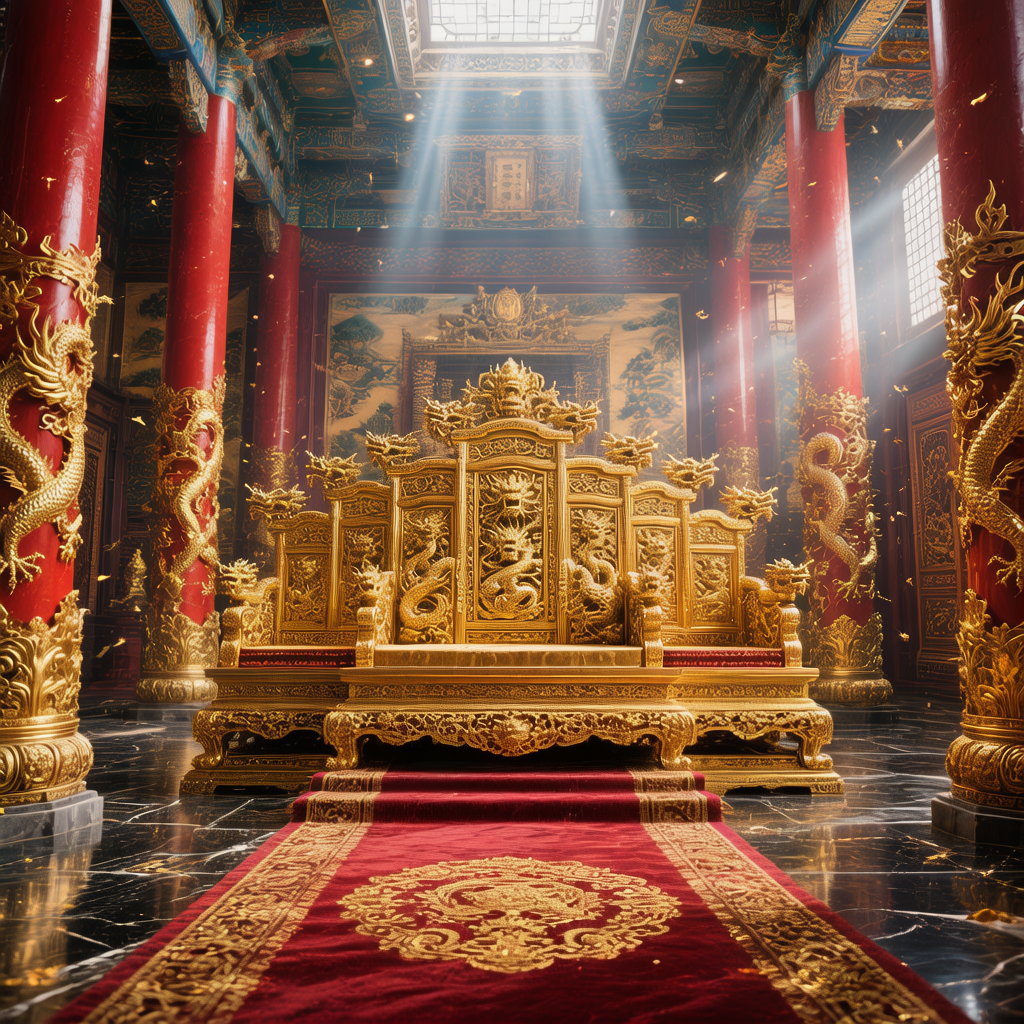
At its heart stands the Hall of Supreme Harmony (Taihe Dian), the largest surviving wooden structure in China and the most important building in the entire complex. Rising 35 meters above its triple-tiered marble terrace, this hall was the setting for the most significant ceremonies in the imperial calendar: coronations, imperial weddings, and the celebration of military victories. Inside, the Dragon Throne sits beneath a coffered ceiling adorned with a golden dragon clutching a pearl—the cosmic pearl of wisdom and power.
Flanking the Hall of Supreme Harmony are the Hall of Central Harmony (Zhonghe Dian), where the emperor rehearsed his speeches and examined sacrificial offerings, and the Hall of Preserving Harmony (Baohe Dian), used for banquets and the final stage of the imperial examinations. Together, these three halls represent the Confucian virtues of harmony, balance, and preservation—ideals that the emperor was expected to embody.
The Inner Court: Secrets Behind the Vermilion Walls
North of the Outer Court lies the Inner Court, the private world of the emperor and his household. This is where the real drama of palace life unfolded—where emperors consorted with concubines, where eunuchs schemed for influence, and where succession crises threatened the stability of the empire.
The Palace of Heavenly Purity (Qianqing Gong) was the emperor’s residence during the Ming Dynasty and the site where his coffin would lie in state after death. The Palace of Earthly Tranquility (Kunning Gong) was the empress’s domain, where she oversaw the management of the imperial household. Between them stands the Hall of Union (Jiaotai Dian), symbolizing the harmonious union of heaven and earth, yin and yang, emperor and empress.
Perhaps the most fascinating area is the Imperial Garden, a carefully curated landscape of ancient cypresses, bizarre rockeries, and pavilions that offered the imperial family a rare taste of nature within the palace walls. The Pavilion of Imperial Peace, crowned with a golden dome, sits at the garden’s center, a Daoist sanctuary where the emperor could seek spiritual solace.
Life Inside the Golden Cage
For all its magnificence, life in the Forbidden City was a gilded prison. The emperor’s days were regimented by ritual and protocol. He rose before dawn to perform sacrifices, received officials at prescribed hours, and spent his evenings reviewing memorials from provincial governors. Every aspect of his existence was choreographed to project the image of a sage-king who governed through moral virtue rather than mere force.
The imperial harem was a world unto itself, governed by its own elaborate hierarchy. At its peak during the Qing Dynasty, the palace housed thousands of concubines, each ranked according to a strict eight-tier system. The empress stood at the top, followed by the imperial noble consort, noble consorts, consorts, imperial concubines, noble ladies, first-class female attendants, and second-class female attendants. Competition for the emperor’s favor was fierce, and the politics of the harem could determine the fate of the empire.
The eunuchs were the invisible machinery that kept the palace functioning. Castrated before puberty, they served as the emperor’s most intimate attendants, managing everything from the imperial kitchen to the treasury. Their unique position—trusted with access to the inner court yet barred from founding rival dynasties—made them indispensable and, at times, dangerously powerful. During the Ming Dynasty, eunuch factions grew so influential that they effectively controlled the government, leading to one of the most dramatic power struggles in Chinese history.
Survival Through the Centuries
The Forbidden City has survived fires, invasions, revolutions, and the ravages of time with a resilience that borders on the miraculous. Fires were the greatest constant threat—over fifty major blazes swept through the palace during the Ming Dynasty alone, each one followed by meticulous reconstruction. The buildings were designed with fire prevention in mind: massive bronze vats stood ready with water, and the architecture incorporated firewalls between courtyards.
The most dramatic near-destruction came in 1644, when the last Ming emperor, Chongzhen, hanged himself as rebel forces closed in on Beijing. The rebels looted and burned parts of the palace before the Manchu forces of the emerging Qing Dynasty seized control. Rather than destroying the Ming palace, the Qing emperors embraced it, moving in and making it their own while adding distinctly Manchu elements to the architecture and court life.
In 1900, the Boxer Rebellion brought foreign troops into Beijing, and the Forbidden City was occupied by the Eight-Nation Alliance. The empress dowager Cixi fled the capital, and the palace suffered looting, though its structures remained largely intact. The final imperial resident was Puyi, who abdicated in 1912 but continued to live in the Inner Court until 1924, when he was finally expelled by the warlord Feng Yuxiang. In 1925, the Palace Museum was established, and the Forbidden City was opened to the public for the first time in its 500-year history.
A Repository of Unimaginable Treasures
Beyond its architectural significance, the Forbidden City houses one of the world’s greatest collections of art and antiquities. The Palace Museum’s holdings include approximately 1.86 million items, ranging from ancient bronzes and jade carvings to Ming porcelain and Qing imperial portraits. The collection of ceramics alone spans 8,000 years of Chinese history, while the painting and calligraphy collection includes masterpieces by the most revered artists in Chinese civilization.
The imperial workshops produced objects of staggering beauty and technical virtuosity. Cloisonné vases with impossibly intricate wire patterns, jade mountains carved from single boulders, lacquerware built up from hundreds of layers—each piece represents thousands of hours of skilled labor. The clock collection, largely assembled during the Qing Dynasty’s encounter with European technology, features elaborate automata that still function today, miniature mechanical theaters where tiny figures dance and chime the hours.
The Forbidden City Today: Conservation and Controversy
Maintaining a 600-year-old wooden palace complex is an undertaking of extraordinary complexity. The Palace Museum employs hundreds of conservators and craftspeople who practice traditional building techniques passed down through generations. Roof tiles are replaced using the same methods employed during the Ming Dynasty. Wooden beams are repaired using traditional mortise-and-tenon joinery, without nails or modern adhesives. The distinctive vermilion walls are repainted with the same mineral pigments used centuries ago.
In recent years, the museum has undertaken ambitious digital preservation projects, creating detailed 3D models of every building and digitizing millions of documents from the imperial archives. Virtual tours now allow people around the world to explore areas that are too fragile for foot traffic. The balance between preservation and access remains a constant challenge—as visitor numbers continue to climb, the wear on ancient stone floors and wooden structures accelerates.
Visiting the Forbidden City: A Practical Guide
For modern visitors, the Forbidden City offers an experience unlike any other. Entering through the Meridian Gate, you pass through successive courtyards of increasing grandeur, each one revealing new perspectives on the vastness of imperial ambition. The highlights include the Hall of Supreme Harmony with its Dragon Throne, the exquisite Nine-Dragon Wall, the Clock Gallery with its mesmerizing automata, and the Treasure Gallery displaying imperial jewelry and jade.
Plan at least half a day for your visit—a full day is better. Arrive early to avoid the heaviest crowds, and consider hiring an audio guide or joining a tour to fully appreciate the layers of meaning embedded in every corner. The Palace Museum now requires advance ticket booking, especially during peak seasons. Photography is permitted in most areas, though flash is prohibited in exhibition halls.
Cultural Significance: Why the Forbidden City Matters
The Forbidden City is far more than a tourist attraction or a museum. It is the most complete expression of traditional Chinese palatial architecture, a UNESCO World Heritage Site that encapsulates five centuries of imperial rule. Its design principles—informed by Confucian hierarchy, Daoist cosmology, and feng shui—offer profound insights into how the Chinese understood the relationship between heaven, earth, and human society.
For the Chinese people, the Forbidden City represents both a source of cultural pride and a reminder of the complexities of history. It stands as evidence of the extraordinary achievements of Chinese civilization while also bearing witness to the human costs of absolute power. The millions who walk its courtyards each year are not just sightseeing—they are engaging with the deepest currents of Chinese identity, touching the stones that shaped the destiny of a nation for half a millennium.
In a world that often seems to value the new over the old, the Forbidden City reminds us that some achievements are timeless. Its vermilion walls and golden tiles continue to inspire wonder, not because they are ancient, but because they represent the pinnacle of what human creativity, determination, and craftsmanship can achieve. The Forbidden City was built to last forever—and, against all odds, it has.