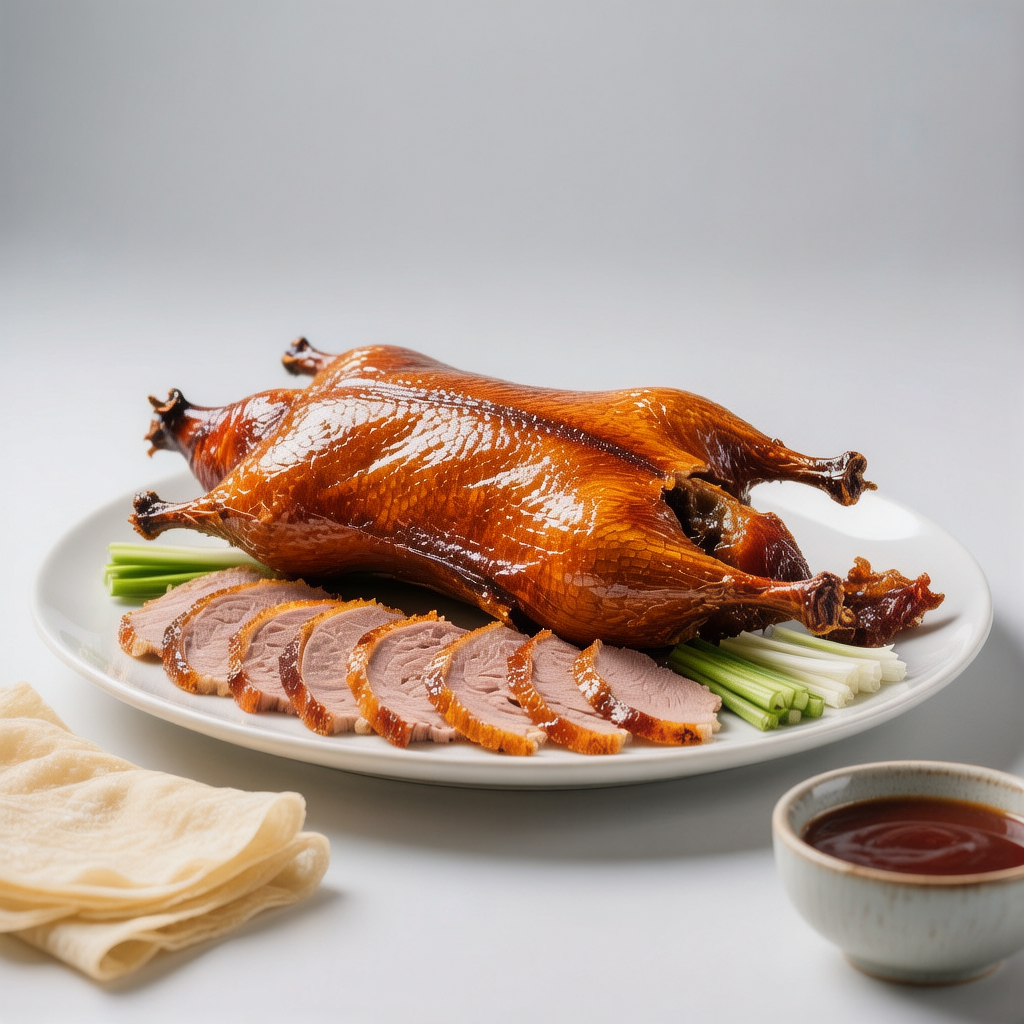
Few dishes in the world carry the prestige and pageantry of Peking Duck (北京烤鸭, Beijing Kaoya). With its paper-thin, lacquered skin and tender meat, served alongside delicate Mandarin pancakes, scallion brushes, and sweet hoisin sauce, Peking Duck is not just a meal — it is a ceremony. For over 600 years, this dish has been the crown jewel of Chinese imperial cuisine, and today it remains the dish that every visitor to Beijing must try. This guide will show you how to recreate this legendary experience in your own kitchen.
The Imperial History of Peking Duck
Peking Duck has been served in Beijing since the Yuan Dynasty (1271–1368), but it was during the Ming Dynasty that it truly became an imperial delicacy. The chefs of the Forbidden City refined the roasting technique over centuries, and by the Qing Dynasty (1644–1912), Peking Duck was a staple of the imperial court menu.
The first commercial Peking Duck restaurant, Bianyifang (便宜坊), opened in Beijing in 1416, making it one of the oldest continuously operating restaurants in the world. The more famous Quanjude (全聚德), established in 1864, popularized the “hanging oven” roasting method that is now the gold standard. Today, Quanjede serves millions of ducks per year, and the art of Peking Duck roasting has been designated a Chinese National Intangible Cultural Heritage.
What Makes Authentic Peking Duck Special?
Authentic Peking Duck is distinguished by three defining characteristics:
- Glass-like crispy skin — The skin should be thin, brittle, and shatter like glass when bitten. It should separate cleanly from the fat layer beneath.
- Tender, juicy meat — The meat underneath remains moist and flavorful, never dry or overcooked.
- Minimal seasoning — The duck itself is seasoned simply. The magic comes from the roasting technique, not heavy marinades. The flavor comes from the duck itself and the serving accompaniments.
Achieving this result requires a specific breed of duck, a precise preparation process, and a specialized roasting method that has been perfected over centuries.
Choosing the Right Duck
The traditional Peking Duck uses the White Beijing Duck (北京鸭), a breed specifically developed for this dish. These ducks are raised for exactly 65 days and fed a rich diet to develop the plump, tender meat and a thick layer of fat beneath the skin — the key to that signature crispness.
For home cooking, look for:
- A whole duck, 4-5 pounds (1.8-2.3 kg) — Smaller ducks cook more evenly and have a better skin-to-meat ratio.
- Fresh, not frozen if possible — Fresh duck skin renders fat more evenly during roasting.
- Duck with intact skin — Any tears or punctures in the skin will allow fat to drain during roasting, resulting in uneven crispness.
Cooking Tip: If you can only find frozen duck, thaw it slowly in the refrigerator for 24-48 hours. Never thaw at room temperature, as this can cause bacterial growth and uneven thawing that damages the skin texture.
The Secret to Crispy Skin: Air Drying and Glazing
The single most important step in Peking Duck preparation is creating that perfectly crispy skin. This is achieved through a two-step process of glazing and air drying:
Step 1: Separating Skin from Meat
Before anything else, the skin must be separated from the meat. In professional kitchens, this is done by inflating the duck with air pumped between the skin and flesh. This allows the fat to render out during roasting, leaving the skin dry and crispy. At home, you can achieve a similar effect by gently sliding your fingers or the handle of a wooden spoon between the skin and the meat, being careful not to tear the skin.
Step 2: The Glaze
The duck is then coated with a glaze made from:
- 2 tablespoons honey
- 2 tablespoons warm water
- 1 tablespoon white vinegar or rice vinegar
- 1 teaspoon five-spice powder
Bring the glaze ingredients to a gentle simmer and brush generously over the entire duck. The honey creates the lacquered shine, the vinegar helps dry the skin, and the five-spice adds subtle aroma.
Step 3: Air Drying
After glazing, the duck must be air-dried for at least 12-24 hours in the refrigerator, uncovered. Place the duck on a wire rack set over a sheet pan to allow air circulation on all sides. The refrigerator’s dry environment will dehydrate the skin, which is essential for maximum crispness during roasting.
Cooking Tip: For the best results, use a small fan to blow air over the duck in the refrigerator, or place it in front of a fan at room temperature for 4-6 hours before refrigerating. The drier the skin before roasting, the crispier it will become.
Two Roasting Methods: Closed Oven vs. Hanging Oven
There are two traditional roasting methods for Peking Duck, each with its own merits:
Closed Oven Method (焖炉, Men Lu)
Used by Bianyifang, the closed oven method involves heating a brick oven, then placing the duck inside and sealing the door. The duck cooks in the residual heat, resulting in more tender meat with a slightly softer skin. This method is gentler and more forgiving for home cooks.
Hanging Oven Method (挂炉, Gua Lu)
Used by Quanjude, the hanging oven method roasts the duck over an open flame fueled by fruitwood (traditionally jujube or pear wood). The duck is hung on a hook and rotates slowly, cooking evenly from all sides. The open flame imparts a subtle smoky flavor and produces the shatteringly crisp skin that most people associate with Peking Duck.
Home Adaptation: For home cooks, roasting at a high temperature (450°F / 230°C) for the first 30 minutes, then reducing to 350°F / 175°C for the remainder, approximates the hanging oven effect. Using a vertical roaster or beer can stand to hold the duck upright allows fat to drain and air to circulate, mimicking the hanging position.
Step-by-Step: Roasting Peking Duck at Home
Here is the complete method for making Peking Duck in a conventional home oven:
- Prepare the duck — Remove giblets, pat the duck completely dry with paper towels. Gently separate the skin from the breast and thigh meat using your fingers or a wooden spoon handle.
- Blanch the duck — Pour boiling water over the duck’s skin to tighten the pores. This helps the glaze adhere and the skin crisp during roasting.
- Apply the glaze — Brush the honey-vinegar glaze generously over the entire duck surface. Make sure every part is coated evenly.
- Air dry — Place the duck on a wire rack over a sheet pan, uncovered, in the refrigerator for 12-24 hours. The skin should feel dry and papery to the touch.
- Roast at high heat — Preheat oven to 450°F (230°C). Place the duck on a vertical roaster or wire rack set in a roasting pan with water at the bottom (to catch dripping fat and prevent smoke). Roast for 30 minutes.
- Reduce heat and continue — Lower oven temperature to 350°F (175°C). Roast for another 60-75 minutes, or until the skin is deep golden brown and the internal temperature reaches 165°F (74°C).
- Rest — Remove the duck from the oven and let it rest for 15 minutes before carving. This allows the juices to redistribute.
Cooking Tip: Prick the duck skin lightly with a needle or skewer before roasting (avoid piercing the meat). This allows subcutaneous fat to render out during cooking, which is the key to crisp skin. Do not prick too deeply — you only want to pierce the skin, not the meat.
The Art of Carving Peking Duck
In Beijing restaurants, the carving of Peking Duck is a theatrical performance. A skilled chef slices the duck tableside with remarkable precision, producing approximately 108-120 thin slices from a single duck. Each slice should have both skin and meat.
The traditional carving sequence is:
- Skin first — The crispiest skin from the breast is sliced off in thin sheets and served first. This is the most prized part.
- Skin and meat together — The remainder of the breast and thigh is sliced into pieces that include both skin and meat.
- Remaining meat — The rest of the meat is carved off for additional servings.
At home, use a very sharp knife and slice the duck at a slight angle, cutting thin pieces that include both skin and meat. Do not worry about achieving restaurant-level precision — the flavor will be just as impressive.
The Accompaniments: Building the Perfect Peking Duck Wrap
The way you eat Peking Duck is just as important as how you cook it. The traditional method involves assembling small wraps, and each component plays a specific role:
Mandarin Pancakes (春饼)
These thin, soft wheat pancakes are the foundation. They should be pliable enough to fold without cracking, but thin enough that they do not overpower the duck. To make them:
- Mix 2 cups all-purpose flour with 3/4 cup boiling water to form a dough.
- Knead until smooth, rest for 30 minutes.
- Divide into small balls, flatten two at a time with sesame oil between them, roll thin, and cook on a dry pan for 30 seconds per side.
- Peel the two layers apart while still warm.
Cooking Tip: Mandarin pancakes can be made a day ahead and reheated by steaming for 2-3 minutes. They also freeze well — separate with parchment paper and freeze in a ziplock bag for up to 1 month.
Hoisin Sauce (海鲜酱)
The sweet, savory sauce that ties everything together. Spread a thin layer on the pancake before adding duck. Use a quality brand — the difference between good and cheap hoisin is noticeable.
Scallion Brushes (葱白丝)
Cut scallion whites into thin julienne strips. Some restaurants serve them as “brushes” — scallion whites slit at both ends and fanned out. These provide a sharp, fresh crunch that cuts through the richness of the duck.
Cucumber Sticks
Thin strips of seedless cucumber add a cool, refreshing crunch. They also help balance the richness of the duck and sauce.
Sugar (白糖)
In the most traditional Beijing service, the first slices of pure crispy skin are dipped in fine white sugar. This may sound unusual, but the combination of shatteringly crisp, savory skin with sweet sugar crystals is absolutely divine.
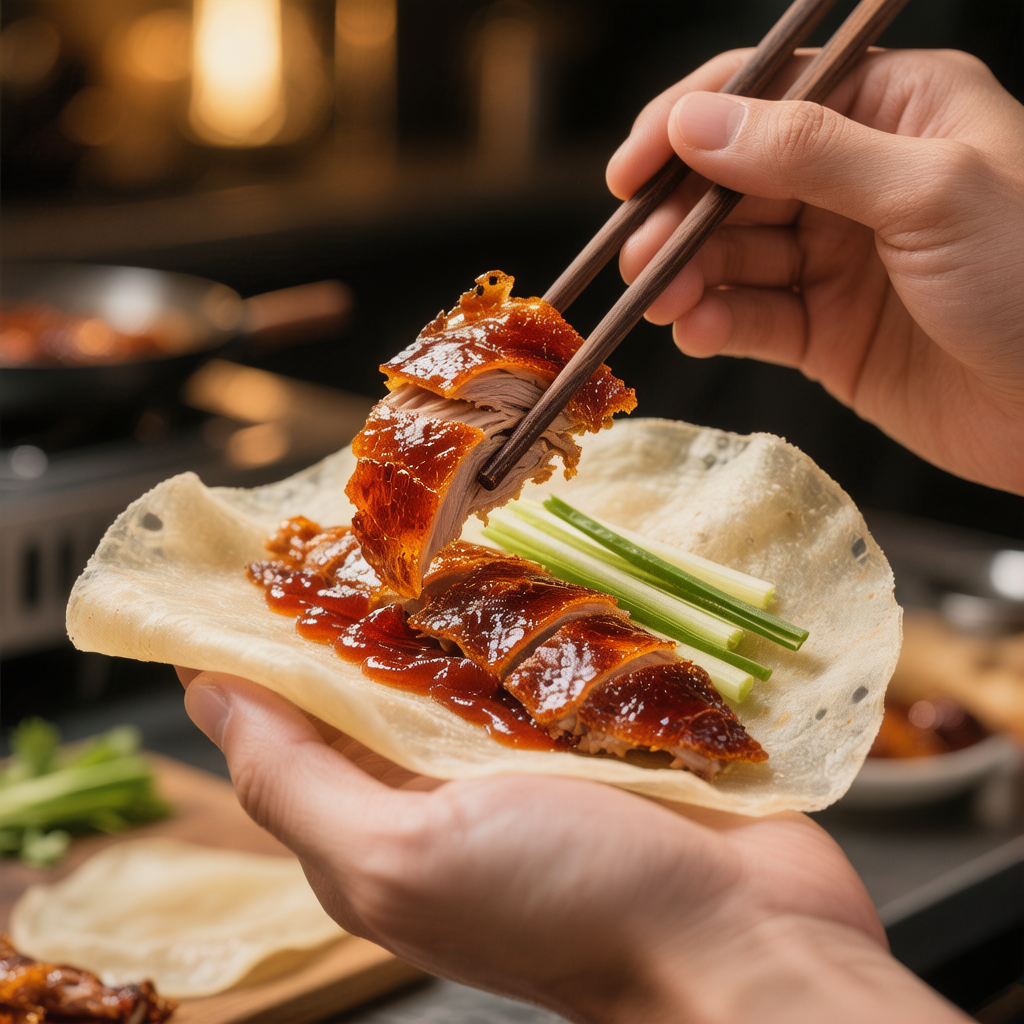
How to Assemble a Peking Duck Wrap
The ritual of assembling and eating Peking Duck is part of the experience:
- Place a warm Mandarin pancake flat on your plate.
- Spread a thin layer of hoisin sauce across the center.
- Add 2-3 slices of duck (skin and meat).
- Top with scallion strips and cucumber sticks.
- Fold the bottom edge up, then fold the sides in to create a neat parcel.
- Eat with your hands, in one or two bites.
The combination of textures and flavors — the shattering crisp skin, the tender meat, the sweet hoisin, the sharp scallion, and the cool cucumber — creates a perfect bite every time.
What to Do with Leftover Duck
In Beijing, no part of the Peking Duck goes to waste. After the skin and meat are carved, the bones are used to make a rich, milky-white duck bone soup (鸭架汤). Here is how:
- Break the remaining carcass into pieces.
- Simmer in water with ginger, scallions, and a splash of cooking wine for 2-3 hours.
- Season with salt and white pepper.
- Add napa cabbage or tofu for a complete soup.
Leftover duck meat can also be stir-fried with vegetables, used in fried rice, or added to noodle soups.
Peking Duck vs. Cantonese Roast Duck
These two famous Chinese duck dishes are often confused, but they are very different:
| Feature | Peking Duck | Cantonese Roast Duck |
|---|---|---|
| Origin | Beijing (Northern China) | Guangdong (Southern China) |
| Serving style | Sliced with pancakes and hoisin | Chopped and served with rice or noodles |
| Seasoning | Minimal — honey glaze on skin | Heavily marinated with five-spice, soy, fermented bean paste |
| Skin texture | Paper-thin, shatteringly crisp | Thicker, with more subcutaneous fat |
| Cooking method | Roasted whole, air-dried first | Roasted whole, marinade injected inside |
Common Mistakes to Avoid
- Skipping the air-drying step — Without proper drying, the skin will steam rather than crisp. This is the number one reason home Peking Duck fails. Give it at least 12 hours, ideally 24.
- Not separating skin from meat — If the skin is still attached to the meat, fat cannot render out, and the skin will be chewy rather than crispy.
- Roasting at too low a temperature — High initial heat is essential for blistering the skin and starting the rendering process. Starting low will result in greasy, rubbery skin.
- Using the wrong type of duck — A fatty, plump duck is actually ideal. Lean ducks will produce dry meat and less crispy skin.
- Overcrowding the pan — Air must circulate around the entire duck. If the duck is touching the sides of the pan, those areas will not crisp properly.
Pairing Suggestions
Peking Duck pairs beautifully with:
- Beijing Erguotou (二锅头) — A clear, strong Chinese spirit that cuts through the duck’s richness. The traditional Beijing pairing.
- Riesling (off-dry) — The touch of sweetness and bright acidity complement the hoisin sauce and crispy skin.
- Chrysanthemum tea (菊花茶) — Light and floral, it cleanses the palate between bites.
- Beijing Yanjing Beer — A crisp lager that refreshes without competing with the duck’s flavors.
Complete Peking Duck Recipe
Ingredients
- 1 whole duck (4-5 lbs / 1.8-2.3 kg)
Glaze
- 2 tablespoons honey
- 2 tablespoons warm water
- 1 tablespoon white vinegar or rice vinegar
- 1 teaspoon five-spice powder
Serving Accompaniments
- 12-15 Mandarin pancakes (homemade or store-bought)
- 1/2 cup hoisin sauce
- 4 scallions, white parts cut into thin julienne strips
- 1 seedless cucumber, cut into thin sticks
- Fine white sugar (for dipping crispy skin)
Instructions
- Remove giblets and pat the duck completely dry with paper towels.
- Gently separate the skin from the breast and thigh meat using your fingers or a wooden spoon handle, being careful not to tear the skin.
- Pour boiling water over the duck’s skin to tighten the pores. Pat dry again.
- Simmer the glaze ingredients together and brush generously over the entire duck.
- Place the duck on a wire rack over a sheet pan, uncovered, in the refrigerator for 12-24 hours to air dry.
- Preheat oven to 450°F (230°C). Place the duck on a vertical roaster or wire rack in a roasting pan with 1 inch of water at the bottom.
- Roast at 450°F for 30 minutes.
- Reduce heat to 350°F (175°C) and continue roasting for 60-75 minutes, until skin is deep golden brown and internal temperature reaches 165°F (74°C).
- Rest the duck for 15 minutes before carving.
- Carve the duck into thin slices, each with skin and meat.
- Serve with warm Mandarin pancakes, hoisin sauce, scallion strips, cucumber sticks, and sugar for dipping.
Final Thoughts
Peking Duck is a labor of love. The 24-hour preparation, the careful roasting, the theatrical carving — every step is part of what makes this dish so special. But the reward is extraordinary: skin so crisp it shatters like glass, meat so tender it melts on the tongue, and a dining experience that turns a simple meal into an event. Whether you are recreating a Beijing memory or experiencing this dish for the first time, homemade Peking Duck will give you a newfound appreciation for the artistry and tradition behind China’s most famous dish. Take your time, follow the steps, and savor every crispy, savory bite.