Fenghuang: Where History Flows Like the Tuojiang River
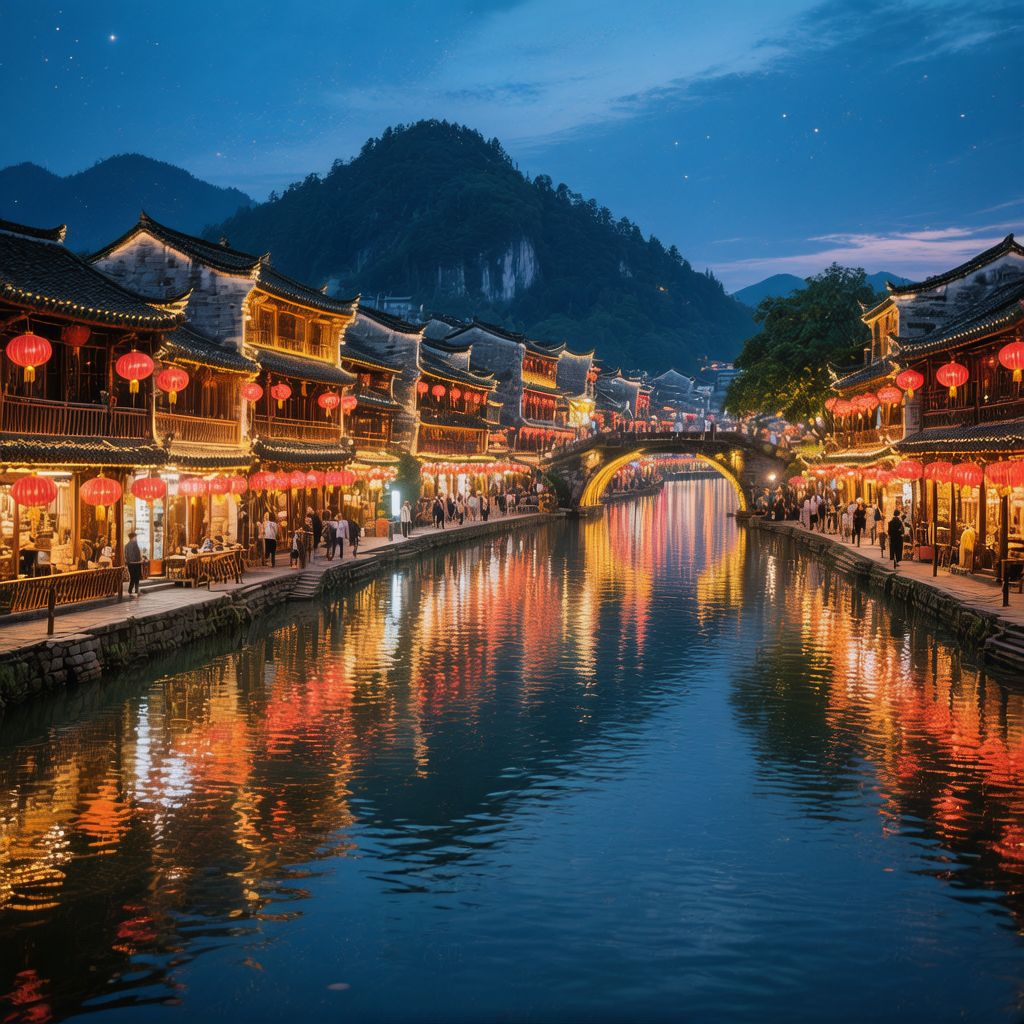
There is a moment in Fenghuang — perhaps at dusk, when the first lanterns begin to glow along the riverbank, or at dawn, when morning mist rises from the Tuojiang and the stilt houses seem to float like a watercolor painting — when you realize this ancient town is not just a destination, but an experience that seeps into your soul. Known in Chinese as “Phoenix Town,” Fenghuang is one of the best-preserved ancient settlements in all of China, a place where 300 years of history live and breathe in every cobblestone street and weathered wooden facade.
A Town Born of Necessity and Beauty
Fenghuang was established during the early Qing Dynasty (around 1704) as a military garrison, strategically positioned at the border between the Miao ethnic minority regions and the Han Chinese heartland. The town’s location along the Tuojiang River made it a natural trading post, and over the centuries, it evolved from a military outpost into a thriving commercial center where Han, Miao, and Tujia cultures mingled and merged.
The town’s architecture reflects this multicultural heritage. The iconic stilt houses (diaojiaolou) that line the river are built in the style of the Miao and Tujia people, elevated on wooden pillars to protect against flooding and to make use of limited flat land along the riverbank. The cobblestone streets, city walls, and gate towers are distinctly Han in design, built during the Kangxi Emperor’s reign to fortify the settlement. The result is an architectural tapestry that tells the story of cultural exchange, conflict, and coexistence.
Walking Through Time: The Old Town
The ancient town core is compact enough to explore entirely on foot, and that’s exactly how it should be experienced. No cars are permitted within the old streets — only the footsteps of travelers and the occasional bicycle. This pedestrian-only policy preserves not just the atmosphere but the physical integrity of streets that were never designed for vehicular traffic.
East Gate Tower (Dongmen Chenglou)
The most impressive of Fenghuang’s four original gates, the East Gate Tower stands as a testament to the town’s military past. Built in 1715, this stone gate features an arched entrance wide enough for a single horse and rider, with a defensive tower above that once housed guards and weapons. Today, you can climb to the top for a panoramic view of the old town and the river winding through it.
Tuojiang River and the Stepping Stones
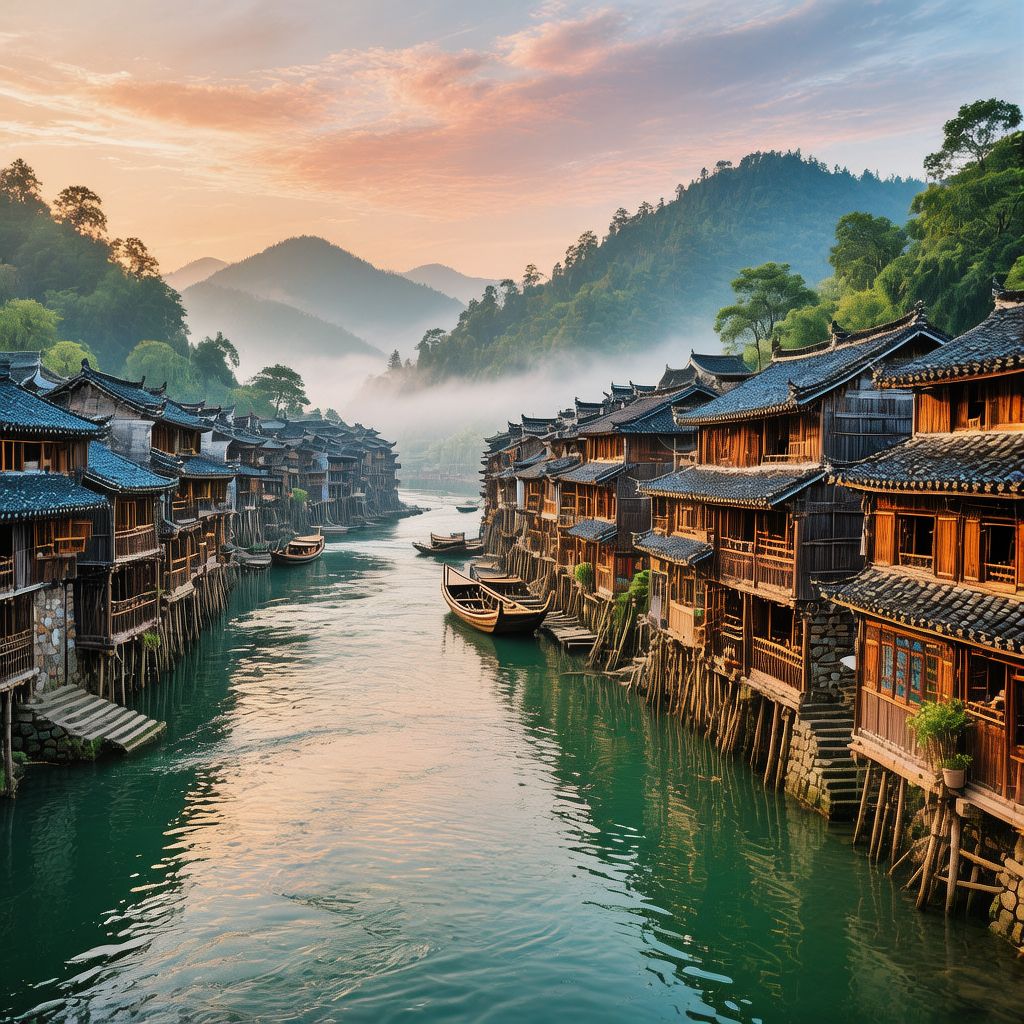
The Tuojiang River is the lifeblood of Fenghuang, and a slow walk along its banks reveals the town at its most picturesque. The stilt houses on the eastern bank lean over the water, their wooden balconies festooned with drying laundry, potted plants, and red lanterns. On the western bank, the old city wall follows the river’s curve, punctuated by watchtowers that have kept vigil for three centuries.
Crossing the river is an experience in itself. The most famous crossing is the series of stepping stones — flat, rectangular blocks placed just above the waterline that allow pedestrians to hop across the river one stone at a time. It’s slightly precarious, especially when the water is high, but it’s also enormous fun and offers the best vantage point for photographing the stilt houses from mid-river.
Hongqiao Art Bridge
This covered bridge, built in 1670 and rebuilt several times since, serves as both a river crossing and a cultural landmark. The upper floor houses a tea house and small shops selling local crafts, while the bridge itself provides shelter from both sun and rain. Standing on the bridge at sunset, watching the river turn gold beneath the ancient eaves, is one of Fenghuang’s most iconic experiences.
The Cultural Heart: Miao and Tujia Heritage
Fenghuang sits at the cultural crossroads of western Hunan, and the influence of the Miao and Tujia ethnic minorities is woven into every aspect of daily life. The town’s markets overflow with hand-woven textiles, silver jewelry, and embroidered crafts produced by Miao artisans using techniques passed down through generations. The distinctive Miao silver headdresses — elaborate, cascading ornaments that can weigh several kilograms — are worn during festivals and ceremonies, their intricate designs telling stories of nature, mythology, and family lineage.
Traditional Miao music fills the air on festival days, with the lusheng (a bamboo pipe instrument) providing the rhythmic backbone for circle dances that draw entire communities into spontaneous celebration. Even if your visit doesn’t coincide with a major festival, you’ll likely encounter informal performances in the town squares and along the riverfront, particularly in the evenings.
Shen Congwen: Fenghuang’s Literary Son
No discussion of Fenghuang is complete without mentioning Shen Congwen (1902-1988), one of China’s most important 20th-century writers and Fenghuang’s most famous native son. His masterpiece, “Border Town” (Bian Cheng), is set in a fictionalized version of Fenghuang and captures the town’s spirit with a lyrical sensitivity that has made it required reading for generations of Chinese students.
Shen Congwen’s former residence, a well-preserved courtyard house in the old town, is open to visitors and offers insight into the writer’s life and work. The house contains photographs, manuscripts, and personal effects that trace his journey from a military school dropout to one of modern China’s most celebrated literary voices. His grave, located on a hillside overlooking the Tuojiang River, is a peaceful spot marked by a simple stone inscribed with his own words: “A soldier who doesn’t fight is either dead or returning home.”
Night in Fenghuang: When the Magic Deepens
If Fenghuang is beautiful by day, it is enchanting by night. As darkness falls, the town undergoes a transformation that borders on the theatrical. Thousands of red lanterns are lit along the riverbanks and across the bridges, their warm glow reflecting in the dark water to create a scene of almost hallucinatory beauty. The stilt houses, now silhouetted against the illuminated riverfront, take on a ghostly, timeless quality.
The night markets come alive with sizzling street food — spicy Miao-style grilled fish, rice noodles in rich broth, and the famous Fenghuang ginger candy that you can watch being made on the spot. Live music drifts from the bars and tea houses that line the river, mixing traditional folk songs with contemporary acoustic sets. It’s busy, it’s vibrant, and it’s absolutely unforgettable.
Practical Travel Tips
Getting There
Fenghuang doesn’t have its own airport or train station, but it’s easily accessible from several transport hubs:
From Zhangjiajie: The most popular route. Direct buses run from Zhangjiajie to Fenghuang in about 4 hours, making it a natural addition to a Zhangjiajie trip.
From Huaihua: The nearest high-speed rail station, about 1 hour by bus from Fenghuang. High-speed trains connect Huaihua to Changsha (2.5 hours), Guangzhou (5 hours), and other major cities.
From Tongren (Guizhou): Tongren Fenghuang Airport is about 40 minutes from Fenghuang by taxi, with flights from Beijing, Shanghai, and other cities.
Best Time to Visit
Spring (March-May) and autumn (September-November) offer the most pleasant weather and the most photogenic conditions. Summer can be hot and humid, while winter is cold but atmospheric, with fewer tourists and the possibility of snow on the ancient rooftops.
Tickets and Access
The old town charges a combined entrance ticket (approximately 148 CNY) that provides access to nine historical sites including the East Gate Tower, Shen Congwen’s Residence, the Ancient City Museum, and a boat ride on the Tuojiang. If you simply want to wander the streets and enjoy the atmosphere, you can enter the old town without purchasing the full ticket — only the specific historical sites require paid admission.
Accommodation
Staying in a riverside stilt house is the quintessential Fenghuang experience. Many of these historic buildings have been converted into guesthouses with modern amenities while preserving their original character. Expect to pay 200-600 CNY per night for a riverside room, with prices rising during peak season and weekends. For budget travelers, guesthouses on the quieter side streets offer rooms from 80-150 CNY.
Local Specialties
Fenghuang’s cuisine is distinctly Hunanese — bold, spicy, and deeply flavorful. Don’t miss the sour fish soup (suantang yu), a local specialty that balances sour and spicy flavors with fresh river fish. Ginger candy, available from numerous vendors along the river, makes an excellent souvenir. For the adventurous, try the Miao-style blood tofu — a distinctive dish that exemplifies the region’s culinary traditions.
Exploring Beyond the Old Town
While the ancient town itself could easily fill two days, the surrounding countryside offers additional rewards:
Miao Village Tours: Several Miao villages within an hour’s drive of Fenghuang offer authentic cultural experiences, including traditional meals, craft demonstrations, and performances. Shanjiang Miao Village and Dehang Miao Village are among the most accessible and least commercialized options.
Nanwushan Great Wall: Sometimes called the “Southern Great Wall,” this 190-kilometer wall was built during the Ming Dynasty to separate the Miao territories from Han-controlled areas. A restored 2-kilometer section near Fenghuang provides a thought-provoking contrast to the more famous Great Wall near Beijing.
Qiliang Cave: A impressive limestone cave system about 3 kilometers from the old town, featuring stalactites, stalagmites, and underground streams. The cave is well-lit and easy to navigate, making it a good option for families.
A Final Reflection
Fenghuang has been called one of the most beautiful small towns in China, and after a single walk along the Tuojiang at twilight, you’ll understand why. But its true magic lies not in any single view or building, but in the accumulated weight of centuries — in the worn cobblestones that have felt millions of footsteps, in the river that has reflected a thousand years of lantern light, and in the enduring spirit of the people who have called this extraordinary place home.
Come for the photographs. Stay for the feeling that you’ve stepped outside of time.