Walk into any Chinese home, office, or restaurant, and you may notice subtle arrangements that seem deliberate yet hard to articulate: a mirror positioned to reflect the entrance, a small water fountain in a specific corner, furniture arranged to face a particular direction. These are not random choices but the practical application of Feng Shui (风水, fēngshuǐ)—literally “wind-water”—one of the oldest and most influential environmental design systems in human history. For over three thousand years, Feng Shui has guided the Chinese people in creating spaces that harmonize with the natural world, and its principles continue to shape architectural decisions, interior design, and urban planning across the globe.
Foundations: Qi, Yin-Yang, and the Five Elements
Feng Shui rests upon three interconnected philosophical pillars that form the foundation of traditional Chinese cosmology. Understanding these principles is essential to grasping why Feng Shui works and why it has endured for millennia.
Qi (气) is the fundamental concept underlying all of Feng Shui practice. Often translated as “vital energy” or “life force,” qi is the invisible but palpable energy that flows through all things—the air we breathe, the water we drink, the earth beneath our feet, and the spaces we inhabit. Feng Shui’s primary objective is to optimize the flow of qi in any given environment: attracting beneficial (sheng) qi while deflecting or neutralizing harmful (sha) qi. When qi flows smoothly and gently through a space, it promotes health, prosperity, and well-being. When qi is blocked, stagnant, or rushing, it can cause illness, misfortune, and disharmony.
Yin-Yang (阴阳) represents the complementary opposites that exist in all phenomena. Yin qualities include darkness, stillness, coolness, receptivity, and softness; yang qualities encompass light, movement, warmth, activity, and hardness. Feng Shui seeks to balance yin and yang in every space—ensuring that rooms have both active (yang) and quiet (yin) areas, that natural light is balanced with shade, and that energetic spaces give way to restful ones. This balance reflects the Chinese philosophical understanding that harmony arises not from the elimination of opposites but from their dynamic equilibrium.
The Five Elements (五行, wǔxíng)—Wood, Fire, Earth, Metal, and Water—constitute the third foundational framework. Each element possesses distinct qualities and associations: Wood represents growth and vitality; Fire embodies passion and transformation; Earth symbolizes stability and nourishment; Metal conveys precision and clarity; Water signifies wisdom and flow. Feng Shui practitioners use the Five Elements to analyze and adjust the energetic qualities of spaces, introducing or removing element-associated materials, colors, and shapes to achieve optimal balance.
The Luopan: Decoding the Compass of Destiny
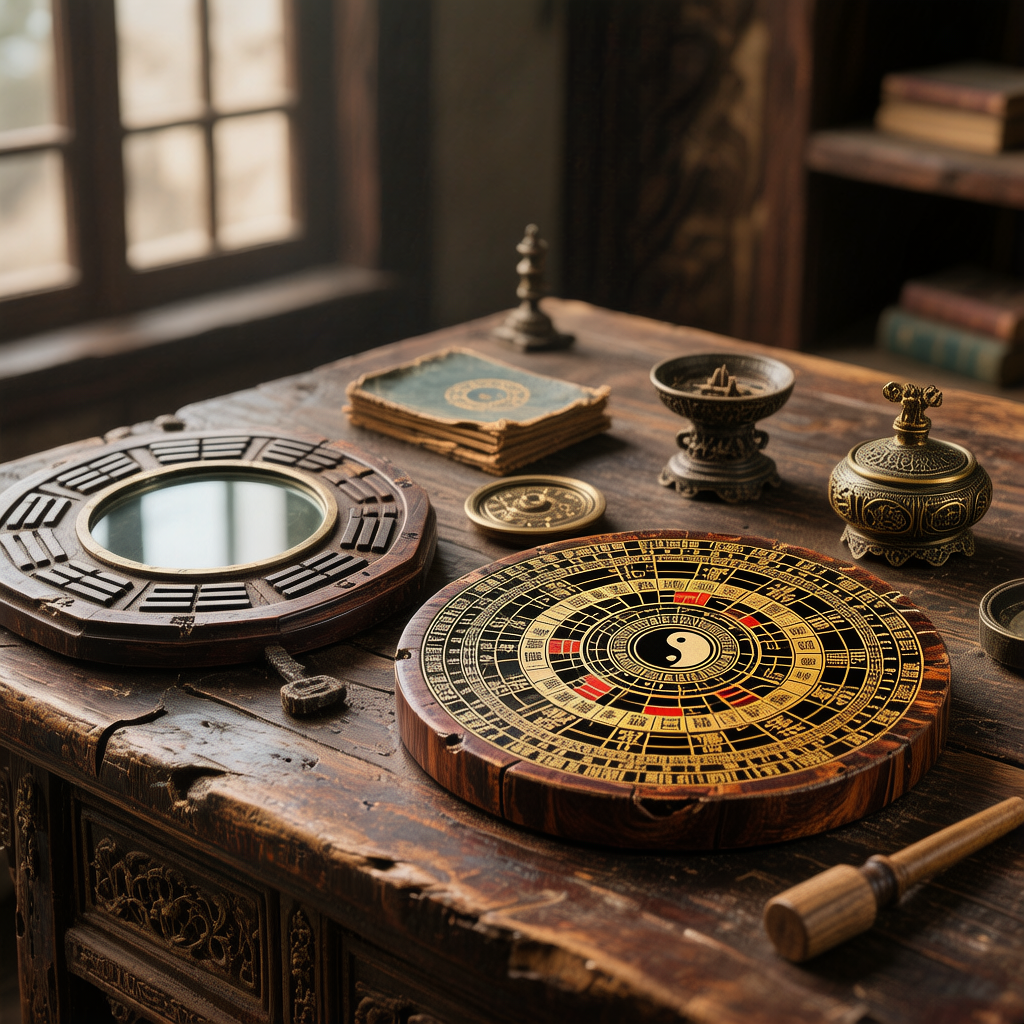
The Luopan (罗盘), or Feng Shui compass, is the practitioner’s most essential tool and one of the most sophisticated navigational instruments ever devised. Unlike a conventional compass that simply indicates north, the Luopan contains multiple concentric rings—traditionally between 7 and 36—each encoding different layers of cosmological information.
The outermost rings typically contain the 24 Mountains, a division of the compass into 15-degree segments that combines the twelve Earthly Branches, eight Trigrams, and ten Heavenly Stems. Inner rings may show the 64 Hexagrams of the I Ching, the 28 Lunar Mansions, or the 72 Dragons. By aligning the Luopan with a building’s orientation and analyzing the relationships between these multiple information layers, a skilled practitioner can generate a comprehensive energetic assessment of any site.
The Luopan’s complexity reflects the sophistication of Feng Shui’s theoretical framework. It is not a tool for simple fortune-telling but an instrument for precise environmental analysis, combining astronomy, geography, and mathematics in a way that Western science is only beginning to appreciate. Modern researchers have noted that traditional Feng Shui orientations often correlate with optimal solar angles, prevailing wind patterns, and natural water drainage—suggesting that centuries of empirical observation encoded practical environmental knowledge into the system’s apparently mystical framework.
Two Schools: Form and Compass
Feng Shui practice divides into two major schools that complement each other in professional analysis.
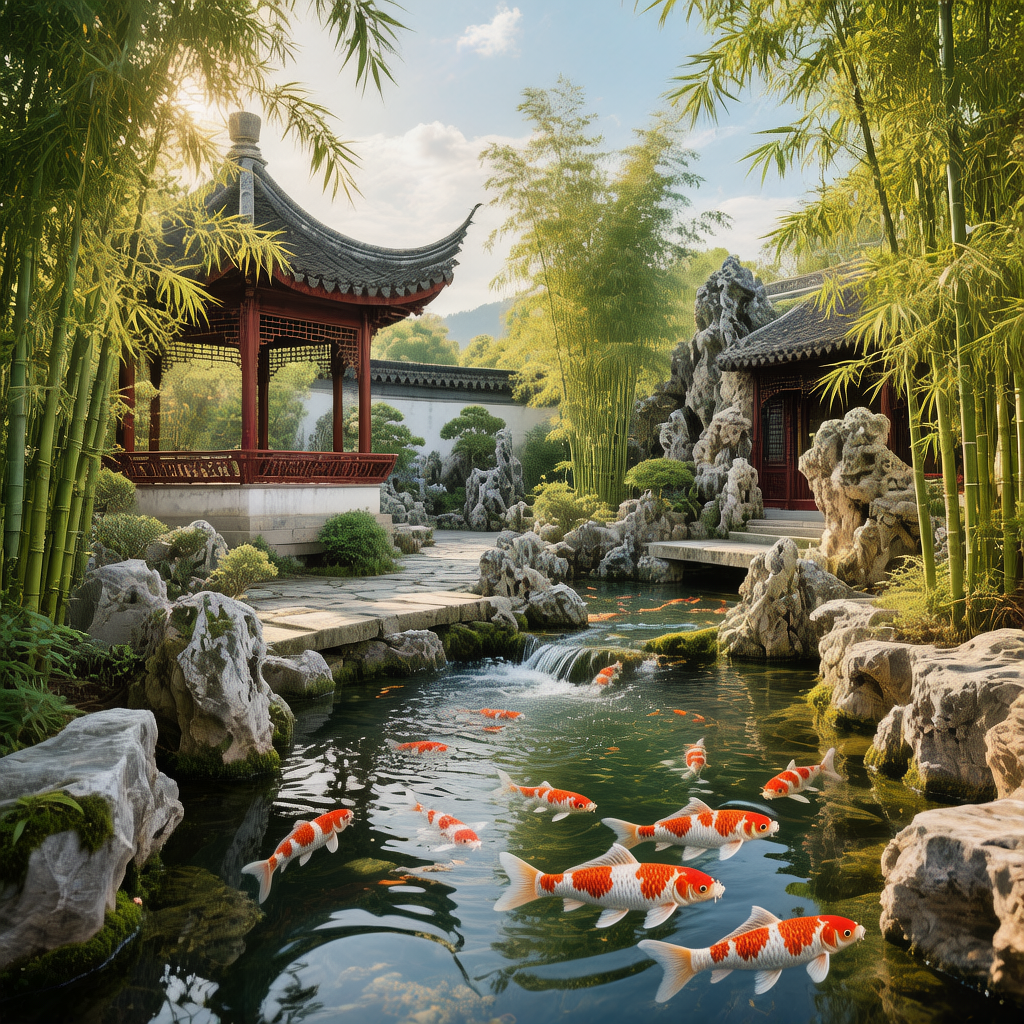
The Form School (形势派, xíngshì pài), the older tradition, focuses on the physical characteristics of the landscape—the shapes of mountains, the courses of rivers, the quality of vegetation, and the overall topography of a site. Form School analysis identifies the ideal configuration as the “armchair” formation: a site backed by a mountain (the Black Tortoise), flanked by lower hills on the left (the Azure Dragon) and right (the White Tiger), with open space and water in front (the Vermilion Bird). This configuration provides protection from harsh winds, access to sunlight, and proximity to water—the essential ingredients for a thriving settlement.
The Compass School (罗盘派, luópán pài), which gained prominence during the Song Dynasty (960–1279 CE), analyzes spaces using the Luopan compass and calculations based on the occupant’s birth year and the building’s construction date. The most widely practiced Compass School method is Flying Stars (玄空飞星, xuánkōng fēixīng), which maps the movement of nine “stars” (energetic influences) through a nine-grid matrix overlaid on the floor plan. Each star combination produces specific energetic qualities that change over time in predictable cycles, explaining why a space that feels wonderful in one period may feel uncomfortable in another.
Professional Feng Shui practitioners typically employ both schools, using Form School analysis for site selection and exterior assessment while applying Compass School calculations for interior optimization. This comprehensive approach ensures that both visible and invisible environmental factors are addressed.
Classical Applications: Tombs, Temples, and Imperial Palaces
The most dramatic demonstrations of Feng Shui’s influence are found in China’s greatest architectural achievements. The Forbidden City in Beijing, the world’s largest palace complex, is a masterpiece of Feng Shui design. Its north-south axis aligns with the celestial pole, symbolizing the emperor’s connection to cosmic order. The complex is backed by Coal Hill (Jingshan) to the north, which provides the essential “mountain support,” while the Golden Water River flows in a curving path through the southern courtyards, bringing beneficial qi to the imperial residence.
Ancestral tomb placement (阴宅风水, yīnzhái fēngshuǐ) represents perhaps the most intensive application of Feng Shui principles. The Chinese believed that the qi flowing through an ancestor’s tomb directly influenced the fortunes of their descendants, making tomb siting a matter of the utmost familial importance. The most famous example is the Ming Tombs near Beijing, where thirteen emperors were buried in a valley selected for its extraordinary Feng Shui qualities—a location described as having “mountains embracing like a dragon and water winding like a jade belt.”
Temple and monastery construction followed similar principles. Buddhist temples in China are consistently situated in locations that combine natural beauty with optimal qi flow—typically on mountain slopes with water views, oriented to receive the first light of morning sun. The placement of temple halls, pagodas, and gardens within these complexes follows precise Feng Shui guidelines that enhance both the spiritual practice of the monks and the aesthetic experience of visitors.
Feng Shui in Everyday Chinese Life
While imperial applications are dramatic, Feng Shui’s true significance lies in its penetration into everyday Chinese life. The following practices are commonplace across Chinese communities worldwide:
Entrance design receives particular attention, as the front door is considered the “mouth of qi”—the primary channel through which energy enters a space. Doors should open inward to welcome qi, should not face directly toward a back door or window (which would allow qi to flow straight through without circulating), and should be kept clean and unobstructed. Many Chinese homes place a decorative screen just inside the entrance to slow and redirect incoming qi.
Bedroom arrangement follows strict guidelines: the bed should have a solid wall behind it (providing “mountain support”), should not be positioned directly in line with the door, and should offer a clear view of the entrance without being in its direct path. Mirrors should never face the bed, as they are believed to disturb sleep by reflecting qi back at the sleeper.
Kitchen placement is critical because the kitchen contains both Fire (the stove) and Water (the sink), which are in a naturally destructive relationship according to Five Elements theory. Feng Shui recommends keeping these elements separated and using Wood (green plants, wooden accessories) as a mediating element between them.
Office design follows the “command position” principle: the desk should face the door while positioned as far from it as possible, with a solid wall behind the occupant. This arrangement provides psychological security and maximizes awareness of opportunities—literally and metaphorically “seeing what comes your way.”
The Bagua Map: A Template for Transformation
One of Feng Shui’s most practical tools is the Bagua Map (八卦图), an octagonal grid that maps nine life areas onto a space. Each area corresponds to a specific aspect of human experience and is associated with particular elements, colors, and shapes:
- Wealth/Prosperity (Wood) — back left area; enhanced with purple, green, water features, and healthy plants
- Fame/Reputation (Fire) — back center; enhanced with red, fire elements, and bright lighting
- Love/Relationships (Earth) — back right; enhanced with pink, pairs of objects, and romantic imagery
- Family/Health (Wood) — middle left; enhanced with green, wooden furniture, and family photographs
- Center/Tai Qi (Earth) — center; enhanced with yellow, earth tones, and grounding objects
- Creativity/Children (Metal) — middle right; enhanced with white, metal objects, and playful art
- Knowledge/Wisdom (Earth) — front left; enhanced with blue, books, and educational symbols
- Career/Life Path (Water) — front center; enhanced with black, water features, and mirrors
- Helpful People/Travel (Metal) — front right; enhanced with gray, metal wind chimes, and travel souvenirs
By overlaying the Bagua Map onto a floor plan, practitioners can identify which life areas are missing, cramped, or energetically compromised, and recommend specific adjustments to restore balance and activate desired outcomes.
Modern Feng Shui: Ancient Wisdom in Contemporary Contexts
Feng Shui has experienced an extraordinary global resurgence since the late 20th century, adapting its ancient principles to address modern challenges. Major corporations including Trump Organization, Citibank, and MGM Mirage have consulted Feng Shui practitioners for building design and interior layout. Real estate developers in Hong Kong, Singapore, and increasingly in Western cities employ Feng Shui consultants to optimize property values and marketability.
Environmental psychologists have found that many Feng Shui principles correlate with established findings about human comfort and well-being. The preference for “prospect and refuge”—having a clear view while feeling protected—maps directly onto the Feng Shui “command position.” The emphasis on natural light, ventilation, and connection to nature aligns with biophilic design principles that research has shown improve cognitive function, reduce stress, and enhance creativity.
The growing field of neuroarchitecture—which studies how built environments affect the brain—is providing scientific validation for many traditional Feng Shui insights. Studies have demonstrated that curved paths (favored in Feng Shui over straight ones) reduce cortisol levels, that views of nature improve healing times, and that ceiling height affects creative thinking—all findings that Feng Shui practitioners have applied intuitively for centuries.
Cultural Insights: What Feng Shui Reveals About Chinese Thought
Feng Shui embodies several fundamental principles of Chinese culture and philosophy:
- Humanity within nature — Feng Shui places human activity within the natural world rather than in opposition to it, reflecting the Chinese philosophical tradition that sees humanity as part of, not separate from, the cosmos
- Empirical wisdom — Despite its mystical veneer, Feng Shui is fundamentally empirical, based on thousands of years of observation about which environmental conditions produce the best outcomes
- Dynamic balance — The constant adjustment of yin-yang and Five Elements reflects the Chinese understanding that balance is not a static condition but an ongoing process of responsive adaptation
- Interconnectedness — Feng Shui assumes that everything in an environment affects everything else, anticipating modern systems thinking and ecological awareness
- Practical spirituality — Feng Shui bridges the material and spiritual dimensions of life, insisting that physical environments have genuine effects on spiritual well-being and vice versa
Feng Shui offers the world a radical proposition: that the spaces we inhabit are not neutral containers for our lives but active participants in shaping our experiences, relationships, and destinies. In an age of environmental crisis and disconnection from nature, this ancient Chinese science of harmonious living speaks with renewed urgency, reminding us that our well-being is inseparable from the well-being of the places we create and inhabit. The wind and water that give Feng Shui its name are the same forces that sustain all life—and learning to live in harmony with them may be the most important lesson that Chinese culture can offer the modern world.