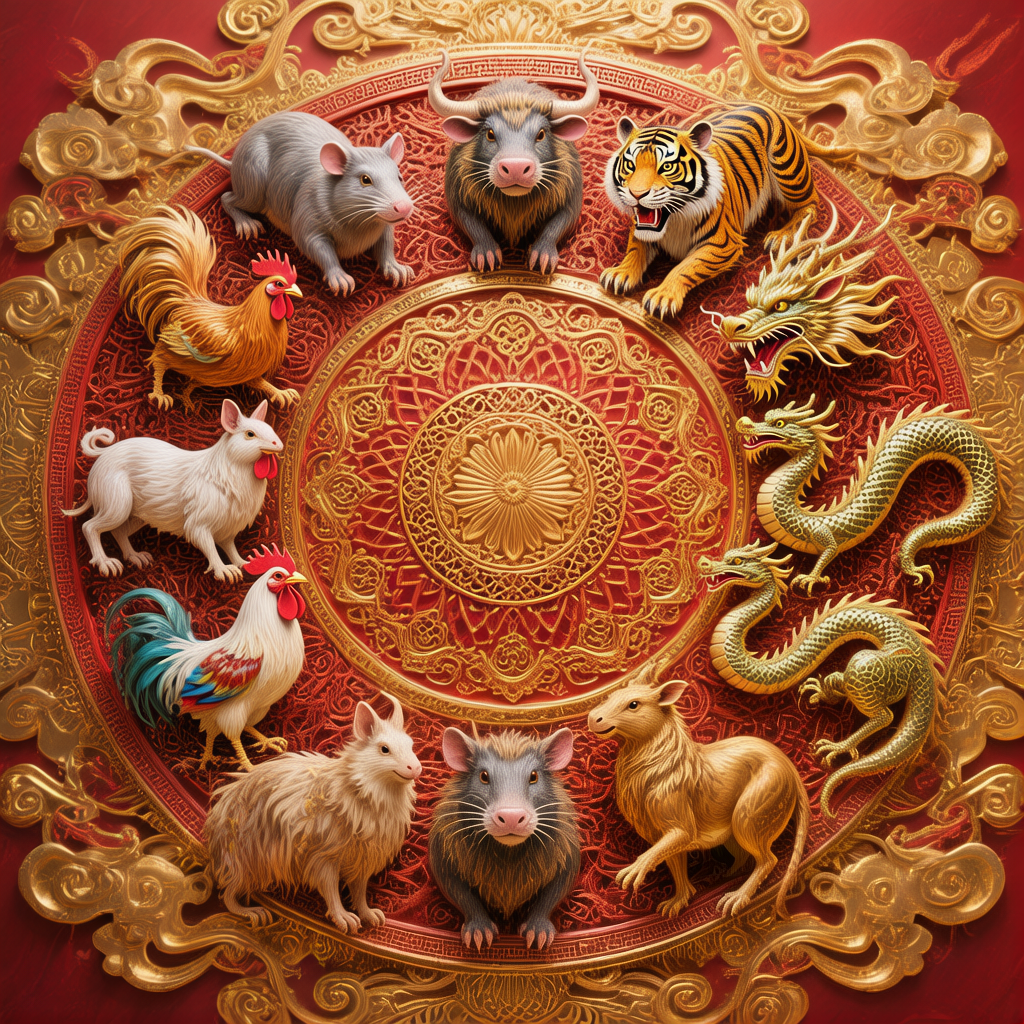
When a child is born in China, one of the first questions asked is not about the day or the month, but about the animal year. The Chinese Zodiac (生肖, shēngxiào) is far more than a system of timekeeping—it is a comprehensive framework for understanding personality, destiny, relationships, and the fundamental rhythms of the universe. For over two thousand years, these twelve animals have shaped how millions of people perceive themselves and their place in the cosmic order.
The Great Race: How the Zodiac Was Born
The most beloved origin story of the Chinese Zodiac tells of the Great Race organized by the Jade Emperor, the supreme deity in Chinese folk religion. Seeking a way to measure time, the Emperor declared that the first twelve animals to cross a swiftly flowing river would each have a year named in their honor, creating a perpetual cycle that would govern the calendar.
The clever Rat, knowing it could not swim well, asked the good-natured Ox to carry it across. As the Ox neared the far shore, the Rat leapt from the Ox’s head and claimed first place. The Ox accepted second with characteristic stoicism. The Tiger, powerful but struggling against the current, came third. The Rabbit hopped across on floating logs and took fourth. The majestic Dragon, despite its ability to fly, arrived fifth because it had stopped to help villagers and the Rabbit along the way. The Horse was next, but the Snake coiled around its hoof, startling it and claiming sixth place while the Horse took seventh.
The Goat, Monkey, and Rooster worked together to cross on a raft, sharing eighth, ninth, and tenth places. The Dog, an excellent swimmer who had been playing in the water, arrived eleventh. Finally, the Pig, who had stopped for a meal and a nap, came last—but still earned its place in the zodiac.
This charming tale encodes profound truths about Chinese values: intelligence and adaptability (Rat), diligence and reliability (Ox), courage and competitiveness (Tiger), caution and elegance (Rabbit), nobility and compassion (Dragon), wisdom and cunning (Snake), energy and freedom (Horse), gentleness and harmony (Goat), cleverness and versatility (Monkey), observation and honesty (Rooster), loyalty and playfulness (Dog), and generosity and indulgence (Pig).
The Twelve Animals in Detail
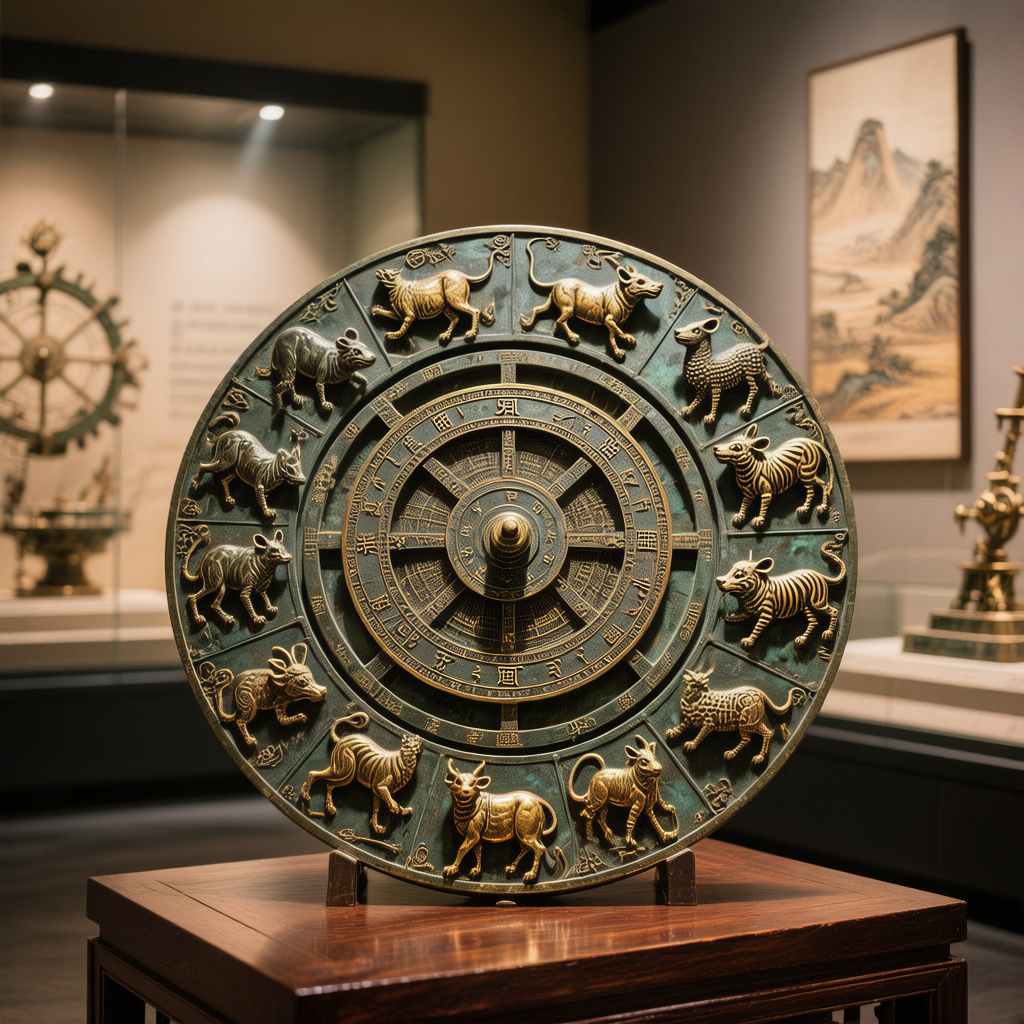
The Rat (鼠, shǔ) — Years: 1924, 1936, 1948, 1960, 1972, 1984, 1996, 2008, 2020. The first animal of the zodiac embodies sharp intelligence, resourcefulness, and adaptability. Rats are natural strategists who thrive in social situations and possess an almost supernatural ability to sense opportunity. Their quick wit and charm make them effective leaders, though they can sometimes be perceived as calculating. In Chinese culture, the Rat is associated with wealth and surplus, and Rat years are considered auspicious for new ventures.
The Ox (牛, niú) — Years: 1925, 1937, 1949, 1961, 1973, 1985, 1997, 2009, 2021. The Ox represents the virtues of patience, determination, and honest labor. People born in Ox years are seen as dependable, methodical, and quietly powerful. They inspire trust through their consistency and earn respect through their willingness to bear heavy burdens without complaint. The Ox teaches that lasting achievement comes not from cleverness alone but from sustained, principled effort.
The Tiger (虎, hǔ) — Years: 1926, 1938, 1950, 1962, 1974, 1986, 1998, 2010, 2022. The Tiger embodies raw courage, passion, and magnetic charisma. Those born under this sign are natural leaders who command attention and inspire followers through their fearless approach to life. Tigers are also associated with justice and protection—traditionally, Chinese children wear tiger-head shoes and hats to ward off evil spirits, drawing on the Tiger’s fearsome reputation.
The Rabbit (兔, tù) — Years: 1927, 1939, 1951, 1963, 1975, 1987, 1999, 2011, 2023. The Rabbit represents grace, diplomacy, and artistic sensibility. Rabbit people are known for their refined taste, gentle manners, and ability to navigate complex social situations with elegance. In Chinese mythology, the Rabbit is associated with the Moon, where the Jade Rabbit pounds the elixir of immortality—a connection that lends the sign an otherworldly, contemplative quality.
The Dragon (龙, lóng) — Years: 1928, 1940, 1952, 1964, 1976, 1988, 2000, 2012, 2024. The Dragon is the most revered sign in the Chinese Zodiac, the only mythological creature in the cycle and the most auspicious birth year. Dragon people are believed to be destined for greatness—charismatic, ambitious, and fearless. Chinese hospitals historically recorded significant spikes in birth rates during Dragon years, as parents eagerly sought this most favorable sign for their children. The Dragon represents the yang principle at its most powerful: creative force, imperial authority, and cosmic energy.
The Snake (蛇, shé) — Years: 1929, 1941, 1953, 1965, 1977, 1989, 2001, 2013, 2025. The Snake embodies wisdom, intuition, and enigmatic depth. Snake people are deep thinkers who prefer to observe before acting, gathering knowledge and insight that gives them a strategic advantage. While sometimes misunderstood as cold or calculating, Snakes are actually among the most emotionally complex signs, possessing a rich inner life and profound aesthetic sensitivity. In Chinese folk belief, a Snake in the house is a sign that the family will never go hungry.
The Horse (马, mǎ) — Years: 1930, 1942, 1954, 1966, 1978, 1990, 2002, 2014, 2026. The Horse represents freedom, energy, and an irrepressible spirit. Horse people are naturally athletic, restless, and drawn to adventure. They communicate with infectious enthusiasm and are often the life of any gathering. However, their desire for independence can make them resistant to commitment. The Horse’s association with travel and movement reflects the nomadic spirit that has always existed alongside China’s settled agricultural civilization.
The Goat (羊, yáng) — Years: 1931, 1943, 1955, 1967, 1979, 1991, 2003, 2015, 2027. The Goat (sometimes translated as Sheep or Ram) embodies gentleness, creativity, and harmony with nature. Goat people are the zodiac’s artists and dreamers, possessed of a calm strength that draws others to them. They have an innate appreciation for beauty and a talent for creating comfortable, aesthetically pleasing environments. The Goat’s association with the virtue of filial piety comes from the traditional observation that kid goats kneel to nurse.
The Monkey (猴, hóu) — Years: 1932, 1944, 1956, 1968, 1980, 1992, 2004, 2016, 2028. The Monkey represents cleverness, playfulness, and boundless inventiveness. Monkey people are natural problem-solvers who approach life with curiosity and humor. They are the zodiac’s tricksters, able to find unconventional solutions and delight in subverting expectations. The Monkey King Sun Wukong, protagonist of the classic novel Journey to the West, is the ultimate expression of this sign—rebellious, brilliant, and ultimately devoted to a higher purpose.
The Rooster (鸡, jī) — Years: 1933, 1945, 1957, 1969, 1981, 1993, 2005, 2017, 2029. The Rooster represents honesty, precision, and flamboyant self-expression. Rooster people are meticulous, honest to a fault, and blessed with an eye for detail that makes them excellent critics and organizers. They are also among the most visually striking signs, taking pride in their appearance and unafraid to stand out from the crowd. The Rooster’s traditional role as the announcer of dawn connects it to reliability and the triumph of light over darkness.
The Dog (狗, gǒu) — Years: 1934, 1946, 1958, 1970, 1982, 1994, 2006, 2018, 2030. The Dog embodies loyalty, justice, and protective devotion. Dog people are the most trustworthy of the zodiac, valued for their honesty, sense of fair play, and willingness to defend those they love. They have an almost supernatural ability to detect dishonesty and are deeply disturbed by injustice. The Dog’s association with guardianship reflects its traditional role as protector of the household in Chinese rural life.
The Pig (猪, zhū) — Years: 1935, 1947, 1959, 1971, 1983, 1995, 2007, 2019, 2031. The Pig represents generosity, pleasure, and sincere goodwill. Pig people are the most easygoing and big-hearted of the zodiac, known for their love of good food, fine company, and comfortable living. Despite their reputation for indulgence, Pigs possess a deep intelligence and an almost philosophical acceptance of life’s pleasures and challenges. The Pig’s position as the final animal in the cycle symbolizes completion, abundance, and the fulfillment of the zodiac’s journey.
Five Elements: Adding Depth to the Cycle
The twelve-animal cycle is only the foundation of the Chinese Zodiac system. Overlaying the animal cycle is the Five Elements cycle (五行, wǔxíng): Wood, Fire, Earth, Metal, and Water. Each element governs two consecutive years, creating a complete sexagenary (60-year) cycle when combined with the twelve animals.
The elements add crucial nuance to each animal’s character. A Wood Dragon, for instance, is more cooperative and growth-oriented than a Metal Dragon, who tends to be more rigid and autocratic. A Fire Horse is more passionate and impulsive than an Earth Horse, who is more grounded and practical. Understanding these elemental variations is essential for accurate astrological readings and reveals the extraordinary sophistication of the Chinese astrological system.
Each element also corresponds to specific physical organs, emotions, seasons, and directions, creating a comprehensive cosmological framework that connects the zodiac to traditional Chinese medicine, feng shui, and philosophical thought. This integration reflects the Chinese worldview that sees all phenomena as interconnected aspects of a single, self-regulating system.
Compatibility and Relationships
One of the most practical applications of the Chinese Zodiac is in assessing compatibility between individuals. The system identifies natural affinities and tensions between signs through the concept of trine groups (三合, sānhé)—sets of three animals that share complementary energies.
The four trine groups are: Tiger-Horse-Dog (action-oriented, passionate); Rabbit-Goat-Pig (artistic, peace-loving); Rat-Dragon-Monkey (intellectual, ambitious); and Ox-Snake-Rooster (methodical, detail-oriented). Signs within the same trine group tend to understand each other intuitively and form harmonious relationships.
Conversely, signs directly opposite each other on the zodiac wheel (Rat-Horse, Ox-Goat, Tiger-Monkey, Rabbit-Rooster, Dragon-Dog, Snake-Pig) are considered clashing pairs (六冲, liùchòng)—not necessarily doomed to conflict, but requiring greater effort and understanding to achieve harmony. These traditional compatibility principles continue to influence Chinese attitudes toward marriage, business partnerships, and even political alliances.
The Zodiac in Daily Life
The influence of the Chinese Zodiac extends far beyond casual personality typing. In traditional Chinese society, zodiac signs were consulted for virtually every major life decision. Matchmakers assessed zodiac compatibility before arranging marriages. Business partners evaluated whether their signs would produce harmonious or contentious relationships. Parents timed pregnancies to ensure auspicious birth years, and farmers consulted zodiac calendars to determine the best days for planting and harvesting.
Even in modern China, the zodiac retains remarkable cultural power. Dragon years still see statistically significant increases in birth rates. Major decisions—from launching businesses to scheduling surgeries—are often timed according to zodiac auspices. Chinese New Year celebrations always prominently feature the incoming zodiac animal, and zodiac-themed merchandise generates billions of yuan in annual sales.
The zodiac also serves as a universal social connector. Asking someone’s zodiac sign is a common icebreaker in Chinese social settings, providing an immediate framework for understanding and connection. Unlike Western astrology, which often requires knowing an exact birth time, the Chinese Zodiac requires only a birth year, making it an exceptionally accessible system of self-knowledge and interpersonal understanding.
Cultural Insights: The Zodiac’s Deeper Wisdom
The Chinese Zodiac offers profound insights into traditional Chinese values and worldview:
- Cyclical time — Unlike the linear time of Western thought, the zodiac reflects the Chinese understanding of time as cyclical and recurring, with each generation echoing the patterns of its predecessors
- Interdependence — The compatibility system reveals a worldview that prioritizes relationships and harmony over individual assertion
- Embracing diversity — Each animal’s distinct virtues and flaws are equally valued, reflecting an understanding that society needs all kinds of temperaments to function
- Balance of opposites — The yin-yang alternation within the zodiac (odd-numbered animals are yang, even-numbered are yin) reflects the fundamental Chinese principle of cosmic balance
- Self-knowledge as wisdom — The zodiac provides a mirror for self-reflection, encouraging individuals to understand their strengths and weaknesses in the context of a larger cosmic pattern
The Chinese Zodiac endures because it offers something that purely rational systems cannot: a sense of belonging to a cosmic order, a framework for understanding human diversity, and a language for discussing the deepest questions of character and destiny. Whether you approach it as serious cosmology or cultural entertainment, the twelve animals of the Chinese Zodiac continue to race through the imaginations of over a billion people, carrying with them the accumulated wisdom of one of the world’s oldest civilizations.