
Tai Chi, also known as Taijiquan, offers remarkable health benefits through gentle, flowing movements that combine meditation, martial arts, and traditional Chinese medicine into a unified practice for complete wellness. This ancient Chinese practice has been embraced by millions worldwide for its ability to improve balance, reduce stress, and promote overall health, making it one of the most popular mind-body exercises in the world. Unlike vigorous forms of exercise, Tai Chi is accessible to people of all ages and fitness levels, from young athletes seeking improved coordination to elderly individuals looking to maintain mobility and prevent falls.
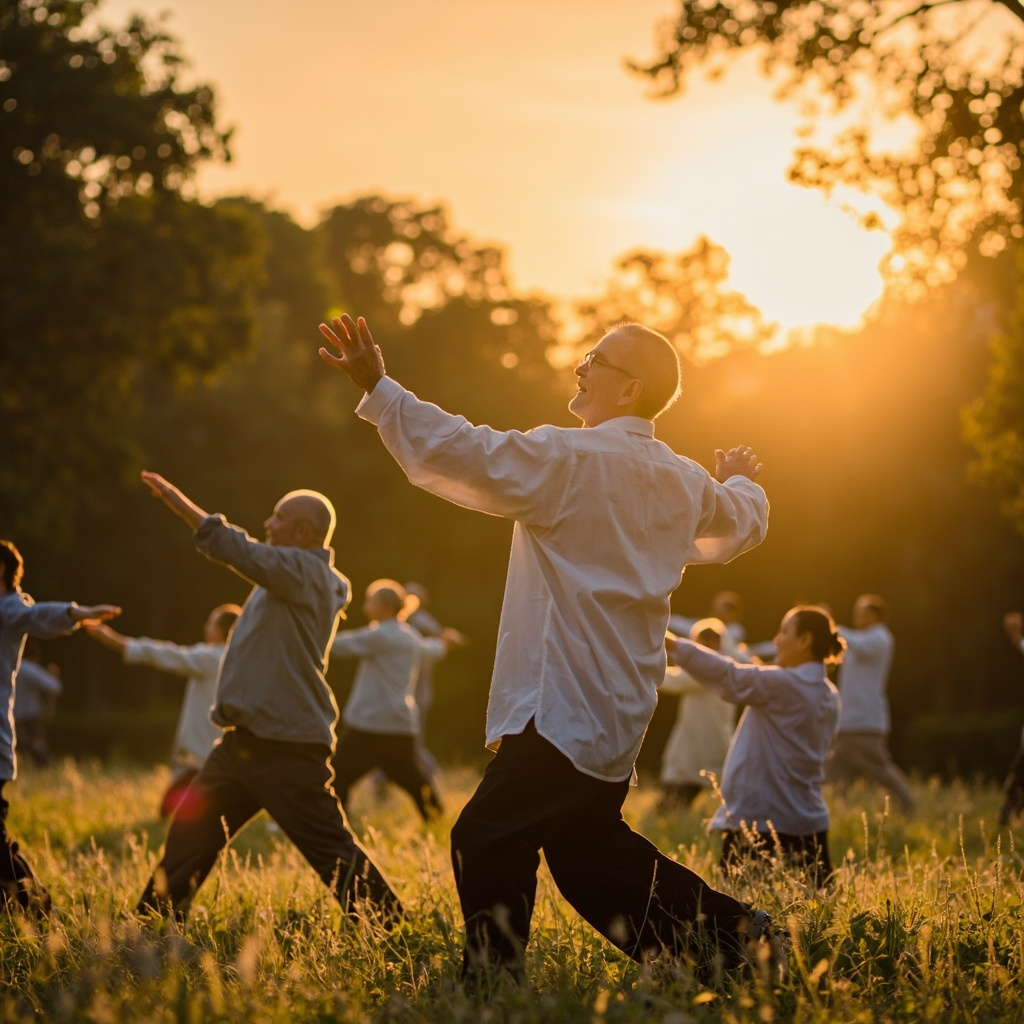
The origins of Tai Chi trace back to Chenjiagou village in Henan Province, where the Chen family developed the practice during the 17th century based on principles from Taoist philosophy, traditional Chinese medicine, and martial arts. The Chen style emphasizes slow, circular movements combined with explosive power, creating a practice that develops both relaxation and strength. Over the centuries, several major styles emerged, including Yang, Wu, and Sun styles, each with its own emphasis and characteristics. Despite their differences, all styles share the fundamental principles of relaxation, proper alignment, and the cultivation of internal energy known as qi.
What Is Tai Chi
Taijiquan, which translates to supreme ultimate fist, uses slow, flowing movements performed in sequences called forms that can range from 24 to 108 movements depending on the style and length of the form. Each movement flows seamlessly into the next, creating a continuous, dance-like sequence that appears effortless when performed by skilled practitioners. The practice combines physical postures, breathing techniques, and mental focus to create a moving meditation that strengthens the body while calming the mind. Despite its gentle appearance, Tai Chi is a complete martial art with applications for self-defense, though most modern practitioners focus on its health benefits rather than combat applications. The slow, deliberate movements allow practitioners to develop body awareness, proper alignment, and efficient movement patterns that carry over into all physical activities.
Health Benefits Supported by Research
Scientific research has confirmed numerous health benefits of regular Tai Chi practice, validating what Chinese practitioners have known for centuries. Studies show that Tai Chi significantly improves balance and reduces the risk of falls in older adults, making it one of the most effective fall prevention exercises available. The practice has been shown to reduce stress, anxiety, and depression through its combination of physical activity, controlled breathing, and meditative focus. Research indicates that regular Tai Chi practice improves cardiovascular health, lowers blood pressure, and enhances immune function. The practice also improves flexibility, muscle strength, and joint health, making it beneficial for people with arthritis and other musculoskeletal conditions. Cognitive benefits include improved memory, attention, and executive function, with some studies suggesting that Tai Chi may help delay cognitive decline in older adults. The combination of physical, mental, and emotional benefits makes Tai Chi a uniquely comprehensive health practice.
Basic Principles of Tai Chi Practice
Tai Chi practice is guided by several fundamental principles that distinguish it from other forms of exercise. Relaxation is the first and most important principle, with practitioners learning to release unnecessary tension throughout the body while maintaining structural integrity. A straight spine, aligned from the crown of the head to the tailbone, allows energy to flow freely and prevents strain on the back and joints. Natural breathing, coordinated with movement, follows the principle that breath leads movement rather than movement controlling breath. Continuous movement, without pauses or jerks between postures, creates the flowing quality that characterizes skilled Tai Chi practice. Weight shifting, with clear distinction between full and empty weight distribution, develops balance and efficient movement. Turning from the waist, using the body’s core to initiate movement, generates power without muscular tension. These principles require years of practice to master fully, but even beginners can benefit from understanding and applying them.
Getting Started with Tai Chi
Beginning Tai Chi practice requires finding a qualified teacher who can provide proper instruction in movement, alignment, and principles. While books and videos can supplement learning, direct instruction from an experienced teacher is essential for developing correct technique and avoiding common mistakes. Beginners should start with simple warm-up exercises and basic movements before progressing to longer forms. The 24-form simplified Yang style is the most common starting point for beginners worldwide, as it introduces the essential movements of Tai Chi in a manageable sequence that takes about six minutes to perform. Beginners should practice at least fifteen to twenty minutes daily to develop the muscle memory and body awareness necessary for progress. Comfortable clothing and flat, flexible shoes allow freedom of movement, and practice can be done indoors or outdoors in almost any weather. Many parks in Chinese cities host morning Tai Chi groups where beginners can observe and participate in group practice, a tradition that reflects Tai Chi’s role as a community activity.
Tai Chi as Moving Meditation
Beyond its physical benefits, Tai Chi is fundamentally a meditative practice that cultivates mental calm and focused awareness. The slow, repetitive movements provide a focal point for attention, similar to focusing on the breath in sitting meditation, allowing the mind to settle into a state of relaxed alertness. Practitioners often describe the experience as a moving meditation, where the body’s movement supports mental stillness rather than distracting from it. The meditative aspect of Tai Chi becomes more pronounced as practitioners progress, with advanced practitioners able to maintain meditative awareness even during fast, complex movements. This combination of movement and meditation makes Tai Chi particularly effective for stress reduction, as it addresses both the physical and mental dimensions of stress simultaneously.
Conclusion
Tai Chi provides lifelong physical and mental benefits through a practice that is gentle enough for everyone yet deep enough to occupy a lifetime of study. Regular practice transforms health, reduces stress, and cultivates a sense of inner peace that extends beyond the practice session into daily life. Whether practiced for health, martial arts, or spiritual development, Tai Chi offers a path to greater well-being that has been traveled by millions over centuries.
Tai Chi Styles Comparison
Understanding the differences between major Tai Chi styles helps practitioners choose the approach that best suits their goals and preferences. Yang style, the most widely practiced, features large, expansive movements performed at a slow, even pace, making it the most accessible style for beginners and older practitioners focusing on health benefits. Chen style alternates between slow, circular movements and sudden, explosive releases of power, preserving the martial origins of Tai Chi more explicitly than other styles. Wu style emphasizes smaller, more compact movements with a forward-leaning posture that develops unique martial applications. Sun style combines elements of other styles with distinctive footwork and is known for its flowing, graceful quality. Each style offers different benefits, and many practitioners eventually explore multiple styles to deepen their understanding of Tai Chi principles.
Integrating Tai Chi into Daily Life
The benefits of Tai Chi extend beyond formal practice sessions into daily life, transforming how practitioners approach everyday activities. The principles of relaxation, proper alignment, and mindful movement learned in Tai Chi can be applied to sitting at a desk, walking, lifting objects, and performing household chores. Many practitioners find that Tai Chi breathing techniques help manage stress during challenging situations at work or in personal relationships. The practice of maintaining relaxed awareness, central to Tai Chi, carries over into activities requiring concentration and balance, from sports to public speaking. Some practitioners find that the philosophy of yielding and adapting, learned through Tai Chi push hands practice, transforms how they approach conflicts and challenges in daily life. This integration of practice into daily living is considered the highest expression of Tai Chi mastery, transforming the art from a periodic exercise into a way of being.
Common Misconceptions About Tai Chi
Several misconceptions about Tai Chi can discourage potential practitioners or lead to unrealistic expectations. While Tai Chi is gentle and accessible, it is not effortless genuine Tai Chi practice requires significant physical effort and can produce substantial fitness benefits when practiced with proper intensity. Tai Chi is not exclusively for older people while it is excellent for seniors, the practice offers benefits for people of all ages, including athletes seeking improved balance and body awareness. Tai Chi is not a religion while it has philosophical connections to Taoism and Buddhism, the practice is compatible with any belief system and can be practiced purely as a health exercise. Tai Chi cannot make you invincible in a fight while it has martial applications, developing combat skill requires dedicated practice of martial techniques beyond the health-oriented forms. Understanding what Tai Chi is and is not helps practitioners approach their practice with appropriate expectations and commitment.