Peking Opera represents one of China’s most treasured performing arts, combining singing, speaking, acting, and martial arts in spectacular theatrical performances that have captivated audiences for over two centuries. This comprehensive art form integrates music, vocal performance, mime, dance, and acrobatics into a unified theatrical experience that demands extraordinary skill and years of training from its performers. Recognizing Peking Opera as a UNESCO Intangible Cultural Heritage, China continues to preserve and promote this remarkable artistic tradition.
Emerging in Beijing during the late 18th century, Peking Opera absorbed techniques from Anhui and Hubei opera traditions before developing into a distinct art form that became the most influential style of Chinese opera. Originally performed in tea houses and temple fairs, it gained imperial patronage and became court entertainment before spreading to common audiences. The art form’s golden age in the late 19th and early 20th centuries produced legendary performers like Mei Lanfang, who revolutionized female role portrayal and introduced Peking Opera to international audiences through tours to Japan, the United States, and the Soviet Union.
Four Main Performance Skills
Peking Opera performers must master four essential skills that require decades of dedicated training. Singing involves specialized vocal techniques that project the voice without amplification, using precise pitch and rhythm to convey character and emotion. Speaking follows prescribed patterns with musical intonation, distinguishing between poetic recitation and conversational dialogue. Acting encompasses stylized movements and gestures that communicate specific meanings, from opening a door to riding a horse, all performed without props through carefully choreographed movements. Combat skills include acrobatic movements, martial arts sequences, and weapon handling that demonstrate the performer’s physical training and discipline. Training typically begins in childhood, with students entering specialized schools where they spend up to twelve hours daily practicing these skills under strict teachers.
Symbolic Face Paintings and Costumes
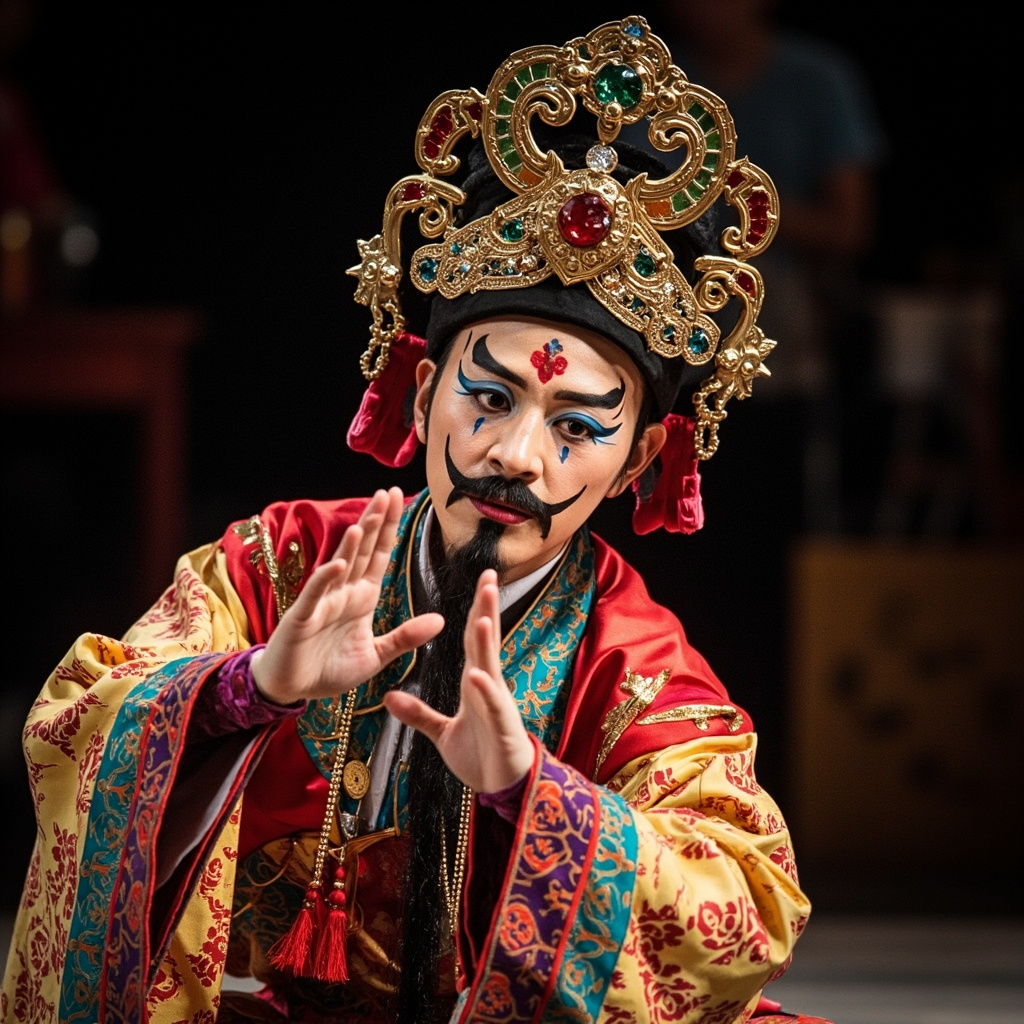
Distinctive face paints reveal character traits without dialogue, using an elaborate color symbolism that audiences learn to read. Red indicates loyalty and courage, often used for heroic characters like Guan Yu. White suggests treachery and cunning, typically used for villains and deceitful characters. Black represents integrity and straightforwardness, common for righteous officials and warriors. Blue and green denote fierce and stubborn personalities, while gold and silver are reserved for gods and supernatural beings. The specific patterns of the face painting further distinguish character types, with fully painted faces indicating major characters and partial painting suggesting lesser roles. Elaborate costumes follow strict rules based on character type, status, and gender, with colors, patterns, and accessories precisely specified in the operatic tradition.
Musical Elements and Instruments
Peking Opera music creates distinctive soundscapes that support the dramatic action and emotional content of performances. The orchestra, traditionally seated at the side of the stage, combines string, wind, and percussion instruments in a ensemble that follows the performers rather than accompanying them. The jinghu, a two-stringed fiddle, leads the melodic section with its piercing, expressive tone that mimics the human voice. Percussion instruments, particularly drums, gongs, and cymbals, cue performers’ movements and create dramatic emphasis at key moments. The clapper, known as the ban, controls the rhythm and pace of performances, signaling transitions and emphasizing important actions. The relationship between music and performance is highly codified, with specific musical patterns associated with particular character types, emotions, and dramatic situations.
Classic Repertoire and Stories
The Peking Opera repertoire draws from Chinese history, literature, and folklore, with many stories familiar to audiences across China. The Legend of the White Snake tells the tragic love story between a human scholar and a white snake spirit, exploring themes of love, loyalty, and supernatural transformation. The Drunken Concubine portrays Yang Yuhuan, the beloved consort of Emperor Xuanzong, in a poignant exploration of loneliness and longing. Farewell My Concubine, made internationally famous by the film of the same name, dramatizes the fall of the Qin Dynasty through the relationship between the hegemon king Xiang Yu and his concubine Yu Ji. These classic operas continue to draw audiences with their combination of spectacular performance, emotional depth, and cultural significance.
Watching Peking Opera Today
Beijing offers numerous venues for experiencing Peking Opera, from traditional tea houses to modern theaters. The Lao She Teahouse provides an intimate setting with tea service and English explanations for international visitors. The National Centre for the Performing Arts presents elaborate productions with English subtitles and program notes. Visiting audiences should arrive early to observe performers applying their elaborate makeup and costumes, which is itself a fascinating process. Understanding the basic conventions of face painting and symbolic gestures significantly enhances appreciation of performances, as does reading a summary of the story before attending.
Conclusion
Peking Opera rewards attentive viewers with rich cultural experiences that combine artistic excellence with deep cultural significance. Understanding basic conventions enhances appreciation for this theatrical art form that continues to evolve while preserving its essential traditions. A Peking Opera performance offers an unforgettable window into the aesthetic values and performing traditions that have shaped Chinese culture for centuries.
Learning Peking Opera
For those inspired to learn Peking Opera, training opportunities exist in Beijing. The National Academy of Chinese Theatre Arts offers formal training programs ranging from short-term workshops to full degree programs. These programs require dedication, with training schedules that often begin at dawn. For casual learners, cultural centers offer introductory workshops teaching basic movements, vocal techniques, and face painting in sessions lasting a few hours. These workshops provide appreciation for the skill required in professional performances while being accessible to visitors with limited time. Watching professional rehearsals offers insight into the training process and dedication required for professional performance. Learning even basic Peking Opera techniques deepens appreciation for performances and understanding of the art form demands.
Contemporary Peking Opera Innovations
Peking Opera continues to evolve in the 21st century. Young directors have experimented with shortened performances that maintain the essence of opera while respecting shorter attention spans. Some productions incorporate multimedia elements including video projections and contemporary lighting techniques. Collaborations between Peking Opera artists and Western musicians have created fusion works that introduce the art form to new audiences. The rise of Peking Opera stars on social media has brought younger followers, with short video clips reaching millions of viewers. These innovations ensure that Peking Opera remains a living art form. The challenge is balancing innovation with tradition, maintaining the essential character while making it accessible to modern audiences.
Famous Peking Opera Performers
Throughout its history, Peking Opera has produced legendary performers who elevated the art form and expanded its possibilities. Mei Lanfang is the most famous Peking Opera performer in history, known for his portrayal of female roles or dan roles with unprecedented grace and emotional depth. He toured internationally in the 1930s, performing in the United States, Japan, and the Soviet Union, introducing Peking Opera to global audiences. His performances influenced international artists including Charlie Chaplin and Konstantin Stanislavski. Cheng Yanqiu developed his own school of dan performance characterized by elegant, refined movements and subtle emotional expression. Xun Huisheng was known for his lively, spirited performances of young female roles. Zhou Xinfang was a master of laosheng or old male roles, known for his powerful voice and authoritative stage presence. These masters trained students who continue their traditions, ensuring that their approaches to performance are preserved and transmitted to new generations.
Peking Opera Costumes and Makeup
Peking Opera costumes follow elaborate conventions that communicate character information to the audience. Emperors wear yellow robes embroidered with dragons, while generals wear armor covered with flags indicating their rank. Female roles wear elaborate headdresses decorated with pearls and flowers. The water sleeves, long white silk extensions attached to costumes, are manipulated to express emotions from joy to sorrow. Costume colors follow symbolic conventions: yellow for royalty, red for loyal characters, green for fierce warriors. Makeup application requires hours of preparation. The base white makeup creates a canvas for colored patterns that define character types. Red around the eyes indicates loyalty, while white around the nose suggests treachery. Each character type has specific makeup patterns that audiences learn to read, making makeup essential visual communication in Peking Opera.