
Chinese calligraphy represents one of the most elegant artistic traditions in human history, transforming writing into visual expression that combines beauty of form with meaning of characters. This ancient art form has been practiced for over 3,000 years, evolving from simple inscriptions on oracle bones into a sophisticated art that is revered alongside painting and poetry as one of China’s highest cultural achievements. Understanding Chinese calligraphy provides profound insights into Chinese aesthetic values and the philosophical principles that shape Chinese culture.
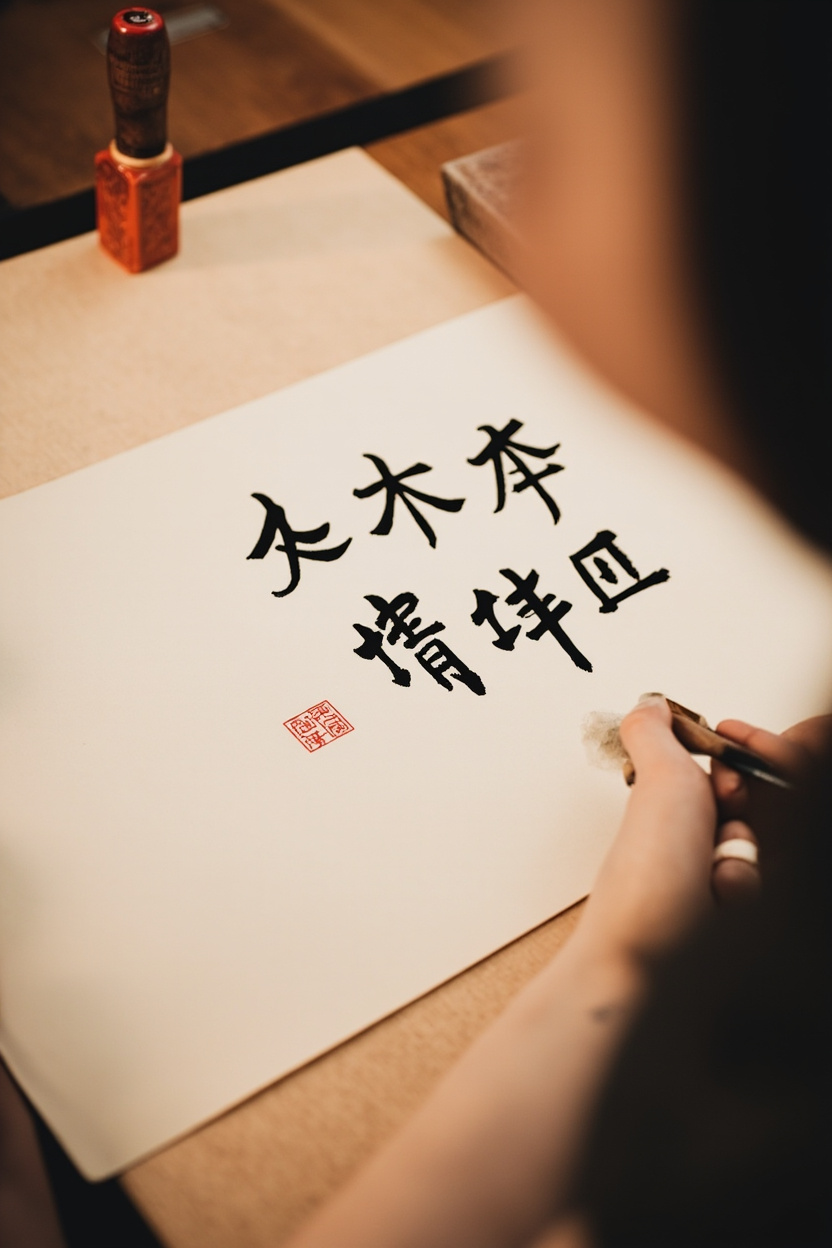
Unlike Western calligraphy, which primarily focuses on decorative lettering, Chinese calligraphy is considered a complete art form that expresses the calligrapher’s personality, mood, and spiritual state through the dynamic movement of the brush. Each stroke carries meaning beyond the character being written, revealing the artist’s training, emotional state, and creative energy. This expressive quality makes Chinese calligraphy a deeply personal art form, where no two calligraphers produce identical results even when writing the same characters.
Four Treasures of the Study
Traditional calligraphy practice requires four essential tools known as the Four Treasures of the Study. The brush, traditionally made from animal hair mounted on a bamboo or wooden handle, comes in various sizes and hardness levels for different script styles. The ink is produced by grinding an ink stick against an inkstone with water, a meditative process that prepares the calligrapher mentally before writing. The paper, typically xuan paper made from sandalwood bark and rice straw, has an absorbent quality that allows the ink to spread naturally and create the characteristic gradations of tone. The inkstone, often carved from decorative stone, serves as the surface for grinding ink and becomes more valuable with age as it absorbs the essence of countless grinding sessions. Serious calligraphers invest considerable time and resources in selecting and maintaining their Four Treasures, as the quality of tools directly affects the quality of the work produced.
Five Classic Scripts
Chinese calligraphy evolved through five major script styles that developed over thousands of years. Seal Script, the oldest style, features uniform stroke widths and symmetrical structures that give characters an ancient, dignified appearance. Official Script emerged during the Han Dynasty with flattened characters and distinctive wave-like strokes that make it more practical for administrative writing. Regular Script, also known as standard script, is the most commonly used style today, with clear, balanced strokes that make it the ideal script for beginners to learn. Running Script, a more cursive style, connects many strokes within characters, allowing faster writing while maintaining legibility. Cursive Script, the most abstract style, reduces characters to their essential forms and emphasizes the calligrapher’s personal expression over readability. Each style requires different techniques and tools, and master calligraphers often specialize in one or two styles while maintaining competence in all five.
Basic Strokes and Techniques
All Chinese characters derive from eight fundamental strokes that combine in endless variations to create the thousands of characters in the Chinese writing system. These basic strokes include the dot, horizontal line, vertical line, downward left hook, downward right hook, rising stroke, and two types of sweeping strokes. Mastering these fundamental strokes requires years of practice, as each has specific brush movements, pressure variations, and entry and exit techniques that must be executed correctly. The brush must be held vertically and moved using the entire arm rather than just the fingers, allowing the calligrapher to maintain consistent pressure and control throughout each stroke. Beginners typically spend months practicing individual strokes before attempting complete characters, building muscle memory that makes more complex writing possible.
Learning Resources and Practice Methods
Traditional calligraphy learning follows a structured progression from tracing to copying to free creation. Beginners start by tracing characters printed in light ink, gradually moving to copying characters from master works, and eventually developing their own style. Modern students benefit from online tutorials, instructional videos, and digital tools that supplement traditional practice methods. Many Chinese cities offer calligraphy classes for all levels, and cultural centers abroad often provide introductory workshops. Daily practice is essential for developing skill, with even fifteen minutes of focused practice each day producing noticeable improvement over time.
Conclusion
Chinese calligraphy offers meditative practice and artistic expression that provides lasting benefits for practitioners. Learning basic techniques opens the door to appreciating one of China’s most refined cultural traditions. Whether you practice casually or pursue serious study, calligraphy offers a unique combination of artistic creativity, mental discipline, and cultural connection that enriches modern life.
Famous Calligraphers Throughout History
Chinese calligraphy history features several legendary masters whose works continue to inspire practitioners today. Wang Xizhi, who lived during the Jin Dynasty, is considered the greatest calligrapher in Chinese history, known especially for his running script masterpiece the Preface to the Poems Composed at the Orchid Pavilion. Yan Zhenqing, a Tang Dynasty official, developed the standard script style characterized by bold, dignified strokes that have influenced calligraphy education for over 1,000 years. Mi Fu, a Song Dynasty painter and calligrapher, was known for his eccentric personality and innovative style that broke from established conventions. Zhao Mengfu, a Yuan Dynasty master, excelled at multiple scripts and styles, creating works that combined classical elegance with personal expression. Each of these masters contributed to the development of calligraphic tradition while maintaining the essential principles that define the art form.
Digital Calligraphy and Modern Applications
Chinese calligraphy has adapted to the digital age through various technologies. Digital calligraphy apps allow users to practice characters on tablets and smartphones, using touch-sensitive screens that respond to pressure and angle. These tools are useful for beginners who want to practice without investing in traditional materials. Computer fonts based on calligraphic styles have become ubiquitous in digital media. Some contemporary artists combine traditional calligraphy with digital media, projecting calligraphic strokes onto buildings or generating forms through algorithms. The debate continues about whether digital calligraphy can be considered true calligraphy, reflecting broader questions about tradition and innovation in Chinese art.
Calligraphy in Chinese Painting
Chinese calligraphy and painting are closely related arts that share tools, techniques, and aesthetic principles. The same brush used for calligraphy creates paintings, and the same ink and paper serve both arts. Many Chinese painters were also accomplished calligraphers, and their painting styles reflect calligraphic techniques. The concept of brushstroke quality, or bi fa, is central to both arts, with painters using calligraphic strokes to depict bamboo, orchids, and plum blossoms. The integration of poetry into painting, where the artist inscribes a poem directly onto the painting, creates a unified work combining calligraphy, poetry, and visual art. This tradition, known as the three perfections, represents the highest achievement in Chinese art. Many famous Chinese painters, including Xu Beihong and Qi Baishi, were also renowned calligraphers whose painting styles reflected their calligraphic training.
Collecting and Appreciating Calligraphy
Collecting Chinese calligraphy requires knowledge, patience, and appreciation for the subtle qualities that distinguish fine works. Authentication is the most challenging aspect, as forgeries have been produced throughout Chinese history. Collectors study brushwork quality, ink consistency, paper texture, and seal impressions to verify authenticity. The provenance or ownership history of a work significantly affects its value and authenticity. Works by famous calligraphers command high prices at auction, but works by lesser-known masters can provide excellent value for new collectors. The condition of a work affects its value, with worm damage, water stains, and improper restoration reducing desirability. Framing and mounting should use archival materials that protect rather than damage the work. Beginning collectors should study extensively before making significant purchases, visiting museums, reading scholarly works, and consulting experienced collectors.