Chinese wedding traditions represent one of the most significant ceremonial events in Chinese culture, blending ancient customs with modern celebrations to create spectacular displays of cultural heritage and family values. These elaborate wedding ceremonies reflect thousands of years of accumulated tradition, philosophical beliefs, and social customs that continue influencing Chinese wedding celebrations worldwide.
The importance of weddings in Chinese culture cannot be overstated. Marriage represents the foundation of family life, ensuring continuation of the family line and honoring ancestors through proper observance of rituals. Every aspect of wedding planning and celebration carries deep symbolic meaning, from selection of the wedding date to the final ceremonial acts. Understanding these traditions provides insight into Chinese cultural values and family relationships that define Chinese society.
Historical Background of Matchmaking
Traditional Chinese marriages were arranged by families with the assistance of professional matchmakers who ensured compatibility between families. This system, which dominated Chinese marriage practices for centuries, treated marriage as a union between families rather than simply between individuals. The matchmaker’s role involved assessing family backgrounds, social status, and fortune-telling compatibility before proposing matches.
Fortune-telling played an essential role in determining marriage suitability. Traditional beliefs held that the heavenly stems and earthly branches of both partners’ birth dates must harmonize for a successful marriage. Families consulted fortune-tellers to analyze theEight Characters (ba zi) of potential partners, seeking auspicious combinations that would ensure marital happiness and prosperity. While modern couples typically choose partners based on personal affection, many still consult fortune-tellers to select wedding dates.
Engagement Ceremonies and Traditions
The formal engagement ceremony, or guo dun li, represents one of the most important wedding-related events. This ceremony involves the groom’s family presenting gifts to the bride’s family, formally requesting permission for the marriage. The gift presentation follows strict protocols regarding types, quantities, and presentation methods that reflect the groom family’s respect for the bride’s family and serious intentions.
Traditional gift presentations include tea, alcohol, fruits, and special pastries made for the occasion. The most important gift involves dragon and phoenix pastries, or long feng gao, symbolizing the auspicious union of the couple. Whole animals, such as pigs and sheep, may also be presented to demonstrate the groom family’s prosperity and ability to support the bride. In return, the bride’s family provides gifts in return, including items for the new household.
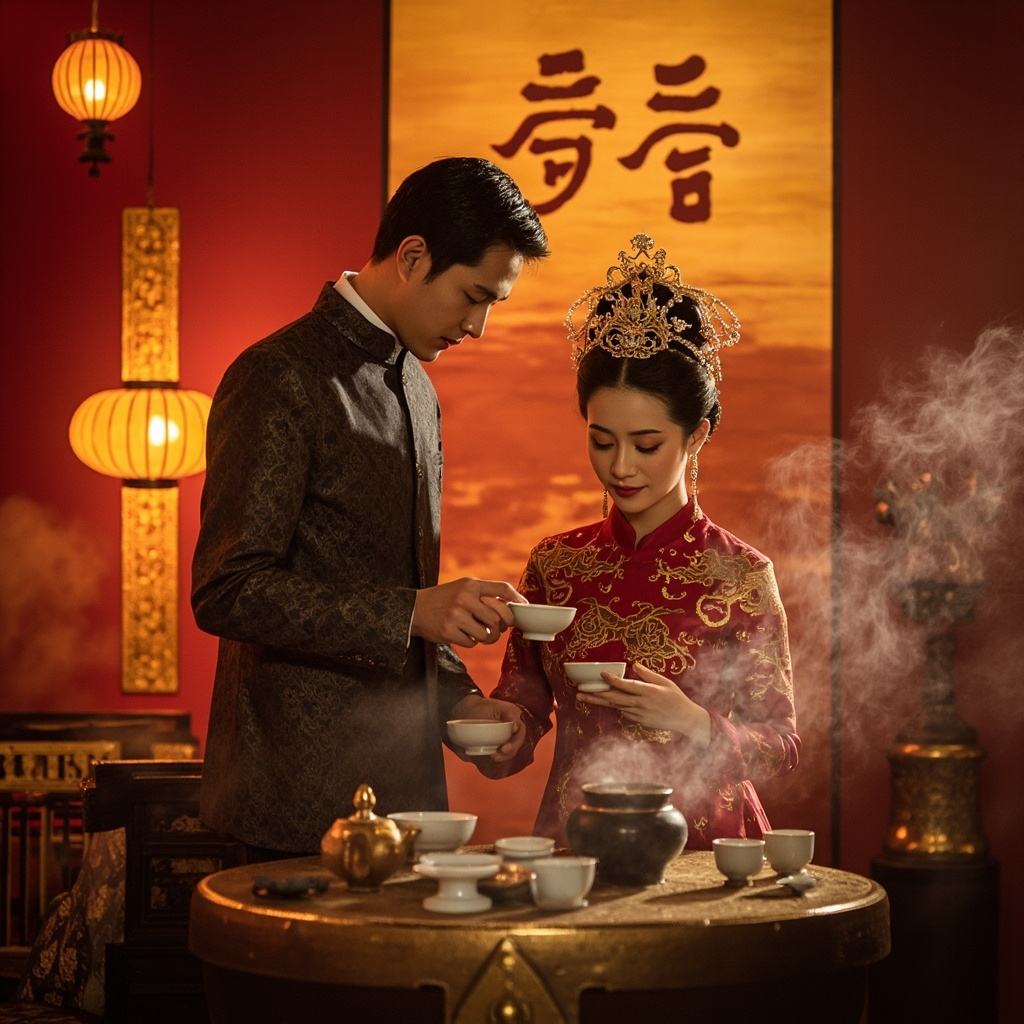
The tea ceremony during engagement formally establishes the relationship between both families. The bride serves tea to her future parents-in-law, who present her with gifts in return, symbolizing acceptance into the new family. This ceremony parallels the wedding day tea ceremony, establishing the foundation for family relationships that will develop over years of married life.
Wedding Date Selection and Auspicious Timing
Selecting the wedding date follows elaborate procedures designed to identify the most auspicious day for the marriage ceremony. Traditional Chinese culture holds that the marriage date significantly influences the couple’s future happiness and fortune. Families consult lunar calendars, fortune-tellers, and various divination practices to identify optimal dates.
Auspicious wedding dates typically avoid months associated with funerals, ghost festivals, and other inauspicious periods. The seventh lunar month, traditionally associated with hungry ghosts, is particularly avoided for wedding celebrations. Spring and autumn months generally prove most popular for weddings, offering pleasant weather and traditional associations with new beginnings and harvests.
The wedding day itself requires careful timing for various ceremonial elements. The arrival of the bridal procession, the tea ceremony, and other key events follow schedules determined by astrological considerations. These timing requirements create elaborate choreography that must be executed precisely, requiring extensive planning and coordination.
Bridal Preparations and Traditions
Bridal preparations begin weeks before the wedding day with elaborate beauty rituals and physical treatments intended to prepare the bride for her new role. These preparations include skincare routines, hair treatments, and traditional practices intended to enhance the bride’s beauty and fortune. Family elders often supervise these preparations, ensuring proper observance of traditions.
The wedding dress itself represents a significant decision, with modern brides often choosing multiple outfits for different ceremony phases. The traditional qipao or cheongsam in red or pink represents Chinese wedding fashion at its most elegant, while Western-style white wedding gowns have become increasingly popular. Many brides opt for the best of both traditions, wearing traditional Chinese attire for the tea ceremony and Western gown for the reception.
Jewelry, particularly gold pieces, accompanies the wedding attire as expressions of prosperity and good fortune. Dragon and phoenix bangles, traditional symbols of marital harmony, represent essential bridal jewelry. These pieces often represent family heirlooms passed through generations, connecting the bride to ancestors who wore similar items at their own weddings.
The Grand Wedding Banquet
The wedding banquet represents the central social event of Chinese wedding celebrations, featuring elaborate multi-course meals that showcase culinary abundance and family prosperity. Unlike Western wedding receptions that typically occur in the evening, Chinese wedding banquets traditionally begin in the late afternoon or evening and feature multiple courses served family-style to shared plates at each table.
The banquet course sequence follows traditional patterns designed to honor guests with progressively elaborate dishes. Courses typically include eight to twelve dishes, with each course carrying symbolic meaning. Whole fish dishes represent abundance and surplus, while suckling pig symbolizes purity and completeness. Bird’s nest soup, shark fin, and other luxury ingredients demonstrate the host family’s prosperity and generosity.
Guest seating arrangements follow strict protocols reflecting social hierarchy and relationship to the couple. The seats facing the entrance honor the most senior family members and distinguished guests. The wedding couple’s table typically occupies a prominent position, allowing all guests to observe the couple and participate in their celebration. Wedding coordinators ensure smooth service while respecting these traditional arrangements.
The Tea Ceremony
The wedding day tea ceremony represents one of the most significant ritual elements of Chinese wedding tradition. During this ceremony, the bride serves tea to her new parents-in-law and elder relatives, demonstrating respect and obedience while receiving their blessing for the marriage. The formal nature of this ceremony establishes the bride’s new family relationships and integration into her husband’s family.
Serving tea follows specific protocols regarding posture, gesture, and verbal expressions of respect. The bride kneels before elders and offers tea with both hands, using specific titles to address each recipient. In return, elders drink the tea and present the bride with red envelopes containing gifts or jewelry, symbolizing their acceptance and blessing.
Modern weddings often modify tea ceremonies to include both families, with the groom also serving tea to the bride’s parents in a gesture of respect. These modified ceremonies maintain traditional significance while accommodating contemporary family structures and relationships between families of both spouses.
Regional Variations in Wedding Traditions
While core wedding traditions remain consistent across China, regional variations add fascinating diversity to wedding celebrations. Cantonese weddings traditionally feature elaborate flower parades and the Double Happiness symbol prominently displayed throughout celebrations. Northern Chinese weddings may emphasize different ceremonial elements, including more elaborate processional traditions and distinctive musical accompaniment.
Hong Kong and Taiwan wedding traditions incorporate both traditional Chinese elements and contemporary Western influences, creating hybrid celebrations that showcase cultural exchange. These regional variations demonstrate how Chinese wedding traditions adapt to local conditions while maintaining essential symbolic meanings that define the ceremony’s cultural significance.
Modern Wedding Trends
Contemporary Chinese weddings blend traditional elements with Western influences and modern conveniences. Beach weddings, destination celebrations, and Western-style ceremonies have become increasingly popular among urban couples seeking unique wedding experiences. Photography and videography services create elaborate documentation of wedding celebrations, combining traditional and modern visual documentation.
Despite these modern adaptations, traditional elements remain central to most Chinese wedding celebrations. The tea ceremony, wedding banquet, and symbolic gestures continue defining Chinese wedding experiences regardless of other modern modifications. This persistence of traditional practices demonstrates their continued significance in Chinese cultural identity.
Conclusion
Chinese wedding traditions beautifully preserve cultural heritage while accommodating modern lifestyle preferences. The elaborate customs, symbolic gestures, and ceremonial elements create wedding celebrations that honor ancestors, strengthen family bonds, and express hopes for the couple’s future happiness. Attending a traditional Chinese wedding provides intimate insight into Chinese family values and cultural traditions that have shaped Chinese society for millennia.
Whether participating as guest or observing as visitor, Chinese wedding celebrations offer unforgettable cultural experiences. The warmth of family relationships, the spectacle of traditional performances, and the deep symbolic significance of every custom combine to create celebrations that illuminate Chinese cultural identity at its most vibrant and meaningful.