Tea drinking in China transcends mere refreshment to encompass philosophy, art, and social customs refined over thousands of years. Chinese tea culture represents one of humanity’s most sophisticated beverage traditions, transforming a simple leaf into a symbol of hospitality, meditation, and cultural refinement. Understanding Chinese tea culture opens doors to aspects of Chinese daily life that reveal the sophistication and depth of traditional Chinese civilization.
The significance of tea in Chinese culture extends far beyond its role as a popular beverage. Tea houses have served as social gathering places for friends, business associates, and communities for centuries. The tea ceremony, or gongfu cha, represents a complete practice integrating aesthetic principles, meditation techniques, and social interaction into a unified cultural experience. This holistic approach to tea distinguishes Chinese tea culture from tea traditions in other countries.
The Historical Origins of Tea
Legend attributes the discovery of tea to Emperor Shennong in 2737 BCE, who reportedly discovered the beverage when tea leaves fell into his pot of boiling water. Whether or not this legend reflects historical truth, archaeological evidence suggests tea consumption in China dates back at least 2,000 years. Early tea was consumed primarily for medicinal purposes before evolving into a daily beverage and eventually a sophisticated art form.
During the Tang Dynasty (618-907 CE), tea drinking spread throughout Chinese society and began developing into the refined practice known today. Lu Yu, often called the Sage of Tea, wrote the Classic of Tea during this period, establishing theoretical foundations for tea appreciation that continue influencing Chinese tea culture. This text codified tea production methods, brewing techniques, and ceremonial practices that would define Chinese tea culture for centuries.
The Song Dynasty (960-1279 CE) saw further refinement of tea culture, with tea houses becoming centers of social and intellectual life. Tea competitions and the development of whisking tea practices reflected the aesthetic sensibilities that characterized this period. The Ming Dynasty (1368-1644 CE) introduced the practice of brewing whole leaves, which remains standard practice today, replacing earlier methods involving tea powders.
Six Famous Tea Types
China produces six main categories of tea, each offering distinct characteristics that reflect differences in processing methods and regional growing conditions. Understanding these categories provides essential foundation for exploring Chinese tea culture in depth.
Green tea, unoxidized and minimally processed, preserves the fresh, grassy character of tea leaves. Famous green teas include Longjing (Dragon Well) from Hangzhou, known for its flat leaves and sweet, mellow flavor. Biluochun from Jiangsu province produces tightly rolled leaves with fruity aromatics. Other notable green teas include Huangshan Maofeng and Xinyang Maojian, each representing distinct regional characteristics.
White tea, minimally processed and lightly oxidized, offers the most delicate tea experience. Bai Hao Yinzhen (Silver Needle) represents the highest grade white tea, featuring downy white buds processed to preserve their delicate character. White peony (Bai Mudan) combines buds and leaves for slightly stronger flavor while maintaining white tea’s characteristic subtlety.
Yellow tea, rare and specialty production, undergoes unique processing that includes a gentle oxidation step creating distinctive mellow flavor. Junshan Yinzhen and Mengding Huangya represent famous examples of this unusual category that bridges green and white tea characteristics.
Oolong tea, partially oxidized, spans a wide range from greenish oolongs approaching green tea to dark oolongs approaching black tea. Famous oolongs include Da Hong Pao from Wuyi Mountains, known for its rock (yan yun) character, and Tie Guan Yin from Anxi, featuring floral aromatics and smooth texture.
Black tea, fully oxidized, produces dark teas with rich, bold flavors suited to Western tastes. Keemun from Anhui province and Lapsang Souchong from Fujian represent famous Chinese black teas that have influenced global tea culture. Yunnan black tea from the province near Myanmar demonstrates how regional conditions create distinctive tea characteristics.
Dark tea, or hei cha, undergoes post-fermentation that creates unique aging potential and complex flavors. Pu-erh from Yunnan province represents the most famous dark tea, with aged examples commanding premium prices due to their developed complexity over decades of aging.
The Tea Ceremony: Gongfu Cha
Gongfu cha, meaning “making tea with skill,” represents the most refined approach to tea preparation in Chinese culture. This elaborate ceremony involves precise attention to water temperature, brewing time, tea leaf quantity, and ceremonial protocol. The practice transforms tea preparation into meditative art requiring years of study to master.
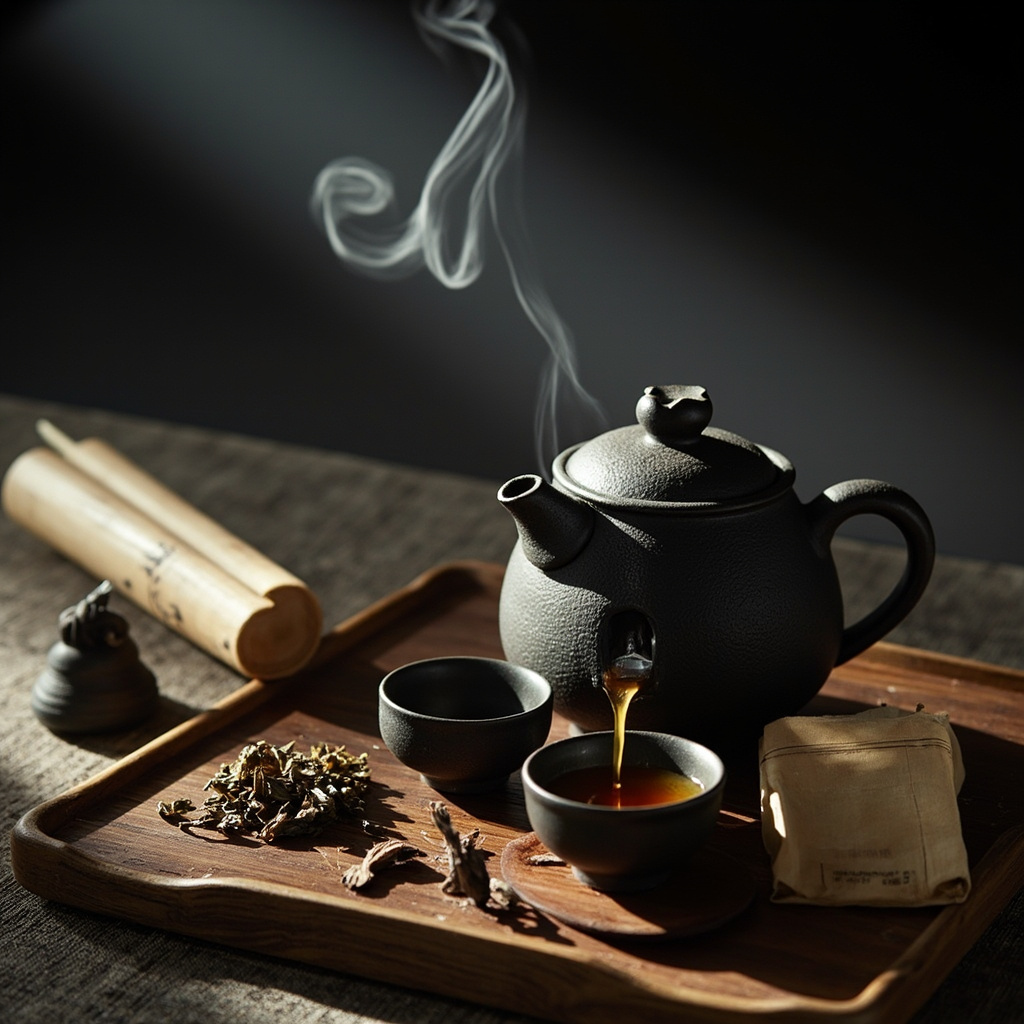
The ceremony begins with preparation of the tea set, traditionally using Yixing clay teapots from Jiangsu province. These unglazed teapots absorb tea oils that season the vessel over years of use, developing flavors that enhance subsequent brewing. The choice of teapot significantly affects the tea experience, with collectors and connoisseurs maintaining extensive collections for different tea types.
Water selection proves essential to successful tea preparation. Spring water from natural sources traditionally represents the ideal, while filtered or distilled water provides modern alternatives. The temperature of water varies according to tea type, with green teas requiring cooler water (70-80°C) and black teas tolerating higher temperatures (90-100°C). Control of water temperature demonstrates technical skill in tea preparation.
The brewing process itself follows specific protocols regarding tea leaf quantity, brewing time, and number of infusions. Gongfu cha typically uses high leaf-to-water ratios, yielding strong tea that can be infused multiple times. Each infusion reveals different aspects of the tea’s character, with skilled practitioners adjusting technique to maximize expression of the tea’s potential.
Yixing Clay Teapots
Yixing teapots from Jiangsu province represent the most treasured tea brewing vessels in Chinese tea culture. These teapots are crafted from purple clay (zi sha) unique to the Yixing region, a mineral-rich clay that withstands high temperatures without imparting flavors to tea. The porous nature of the clay absorbs tea oils that season the teapot over years of use, creating vessels prized for their contribution to tea flavor.
Each Yixing teapot develops unique characteristics reflecting the specific teas brewed in it and the owner’s care over years of use. Serious tea enthusiasts maintain separate teapots for different tea types, preventing flavor contamination that would compromise each tea’s distinctive character. Some tea enthusiasts dedicate specific teapots to particular seasons or occasions, developing personal relationships with their vessels.
Authentic Yixing teapots command significant prices, particularly those crafted by recognized master artisans. Reproductions and mass-produced imitations flood the market, requiring knowledge and experience to distinguish genuine Yixing clay from inferior materials. Collectors value teapots not only for their brewing qualities but also as sculptural objects reflecting Chinese aesthetic principles.
Tea House Culture and Social customs
Traditional tea houses serve as essential social spaces where Chinese people gather for conversation, business discussions, and relaxation. These establishments range from elaborate facilities offering premium teas and formal service to simple street-level establishments serving neighborhood regulars. The tea house provides a democratic space where people from all social classes can enjoy tea together.
Business negotiations frequently occur over tea in Chinese culture, with the casual atmosphere of tea houses creating favorable conditions for building relationships and reaching agreements. The practice of treating guests to tea demonstrates hospitality and respect, with hosts争先恐后 (vying to pay) for the honor of purchasing tea for their companions. This social custom reflects broader Chinese values regarding face, relationship, and reciprocal obligation.
Retirement culture in China often centers on tea houses, with elderly men gathering daily to share news, play chess, and enjoy companionship over pots of tea. This tradition provides structure and social connection for retired individuals, demonstrating tea’s continuing role in Chinese social life despite modernization and changing lifestyles.
Famous Tea Regions and Destinations
China’s major tea-producing regions offer distinctive teas reflecting local climate, soil, and traditional processing methods. Visiting these regions provides opportunities to witness tea production firsthand and purchase teas directly from producers. Hangzhou’s West Lake district hosts Longjing tea plantations where visitors can participate in tea picking and brewing experiences.
Wuyi Mountains in Fujian province produce famous Da Hong Pao and other oolong teas with distinctive rock character imparted by the mineral-rich soil. Tea tourism in this region includes visits to tea estates, demonstrations of traditional roasting techniques, and tastings of aged productions. The scenic beauty of the mountain landscapes enhances the tea tourism experience.
Yunnan’s Xishuangbanna region, birthplace of tea, offers experiences with ancient tea trees some exceeding 1,000 years in age. Pu-erh production in this region connects contemporary tea enthusiasts to millennia of tea tradition. Visiting tea mountains provides context for understanding tea’s cultural significance that cannot be obtained from tea alone.
Health Benefits of Tea
Modern scientific research has confirmed many traditional beliefs about tea’s health benefits. Tea contains polyphenols, catechins, and other antioxidants that support cardiovascular health, metabolism, and cellular function. Regular tea consumption has been associated with reduced risk of various chronic conditions in numerous studies.
The L-theanine compound unique to tea has been shown to promote relaxation and mental focus without causing drowsiness. This explains traditional beliefs about tea’s ability to enhance concentration and meditation practice. The combination of caffeine and L-theanine produces alert relaxation that tea enthusiasts describe as centered presence.
Traditional Chinese medicine has long recognized tea’s medicinal properties, prescribing specific teas for various conditions. Cooling teas for summer heat, warming teas for winter cold, and digestion-aiding teas after meals reflect traditional understanding of tea’s therapeutic applications. Modern research increasingly validates these traditional medical uses.
Conclusion
Chinese tea culture offers meditation practice, social connection, and aesthetic appreciation that enrich daily life. Exploring tea traditions reveals aspects of Chinese philosophy, art, and social customs that define Chinese cultural identity. The simple act of preparing and drinking tea becomes gateway to understanding Chinese civilization’s sophistication and depth.
For visitors to China, visiting tea houses and tea-producing regions provides unforgettable cultural experiences. Participating in tea ceremonies, tasting exceptional teas, and observing tea culture in action opens windows into Chinese daily life that cannot be accessed through other cultural activities. The hospitality, aesthetic refinement, and philosophical depth of Chinese tea culture reward curious visitors with experiences that last a lifetime.