## Introduction
Chinese breakfast is far more than a hurried bite on the way to work; it is a vibrant ritual that reflects centuries of culinary ingenuity, regional diversity, and a deep respect for balance and flavor. From steaming bowls of silky congee to crispy, golden youtiao (fried dough sticks), the typical Chinese morning table offers a harmonious mix of carbohydrates, proteins, and fresh toppings that set the tone for the day. In this comprehensive guide, we explore the cultural roots, staple ingredients, and most beloved traditional dishes that make Chinese breakfast a cherished part of daily life, both at home and on the bustling streets of China.
## History and Cultural Significance of Chinese Breakfast
Breakfast has always occupied a special place in Chinese culture. Historical records from the Tang Dynasty (618–907) already mention “morning meals” served at inns and markets, often consisting of rice porridge, steamed buns, and simple fried pastries. Over the centuries, the philosophy of “五味调和” (balancing the five flavors—sweet, sour, bitter, salty, and umami) became a guiding principle for every meal, including breakfast.
In modern China, the phrase “早餐吃得好”(eat a good breakfast) is a common refrain, underscoring the belief that a well‑balanced morning meal fuels both physical stamina and mental sharpness. Street vendors, known as “早点摊” (zaodian tan), have long been the backbone of urban breakfast culture, offering quick, affordable, and deeply flavored foods that cater to the fast pace of city life. At the same time, families gather around the kitchen table on weekends to prepare homemade congee, steamed buns, and fresh soy milk, reinforcing familial bonds and culinary heritage.
## Staple Ingredients in Traditional Chinese Breakfast
Understanding the core building blocks helps demystify the variety of dishes that follow. The most common ingredients include:
– **Rice and Rice Products**: Rice forms the base for congee, rice porridge, steamed rice cakes, and rice noodle rolls.
– **Wheat and Wheat Products**: Wheat flour is transformed into dough for steamed buns (baozi), pan‑fried scallion pancakes, fried dough sticks (youtiao), and thin wheat noodles.
– **Soybeans**: Soy milk, tofu, and fermented soy products such as douchi (fermented black beans) provide protein and a subtle umami punch.
– **Eggs**: Scrambled, steamed, or wrapped in batter, eggs add richness and are often paired with savory fillings.
– **Vegetables and Pickles**: Pickled mustard greens, steamed bok choy, fresh cucumber, and fermented radish provide crunch and contrast.
– **Aromatics**: Scallions, ginger, garlic, and sesame oil are essential for flavor building.
– **Sweeteners and Condiments**: Rock sugar, honey, soy sauce, hoisin, and chili oil adjust taste and texture.
These ingredients are combined using techniques like steaming, boiling, deep‑frying, and pan‑frying, creating a spectrum of textures from silky to crispy.
## Popular Traditional Chinese Breakfast Dishes
Below are some of the most iconic dishes that grace Chinese breakfast tables across regions.
### Congee (Rice Porridge)
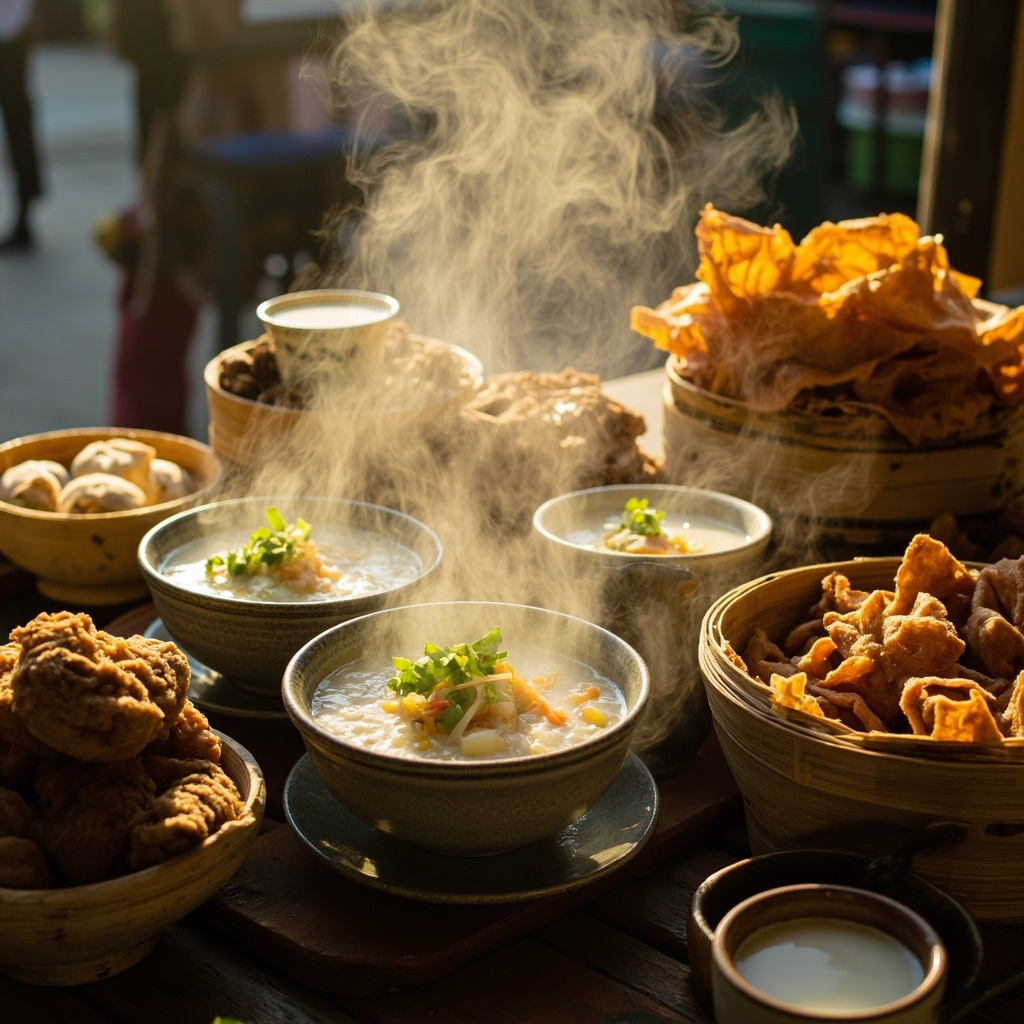
Congee, or “zhou,” is a comforting, velvety rice porridge that serves as a blank canvas for countless toppings. Cooked by simmering rice in an ample amount of water until it breaks down into a thick, creamy consistency, congee can be plain or enriched with ingredients like shredded chicken, pork floss, century egg, pickled vegetables, or a drizzle of sesame oil. It is especially popular during colder months and is often served with a side of crispy fried dough sticks for a contrast of textures.
### Soy Milk (Doujiang) and Youtiao (Fried Dough Sticks)
A classic duo, fresh soy milk paired with youtiao is a morning staple in northern and southern China alike. The soy milk, often lightly sweetened or salted, is poured into a bowl and enjoyed with chunks of youtiao—long, golden, airy fried dough that crunches satisfyingly when bitten. The combination delivers a balance of protein, carbs, and a hint of nuttiness that keeps hunger at bay until lunch.
### Steamed Buns (Baozi)
Baozi are soft, fluffy parcels of dough that encase a myriad of fillings. Common varieties include:
– **Cha siu bao**: Stuffed with glazed roasted pork, the sweetness of the sauce contrasts the savory meat.
– **Xiancai bao**: Filled with a mixture of pork and Chinese chives, offering a fresh, slightly pungent note.
– **Doubua bao**: A sweet bun filled with red bean paste, a favorite among children and those with a sweet tooth.
Buns are traditionally steamed in bamboo baskets, which impart a subtle fragrance and keep the exterior pillowy.
### Scallion Pancake (Cong You Bing)
The scallion pancake is a pan‑fried, flaky flatbread made from layers of dough brushed with fragrant scallion oil and sesame oil. Each bite reveals a crispy, golden crust interlaced with aromatic green onions. It is often rolled up with a strip of fried dough or a slice of ham, making it a portable, satisfying option for commuters.
### Chinese Cruller (Mahua)
Mahua are twisted, deep‑fried dough snacks that are chewy on the inside and crunchy on the outside. They vary by region: in the north they may be plain and slightly sweet, while in Sichuan they can be flavored with Sichuan peppercorn powder for a numbing kick. Mahua is frequently enjoyed as an accompaniment to soy milk or as a crunchy snack on its own.
### Rice Noodle Rolls (Cheung Fun)
Cheung fun are delicate, translucent rice noodle rolls that are filled with ingredients such as shrimp, beef, or vegetables, then drizzled with a savory soy‑based sauce and a sprinkle of sesame seeds. The texture is silky and slightly springy, providing a light yet filling breakfast option. They are commonly found in dim sum houses but also appear at street stalls throughout Guangdong and Hong Kong.
### Sticky Rice (Zongzi)
Though often associated with the Dragon Boat Festival, zongzi—glutinous rice parcels wrapped in bamboo or lotus leaves—are enjoyed as a breakfast food in many regions. The rice is infused with soy sauce and filled with meats, beans, or sweet pastes such as red bean or lotus seed. After steaming, the zongzi becomes firm, making it easy to slice and serve with a drizzle of sweet soy glaze.
### Tofu Pudding (Douhua)
Douhua is a silky, custard‑like tofu served either sweet or savory. Sweet versions are topped with ginger syrup, caramelized sugar, or a splash of almond milk, while savory renditions are dressed with soy sauce, scallions, and a drizzle of chili oil. The gentle, melt‑in‑your‑mouth texture makes douhua a soothing start to the day, especially in the southern provinces where it is a popular street‑side treat.
## Regional Variations
China’s vast geography leads to distinct breakfast cultures that reflect local ingredients, climate, and customs.
### Northern Chinese Breakfast
The northern climate favors heartier fare. Wheat‑based dishes dominate, including steamed buns, thick wheat noodles, and pan‑fried scallion pancakes. Congee is less common, and when it appears, it is often heartier, with added beans or minced meat. Street vendors in Beijing, Tianjin, and Harbin frequently serve fried dough sticks alongside warm soy milk.
### Southern Chinese Breakfast
In contrast, the south leans toward rice‑based dishes and lighter, more delicate flavors. Congee, rice noodle rolls, and sweet soups such as red bean soup are staples. Dim sum culture flourishes in Guangdong, Hong Kong, and Macau, where small plates of shrimp dumplings, pork siu mai, and turnip cakes accompany tea.
### Shanghai Street Food
Shanghai’s breakfast scene is a melting pot, featuring both northern and southern influences. Signature items include Shengjian mantou (pan‑fried pork buns with a crispy bottom), thin soy‑milk soup, and a variety of fried dough twists known locally as “油条.” The city’s “粥铺” (congee shops) also offer dozens of toppings, from salted duck eggs to pickled radish.
### Cantonese Dim Sum
Cantonese dim sum is an art form, with each dumpling, roll, and cake crafted to showcase the freshness of ingredients. Popular morning selections include har gow (shrimp dumplings), char siu bao, loh bak gou (turnip cake), and cheung fun filled with roast pork. Tea—usually oolong, pu‑erh, or jasmine—completes the experience, turning breakfast into a social ritual.
## How to Build a Balanced Chinese Breakfast
A well‑rounded Chinese breakfast follows the same nutritional principles as the broader diet: a mix of carbohydrates, protein, vegetables, and healthy fats.
### Pairing Carbs with Protein
Combine a starch (such as congee, steamed rice, or a wheat pancake) with a protein source (scrambled egg, pork floss, tofu, or a small piece of braised meat). This pairing stabilizes blood sugar and provides sustained energy.
### Adding Vegetables and Fermented Foods
Incorporate a side of quick‑pickled vegetables, a small bowl of steamed greens, or a drizzle of fermented bean paste to boost fiber and probiotic intake. For instance, a serving of pickled mustard greens alongside congee adds crunch and tang.
### Beverages
Choose a warm drink that complements the meal. Traditional options include unsweetened soy milk, a light rice‑milk drink, or a cup of Chinese tea. Avoid sugary sodas; the natural sweetness of the food is usually sufficient.
## Practical Tips for Making Chinese Breakfast at Home
Bringing authentic Chinese breakfast flavors into your kitchen is easier than you might think. Below are practical steps to get started.
### Essential Equipment
– **Steamer**: A bamboo steamer set over a wok or a dedicated electric steamer is essential for baozi, dim sum, and zongzi.
– **Wok**: A well‑seasoned carbon‑steel wok works for pan‑frying scallion pancakes, stir‑frying fillings, and deep‑frying youtiao.
– **Rice Cooker**: Ideal for making large batches of congee or steamed rice.
– **Blender or Soy Milk Maker**: For smooth, fresh soy milk and douhua.
### Key Ingredients to Stock
– Glutinous rice, short‑grain rice, rice flour, and wheat flour.
– Dried soybeans (for soaking and grinding), or ready‑made soy milk powder.
– Fresh scallions, ginger, garlic, and Sichuan peppercorns.
– Soy sauce, oyster sauce, hoisin, sesame oil, and chili oil.
– Pickled vegetables (e.g., kimchi, mustard greens) and fermented bean paste.
### Simple Recipes
**Basic Congee**: Rinse 1 cup short‑grain rice, add 7 cups water, and simmer over low heat for 45–60 minutes until creamy. Season with a pinch of salt and a drizzle of sesame oil. Serve with toppings such as pickled radish, sliced century egg, and a sprinkle of pork floss.
**Youtiao (Fried Dough Sticks)**: Mix 2 cups wheat flour, 1 tsp instant yeast, ½ tsp salt, and enough water to form a smooth dough. Rest for 30 minutes, roll into ropes, twist, and deep‑fry in 180 °C (350 °F) oil until golden. Drain on paper towels.
**Steamed Baozi (Basic Dough)**: Combine 3 cups all‑purpose flour, 1 tsp yeast, 1 tbsp sugar, and 1 cup warm milk. Knead until elastic, let rise for 1 hour, then divide into balls. Fill with seasoned pork or vegetables, steam for 15 minutes, and serve.
**Scallion Pancake**: Roll out a thin dough rectangle, brush with a mixture of melted butter, chopped scallions, and sesame oil. Roll up tightly, twist, and pan‑fry until crisp.
These recipes can be adapted with regional variations—add Chinese five‑spice to the dough for a northern flavor, or incorporate coconut milk for a southern twist.
## Conclusion
Chinese breakfast is a celebration of simplicity, flavor, and tradition. From the humble bowl of congee that warms the stomach on a cool morning to the delicate rice noodle rolls served in bustling dim sum parlors, each dish tells a story of local ingredients and generations of culinary craft. By exploring the rich tapestry of breakfast foods across China, you not only broaden your palate but also gain insight into the cultural values of balance, community, and respect for fresh, quality ingredients. Whether you are sipping a cup of silky soy milk while watching street vendors in Beijing or steaming a batch of baozi in your own kitchen, embracing the Chinese breakfast tradition promises a delicious start to any day.