## Introduction
China’s vastness is not only measured in land area but also in climatic diversity. From the frozen tundra of Harbin in the northeast to the tropical beaches of Hainan in the south, the “Middle Kingdom” offers a dramatically different travel experience depending on when you visit. For international travelers, selecting the **best time to visit China** can mean the difference between exploring the Great Wall under a blazing summer sun or strolling through the ancient city of Xi’an amid a crisp, golden autumn. This seasonal guide provides a comprehensive overview of China’s climate zones, highlights the optimal travel windows for major regions, and offers practical tips to help you plan a seamless trip.
## Understanding China’s Climate
### Geographic Diversity
China stretches over 5,000 km from east to west and about 5,500 km from north to south. This immense reach crosses several latitudes and longitudes, resulting in a mosaic of climate types. The country can be broadly divided into three climate belts: **temperate** (most of the north and central regions), **subtropical** (the south and southeast), and **plateau** (the western highlands).
### Climate Zones
– **Continental climate** – Cold winters and warm summers, typical of Beijing, Harbin, and the northern plains.
– **Subtropical humid climate** – Mild winters and hot, humid summers, common in Shanghai, Hangzhou, and Guangzhou.
– **Plateau climate** – Cool to cold year‑round with low humidity, seen in Tibet, Qinghai, and parts of Xinjiang.
– **Tropical climate** – Hot and humid throughout the year, confined to Hainan Island and the far southern tip of Yunnan.
Understanding these zones is essential for picking the right season for your preferred activities.
## Spring (March – May)
### Weather Details
Spring marks the transition from the cold winter to warmer months. Average temperatures range from **10 °C (50 °F) in Beijing** to **20 °C (68 °F) in Shanghai** and **25 °C (77 °F) in Guangzhou**. Rainfall begins to increase, especially in the Yangtze River Delta, but sunny days are plentiful.
### Top Destinations
– **Beijing** – Ideal for walking the Forbidden City and Summer Palace as blossoms (peach, apricot, and cherry) bloom.
– **Huangshan (Yellow Mountain)** – The “sea of clouds” is especially vivid after the winter haze lifts.
– **Guilin** – Karst peaks are bathed in fresh green foliage, perfect for river cruises on the Li River.
### Festivals & Events
– **Qingming Festival (Tomb‑Sweeping Day)** – A time to honor ancestors, often accompanied by kite‑flying picnics in parks.
– **International Horticultural Exposition** – Held in various cities, showcasing flower displays and garden design.
### Travel Tips
– **Layered clothing** is essential; mornings can be cool while afternoons warm up.
– **Book accommodations early** in popular spring destinations, as they fill quickly during school holidays.
## Summer (June – August)
### Weather Details
Summer brings heat and humidity across most of China. In the north, temperatures hover around **30 °C (86 °F)**, while the south can experience **35 °C (95 °F)** with high humidity. Rainfall peaks in July and August, especially during the **monsoon season** along the Yangtze River.
### Coastal vs Inland
– **Coastal cities (Shanghai, Qingdao, Dalian)** receive sea breezes but also occasional typhoons in late August.
– **Inland areas (Xi’an, Chengdu)** can feel hotter due to the lack of ocean influences; temperatures often exceed 38 °C (100 °F).
### Best Activities
– **Great Wall hiking** – Early morning starts avoid the midday heat.
– **Water parks & river cruises** – Beat the heat on a Li River cruise or at a theme park in Guangzhou.
– **Highland escapes** – Head to the **Qinghai‑Tibet Plateau** (e.g., Lhasa) where temperatures remain cooler (15–20 °C).
### Practical Tips
– **Stay hydrated** and use sunscreen; UV indices can be high even on cloudy days.
– **Carry a portable umbrella** for sudden rain showers.
– **Consider domestic flights** to avoid long, sweltering train journeys.
## Autumn (September – November)
### Weather Details
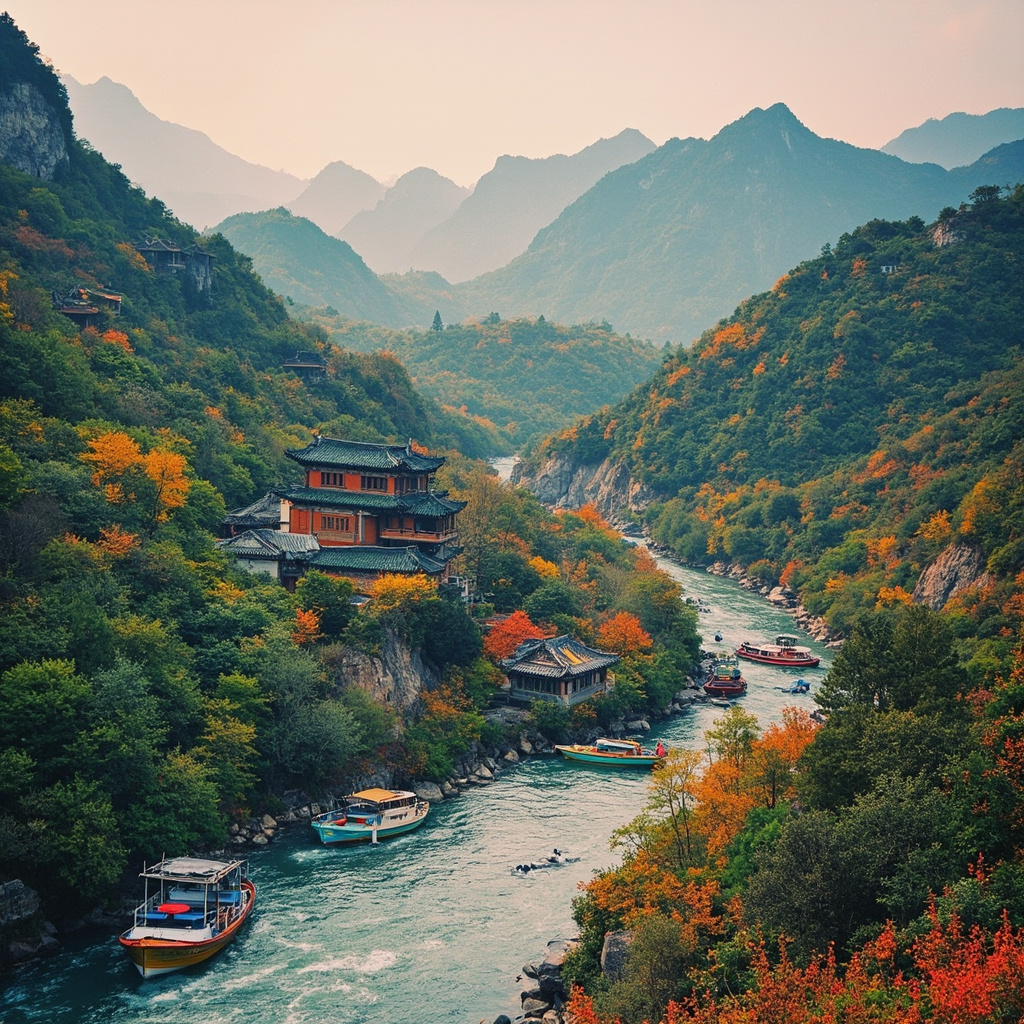
Autumn is widely regarded as the **best season to visit China**. Temperatures drop to a comfortable **15–25 °C (59–77 °F)**, humidity falls, and skies are clear. The northern regions experience crisp mornings and sunny afternoons, while southern areas enjoy warm, dry days.
### Popular Destinations
– **Beijing** – The city’s historic sites look stunning against a backdrop of golden ginkgo trees.
– **Zhangjiajie** – The quartz‑sandstone pillars are often shrouded in mist, creating ethereal scenery.
– **Hangzhou** – West Lake is particularly enchanting with lotus blossoms fading and autumn foliage emerging.
### Cultural Highlights
– **Mid‑Autumn Festival (Moon Festival)** – Celebrated with mooncakes, lantern displays, and family reunions (typically in September/October).
– **China International Travel Mart** – A major tourism expo held in Shanghai, offering travel deals and cultural performances.
### Travel Advice
– **Book accommodations well in advance** for national holidays (e.g., National Day, early October).
– **Pack a light jacket** for evenings, especially in northern cities.
– **Take advantage of longer daylight** for outdoor sightseeing; sunrise and sunset photography are spectacular.
## Winter (December – February)
### Weather Details
Winter varies dramatically across China. The north experiences **freezing temperatures** (‑10 °C to 0 °C / 14–32 °F), while the south remains milder (**10–15 °C / 50–59 °F**). Snow is common in Harbin, Beijing, and parts of the northeast, but rare in the subtropical south.
### Northern vs Southern Winter
– **North (Harbin, Beijing)** – Famous for the Harbin International Ice and Snow Sculpture Festival; cold, dry air and clear skies.
– **South (Guangzhou, Shenzhen)** – Light jacket weather, occasional rain, and vibrant city life continue.
### Unique Experiences
– **Ice & Snow Festival in Harbin** – World‑class ice sculptures illuminated at night.
– **Skiing in Chongli** – The site of the 2022 Winter Olympics offers modern ski resorts near Beijing.
– **Winter festivals in Yunnan** – Mild climate allows for exploration of ancient towns without the summer crowds.
### Preparation Tips
– **Heavy winter coat, thermal layers, and insulated boots** are essential for northern destinations.
– **In southern cities, a warm sweater and raincoat** suffice.
– **Check airline schedules** for possible delays due to snow, especially in Harbin and Beijing.
## Regional Seasonal Highlights
### North (Beijing, Harbin)
– **Spring** – Peach blossoms and low tourist numbers.
– **Summer** – Hot, humid, but perfect for late‑night street food.
– **Autumn** – Clear skies and ideal for historic walks.
– **Winter** – Snow‑capped imperial palaces; Harbin’s ice festival.
### South (Guangzhou, Shenzhen)
– **Spring** – Warm, pleasant, with Lantern Festival celebrations.
– **Summer** – Tropical heat; indoor attractions like Canton Tower provide relief.
– **Autumn** – Mild weather; great for coastal escapes (e.g., Hainan).
– **Winter** – Short sleeves are common; CNY (Chinese New Year) festivities dominate.
### West (Xinjiang, Tibet)
– **Spring** – Wildflower blooms in the Tarim Basin; cool temperatures in Lhasa.
– **Summer** – Ideal for trekking in Xinjiang’s canyons; high‑altitude trekking in Tibet.
– **Autumn** – Golden grasslands; clear skies in the plateau.
– **Winter** – Harsh, with limited access to some regions; only for the adventurous.
### East (Shanghai, Hangzhou)
– **Spring** – Cherry blossoms along the Bund; boat rides on West Lake.
– **Summer** – Humid; cooling off in Yu Garden’s shaded paths.
– **Autumn** – Crisp air; perfect for tea ceremonies and silk market shopping.
– **Winter** – Festive lights; fewer tourists, easier hotel bookings.
## Planning Your Trip: Practical Tips for International Travelers
### Visa & Documentation
– **Tourist Visa (L Visa)** – Apply at the nearest Chinese embassy/consulate; most nationalities receive 30‑day stays.
– **Transit Visa Exemptions** – Citizens of many countries can stay up to 72 hours (or 144 hours in select cities) without a visa if transiting through major hubs (Beijing, Shanghai, Guangzhou).
### Health & Safety
– **Vaccinations** – Routine shots are sufficient; consider hepatitis A and typhoid for rural travel.
– **Air Quality** – Check AQI forecasts (especially in Beijing); wear N95 masks on high‑pollution days.
– **Travel Insurance** – Essential for medical evacuation, especially in remote high‑altitude regions.
### Transportation & Getting Around
– **High‑Speed Rail** – The backbone of China’s domestic travel; book tickets via the 12306 app or at stations.
– **Domestic Flights** – Cheap and frequent; major airlines include Air China, China Eastern, and Hainan Airlines.
– **Public Transit** – Metro systems in Beijing, Shanghai, and Guangzhou are efficient; consider a **China Travel Pass** for unlimited metro rides.
### Packing & Clothing
– **Seasonal Layers** – Pack convertible jackets, moisture‑wicking shirts, and sturdy walking shoes.
– **Electrical Adapters** – China uses Type I plugs (230 V/50 Hz); bring a universal adapter.
– **Language Apps** – Download Pleco or Google Translate for offline Chinese characters.
### Budget Considerations
– **Peak Season (Oct‑Nov & May‑Jun)** – Higher accommodation and flight costs; book early.
– **Off‑Season (Dec‑Feb, July‑Aug)** – Discounts on hotels, but weather extremes may affect comfort.
– **Daily Costs** – Budget ≈ ¥300–¥600 (US $45–$90) for meals, local transport, and attractions, depending on city.
## Conclusion
Choosing the **best time to visit China** hinges on your interests, tolerance for weather, and desired experiences. **Autumn** stands out as the most balanced season—pleasant temperatures, vibrant festivals, and fewer crowds—making it ideal for first‑time visitors. However, each season brings its own unique charm: spring’s blossoms, summer’s lively street life, winter’s snowy spectacles, and the quiet beauty of China’s off‑peak periods. By aligning your travel dates with the climate of the region you wish to explore and following the practical tips outlined above, you’ll set yourself up for an unforgettable journey through one of the world’s most diverse and culturally rich destinations. Safe travels and enjoy the countless wonders of China!