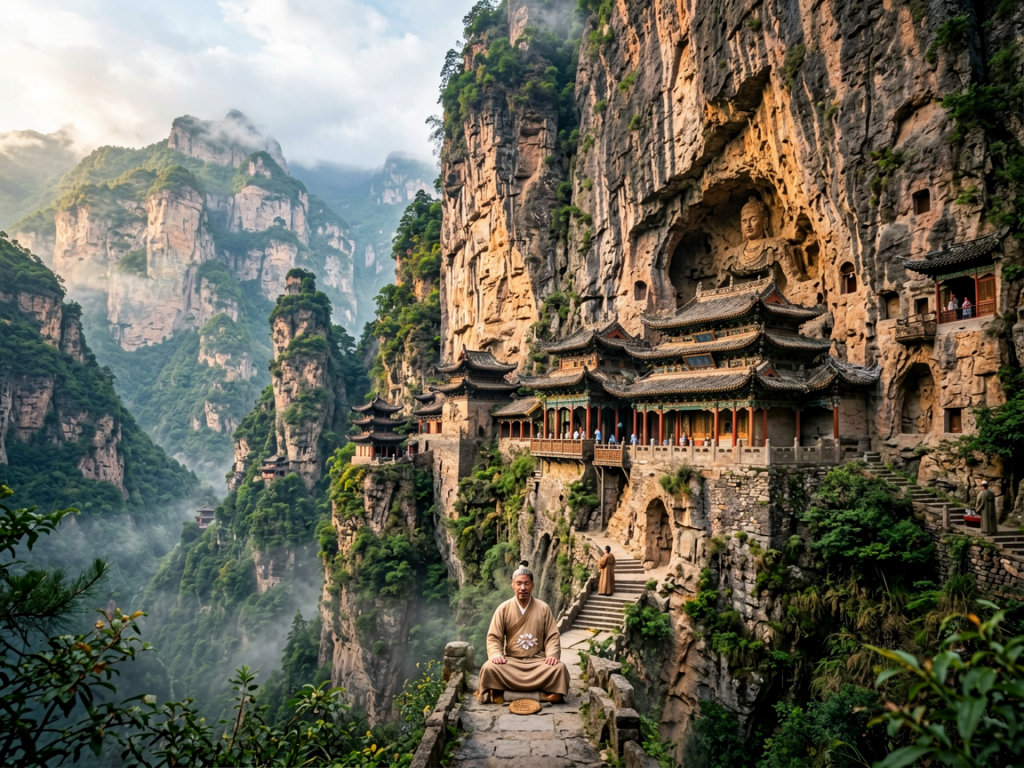
I’ll be honest, I expected a tourist trap when I first booked my trip to Tongren. Most travelers treat Guizhou as a quick stepping stone to Zhangjiajie or Guilin. They snap a few pictures, skip the province, and move on. But I’ve spent eight years watching China’s quieter corners hold onto traditions that bigger cities forgot.
Mount Fanjing doesn’t shout for attention. It just sits there, cloaked in mist, waiting for you to earn the view. This UNESCO World Heritage site refuses to perform spirituality for camera lenses. It demands your boots, your patience, and your willingness to walk slowly.
The drive from Tongren city to the mountain gate takes about forty minutes. You’ll pay twelve yuan for a local bus and watch the highway peel away from concrete suburbs into emerald valleys. The air changes before you even step out of the vehicle. It gets cooler, damper, thick with pine resin and damp earth.
Right? You can feel the shift in your lungs immediately. The city haze drops behind you like a heavy coat. Up here, the atmosphere belongs to monks, mules, and stubborn hikers who refuse to take shortcuts.
The Climb That Changes Your Pace
Getting up to 2,572 meters isn’t a casual stroll. I learned that the hard way on my second visit. The official trail splits into two routes, and most tourists cling to the cable car to save their knees. Don’t do that unless you want to miss half the story.
I prefer walking the upper switchbacks because the mountain forces you to slow down. You can’t rush when your thighs are burning and the path narrows to wooden planks bolted directly into granite. The altitude starts messing with your balance around noon.
I remember dragging myself past the third rest stop. My guide, a local guy named Lao Chen, handed me a paper cup of ginger tea. It tasted like hot spice water, but it cut through the mountain chill like magic. He laughed when I complained about the thin air.
“You’re not high yet,” he told me. “The real climb starts where the trees thin out.” Sound interesting? It should. The vegetation shifts dramatically as you ascend. You trade broadleaf oaks for twisted pines and eventually bare rock.
The trail feels older here, worn smooth by centuries of woolen sandals and mule hooves. I’ve hiked similar routes in Yunnan and Sichuan, but none of them carry this particular weight of history. You’re walking on ground where practitioners used to drag stones up single rope.
Every switchback strips away another layer of city urgency. Your phone signal dies somewhere past the tea stalls. That’s usually a relief. You stop checking notifications and start watching your footing. The mountain rewards presence, not productivity.
Temples Hung on Stone and Prayer
The famous plank walk, Yun Gu Jian, isn’t just a photo op. It’s a narrow spine of wood jutting over a thousand-foot drop. I gripped the iron chain on my left and tried not to look down. My stomach did that flip thing you get on rollercoasters, but I kept moving.
The tension was the point. Pilgrims understood this long before amusement parks monetized fear. The planks groan under heavy boots. Wind whips through the canyon below like a constant reminder of gravity.
At the end of the plank, you catch your first clear view of the twin summits. They rise like broken teeth against a gray sky. Most guides will point out the Red Clouds Summit and tell you it’s the crown jewel. They’re right, but I find myself drawn to the smaller hermitages tucked into the lower crags.
You have to hike past the main visitor center to reach them. Nobody crowds those paths anymore. I stumbled onto a tiny stone shrine one afternoon while taking a wrong turn. It wasn’t on any map. Just a weathered altar, a bronze incense burner, and a faded banner in Tibetan script.
The door creaked open when I knocked. An old monk sat cross-legged on a woven mat, grinding wheat berries with a wooden pestle. He didn’t ask who I was. He just poured me a bowl of coarse barley wine and pointed to the empty seat beside him.
We sat in silence for twenty minutes. That’s when I realized this place doesn’t perform spirituality. It just lives it. The cliffs around Fanjingshan weren’t chosen randomly. Builders selected these remote ledges because isolation sharpens focus. You can’t hide from your own mind up there.
I’ve visited dozens of monastery complexes across Asia. Most of them feel curated for comfort. Fanjingshan’s cliff temples feel carved from survival. The mortar holds together decades of freeze-thaw cycles and constant wind. They stand because generations refused to let them fall.
Where Esoteric Practice Never Left
Chinese Buddhism usually gets labeled as Chan or Pure Land. You sit quietly, you recite Amitabha, you go home. But Fanjingshan never fully bought into that narrative. It’s one of the few spots in eastern China where Tantric or Vajrayana influences still breathe through the local practice.
I’m no scholar, but the difference is obvious once you listen closely. The chants aren’t gentle. They’re low, rhythmic, almost percussive. Monks strike small metal bowls to mark the beat. The sound carries through the narrow gorges like distant thunder.
I watched a small ceremony unfold near the Golden Summit during my third visit. A dozen monks formed a circle around a low table draped in crimson silk. They lit butter lamps and waved hand bells. The air smelled sharply of juniper smoke and aged incense.
What struck me most was the focus. There’s a certain intensity to these rituals that Pure Land meditation rarely demands. Everything moves toward a single visualization. Prayers aren’t just requests. They’re active tools.
You won’t find press coverage for this stuff. Tour operators sell tickets to the viewing platforms and leave well enough alone. But if you wander off the main corridor after dusk, you’ll hear the horns. Low, resonant notes that vibrate in your chest.
I’ve stood on those stone terraces alone, listening to monks work through evening sutras. It’s better than most concert halls I’ve visited back home. The acoustics of granite walls amplify everything. The frequency settles in your ribs.
To be fair, the esoteric elements here blend with local folk traditions. Guizhou has always been a crossroads of minority cultures and Han migrants. That mixing shows up in the iconography. You’ll see deities wearing feathered headdresses alongside bodhisattvas holding lotus flowers.
It feels unpolished, yes. But it also feels alive. I could be wrong about the exact lineage, but the practice definitely refuses to sit still. Tantric methods thrive on direct experience, not textbook theory. These cliff monks treat meditation as physical labor.
Tongren’s Quiet Rhythm
Descending the mountain always hits you harder than climbing it. Your legs shake. Your mind catches up to the noise of the modern world. I like to spend a day wandering Tongren’s old streets before heading back to the city.
The pace there is deliberately slow. People sip tea from porcelain cups on plastic stools. Street vendors fry rice cakes until the oil smokes and puddles the sidewalk. I usually grab dinner at a hole-in-the-wall restaurant near the river.
Their braised pork belly melts on contact with your tongue. The owner, a woman with silver-streaked hair, always sets an extra bowl on my table without asking. She knows I come back every time I need to reset.
That’s the beauty of places like this. The mountain feeds your spirit, but the town feeds your body. You might wonder why anyone bothers maintaining temples at that altitude. It costs money, labor, and constant care.
Snow blankets the roofs every winter. Maintenance crews have to haul supplies up via mule or helicopter. Some would call it inefficient. I call it devotion. These monks aren’t chasing pilgrim traffic. They’re keeping a rhythm older than the current dynasty.
I’ve seen plenty of religious sites get turned into shopping districts. You know the type. Incense counters next to souvenir stalls. Ticket gates blocking the actual prayer halls. Fanjingshan dodged that bullet mostly because the terrain itself acts as a filter.
Only the serious make the full trek. The rest settle for the cable car views and head to a nice hotel in the valley. The mountain keeps its secrets because you have to climb through mud to hear them.
Why the Altitude Matters
Standing at 2,572 meters changes how you hear things. The oxygen thins just enough to strip away distractions. You notice the scrape of wool socks on stone. The drip of condensation from pine needles. The murmur of a single monk reciting a verse.
It’s easier to think clearly up there. Harder to lie to yourself. I used to chase faster climbs and higher peaks. My friends joked that I was collecting mountains like stamps. Then I started spending time in places like Tongren and realized speed misses the point entirely.
The friction of the ascent forces presence. You can’t multitask on a cliff edge. You can’t scroll through emails while balancing on a wooden plank. Your body demands your full attention. There’s a reason Tantric practice leans heavily on physical discipline.
It’s not about punishing the flesh. It’s about breaking your attachment to comfort. When you’re hiking through sleet on the West Peak trail, shivering in a thin jacket, the mental chatter stops. All that’s left is the next step. And then the next.
Eventually, you understand why generations of practitioners preferred remote ridges over city monasteries. The cold clarifies. The exhaustion strips away pretense. You’re left with whatever’s real.
Pack light. Bring really good boots. Leave your ego at the gate. Fanjingshan doesn’t care about your follower count or your travel itinerary. It only cares if you show up willing to listen.
I’ve taken dozens of visitors up those trails over the years. Half of them complain about the cold. The other half come back three months later with a new notebook and a quiet demeanor. You won’t find polished brochures explaining the exact origins of every carving.
You’ll find cracked stone steps, wind-whipped banners, and monks who treat prayer like breathing. That’s the draw. It’s raw. It’s unfiltered. It’s exactly what modern travel desperately needs more of.
Trust me, the cable car will whisk you to the summit in seven minutes. It’s comfortable. It’s safe. It’s completely pointless if you want to actually feel this place. Walk the trails. Get lost on the lower switchbacks. Buy ginger tea from a stranger.
Sit with the monks until they invite you to stay. The mountain will give you exactly what you bring to it. I’m leaving Tongren tomorrow. My legs still ache from the last ascent. I’ll probably miss the smell of wet pine and distant chanting.
Good. Let it linger. You never really leave a place like this anyway.