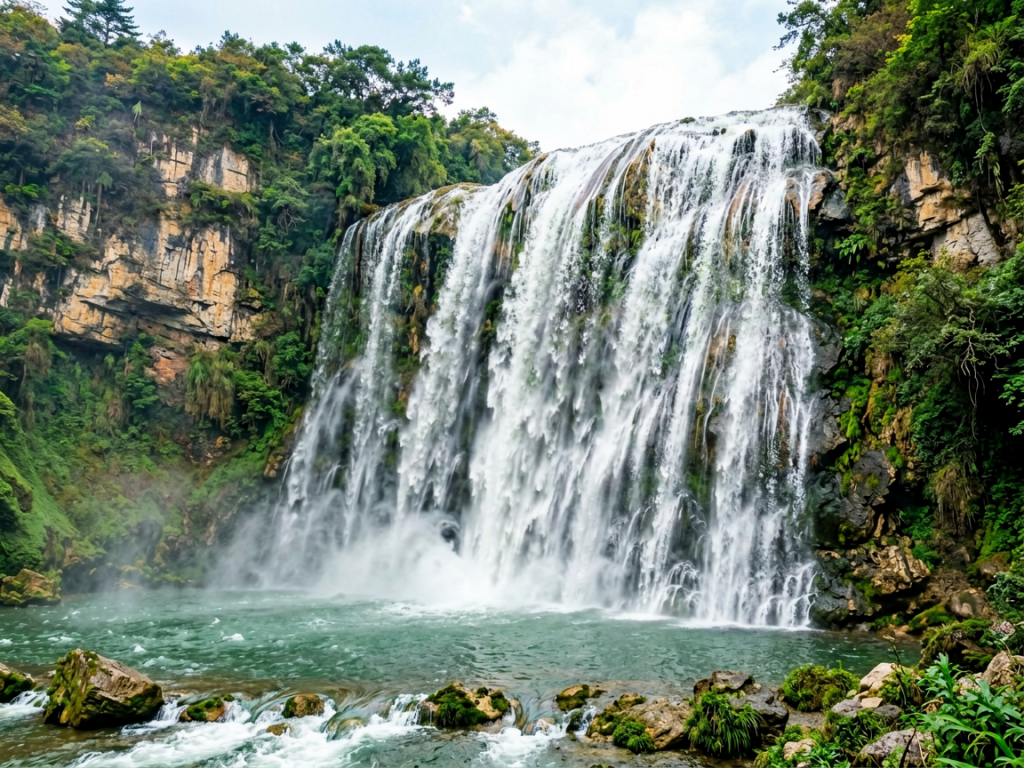
The first time I stood directly under the Huangguoshu Waterfall, my boots were completely soaked through. I didn’t even try to wipe them off. The ground actually vibrated with the weight of thousands of tons of water crashing down from that seventy-seven meter drop. Fine mist clung to my jacket like a permanent second skin. Sound interesting?
I’ve spent eight years wandering through China, and most waterfall tours feel exactly like a theme park ride. You grab a printed ticket, hop on a sealed shuttle bus, walk exactly three hundred meters on polished boardwalks, snap your photo, and head home. That’s not travel. That’s just commuting with better lighting.
Guizhou province keeps getting painted as China’s undiscovered countryside, but honestly, it’s just been waiting for people to actually show up without a pre-packaged itinerary. The provincial government finally poured money into the highways, and now the journey itself feels as rewarding as the destination.
Why Anshun Doesn’t Feel Like a Tourist Factory
Most travelers heading west from Kunming or Guilin just point straight toward Dali or Lijiang. Those cities absolutely deserve their fame. They also deserve their heavy traffic and souvenir market overload. If you want to dodge the crowded walkways and the tour group megaphones, you just need to point your GPS at Anshun instead.
The drive takes about four hours if you maintain a sensible pace. I took the high-speed rail out of Guiyang to Anshun, then rented an electric scooter because the local rental shops actually let foreigners drive them without demanding a passport deposit. You’ll wind through terraced rice paddies and watch farmers guiding water buffalo through muddy irrigation ditches. It feels completely untouched by the glossy postcard aesthetic we see scrolling past on social media.
I stopped at a roadside stand in Pingba District for breakfast before hitting the park gates. The auntie running the stall handed me a steaming bowl of hot dry noodles topped with pickled mustard greens and chili oil. I asked how much it cost, and she just waved her hand like I’d insulted her. That kind of unpretentious hospitality doesn’t happen in places where they’re jostling for the next cruise ship passenger.
When you finally pull into the national park parking lot, you still get a few thousand other visitors. The scale of the place just swallows them whole. The walking paths aren’t designed as tight queues either. You can actually wander without constantly elbowing strangers. Trust me, that physical freedom changes your entire mindset.
Walking Through the Cave Behind the Falls
The main attraction gets its reputation because of the Shuiprogo Cave system. It’s not just a distant viewing platform either. You actually walk directly behind the falling water. I know, it sounds impossible until your rubber soles start slipping on wet limestone.
I remember standing in the dark tunnel as the river roared just inches from my shoulder. The acoustic effect inside that cavern is genuinely wild. You can’t hear yourself think anymore. You just feel the low-frequency vibration rattling your chest cavity. It’s louder than a highway, but somehow it calms you down instead of stressing you out.
Professional photographers usually struggle here. Camera flash bounces off the heavy mist and ruins the exposure entirely. Natural light filtering through the gaps in the rock ceiling does the job far better. I ended up taking zero photos that afternoon. I just stood there and watched the spray create tiny rainbows against the dark stone. Surprised?
The cave network extends way beyond the immediate waterfall base. You’ll pass through narrow passages where the rock walls press in from both sides. Locals call it the Dragon Palace corridor, even though it has nothing to do with actual folklore. It’s just raw geology doing what it does best. Erosion over millions of years carved these tunnels while ancient rivers changed course and mountains slowly sank.
Exploring the Lesser-Known Cascade Networks
Huangguoshu isn’t really just one waterfall. It’s a cluster of fifteen separate cascades spread across a twenty-two kilometer radius. Most guidebooks focus on the big one because it fits neatly into a half-day weekend itinerary. I recommend spending at least two full days just to cover the obvious highlights.
The Tianxingqiao Scenic Area sits just a few kilometers away from the main entrance. I spent an entire afternoon wandering through its exposed root bridges and subterranean streams. The trails here feel more like hiking routes than curated tourist attractions. You’ll cross wooden planks over rushing water and watch kids from nearby villages skip smooth stones on the riverbank. It’s noticeably quieter. It’s much slower. It’s exactly what I look for.
Dangxinghai Waterfall gets even less attention, and that’s honestly a shame. The vertical drop isn’t as tall as the main cascade, but the sheer width of it hits you differently. You stand at the ridge and realize how massive the plateau actually is. The karst landscape around Anshun creates natural geological amphitheaters that trap sound and amplify the roar. It’s a landscape feature that no engineered structure could ever replicate.
I tried to hire a local boatman near Tianxingqiao to take me upstream past the main footbridges. He charged me forty yuan and pointed out where the Miao villagers used to dry their indigo fabric on flat rocks. The river water here runs clear enough to see smooth black stones resting on the bottom. I dipped my fingers in and immediately regretted the decision. It’s freezing cold, even in mid-July.
Food, Pace, and the Real Way to Experience Guizhou
You can’t talk about Anshun without mentioning the signature sour soup fish dish. I ate it at a family-run restaurant that only had plastic stools and a diesel generator kicking on during afternoon power cuts. The broth tasted like fermented tomatoes and wild mountain herbs simmered for six hours straight. It’s sharp, tangy, and completely different from the sweet soy-based stews you get elsewhere in southern China.
I paired the fish with steamed potato cakes slathered in crushed peanuts and dried chili flakes. The locals there eat like the weather dictates the meal plan. Hot humid days demand sour broths to cool you down. Cold mountain mornings call for heavy rice noodles cooked with rendered pork fat. It’s practical regional cooking. Nothing fancy. Just ingredients that grow within five miles of your kitchen.
Travel culture in China has shifted massively over the last decade. Short-form video platforms push everyone toward the same five famous photo spots. You’ll see the exact same poses on Douyin at the Yellow Crane Tower and the Great Wall. I prefer places where the algorithm hasn’t fully figured out how to package them yet. Guizhou still resists easy categorization.
The provincial authorities have invested heavily in infrastructure lately. Modern highways are smooth. Interprovincial buses run on tight schedules. You don’t need to worry about getting stranded in a remote village with zero cellular signal. Yet somehow, the raw charm hasn’t been priced out. Maybe it’s because the steep terrain forces you to slow down. Mountains don’t care about your daily productivity goals.
I met a retired couple from Shanghai who brought their own folding chairs to sit by the river after exploring the park. They said they drove for nine hours just to escape the city smog and humidity. They weren’t there to check tourist boxes. They were there to actually breathe fresh air. I think that’s the real secret to this region. It quietly rewards patience.
Practical Tips for Your Own Trip
Morning entry tickets disappear quickly during national holidays, so book your park passes through the official WeChat mini-program a week ahead. The main scenic area operates on a highly efficient loop shuttle system that actually makes logical sense. You buy one comprehensive ticket and ride between all fifteen waterfalls without paying extra fees.
Wear footwear with actual rubber grip. I learned that the hard way when a smooth basalt slab nearly sent me sliding into a concrete drainage ditch. The park staff puts up bright yellow warning signs, but careless tourists still ignore them. Don’t be that person. Bring a lightweight rain jacket too, even if the morning sky looks perfectly clear. The spray travels half a kilometer into the air on windy afternoons.
Stay overnight in Anshun city rather than trying to commute from Guiyang every single day. Hotel prices drop significantly after the October golden week rush. I found a clean, modern guesthouse near the train station for sixty yuan a night. They offered free laundry service and a rooftop terrace with unobstructed views of the surrounding hills. It beat staying in any sterile five-star lobby I’ve ever paid double digits for.
If you plan to hike the back trails past the main viewing decks, leave your leather backpack in your hotel room. The ambient moisture warps cardboard and ruins electronics faster than you’d expect. I kept my camera phone in a ziplock bag just to be safe. The condensation alone would’ve fogged the lens within three minutes.
I could be wrong about some travelers preferring manicured parks, but I’d rather get muddy boots than wait in line for a selfie stick zone. Anshun gives you physical space to actually look at something instead of just filming it for an audience. That quiet distinction matters more than people ever admit.
Guizhou isn’t trying to sell you a manufactured fantasy. It’s just showing you how rainwater moves through ancient limestone over millennia. I keep coming back because it feels genuinely honest. The spray on my face doesn’t care about my follower count. The sour broth doesn’t adjust its spice level for international palates. It just exists. And sometimes, that raw simplicity is exactly what you need.